تازہ ترین

  • | |

    Arjumand Rahim opens up about anxiety and multiple ER visits

    Arjumand Rahim is one of Pakistani television’s most enduring and respected performers. She began her career in the 1990s and has built a body of work that spans three decades, evolving alongside the industry itself and consistently delivering performances that leave a mark. Her recent role in Sher reminded audiences precisely what she is capable of, earning widespread praise and reinforcing her standing as one of the finest actors of her generation. Away from the screen, however, she has been quietly navigating a health struggle that was far more frightening than anything she has portrayed on camera. Appearing as a guest on Vasay Chaudhary’s show, Arjumand spoke with remarkable candour about a period in her life when she repeatedly found herself in the emergency room with no clear explanation for what was happening to her body. She described feeling faint and physically unwell on multiple occasions, with each ER visit leaving her more shaken than the last. Adding to her fear was a deeply personal detail: her father had passed away due to cardiac arrest, and the physical symptoms she was experiencing brought that grief rushing back in the most frightening way possible. Every episode of faintness or discomfort carried the shadow of that loss. It was only when she received a proper diagnosis that the picture began to make sense. She was found to be suffering from extreme anxiety and depression, conditions that had been manifesting through very real and alarming physical symptoms. For someone who had not understood what was happening to her, the diagnosis, while difficult to hear, was also the beginning of clarity. She sought professional help, underwent therapy, and received the treatment she needed to begin recovering. She described the period before the diagnosis as truly frightening, a time when she did not know what was wrong with her and could not explain what her body was doing or why. The uncertainty, layered on top of grief and the physical toll of the episodes themselves, made for an extraordinarily difficult stretch of time. The good news, and she was clear about this, is that she is doing significantly better now. The treatment worked, and the willingness to seek help made the difference. Her decision to speak openly about what she went through carries weight beyond her own story. In Pakistan, conversations around mental health and its physical manifestations remain challenging, and the stigma surrounding anxiety, depression and therapy continues to prevent many people from reaching out. When a figure of Arjumand Rahim’s stature speaks plainly about her own diagnosis and her experience of getting treatment, it sends a message that reaching for help is not weakness but the beginning of getting better. That is a message worth hearing.
  • | | | | |

    Iran rejects US ceasefire proposal sent through Ir…

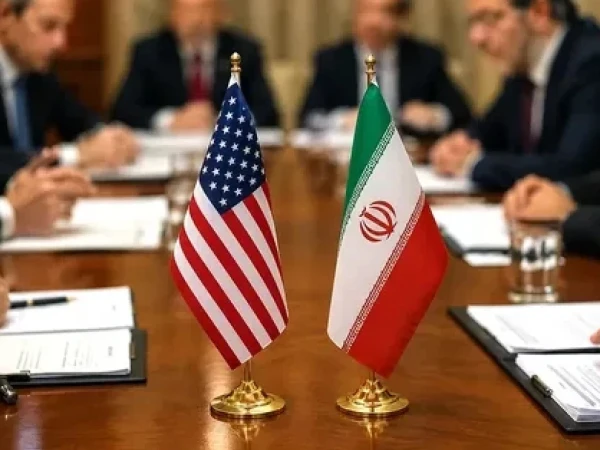
    TEHRAN/WASHINGTON: Iran has reportedly rejected a US-backed ceasefire proposal delivered through Iraq, insisting that any agreement must address the underlying causes of the conflict rather than offer only a temporary halt in fighting, according to a report published by The New York Times. The report said the proposal was conveyed during Iraqi Prime Minister Ali Al-Zaidi’s visit to Tehran after meetings with US officials in Washington. Acting as an intermediary, the Iraqi leader is said to have relayed Washington’s message in an effort to ease rising military tensions between Iran and the United States. According to the report, Iranian officials made it clear that a short-term ceasefire would not be acceptable unless it included concrete solutions to the broader disputes driving the conflict, particularly issues surrounding the Strait of Hormuz, one of the world’s most strategically important maritime routes. While the full details of the reported US proposal were not disclosed, Iranian officials were quoted as saying that a temporary pause in hostilities would do little to resolve the crisis without addressing Tehran’s core strategic concerns. Iranian Foreign Minister Abbas Araghchi confirmed that the Iraqi prime minister had briefed Tehran on his discussions in Washington and shared his observations from the visit. However, Araghchi emphasized that communication channels between Iran and the United States already exist through several regional mediators. “The issue is not the delivery of messages,” Araghchi said, according to Iranian media. “The real problem is Washington’s approach.” He accused the United States of pursuing what he described as an “unreasonable, greedy and controlling” policy that has fueled the current crisis. The report added that Tehran remains committed to its long-standing strategic demands and is unwilling to accept any agreement that it believes undermines Iran’s national interests or regional position. As of the time of publication, the US government had not issued an official response to the New York Times report or to the statements attributed to Iranian officials. The details of the alleged proposal have also not been independently verified. Diplomatic efforts involving Iraq, Qatar, Pakistan, and other regional countries are continuing behind the scenes in an attempt to reduce tensions and prevent a wider regional conflict. However, political analysts say deep disagreements between Tehran and Washington continue to limit the prospects for a breakthrough. The reported rejection underscores the significant obstacles facing mediation efforts, particularly as disputes over regional security, sanctions, and freedom of navigation in the Strait of Hormuz remain unresolved. With military tensions still high and both sides maintaining firm public positions, observers believe a comprehensive diplomatic solution remains difficult despite ongoing regional mediation initiatives.

  • | |

    US Embassy unveils Liberty Bell in Islamabad

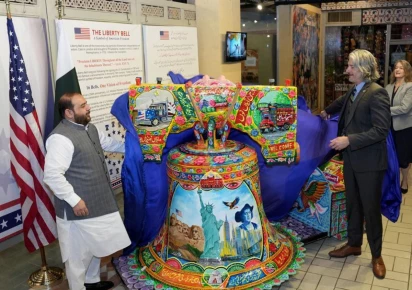
    The United States Embassy in Islamabad has launched a unique cultural exhibition in the Pakistani capital, bringing together art, history and the shared values of two nations as part of celebrations marking the 250th anniversary of American independence. The “Let Freedom Ring” Liberty Bell display was inaugurated on Thursday, July 23, at Lok Virsa Museum in a ceremony attended by US Chargé d’Affaires Andy Halus and Pakistan’s Minister for National Heritage and Culture Aurangzeb Khan Khichi. The display will run until July 27 at two of Islamabad’s most prominent cultural institutions, Lok Virsa Museum and the Pakistan Monument Museum, with members of the public invited to visit both venues throughout the five-day exhibition period. At the heart of the exhibition are 16 uniquely designed bells, each created by a Pakistani artist from across the country and each representing a distinct perspective on the concept of freedom. The artists were invited to respond to a single central question: what does freedom mean to me? The resulting collection is as diverse as the country it comes from, with each bell offering a visual and cultural interpretation of a value that sits at the core of both American history and human aspiration. The initiative was organised by the US Mission to Pakistan’s Public Diplomacy Section through its Lincoln Corners network, in collaboration with the 16 Pakistani artists whose work forms the exhibition. The collaborative nature of the project is itself a reflection of the diplomatic spirit behind it, one country celebrating its founding ideals by inviting another to contribute its own creative voice to the conversation. Speaking at the inauguration, Halus drew a direct line between the values the exhibition represents and the relationship between the two countries. “Looking at this bell, I am reminded of something that Pakistan and the US share deeply, a belief in the power of expression, of art, and of the freedom to imagine a better world,” he said. “Lok Virsa has spent decades preserving that spirit in Pakistan. Today, we are proud to add America’s own story of freedom to this special place.” Pakistan’s cultural minister welcomed the exhibition as a reflection of the longstanding ties between the two nations, highlighting the role that cultural exchange plays in strengthening bilateral relations beyond the formal channels of diplomacy. The “Let Freedom Ring” campaign forms part of the US Mission Pakistan’s year-long “Freedom 250” programme, a global initiative marking the 250th anniversary of the Declaration of Independence through events centred on the themes of freedom, innovation and excellence. The Islamabad exhibition is one of many such events being held around the world as part of this broader commemorative effort.

  • |

    PCB unveils major domestic cricket overhaul ahead of ODI World Cup

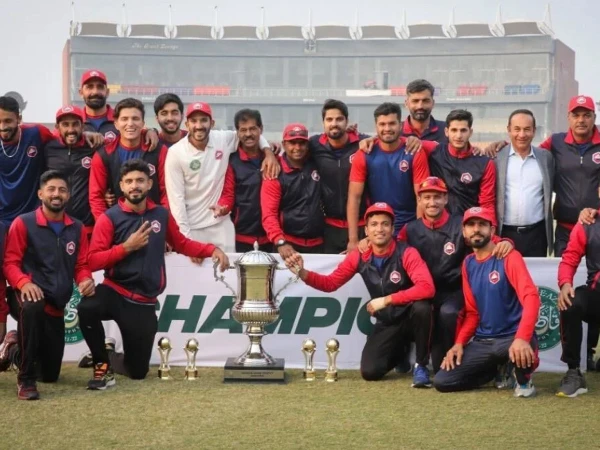
    LAHORE: The Pakistan Cricket Board (PCB) has announced a significant revamp of its 2026–27 domestic cricket season, introducing structural changes aimed at strengthening competition and preparing players for the upcoming ICC Men’s ODI World Cup. The new domestic calendar places greater emphasis on high-quality white-ball cricket while also reshaping Pakistan’s premier first-class competition to improve competitiveness across all formats. According to the PCB, the season will begin on August 11 in Multan with the National Champions Cup, a four-team one-day tournament. Squads for the competition will be selected by the national selection committee, providing emerging players with an opportunity to impress in the 50-over format ahead of the global tournament. The board has also confirmed that the domestic season will feature two List A competitions. Following the National Champions Cup, teams will compete in the President’s Cup, giving players additional match practice and selectors a broader pool of performances to evaluate before international assignments. One of the biggest changes announced is the expansion of regional participation. The number of regional teams has increased from 18 to 20, with Sialkot and Peshawar each receiving permission to field a second team. PCB officials believe the move will create more opportunities for talented cricketers across the country and deepen the domestic talent pipeline. In another landmark decision, the prestigious Quaid-e-Azam Trophy has been divided into Gold and Silver Divisions for the first time in the tournament’s history. The Gold Division will feature the country’s eight strongest teams, while the Silver Division will include 12 teams competing for promotion and a chance to challenge the top sides. Both divisions are scheduled to begin on November 1, with the new format designed to increase the quality and intensity of first-class cricket. The domestic campaign will conclude with the National T20 Cup, scheduled for February and March, ensuring players receive competitive exposure in all three major formats before the international season intensifies. PCB officials said the revised structure reflects the board’s long-term strategy of producing better-prepared cricketers capable of succeeding at the highest level. By increasing meaningful competition, expanding opportunities for regional teams, and aligning domestic cricket with international priorities, the board hopes to strengthen Pakistan’s player development pathway. Cricket analysts have welcomed the changes, saying the new format could raise the standard of domestic cricket while helping selectors identify consistent performers ahead of major international tournaments, including the 2027 ODI World Cup.

  • | |

    Pakistani celebrities voice support for India’s student protesters

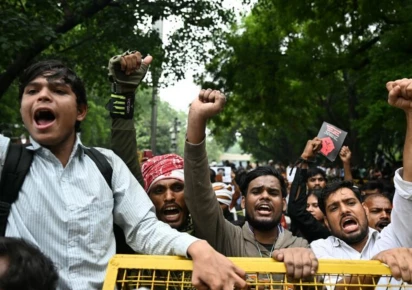
    A student movement in India demanding accountability and reform in the country’s education system has drawn a wave of public support from celebrities on both sides of the border, with Pakistani and Indian stars alike using their platforms to stand alongside the protesters. The Cockroach Janta Party movement began after allegations emerged of widespread examination paper leaks, and has since grown into a nationwide campaign calling for greater transparency and systemic reform in India’s education sector. While the protests started peacefully, clashes with authorities have since been reported in some areas, drawing even wider attention to the students’ cause. Pakistani actors were among the first from across the border to express solidarity. Azfar Rehman shared a video showing alleged police brutality against the protesters, writing: “Shame on the Indian police and government for such insensitive and inhumane behaviour towards students. It’s really sad how these kids are being insulted and beaten up.” Television host Maya Khan praised the students’ awareness and sense of purpose, describing today’s youth as well-informed and saying she stood with them regardless of nationality. Actor Bilal Qureshi expressed empathy, writing simply: “I can feel the pain of this generation, here and there.” Rapper Talha Anjum addressed the protesters directly in an Instagram Story, telling them he had great respect for their resilience and understood their frustration, urging them to stay strong. From within India’s own entertainment industry, the response has been equally vocal. Salman Khan shared a childhood photograph of himself in a school uniform on Instagram, describing the protests as a peaceful movement for educational reform and expressing sadness at the violent turn some demonstrations had taken. He called the issue of paper leaks a very serious one and urged that the movement stay focused on education rather than be pulled into political territory. Alia Bhatt praised the students’ determination in a heartfelt post, describing them as the generation that will shape India’s future and calling their persistence both heartbreaking and hopeful in equal measure. Preity Zinta also voiced support for the students’ demands while cautioning that peaceful demonstrations should not be taken over by what she described as anti-national elements. She additionally called on the Indian government to begin meaningful dialogue with activist Sonam Wangchuk, who has been on an indefinite hunger strike since the protests began. Rakhi Sawant expressed support and questioned the treatment students had faced during the demonstrations. Other Bollywood names who had already lent their voices to the movement included Diljit Dosanjh, Sonakshi Sinha, Aditi Rao Hydari, Shabana Azmi, Pooja Bhatt, Arijit Singh, actor Imran Khan and Zeenat Aman. Not all celebrities have spoken out, and the silence of some has drawn its own kind of scrutiny. A fan page dedicated to Katrina Kaif reportedly shut down, citing disappointment over her decision not to comment on the protests, a reminder that on certain issues, staying quiet is itself read as a statement by an audience that is watching closely.

  • | | |

    Weekly inflation hits 9.66% amid price surge

    ISLAMABAD: Pakistan’s weekly inflation increased during the latest reporting period as higher fuel and food prices pushed up the cost of living, according to the latest report released by the Pakistan Bureau of Statistics (PBS). The report showed that weekly inflation rose by 0.91%, while the country’s annual inflation rate reached 9.66%, indicating that prices of essential goods continue to remain under pressure despite declines in a few commodities. According to the Bureau of Statistics, prices of 22 essential commodities increased during the past week, while eight items became cheaper and 21 items recorded no change. The sharpest increase was recorded in petroleum products. High-speed diesel became 15.87% more expensive, while the price of petrol increased by 5.23%. The rise in fuel prices is expected to affect transportation costs and may also increase the prices of other goods in the coming weeks. Among food items, tomatoes recorded the highest increase, with prices rising 39.92% in just one week. Egg prices increased by 7.31%, adding to household food expenses. The report also showed that the price of liquefied petroleum gas (LPG) increased by 0.91%, while potatoes became 3.70% more expensive. Prices of garlic, beef and several other essential food items also registered increases during the week. Although inflation remained on the rise, consumers received limited relief in the prices of a few commodities. Chicken prices fell by 4.66%, making it one of the biggest weekly declines among food products. Bananas became 1.72% cheaper, while prices of sugar, rice and different varieties of pulses also recorded decreases. Economists say rising fuel prices are one of the major reasons behind the increase in weekly inflation because higher transportation and production costs often lead to price increases across various sectors of the economy. The latest inflation figures suggest that many households continue to face pressure from the rising cost of essential goods, particularly food and fuel. While price reductions in some commodities have provided modest relief, overall inflation remains elevated due to continued increases in several key household items.

  • | |

    Spotify reveals Atif Aslam nears 8 billion streams

    Atif Aslam is entering the release of his fourth studio album with a set of streaming numbers that underscore just how far his music has travelled and how deeply it has embedded itself in the listening habits of people around the world. With Subah Aye Na set to arrive on July 31, 2026, his first full-length album since Meri Kahani debuted in 2008, Spotify has released a series of listening insights that paint a remarkable picture of his global reach. According to the figures, Atif currently holds nearly 8 billion monthly streams on the platform, drawing in more than 80 million listeners spread across 184 countries. In 2025 alone, 96 percent of Atif’s listeners streamed his songs outside Pakistan, highlighting the strength of his international fanbase across the Middle East, North America, Asia Pacific, Europe, South Asia and beyond. (jang) It is a figure that speaks to something more than commercial success. It points to a voice that has crossed cultural and linguistic boundaries in a way that very few South Asian artists have managed at this scale. The generational dimension of his audience is equally striking. Spotify stats confirm that 85 percent of his streams come from younger listeners, suggesting that despite being a millennial himself, Atif’s music resonates deeply with Gen-Z audiences who have discovered him well into his career. (jang) That cross-generational appeal is one of the rarer qualities an artist can have, and the numbers suggest it is very much alive. Last year, more than 41 million listeners discovered or returned to his music on Spotify, a surge that reflects both new audiences finding him for the first time and long-time fans coming back. (jang) The platform also confirmed that his songs appear on more than 37.5 million user-created playlists, including wedding playlists, late night drive compilations and more, (jang) a detail that says as much about the emotional context of his music as it does about its streaming performance. His songs are not simply being listened to. They are being chosen for life’s most significant moments. Atif himself has been characteristically thoughtful in describing what the new album represents. “This album is a true representation of freeing myself from the chaos and meeting my real self,” he said. “Stay tuned. I can’t wait for all of you to hear it.” Subah Aye Na is an eight-track album featuring the songs Subah Aye Na, Safar Mein Hun, Ishq, Let’s Have Some Fun, Sun Sajna, Hun Ishq Mein, Char Yaar and Sachay Waday. For an artist whose career began with Doorie and Aadat and has since become the soundtrack to countless lives across the subcontinent and beyond, July 31 represents not just a new release but a return to something deeply personal.

  • | |

    Whoopi Goldberg defends Elliot Page’s casting in The Odyssey

    Whoopi Goldberg has stepped forward to defend the casting of Elliot Page in Christopher Nolan’s The Odyssey, delivering a pointed and characteristically direct response to the wave of criticism that has been directed at the actor since the film’s release. Speaking on Tuesday’s episode of The View, Goldberg addressed the backlash head-on after a clip was played of conservative commentator Ben Shapiro describing Page’s role as an “absolute puzzler” and taking aim at the actor’s appearance and voice. Goldberg’s response was blunt and unapologetic. “A lot of conservatives who see this are going to feel the same way. That’s okay,” she said. “But I don’t understand. Why go see the movie? If you don’t want to see it, don’t go see it. Why do you care who’s cast in it?” She continued: “I don’t understand this idea that if we hate it, everybody must hate it because we hate it for this reason. You don’t like Elliot Page? Don’t go see the damn movie. Don’t do it. We will be okay if you don’t go see it.” Page, who is trans, plays Sinon in the film, a cousin of Matt Damon’s Odysseus. The casting drew significant online criticism, some of it amplified after Elon Musk weighed in on social media, initially claiming incorrectly that Page would be playing the warrior Achilles. Despite the inaccuracy being pointed out, the backlash continued and widened. Page is not the only cast member to have faced criticism over their casting. Lupita Nyong’o, who plays both Helen of Troy and her sister Clytemnestra in the film, has also been subjected to racially charged criticism over her dual role, highlighting a pattern of commentary around the film’s diverse ensemble that goes well beyond questions of artistic interpretation. Fellow View panelist Alyssa Farah Griffin also pushed back on the criticism during the segment, arguing that the film’s themes of family, faith and the consequences of war are broad and universal enough to resonate across different audiences, including those who had voiced objections before seeing the film. What the controversy has not managed to do is dent the film’s commercial performance. The Odyssey opened in theatres on July 17 and crossed $300 million worldwide within days, making it one of the biggest releases of Christopher Nolan’s career and one of the year’s most significant box office events so far. For Goldberg, the message was simple: the film exists, it is performing, and those who object to its casting choices have every right to stay away. What they do not have, in her view, is the right to demand that everyone else feels the same.

  • | |

    Avatar: Seven Havens gets October premiere date

    The Avatar universe is expanding in a bold and dramatic new direction. Paramount+ has unveiled the first teaser for Avatar: Seven Havens, a new animated series set in a world shattered by catastrophe, and confirmed that the show will premiere on October 9, 2026. The teaser is dark, atmospheric and immediately striking in tone, a significant departure from the warmth and adventure that characterised the original Avatar: The Last Airbender. What it offers instead is a world in ruins, a new Avatar burdened by a deeply complicated legacy, and a story that promises to push the franchise into grittier and more urgent territory. The October 9 date itself carries a certain significance. It had originally been earmarked for the release of Avatar Aang: The Last Airbender, a separate project within the franchise, before that film’s schedule shifted following an online leak. Seven Havens has now stepped into that slot. The series follows a young earthbender who discovers she is the new Avatar after Korra, emerging in a world that has been devastated by a cataclysmic event. In this dangerous and fractured era, being the Avatar is not a source of hope or admiration for those around her. It marks her instead as a figure of fear, seen by many as humanity’s destroyer rather than its saviour. Hunted by both human and spirit enemies, she and her long-lost twin must uncover the truth about their origins and find a way to save the Seven Havens before the last remaining strongholds of civilisation collapse entirely. The cast assembled for the series is a strong one. Saheli Khan leads as Pavi, joined by Aishu Devan as Nisha, Akshay Khanna as Karthik, Major Curda as Jae, Sakina Jaffrey as Agam, Darren Barnet as Daemin, Dianne Doan as Zi, and Dee Bradley Baker, the beloved voice of Appa and Momo from the original series, voicing Geet and Ruhi. The show follows the two-book structure familiar to fans of the original series, with 26 episodes ordered in total, each book comprising 13 episodes. Avatar Studios and Nickelodeon are producing the series, with original franchise creators Michael DiMartino and Bryan Konietzko serving as executive producers alongside director Ethan Spaulding and co-executive producer Sehaj Sethi. The original Avatar: The Last Airbender, which first aired in 2005, is widely regarded as one of the greatest animated series ever made. It was followed by The Legend of Korra in 2012. Seven Havens now continues that legacy into a darker and more complex chapter, and if the teaser is any indication, it has every intention of earning its place in that company.

  • | |

    Ranbir Kapoor opens up about self-doubt ahead of Ramayana

    Ranbir Kapoor has spoken with rare candour about the weight of playing Lord Rama in the most ambitious Indian film production in recent memory, admitting that when the role was first offered to him, his immediate response was fear rather than excitement. Speaking on a panel at San Diego Comic-Con on Thursday alongside co-star Yash, director Nitesh Tiwari and producer Namit Malhotra, Kapoor was asked to reflect on what it meant to take on a role of this magnitude. His answer was unexpectedly personal. “I remember when the film was first offered to me, there was so much of fear, so much of doubt. Will I be able to do this, am I capable enough?” he said. “But I think that doubt changed into gratitude very early on. I think it was a blessing, an opportunity of a lifetime, and a moral responsibility.” What made the role feel so daunting, he explained, was not simply the scale of the film but the depth of the cultural and spiritual responsibility it carried. Lord Rama is not a fictional character for the hundreds of millions of people who hold him sacred. He is a living presence in the faith and moral imagination of a civilisation stretching back millennia. “The Ramayana is ingrained in our subconscious,” Kapoor said. “Lord Rama is the conscience keeper of millions of people around the world for generations, for more than 4,000 years. He is somebody who embodies the triumph of the human spirit in times of adversities. He stands for courage, compassion, forgiveness, righteousness, and just to have the opportunity to represent that is very daunting.” What helped him move through that initial paralysis, he said, was a shift in his approach from technical preparation to something more spiritual. “Very early on, I understood that it just requires a lot of faith, a lot of belief, a lot of truthfulness, and noble intentions. Our entire cast and crew had one noble intention, and that is to tell the story as authentically as we can.” His co-star Yash, who plays the antagonist Ravana, used his moment on the panel to defend Kapoor’s casting, praising both his humility and his dedication and noting that no actor can truly claim to embody a deity. He called Kapoor a fabulous actor who had worked hard for the role, pushing back on any lingering doubt about whether he was the right choice. The panel also brought an unexpected development. The Ramayana trailer, which had been scheduled for a global unveiling at Comic-Con, was postponed just hours before its planned launch. Producer Namit Malhotra confirmed the delay, saying the trailer would be released worldwide at a later date. He described the film as a moment of great pride for Indian cinema, one that would introduce the richness of Indian culture and storytelling to global audiences in the way major Hollywood productions do for their own traditions. Ramayana Part One is scheduled for a theatrical release in November.