National

  • |

    Haroon Akhtar appointed PM’s adviser on industri…

      The federal government has formally appointed Haroon Akhtar Khan as the Prime Minister’s Adviser on Industries and Production, granting him the status of a federal minister. President Asif Ali Zardari approved the appointment, while the Cabinet Division issued the official notification confirming Haroon Akhtar’s new role. He will take charge of his responsibilities immediately and oversee the Industries and Production portfolio as part of his advisory duties. Haroon Akhtar brings extensive political, business and economic experience to the position. He has served as a senator twice and has also been elected as a member of the Punjab Assembly on two occasions. His long association with the business community and industrial sector has given him substantial experience in economic policy, investment, taxation, industry and public-sector affairs. From 2015 to 2018, Haroon Akhtar served as Special Assistant to the Prime Minister on Revenue with the status of a federal minister. During his tenure, he remained involved in matters relating to taxation, revenue collection and economic policy. Earlier, he served as a senator from 2006 to 2012 and played an active role in several parliamentary standing committees. His committee work covered key sectors, including finance, economic affairs, revenue, statistics, planning and development, commerce, industries and production, petroleum, natural resources and minerals, as well as sports, culture and tourism. Haroon Akhtar also has a strong professional background in actuarial science and business administration. He earned Master of Science degrees in Actuarial Science and Business Administration from the University of Manitoba in Canada. He is a fellow of the Society of Actuaries in the United States and the Canadian Institute of Actuaries. He also achieved recognition in the actuarial profession at a young age, becoming one of the youngest qualified actuaries at the time. His professional career has remained closely connected with Pakistan’s business and industrial community for more than three decades. Over the years, he has developed strong links with investors, industrialists, business leaders and government institutions, giving him a broad understanding of the challenges facing the private sector and the regulatory environment. Haroon Akhtar has also worked to strengthen coordination between businesses and government institutions. His experience includes bringing investors, industrialists and regulators together to improve communication, facilitate investment and address issues affecting businesses and industry. His appointment comes at a time when Pakistan continues to focus on strengthening industrial growth, attracting investment, improving the business environment and expanding economic activity. With his background in business, taxation, economic affairs and parliamentary work, Haroon Akhtar is expected to play a key role in shaping policies related to the country’s industrial and production sectors.

  • |

    Pakistan announces Hajj 2027 packages, 107,526 government seats

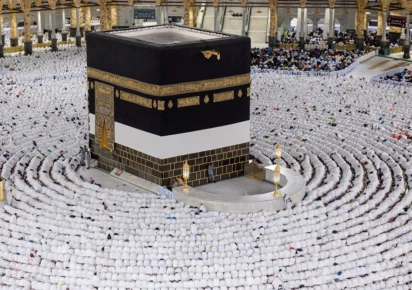
    ISLAMABAD: The federal government has announced the initial arrangements for Hajj 2027, allocating 107,526 seats under the Government Hajj Scheme and introducing a fully digital application and payment system aimed at making the pilgrimage process easier and more transparent for applicants. Federal Minister for Religious Affairs Sardar Muhammad Yousaf said the government has set the estimated cost of the 40-day Hajj package at Rs1.2 million, while the 20 to 25-day package will cost Rs1.3 million. According to the minister, the Hajj 2027 process has been transformed into an end-to-end digital system on the directions of Prime Minister Shehbaz Sharif, with the Ministry of Religious Affairs working in coordination with the Ministry of Information Technology and the National IT Board. The new arrangements are designed to allow intending pilgrims to complete most of the necessary procedures without repeatedly visiting government offices or banks. Applicants will be able to submit their Hajj applications from their homes, deposit the required dues through digital channels and access information and other facilities through the Pak Hajj App and Hajj Portal. Yousaf said the ministry’s primary objective was to reduce the difficulties traditionally faced by pilgrims during the application process. He said the digital system would help eliminate lengthy queues, unnecessary journeys and waiting periods while also making the overall process more convenient for applicants. First instalment to be collected from August 17 The minister announced that the first phase of payments under the approved Hajj Policy 2027 would begin on August 17. Applicants selected under the relevant phase will be required to deposit 50% of the total package cost as the first instalment. The government will subsequently demand the second instalment during the first week of October. The authorities have also opened the final application phase for Hajj 2027. Around 400,000 pilgrims who have already completed the pre-registration process will now be eligible to proceed with their formal applications. Officials expect the digital registration mechanism to simplify verification and reduce delays as the large number of pre-registered applicants move into the next stage. Passport information to be verified digitally The Religious Affairs Ministry has also established a data-sharing arrangement with the Passport Office as part of the government’s efforts to strengthen the digital Hajj registration system. Through the integration, applicants’ passport information can be verified more efficiently, potentially reducing paperwork and manual intervention during the application process. Yousaf said linking databases of different government institutions would improve the accuracy and speed of processing while increasing transparency. The minister maintained that the use of digital verification would also reduce the possibility of errors arising from manual data entry and repeated documentation. HBL named banking partner Habib Bank Limited (HBL) has been designated as the authorised banking partner for the Government Hajj Scheme. According to the minister, the Ministry of Religious Affairs and HBL have signed a Memorandum of Understanding covering the banking arrangements associated with Hajj applications and payment of dues. Pilgrims will have three digital payment options available under the government scheme. They can pay through a OneLink PSID, use a credit or debit card, or download a digital challan through the Pak Hajj App and deposit the required amount at any HBL branch. The government has stressed that applicants should use only the officially prescribed channels when making payments. Seats to be confirmed on first-come, first-served basis Under the Government Hajj Scheme, applicants who successfully deposit the required amount through the online payment system will have their seats confirmed on a first-come, first-served basis. Once the allocated seats are filled, the authorities will stop accepting further payments for that category. The government has separately allocated 30,000 seats for the Short Hajj Scheme. Online payments for the short-duration package will be closed once the allocated quota is exhausted. Authorities have also outlined arrangements for applicants who are unable to secure a seat during the current phase. If the available Hajj 2027 quota is filled, remaining registered applicants will be placed on a waiting list for the following year. At the same time, registration for the Hajj 2028-2030 period will continue according to the announced policy. The minister said details concerning the 10% payment requirement for the Long-Term Hajj Scheme would be announced after completion of the current application phase. Private Hajj Scheme gets 71,684 seats Alongside the government programme, the federal government has allocated 71,684 seats for the Private Hajj Scheme for 2027. Under the new digital mechanism, pilgrims opting for the private scheme will be able to compare packages offered by 25 government-approved authorised Hajj organisers. The available packages and participating companies will be displayed through the official Hajj Portal and Pak Hajj App, allowing intending pilgrims to choose an organiser and package according to their preferences. The government has made it clear that the selection of private Hajj organisers and payments must also be completed through the designated official digital system. Pilgrims warned against direct payments The Religious Affairs Ministry has issued a specific warning to intending pilgrims against handing over money directly to private Hajj operators or tour companies. Yousaf said any payment or financial transaction conducted outside the officially designated government system would not be recognised. Pilgrims have therefore been advised to verify the status of Hajj organisers through the official digital platform before making any payment. The government believes that centralising the selection and payment process through the digital Hajj system will help protect pilgrims from potential fraud, unauthorised operators and disputes over payments.

  • | |

    Punjab cybercrime crackdown, 28 suspects arrested

    LAHORE: Authorities have arrested 28 suspects in Lahore, Faisalabad and Multan as part of a major crackdown on organised online fraud, exposing alleged schemes that relied on impersonation, fake investment opportunities and fabricated official identities to deceive citizens. The arrests were made during a province-wide operation by the National Cyber Crime Investigation Agency (NCCIA) Punjab, directed by Punjab Director Muhammad Ali Wasim, officials said. Investigators also seized 24 mobile phones and a laptop, which are now being examined for evidence that could lead to other members of the alleged network. The investigation has revealed how fraudsters allegedly manipulated trust to convince victims to hand over large sums of money. Millions allegedly lost in Lahore scam In Lahore, 18 suspects were arrested in separate operations. Investigators said the suspects allegedly impersonated relatives, visa agents, government officials and personnel associated with the Punjab Safe Cities Authority. In one case, suspects allegedly posed as both a relative and a visa agent and persuaded a victim to transfer Rs25.86 million. The case has highlighted how scammers can combine apparently familiar identities with urgent requests to make their schemes appear legitimate. Rs54.66m trading fraud uncovered Three suspects were arrested in Faisalabad in connection with alleged online trading fraud and unauthorised access to a company email account. According to investigators, a victim was shown fabricated trading records, digital-wallet balances and purported profit statements to create the impression that substantial returns were being generated. After being persuaded to invest, the victim allegedly lost Rs54.66 million, investigators said. The case demonstrates the growing sophistication of investment scams, where criminals allegedly use manipulated digital information to make fraudulent platforms appear genuine. Multan arrests expose impersonation tactics In Multan, seven suspects were arrested for allegedly posing as relatives, bank employees and individuals claiming to be based in Britain. Officials said victims were approached with various demands, including payments supposedly required for prize money, customs clearance, taxes and visa renewals. Such tactics typically create a sense of urgency, leaving victims with little time to verify the identity of the caller or the authenticity of the demand. Digital evidence now under forensic examination NCCIA investigators are examining the seized devices through forensic analysis. Financial transactions, call records and digital communications are also being reviewed to establish the full extent of the alleged operation and identify other people who may be connected to it. The crackdown comes amid growing concern over online financial fraud in Pakistan. The NCCIA’s own statistics identify financial fraud as a major category of reported cybercrime. The latest arrests underscore a simple but increasingly important warning: an apparently familiar voice, official-looking message or promising investment opportunity may not be what it seems. Authorities are expected to continue the investigation as they trace the alleged network and follow the digital and financial trails left behind.

  • |

    Pakistan digitises Hajj 2027, announces Rs1.2m cost

    Pakistan has moved towards a completely digital Hajj management system, enabling intending pilgrims to complete registration and make pilgrimage-related payments through the official Pak Hajj mobile application, Federal Minister for Religious Affairs Sardar Muhammad Yousuf announced on Monday. Speaking at a press conference in Islamabad, the minister outlined the government’s preparations for Hajj 2027, including the estimated cost of pilgrimage packages, payment schedules, allocation of seats for short-duration Hajj and arrangements for collecting payments from pilgrims. He said the government had taken steps to bring the entire Hajj process onto a digital platform in an effort to make registration, payments and other administrative procedures easier, more transparent and traceable. According to the minister, approximately 400,000 people have already registered and are currently progressing through the application process for the government’s Hajj arrangements. Hajj 2027 packages and costs Sardar Yousuf announced that the estimated expenditure for the regular government Hajj package, which will cover a stay of around 40 to 42 days, has been set at approximately Rs1.2 million. The cost of the shorter package, designed for pilgrims opting for a stay of approximately 20 to 22 days, will be around Rs1.3 million, he said. The government has allocated 30,000 seats specifically for pilgrims opting for the short-duration Hajj package. The minister said the government would begin collecting the first instalment of Hajj expenses from August 17, while the second instalment would be payable during the second week of October. He added that applicants who are not selected to perform Hajj in 2027 would be placed on a waiting list for consideration in the subsequent year. Payments to be processed digitally The minister said the digitalisation programme would cover financial transactions as well as the registration process. Pilgrims would be required to use the Pak Hajj application for making payments instead of relying on other payment channels. The same digital mechanism will also be available to pilgrims travelling under the private Hajj scheme, allowing them to make their payments through the application. Sardar Yousuf emphasised that the government intends to keep Hajj-related financial transactions within the designated digital system to improve monitoring and ensure greater transparency. Pilgrims opting for the private scheme, however, will retain the option of selecting an online Hajj service provider of their choice. Habib Bank selected for Hajj payments As part of the new financial arrangements, the Ministry of Religious Affairs has entered into an agreement with Habib Bank Islami to facilitate the collection of Hajj payments. The minister said the bank would work with the ministry as its authorised banking partner for receiving pilgrimage-related funds under the arrangements being introduced for the upcoming Hajj season. He expressed satisfaction over the partnership and said the agreement would formally be signed on Monday. Minister responds to question over bank selection During the press conference, a journalist questioned the ministry’s decision to authorise Habib Bank as the banking partner for collecting Hajj applications and payments, asking why other banks had not been selected. Responding to the question, Sardar Yousuf said the ministry had opened the process to banks and invited them to participate. He explained that the banks that submitted applications were evaluated against the ministry’s requirements. According to the minister, Habib Bank was the only institution that fulfilled the required criteria, particularly those related to digital payment facilities. He said other participating banks were unable to meet the ministry’s stipulated requirements, which ultimately led to Habib Bank being selected as the authorised partner. Government seeks greater transparency through digital system The government believes the new digital framework will reduce paperwork and simplify several stages of the Hajj process for Pakistani pilgrims. By shifting registration and payment procedures to a centralised digital platform, the Ministry of Religious Affairs aims to improve oversight of applications and financial transactions while reducing the scope for manual errors. The integration of both government and private Hajj arrangements into the app-based system is also expected to provide pilgrims with easier access to information and payment services.

  • Cambridge leak row hits streets as students announce protest outside IBCC

    Islamabad: Students affected by the Cambridge examination paper leak controversy have announced a protest outside the IBCC office Islamabad on Wednesday, August 12, saying they have been left with no option but to take their fight to the streets after a key meeting meant to discuss their evidence was postponed until after the results. The protest has been called by Accountability4Cambridge, a student led movement campaigning over alleged leaks of Cambridge O Level and A Level examination papers during the June 2026 examination series. They said they had spent months collecting evidence, meeting government bodies and trying to get action before the results, but claimed their main meeting was postponed at the last stage. It said the meeting was important because students planned to present findings and evidence connected with the National Cyber Crime Investigation Agency investigation. According to Accountability4Cambridge, it had already met officials including representatives of the IBCC and the British Council, but the latest meeting was postponed without a clear reason. The group said Cambridge officials had also pulled out of an important meeting shortly before the results, ending what students described as their last major chance to settle the matter before grades were announced. The students have now called for what they describe as a peaceful demonstration outside the IBCC office. The group said students had waited long enough and wanted Cambridge, IBCC and other institutions to understand that the voices of students could not simply be ignored. The protest call comes as new forensic findings from the NCCIA add another layer to the controversy. A July 31 report from the National Cyber Crime Investigation Agency examined digital evidence submitted in connection with 13 disputed Cambridge examination components. The NCCIA forensic laboratory examined 24 files stored on a USB drive. According to the report, investigators found no evidence of artificial video editing, splicing, frame addition or cropping in the 24 files they examined. However, the findings did not establish who originally leaked the examination papers. NCCIA said the videos had been shared through social media services including WhatsApp, Discord, Reddit and Telegram. Because the videos were shared through social media services, including WhatsApp, Discord, Reddit, and Telegram, important information about the original recording devices was removed. This meant investigators could not confirm the make, model or serial number of the phones or devices that first created the Leaks. The agency also said the exact recording times could not be confirmed from the media files alone. To establish those details, investigators would need physical access to the original devices. This is an important part of the case because the students say the evidence that examination material was circulating before papers were officially held. The NCCIA report confirmed that the files showed no signs of artificial manipulation, but it also made clear that the digital evidence alone could not legally identify the original person responsible for the leaks. The agency found what it called double encoding in material linked to Chemistry A Level 9701/21 and IGCSE Physics. Simply put, investigators found signs that some material had been recorded from another screen before being shared again. The agency stated this indicated the circulating videos were secondary recordings rather than recordings made directly at the alleged leak’s original source. NCCIA also found foreign time zone information and other indicators in some Physics and Sociology material. The report suggested this could indicate that some material first appeared outside Pakistan before being shared online. However, the agency did not identify the final source of the leak. It said physical seizure and examination of the original recording devices would be necessary to meet the level of evidence required for prosecution or disciplinary action. Accountability4Cambridge has presented the forensic report as an important development in its campaign. The group says the findings support its position that the submitted leaks were genuine rather than artificially created or edited. At the same time, the NCCIA itself stopped short of confirming when the material was originally recorded, who recorded it or who first leaked the examination papers. The protest is also linked to anger over Cambridge’s handling of Mathematics A Level S1, also referred to as Paper 5 of syllabus 9709. According to material shared by campaigners, Cambridge had earlier said the paper had been exposed prematurely and that assessed grades would be used. However, students and teachers later criticised a reported decision to mark candidates’ original scripts instead. Critics argued that even if leaked material reached only a limited number of students, those students could still gain an unfair advantage over candidates who sat the paper honestly. They said a leak does not become harmless simply because the material may not have reached thousands of students. Students fear that those who saw the questions early could score unusually high marks, which could affect grading and disadvantage honest candidates. The controversy has caused particular concern because Cambridge results can affect university admissions, scholarships and future education plans in Pakistan and abroad. Some campaigners also criticised schools and colleges for not speaking strongly enough when the alleged leaks were first being reported. They argued that major schools have direct communication channels with Cambridge and should have raised the issue much earlier on behalf of their students. Critics said statements issued only a few days before results would not solve the problem. They also demanded guarantees that similar incidents would not happen again when students entering A Level or moving from AS to A2 sit their examinations next year. The controversy has also started a wider discussion over whether students in Pakistan should continue depending so heavily on Cambridge examinations. Accountability4Cambridge says its main aim is not hostility towards Cambridge. The movement wants transparency, accountability, fair treatment and compensation for affected students. The group says it has approached senators, parliamentary committees, education authorities and other stakeholders to keep the issue alive. The latest protest call follows months of complaints over the June 2026 examination series. Accountability4Cambridge says the August 12 protest is intended to increase pressure before its

  • Private medical college fees spark Parliamentary debate

    Islamabad: A heated parliamentary debate over private medical college fees has exposed a conflict between the Pakistan Medical and Dental Council and members of the National Health Services Standing Committee. Lawmakers questioned why students are being asked to pay millions of rupees for medical education while some colleges seeking fee increases allegedly have incomplete documents and audit reports. The controversy became more serious when Member Aliya Kamran questioned the approval of higher fees for colleges whose facilities and records were allegedly not good enough to justify such increases. She specifically referred to Rawal Institute of Health Sciences and claimed that photographs showed standing water in classrooms and students unable to attend classes because of poor infrastructure. She questioned how such an institution could qualify for a fee increase and said colleges with poor standards should face action rather than receive permission to charge more. The debate also revealed a major disagreement over whether high fees are responsible for vacant seats in private medical and dental colleges. One PMDC official argued that fees alone cannot explain the vacant seats, pointing out that some colleges charging Rs3.5 million have no vacant seats. The official said students also consider the quality of education, facilities and the reputation of institutions before choosing a college. But the Vice Chancellor of Jinnah Sindh Medical University presented a very different picture. He told the committee that around 8,000 students who passed the Medical and Dental College Admission Test did not take admission because they could not afford the fees. He said many of these students could have joined if more public sector seats had been available. The disagreement over fees comes as the committee is examining a fee range of Rs1.8 million to Rs2.5 million for private medical colleges. According to the PMDC briefing, 61 colleges applied for permission to charge more than the Rs1.8 million baseline. After checking their balance sheets, third party audit reports, specifications and inspection reports, only 35 were declared eligible for fee enhancement. However, eligibility did not mean that all 35 colleges were allowed to charge Rs2.5 million. Some were allowed to charge Rs1.9 million, Rs1.95 million or Rs2 million. The issue of quality also came under strong criticism. Aliya Kamran questioned the argument that better quality should automatically allow a college to charge higher fees. She warned that allowing some institutions to charge Rs2.5 million while keeping others at Rs1.8 million could create the impression that students studying at lower fee colleges belong to inferior institutions. Minister for National Health Syed Mustufa Kamal defended the fee difference by saying that institutions have different facilities and levels of exposure. He cited Aga Khan, which was described as charging Rs3.5 million, and Ziauddin, which was described as charging Rs2 million. He said some colleges hire professors from abroad and provide additional practical training; their audited accounts are used to show their higher operating costs. The debate then turned into a bigger question: should medical education be treated as a business or as a social service? Member Gul Asghar Khan openly argued that medical education is a business and that private investors put money into medical colleges because they expect a return. He warned that imposing strict fee controls could force private colleges to close. He claimed that a major audit could show the actual cost of educating one medical student is more than Rs4 million a year in the public sector. Another member rejected this argument, pointing out that government medical institutions may spend much more on a student while charging students only around Rs5,000 to Rs50,000 in fees. The member said private medical college fees ranging from Rs1.8 million to Rs2.5 million are simply beyond the reach of ordinary families. The committee also heard that medical education fees have increased sharply over the years. A university vice chancellor said the cost per student at a public medical college had earlier been estimated at around Rs750,000 to Rs800,000. An audit conducted after Justice Saqib Nisar sought data had put the private college figure at around Rs900,000, but the fee later increased to Rs1.8 million. The vice chancellor said the higher fee is beyond the ability of most students to pay and stressed that fees are a major factor behind the problem. Another member said medical college fees had earlier been around Rs640,000 before increasing to Rs900,000 and then suddenly reaching Rs1.8 million. The member argued that colleges struggling to fill seats should reduce fees to Rs1.5 million or even Rs1 million rather than leave seats empty. The BDS programme also came under discussion. Officials said the programme is being increased from four years to five years to meet international recognition requirements. This means students will have to pay for an additional year. Officials warned that students already struggling to pay around Rs10 million for four years could face another Rs2.5 million burden for the fifth year, potentially leading to even more vacant seats. The committee was also told about serious questions regarding documentation submitted by colleges seeking fee increases. Aliya Kamran pointed out that Peshawar Medical, Sahara, Liaquat National and Rawal were among colleges whose documents were allegedly incomplete in the list provided to the committee. She questioned how colleges could be included in the fee enhancement process when some did not have audit reports. The PMDC official responded that audit reports had not been demanded from colleges in the past. According to the official, PMDC started demanding third party audit reports after the January 2023 Act. The official said colleges that failed to provide the required documents were rejected, while the 35 colleges approved for fee enhancement had submitted third party audits. The chairman of the committee, Dr. Mahesh Kumar Malani, said the committee had already decided that medical colleges should generally charge between Rs1.8 million and Rs2.5 million and had sought lists of colleges charging higher fees. Complaints had been received that some colleges were charging more than what their standards justified. The discussion also highlighted a major difference between high

  • |

    Rs1.12 trillion tobacco case sparks Senate probe

    Islamabad: A Senate subcommittee investigating cigarette smuggling and tax exemption misuse has raised serious questions regarding the possible recovery of Rs 1.12 trillion from the tobacco industry, alleged leakage of Customs data to private media, corruption complaints against officials and incomplete records provided by government departments. The committee ordered strict action, sought bank and asset details, and demanded a full investigation into the possible misuse of tax exemptions and consumption certificates. The committee strongly questioned how confidential Customs data reached private media organisations. Members observed that such information could not have been leaked without the involvement of Customs officials. The committee also questioned the conduct of media organisations regarding professional ethics. Federal Board of Revenue officials told the committee that an investigation into the data leak was already underway. The convener directed the FBR to take strict action against any official involved in leaking Customs data to the media and to submit a complete report. A major part of the meeting focused on the reported recovery of Rs 1.12 trillion linked to the tobacco industry’s consumption certificates. The committee questioned why complete details of consumption certificates issued for goods imported into tax exempt areas had not been provided. Officials informed the committee that the Peshawar High Court had ordered an audit before consumption certificates could be issued and had also stopped Pakistan Customs from cashing security cheques. The convener urged the FBR to challenge the court order before the Federal Constitutional Court and report back to the committee. The committee also reviewed the alleged misuse of tax exemptions by industries operating in tax exempt areas. Senator Talha Mahmood alleged that some industrialists were operating two or more factories, including one in a tax exempt area and another in a settled area. He further alleged that some Customs officials helped such businesses take advantage of the system. The Federal Investigation Agency told the committee that a team had been formed to investigate the matter. Senator Talha Mahmood said the FIA could help improve the process of issuing consumption certificates if the issue was handled seriously. He also recalled that Pakistan Customs had previously installed tracking chips on containers to check their movement and confirm whether goods reached their declared destinations. He called for stronger tracking and monitoring systems to stop smuggling and misuse of tax exemptions. The committee directed authorities to send letters to all factories operating in tax exempt areas, demanding complete details of imported materials, materials used, brand names and taxes paid during the last two years. Members were informed that Pakistan Customs had issued consumption certificates worth around Rs 378 billion. The committee also sought bank and account details of the companies in whose names those certificates were issued. The Chair observed that anyone refusing to provide required records or information could face legal action. The committee also examined serious allegations of corruption and theft involving officials. Three investigating officers identified as Shahzaib Ali, Fakhar Gondal and Christopher were presented before the committee regarding corruption allegations. The committee was informed that 22 people were allegedly involved in theft incidents and that 11 had been arrested. The committee directed authorities to provide details of assets allegedly beyond the known income of the accused officials. It also sought forensic examination reports of their mobile phones. Senator Talha Mahmood recommended that the Senate Standing Committee on Interior also take up the corruption case. The committee further examined tobacco industry consumption data and asked departments to provide records from earlier years in addition to the data already submitted. Officials briefed members about major raw materials imported by tobacco companies. The committee was told that around 20,002 metric tons of acetate tow had been imported. Around 97 percent of this quantity was reportedly used by two major companies, while the remaining 3 percent was linked to other companies. Officials also reported the import of around 15,639 metric tons of tobacco paper. Of this amount, around 10,840 metric tons was imported by Pakistan Tobacco Company, while Philip Morris imported around 3,118 metric tons. Other companies imported the remaining quantity. The committee was also told that around 533 metric tons of filter rods had been imported. Two major companies accounted for around 96 percent of this quantity, while other companies accounted for the remaining 4 percent. According to the briefing, Pakistan Tobacco Company and Philip Morris together accounted for around 94 percent of imported material consumed by the tobacco industry. Local companies accounted for the remaining 6 percent. The Chair expressed concern that government departments had still failed to provide complete and combined information to the committee. Officials informed the committee that Pakistan Tobacco Company and Philip Morris did not fall under the jurisdiction of RTO Peshawar. Pakistan Tobacco Company was under LTU Islamabad, while Philip Morris was under LTU Karachi. The committee directed the concerned tax offices to provide full details of taxes collected and imported material linked to both companies. The committee was also informed that four illegal cigarette manufacturing companies operating in Khyber Pakhtunkhwa had recently been sealed. Authorities were directed to provide full details of all companies operating under RTO Peshawar. The convener also asked officials to provide the formula used to calculate taxes on cigarettes. Senator Bilal raised concerns that Balochistan was still not receiving enough industrial development. He also complained that legal goods were sometimes being treated as smuggled items even when borders in Balochistan were sealed. Another controversy emerged over conflicting figures related to people arrested in theft cases. One briefing told the committee that 22 people were involved and 11 had been arrested. However, the Inspector General of the National Highways and Motorway Police also reported that 11 people had been apprehended. The committee sought clarification over the figures and demanded one accurate and complete position. Members expressed serious concern over what they described as a misleading statement made before the committee. The committee directed that a letter be sent to the Ministry of Communications and ordered that the matter also be referred to the Privileges Committee. The FBR representative told members that the department

  • Welfare pharmacy seal-off adds to poor patients’ woes

    GUJRAT: The District Health Authority (DHA) has shut down the medical store of the Patients’ Welfare Association at Jalalpur Jattan Civil Hospital following the recent visit of Punjab Secretary for Health and Population Nadia Saqib, a move that has drawn concern from patients, civil society representatives and local residents. The medical store, which had been providing medicines to poor and needy patients on a welfare basis, was closed after Secretary Nadia Saqib’s visit to Gujrat last week. Medical stores at THQ hospitals in Kharian and Kunjah were also closed following the health secretary’s directions, according to official sources. The Health Department’s position is that medicines should not be distributed without a Drug Testing Laboratory (DTL) report. Officials said the Jalalpur Jattan store was sealed because the medicines available there did not have the required DTL reports. They maintained that the department could not allow medicines to be provided to patients without ensuring their quality through the prescribed testing process. However, the closure of the patients’ welfare association’s medical store has raised concerns among local residents, particularly because the association had been supplementing the medicines officially provided by the hospital and helping poor patients who could not afford medicines from private pharmacies. Sources said the official medicine budget of Jalalpur Jattan Civil Hospital was already very low, even when compared with hospitals functioning at the THQ level. Local authorities had therefore engaged civil society and philanthropists to supplement the officially provided medicines and facilitate poor and needy patients. The development has also triggered protests by civil society representatives, who have demanded immediate attention to the shortage of medicines and other healthcare facilities at the hospital, particularly now that the welfare pharmacy is no longer operational. Representatives of the Patients’ Welfare Association have also urged Punjab Chief Minister Maryam Nawaz to take notice of the situation and ensure the establishment of a proper THQ hospital at Jalalpur Jattan, permission for the resumption of medicine provision through appropriate channels, and an increase in the hospital’s medicine budget. The association’s representatives have also criticised the frequent changes of medical superintendents at Jalalpur Jattan Civil Hospital and demanded more medical officers and other staff to improve healthcare services. Jalalpur Jattan was upgraded as a tehsil headquarters by former Punjab chief minister Chaudhry Parvez Elahi in 2022. Despite being the second major urban centre of Gujrat district, the tehsil has yet to get a THQ-level hospital for its population of around 700,000, according to local sources. The issue has become particularly sensitive for residents because the Patients’ Welfare Association had emerged as an important support system for poor patients seeking treatment at the civil hospital. While the Health Department insists that medicines must undergo the required testing process before being distributed, local residents argue that the closure has further reduced an already limited source of medicines for needy patients. The situation has now put the spotlight on both the quality-control requirements for medicines and the broader shortage of healthcare resources at Jalalpur Jattan Civil Hospital.

  • | |

    25 family members swept into Muzaffargarh Canal, r…

    At least 25 members of a family reportedly fell into the Muzaffargarh Canal and were swept away by the strong current, triggering an urgent rescue operation. According to the available information, rescue teams have so far managed to recover five people from the canal. Efforts to locate and rescue the remaining family members are continuing. The incident has raised concerns over the difficult conditions faced by rescuers, particularly because of the canal’s flowing water. Calls have been made to the authorities to immediately reduce or temporarily stop the water flow in the canal to facilitate the search operation. Local residents and concerned citizens have urged the government and relevant departments to take emergency measures. They said controlling the water flow could help rescue teams search the canal more effectively and improve the chances of locating those still missing. Rescue personnel are continuing their search while families and local residents remain at the scene. The exact circumstances that led to so many members of the same family falling into the canal have not yet been established. Authorities are expected to provide further information as the rescue operation progresses. The number of people rescued, missing or recovered may change as search teams continue their efforts. The incident has also prompted appeals for public support. Residents have been asked to assist the affected family and share verified information about the rescue operation.

  • | |

    Murree imposes Section 144 ahead of Independence D…

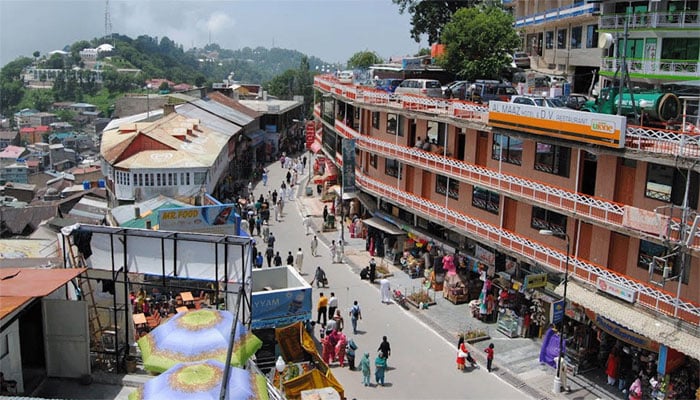
    Authorities in Murree have imposed Section 144 to maintain law and order during the Independence Day celebrations. According to an official notification, the restrictions came into effect on August 10 and will remain in place until August 16, 2026. The decision has been taken ahead of August 14 celebrations. Murree is expected to receive a large number of visitors during the holiday period. Officials have therefore introduced restrictions to manage crowds and prevent any situation that could affect public safety. Under the notification, access to key areas of the hill station will also be regulated. Only families will be allowed to visit Mall Road and GPO Chowk during the restriction period. Mall Road is among Murree’s busiest areas and usually attracts large crowds during public holidays. GPO Chowk is also a major gathering and commercial point. Limiting access to these locations is expected to help authorities control movement and reduce overcrowding. Security personnel will remain alert during the Independence Day period. Visitors have been advised to cooperate with law-enforcement personnel and follow the restrictions announced by the authorities. The administration is also expected to monitor the situation closely as visitor numbers increase. Any further measures required for crowd management and public safety may be taken during the restriction period.