National

  • | |

    Punjab University staff demand forensic audit, war…

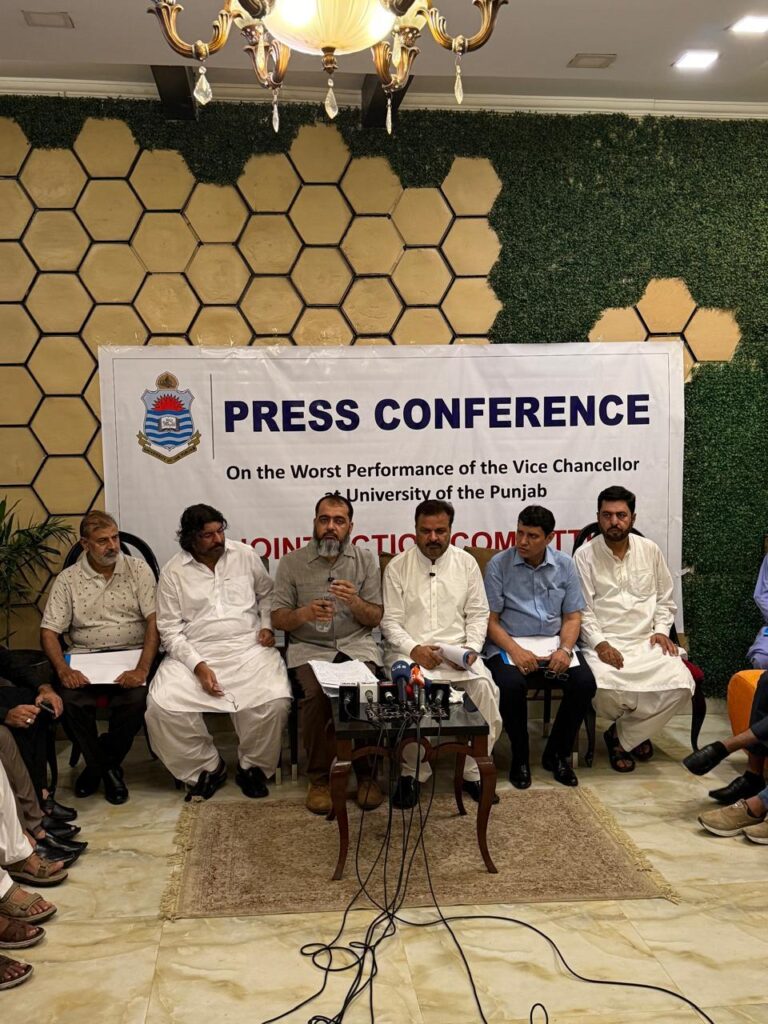
    Lahore: A joint platform representing teachers, officers, employees, and other stakeholders at the University of the Punjab has accused the university administration of driving the country’s oldest and largest public university into a deep financial, administrative, academic, and research crisis, while warning of a protest movement if their demands remain unaddressed within two weeks. Addressing a press conference in Lahore, the Joint Action Committee (JAC) said its purpose was not to target individuals but to present what it described as documented concerns regarding the university’s governance, financial management, academic standards, and research environment. The committee appealed to the Chancellor of the University, the Governor of Punjab, and the provincial government to intervene immediately to safeguard the institution.   The committee alleged that reserve funds worth approximately Rs4.88 billion, accumulated over many years, had been utilized within just 14 months without approval from the Finance and Planning Committee. It claimed that the university’s 2025–26 budget reflected a deficit of Rs2.57 billion and argued that, when combined with the depletion of reserves, the institution was effectively facing a financial shortfall of nearly Rs8 billion. It also questioned expenditures allegedly made beyond approved budget limits and called for greater transparency in financial decision-making. JAC further claimed that around Rs786 million belonging to various academic departments and institutes had been transferred to a central account under the One-Account Policy and later utilized, raising questions about whether the expenditures had received approval from the relevant statutory bodies. It also expressed concern over what it described as the first-ever financial deficit of nearly Rs350 million in the university’s self-supporting programmes. The committee also pointed to an apparent discrepancy in financial reporting, claiming that while the Finance and Planning Committee was informed of a Rs2.57 billion budget deficit at the end of the financial year, a subsequent Syndicate meeting was told the deficit stood at Rs1.6 billion. According to the committee, the variation requires a transparent explanation. Expressing concern over campus security, the committee referred to the killing of a student and the son of a university employee near the Vice Chancellor’s residence despite the presence of armed security personnel, arguing that the incident had raised serious questions about the effectiveness of the university’s security arrangements. On governance, the committee alleged that key statutory bodies, including the Senate, Deans’ Committee, Chairpersons’ Committee, Syndicate, and Selection Boards, had met only infrequently during the current administration, resulting in delays in appointments, promotions, and major policy decisions. It further criticized what it described as an excessive concentration of administrative authority in the office of the Director General (Students, Estate and Security), saying such an arrangement was inconsistent with principles of transparency, institutional balance, and accountability. The committee also referred to pending complaints and inquiries involving the office-holder, questioning the wisdom of assigning additional responsibilities while such matters remain unresolved. Highlighting academic concerns, JAC said the university had slipped from 542nd to 588th position in the QS World University Rankings and had also experienced a decline in the Higher Education Commission’s Office of Research, Innovation and Commercialization (ORIC) rankings. It alleged that faculty members were facing an atmosphere of insecurity and harassment, while research grants, travel support, and publication funding had effectively come to a halt. The committee claimed that although research grants of up to Rs1 million had been announced, no faculty member had yet received financial assistance under the initiative. It further alleged that several researchers had been forced to abandon nationally and internationally funded projects because of inadequate institutional support, damaging both research output and the university’s reputation with funding agencies. According to the committee, hostel accommodation remains unavailable for many students, including research scholars, while an increasing number of inquiry committees against faculty members and officers has created an atmosphere of fear and professional uncertainty. It also expressed concern over delays in permanent appointments to several senior administrative positions, saying the lack of regular appointments had weakened institutional efficiency. The Joint Action Committee demanded an independent forensic audit of the university’s financial affairs, including the use of reserve funds, deficit budgets, the One-Account Policy, and the finances of self-supporting programmes. It also called for the immediate removal of the Director General (Students, Estate and Security) under the principle of “one person, one post,” an end to what it described as retaliatory inquiries, restoration of a secure and professional working environment, immediate advertisement and transparent appointment of a permanent Registrar, payment of outstanding financial dues and benefits to teachers and employees, and the restoration of regular meetings of all statutory bodies in accordance with the University Act. The committee warned that if its demands are not addressed within two weeks, it will launch a phased protest campaign, including demonstrations outside the university, a sit-in outside the Punjab Assembly, publication of a white paper containing documentary evidence, and a boycott of classes that could ultimately disrupt academic activities at the historic institution. The university administration had not issued an official response to the allegations at the time this report was filed.

  • |

    Who controls Senate Housing Society? Senate panel raises alarm over alleged private takeover

    Islamabad: A Senate committee raised serious questions over the management of the Senate Employees Housing Cooperative Society after complaints emerged that Senate employees were still waiting to receive possession of their plots, while the society was allegedly controlled by people who were not its actual members. The Senate Sub Committee on Interior and Narcotics Control took strict notice of the complaints during a meeting held at Parliament House under the chairmanship of Senator Saifullah Abro. The committee questioned how a housing society created for Senate employees could remain outside the control of its own members. Senator Saifullah Abro directed authorities to take action against anyone found illegally managing the society and said the rights of Senate employees must be protected. “Only the legitimate members of the society should control its affairs,” the committee observed while demanding transparency and accountability. Officials from the Federal Investigation Agency (FIA) informed the committee that a criminal case had already been registered against the management of the Senate Housing Society on the orders of the Supreme Court of Pakistan. However, the committee stated the matter required further investigation and directed FIA officials to provide a fresh report on the society’s current management within one week. The committee members expressed concern over reports that employees who were supposed to benefit from the housing project had not yet received possession of their plots. They questioned why the employees were still facing difficulties despite the society being established for their welfare. The committee made it clear that no individual or private group would be allowed to control the housing society if they had no legal authority to do so. Senator Saifullah Abro said strict legal action would be taken against anyone involved in unlawful management or activities. The committee said its main goal was to ensure that Senate employees receive their rightful benefits and that the society operates according to the law. The committee will review the matter again after the FIA submits its updated report.

  • | |

    Pakistan stock exchange holds steady in mid-day tr…

      KARACHI: The Pakistan Stock Exchange (PSX) traded in positive territory during Thursday’s mid-day session, although gains remained limited as investors continued to adopt a cautious approach. The benchmark KSE-100 Index stood at 174,533.28 points, registering an increase of 103.36 points, or 0.06 percent, compared to the previous closing level of 174,429.92 points. The market started the day on a stronger note, with buying interest pushing the benchmark index higher in early trading. During the session, the KSE-100 climbed to an intraday high of 175,237.59 points, reflecting initial optimism among market participants. However, the upward momentum was short-lived as investors began booking profits, causing the index to retreat from its peak. At one stage, the benchmark slipped to an intraday low of 174,144.11 points before recovering modestly. Despite the fluctuations, the overall market remained in positive territory, indicating a degree of resilience. Trading activity was moderate throughout the first half of the session. By mid-day, total trading volume had reached approximately 60.14 million shares, while the value of traded securities stood at around Rs3.52 billion. These figures suggested that although investors were active, trading lacked the intensity typically associated with a strong bullish rally. Market participants remained watchful as the trading session continued, with investors responding cautiously to mixed economic and market signals. Analysts noted that the benchmark index moved within a relatively narrow range following its early gains, reflecting uncertainty about the market’s short-term direction. Rather than witnessing broad-based buying across sectors, trading activity appeared selective, with investors focusing on specific stocks instead of making aggressive market-wide investments. According to market observers, institutional participation remained relatively subdued during the session. Large investors largely stayed on the sidelines, resulting in lower overall momentum despite the benchmark index maintaining positive territory. The absence of strong institutional buying limited the market’s ability to sustain its early advance. Brokers also pointed out that profit-taking emerged after the KSE-100 Index approached its intraday high. Investors who had benefited from recent market gains chose to lock in profits, leading to some downward pressure on the index. This selling activity prevented the market from extending its early rally and kept price movements within a limited range. Although the market showed signs of stability during the mid-day session, analysts believed that investor sentiment remained cautious. The performance of key sectors and any fresh developments during the remainder of the trading day were expected to influence the market’s closing direction. A stronger participation from institutional investors or renewed buying in heavyweight stocks could provide additional support, while continued profit-taking might limit further gains. Overall, the Pakistan Stock Exchange demonstrated resilience by holding on to modest gains despite intermittent selling pressure. However, with trading remaining range-bound and investor confidence still measured, market participants continued to monitor developments closely before making significant investment decisions.

  • | |

    Pakistan rejects India’s statements at UN securi…

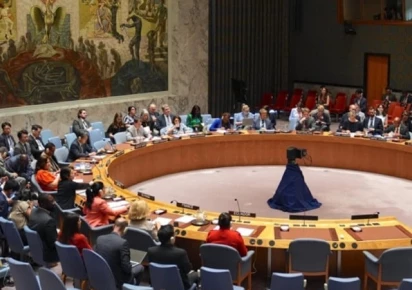
      ISLAMABAD: Pakistan has strongly rejected India’s remarks at the United Nations Security Council (UNSC) concerning the Indus Waters Treaty (IWT) and allegations of terrorism, describing them as an attempt to misrepresent facts and divert attention from issues raised by Pakistan. The response came after India’s Permanent Representative to the United Nations, Ambassador Harish Parvathaneni, accused Pakistan of supporting cross-border terrorism and suggested that the issue had affected bilateral cooperation under the Indus Waters Treaty. Pakistan dismissed these allegations during the UNSC’s High-Level Open Debate on “Natural Resource Governance: The Foundation of Peace, Security and Prosperity.” Speaking in a right of reply, Pakistan’s First Secretary to the UN, Ansar Shah, said India’s statement was misleading and represented a futile effort to distort the facts surrounding the treaty and regional security issues. He maintained that the Indus Waters Treaty remains legally valid and binding, rejecting India’s claim that the agreement could be placed in abeyance through unilateral action. Shah stated that the treaty contains no provision allowing either party to suspend or set it aside on its own. He referred to the Court of Arbitration’s August 2025 award, which, according to Pakistan, reaffirmed that the treaty continues to remain fully in force along with its dispute resolution mechanisms. He argued that India’s unilateral approach violated the terms of the agreement as well as established principles of international law. Pakistan also accused India of using shared water resources as a political tool. Shah said any attempt to weaponise water for political pressure or to restrict water access would amount to a serious breach of international legal obligations and norms. He added that such actions could undermine regional stability and pose risks to international peace and security, making the issue relevant to discussions at the Security Council. Responding to India’s allegations regarding terrorism, Shah rejected the accusations and instead claimed that India was attempting to conceal its own involvement in activities that Pakistan says have contributed to terrorism within its borders. He alleged that militant groups such as the Tehreek-e-Taliban Pakistan (TTP), the Balochistan Liberation Army (BLA), and the Majeed Brigade had been responsible for attacks that claimed the lives of thousands of Pakistani civilians and security personnel, including women and children. Pakistan reiterated its long-standing allegation that India supports and finances these groups, a claim India has consistently denied. Shah also referred to reports of alleged extraterritorial operations involving India, saying such incidents had raised international concerns. He further argued that India could not portray itself solely as a victim of terrorism while ignoring accusations directed against it. Addressing the situation in Indian Illegally Occupied Jammu and Kashmir, Shah said the people of the region continue to be denied their right to self-determination. He maintained that the territory remains internationally recognised as disputed and asserted that no unilateral measures could alter its legal or historical status. He also urged India to fulfil its obligations under the UN Charter and implement relevant UN Security Council resolutions. Earlier in the debate, Pakistan’s Permanent Representative to the United Nations, Ambassador Asim Iftikhar, reaffirmed that the Indus Waters Treaty remains effective and legally binding. He called on the UN Security Council to remain vigilant against the misuse or weaponisation of natural resources and encouraged greater use of preventive diplomacy, peaceful dispute resolution, monitoring mechanisms, and other international measures to prevent disputes over shared resources from escalating into broader conflicts.

  • | |

    Pakistan’s monsoon crisis deepens as heavy r…

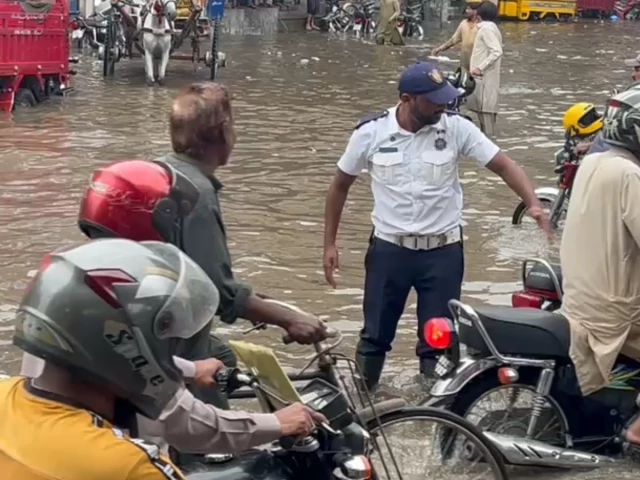
    Heavy monsoon rains continue to cause widespread devastation across Pakistan, with Punjab and Khyber-Pakhtunkhwa (K-P) suffering significant casualties and damage. According to disaster management authorities, at least 43 people have lost their lives and 177 others have been injured due to rain-related incidents, while officials have warned that more heavy rainfall and possible flooding are expected in the coming days. In Punjab, the Provincial Disaster Management Authority (PDMA) reported 21 deaths and 154 injuries linked to the ongoing monsoon season. Lahore has been among the worst-hit cities, receiving approximately 343 millimeters of rainfall over the past 48 hours. The intense downpour flooded roads, underpasses, and low-lying neighborhoods, causing severe traffic disruptions and exposing weaknesses in the city’s drainage infrastructure. Emergency drainage operations were launched across the provincial capital to remove accumulated rainwater. Most fatalities in Punjab resulted from roof and building collapses, which claimed 15 lives. Additional deaths were caused by lightning strikes, electrocution, and drowning. Authorities also reported damage to dozens of homes, highlighting the vulnerability of aging structures during extreme weather conditions. A tragic incident occurred in Lahore when a 19-year-old motorcyclist was critically injured after being electrocuted while riding through flooded streets in the Chungi Amar Sidhu area. The victim was immediately shifted to Lahore General Hospital for emergency treatment. Heavy rainfall also forced the closure of several underpasses and roads in DHA and other parts of the city due to waterlogging, while traffic was diverted through alternative routes. In addition, rain damaged an 11kV electricity line, causing temporary power outages in affected areas. The city also witnessed the formation of multiple sinkholes after continuous rainfall weakened road surfaces. Traffic authorities sealed off the affected locations, redirected vehicles, and coordinated with municipal departments to begin urgent repair work. Earlier, two teenage brothers lost their lives when their motorcycle skidded on a rain-soaked road near Lahore while traveling toward Kasur. Officials attributed the accident to slippery road conditions and urged motorists, particularly motorcyclists, to reduce speed, wear helmets, and avoid unnecessary travel during heavy rainfall. Meanwhile, Khyber-Pakhtunkhwa recorded 22 deaths and 23 injuries in rain-related incidents. The victims included men, women, and several children. The province also suffered damage to 37 houses, with eight completely destroyed and the remaining partially damaged. The affected districts include Peshawar, Mardan, Nowshera, Abbottabad, Mansehra, Bajaur, Swabi, and several others. The K-P PDMA stated that rescue teams, district administrations, and emergency services are working together to provide relief and assistance to affected families. Although river water levels currently remain within normal limits, authorities have placed all districts on high alert due to forecasts of continued heavy rainfall. The Pakistan Meteorological Department has warned that another spell of widespread rain is expected across Punjab, Khyber-Pakhtunkhwa, Islamabad, Rawalpindi, and Kashmir over the next 24 hours. Officials fear urban flooding, flash floods in local streams, and landslides in hilly regions such as Murree and Galiyat. Residents have been advised to avoid unnecessary travel, stay away from damaged buildings and flood-prone areas, and follow official safety advisories to minimize further loss of life and property.

  • | |

    Ishaq Dar urges global support for gulf peace effo…

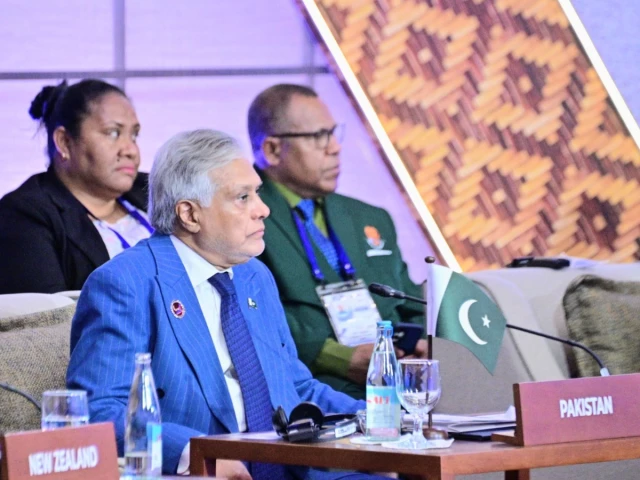
    Deputy Prime Minister and Foreign Minister Ishaq Dar has urged the international community to build on recent diplomatic progress in the Gulf region, emphasizing that the opportunity to achieve lasting peace should not be wasted. Speaking at the 33rd ASEAN Regional Forum (ARF) Ministerial Meeting in Manila, Dar stressed the importance of continued dialogue, diplomacy, and constructive engagement to maintain regional stability. Dar, who arrived in the Philippines with a high-level delegation, is attending the ARF Plenary Meeting and holding bilateral discussions with foreign ministers on the sidelines of the forum. During his address, he noted that recent developments in the Gulf have had far-reaching consequences for countries across the region, making it essential for all stakeholders to work together to prevent further instability. The foreign minister highlighted Pakistan’s role in promoting peace by facilitating diplomatic efforts that contributed to a ceasefire in the Gulf. He referred to the Islamabad Talks, held after a gap of 47 years, followed by the signing of the Islamabad Memorandum of Understanding in Bürgenstock. According to Dar, these initiatives reflected Pakistan’s commitment to peaceful conflict resolution and regional stability. He expressed gratitude to the United States, Iran, Gulf nations, and other international partners for placing their trust in Pakistan’s diplomatic efforts. Describing the recent progress as the result of patient negotiations and dialogue, Dar warned that these achievements must be safeguarded through continued engagement rather than allowing tensions to resurface. Dar reaffirmed Pakistan’s commitment to supporting every initiative aimed at restoring peace and security in the region. He urged all parties to exercise restraint, fulfill their commitments, and prioritize diplomatic solutions over confrontation. He also expressed hope that ongoing negotiations would help restore normal shipping operations through the Strait of Hormuz, a vital international trade route. At the beginning of his speech, Dar thanked the Philippines for hosting the ministerial meeting and reaffirmed Pakistan’s support for dialogue, mutual respect, and peaceful coexistence. He described the ASEAN Regional Forum as a key platform for regional security cooperation and welcomed the adoption of the Manila Plan of Action (2026–2036), pledging Pakistan’s support for its successful implementation. Addressing South Asian affairs, Dar reiterated Pakistan’s position that the unresolved Jammu and Kashmir dispute remains a major source of regional instability. He called for a peaceful resolution based on the United Nations Charter, relevant UN Security Council resolutions, and the wishes of the Kashmiri people. He also voiced concerns over India’s decision to suspend the Indus Waters Treaty, describing the move as a unilateral action that could threaten Pakistan’s water security and the livelihoods of millions of its citizens. Dar urged the international community to support international law and encourage peaceful solutions to regional disputes. Speaking on the humanitarian crisis in Gaza, Dar described the situation as deeply concerning and called for immediate international action to prevent further suffering. He reaffirmed Pakistan’s longstanding support for the Palestinian people’s right to self-determination and the establishment of an independent Palestinian state based on the pre-1967 borders, with Al-Quds Al-Sharif as its capital. Concluding his address, Dar highlighted Pakistan’s sacrifices in the global fight against terrorism, noting that the country has lost more than 80,000 lives and suffered significant economic losses. He reaffirmed Pakistan’s determination to continue working with the international community to promote peace, stability, and security both regionally and globally.

  • | |

    District judge, security guard killed in gun attac…

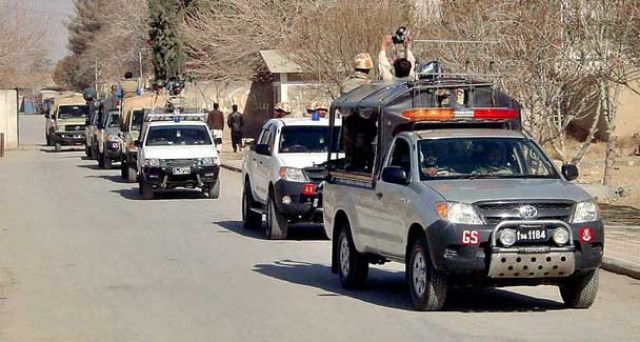
    A district and sessions judge and his security guard were killed after unidentified gunmen opened fire on their vehicle on the national highway in Balochistan’s Mastung district on Thursday. The attack also left an additional sessions judge and another passenger seriously injured, according to local authorities. Deputy Commissioner Bahram Saleem said District and Sessions Judge Abdul Hakeem Kakar was travelling from Quetta to Mastung when armed assailants ambushed his vehicle. The attackers opened fire, killing Judge Kakar and his security guard on the spot. Additional Sessions Judge Tariq Lashari and another individual sustained critical injuries and were immediately shifted to a nearby hospital, where they continue to receive medical treatment. Following the incident, security forces and law enforcement agencies sealed off the area and launched a large-scale search operation. Checkpoints were established along key routes in an effort to track down and arrest those responsible for the attack. The incident drew strong condemnation from Pakistan’s political leadership. President Asif Ali Zardari expressed deep sorrow over the loss of lives and offered prayers for the recovery of the injured. He stated that anti-state elements backed by foreign interests would never succeed in destabilizing Pakistan and reaffirmed the country’s commitment to eliminating terrorism. He stressed that terrorist groups and those supporting them could not weaken Pakistan’s institutions or its determination to maintain peace. Prime Minister Shehbaz Sharif also condemned the attack, calling it another attempt by anti-state forces to undermine national stability. He reiterated the government’s resolve to eliminate terrorism in all its forms and ensure that those responsible are brought to justice. Balochistan Chief Minister Sarfraz Bugti described the attack as a direct assault on the state and its institutions. He vowed that both the attackers and those facilitating them would face strict legal action. According to the chief minister, the sacrifice of those protecting the law would not be forgotten, and the government would intensify operations against terrorist networks across the province. He further emphasized that there would be no safe haven for militants in Balochistan and that the state’s authority would be upheld at all costs. Special Assistant to the Chief Minister for Information and Political Affairs, Shahid Rind, also denounced the attack, calling the killing of a judge and his security guard a deeply tragic incident. He said targeting members of the judiciary and legal community was part of a broader attempt to weaken the rule of law but insisted such efforts would fail. He added that the provincial government had directed authorities to provide the best possible medical care to the injured while extending full support to the victims’ families. Balochistan Home Minister Mir Ziaullah Langove expressed grief over the attack and ordered an immediate investigation. He directed the Inspector General of Police and the provincial commissioner to submit a detailed report and ensure the swift arrest of those responsible. He reaffirmed that protecting citizens and state institutions remains the government’s highest priority. The Balochistan Bar Council strongly condemned the attack, describing it as an assault on the judiciary, the legal profession, and the rule of law. In protest, the council announced a two-day boycott of court proceedings and declared three days of mourning. Lawyers across the province will wear black armbands while appearing before courts. The council also demanded enhanced security for judges, lawyers, and court staff, reaffirming the legal community’s commitment to defending justice and standing united against terrorism.

  • Govt probes drug price hikes

    The Pakistani government has asked pharmaceutical companies to explain steep increases in the prices of deregulated medicines after concerns over rising healthcare costs. According to sources the prices of some deregulated medicines have increased by as little as 76.8% and by as much as 1,621%, prompting government action. The Drug Regulatory Authority of Pakistan (DRAP) has issued show cause notices to 37 pharmaceutical companies that raised the prices of certain medicines by more than 50%. Federal Health Minister Mustafa Kamal said he had directed officials to issue notices to the companies. They have been asked to explain why they increased medicine prices by such large amounts. Sources said that 12 of the 37 companies have already submitted replies regarding price increases for 35 medicines. Two companies have requested more time to respond. However 23 companies have not yet replied to the notices. Reminder notices have now been sent to them. Officials say the government will decide its next steps after reviewing responses from all the pharmaceutical companies.

  • |

    Pakistan to tour England for five-match ODI series ahead of 2027 World Cup

    Pakistan’s men’s cricket team will tour England in May 2027 for a five-match One-Day International (ODI) series, offering both sides an important opportunity to fine-tune their preparations ahead of the ICC Men’s Cricket World Cup later that year. The Pakistan Cricket Board (PCB) has officially confirmed the tour schedule, with matches set to be played at five different venues across England. The series will begin on 15 May 2027 in Southampton, where the opening ODI will be played. The second match is scheduled for 19 May in Manchester before the teams travel to Leeds for the third ODI on 21 May. Chester-le-Street will host the fourth match on 23 May, while the fifth and final ODI will be played in Cardiff on 26 May, concluding Pakistan’s limited-overs tour. The five-match series is expected to play a significant role in both teams’ preparations for the ICC Men’s Cricket World Cup 2027, which will be jointly hosted by South Africa, Zimbabwe, and Namibia from 4 October to 21 November. With the tournament only a few months away, the ODI series will provide players with valuable match practice and allow team management to evaluate combinations, strategies, and player form before the global event. Pakistan are currently involved in a two-match Test series against the West Indies. After completing that assignment, the national team will travel to England next month for a three-match Test series scheduled to take place between 19 August and 13 September. The 2027 ODI tour will further strengthen the long-standing cricket rivalry between Pakistan and England and provide another competitive contest between two experienced international sides. According to the latest ICC Men’s ODI Team Rankings, Pakistan are currently placed fifth, while England occupy seventh position. Both teams have consistently remained among the leading sides in one-day cricket, making the upcoming series an important contest as they build momentum ahead of the World Cup. The last time Pakistan toured England for an ODI series was in 2021, when the two teams played a three-match contest. Although Pakistan did not win the series, then-captain Babar Azam produced an outstanding batting performance. He finished as the leading run-scorer with 177 runs in three innings, including a memorable knock of 158 in the third ODI. His performance was widely praised and remains one of Pakistan’s finest individual displays in England in recent years. Cricket supporters from both countries are expected to eagerly follow the 2027 series, which promises exciting competition at some of England’s most famous cricket venues. Beyond the results, the series will serve as a crucial testing ground for both squads as they prepare for the challenges of the ICC Men’s Cricket World Cup. With experienced players and emerging talent expected to feature, the five-match ODI series is likely to provide high-quality cricket and valuable insights for both teams before they head to the biggest tournament in the one-day format.

  • | |

    PM, Dar hand over official gifts to Toshakhana

    Prime Minister Shehbaz Sharif, Deputy Prime Minister Ishaq Dar and several other senior government officials received a total of 21 official gifts during the April to June period, according to the latest Toshakhana record released by the Cabinet Division. The official record shows that the prime minister and deputy prime minister were among the senior officeholders who received gifts from foreign dignitaries and officials during official meetings and state engagements. In line with the Toshakhana rules, both leaders deposited all the gifts with the Toshakhana instead of retaining them. According to the Cabinet Division, Prime Minister Shehbaz Sharif received several gifts, including a decorative sugar bowl, a luxury pen, a model of Masjid-e-Nabawi (PBUH), a shield and a tie. He also received a model of the Chinese Space Station, a commemorative cup, a wristwatch and another shield during separate official engagements. The records further show that Deputy Prime Minister Ishaq Dar received a Chinese leather belt, a model of an Egyptian statue and a pair of cufflinks as official gifts. These items were also submitted to the Toshakhana in accordance with the prescribed procedure. The Cabinet Division said all gifts received by the prime minister and deputy prime minister have been deposited with the Toshakhana. It added that the process of assessing the monetary value of the gifts is currently in progress. The estimated value will be determined before the record is finalized, following the standard rules governing official gifts received by public officeholders. The Toshakhana maintains a record of gifts presented to government officials by foreign leaders, diplomats and visiting delegations during official visits and meetings. Under the applicable rules, such gifts must be declared and deposited, while their valuation is carried out through the prescribed official mechanism.