
National

  • | | |

    Pakistan rejects EU GSP+ report, defends reform re…

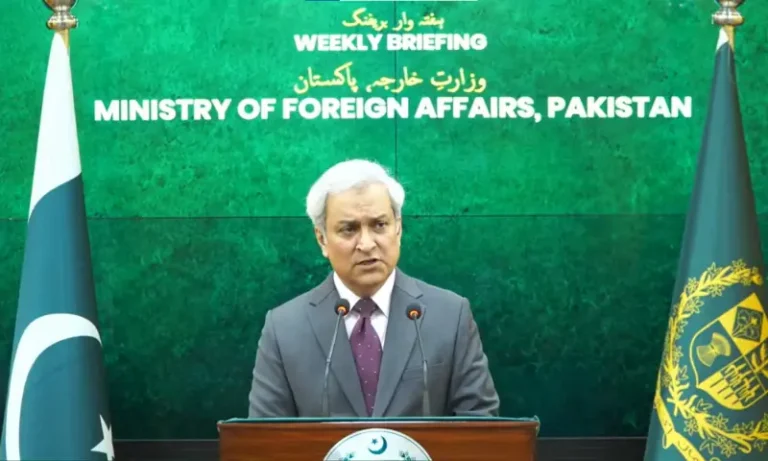
    Pakistan has expressed disappointment over the European Union’s latest assessment of the country’s performance under the Generalised Scheme of Preferences Plus (GSP+), saying the report does not accurately reflect the scale of reforms implemented over the past several years. Speaking during the weekly media briefing, Foreign Office spokesperson Tahir Andrabi said Pakistan appreciates that the report acknowledges the country’s legislative progress and continued implementation of the 27 international conventions linked to the GSP+ programme. However, he said the overall assessment presents an unbalanced picture by placing greater emphasis on areas where progress has been slower while overlooking broader reforms. Andrabi said Pakistan has introduced wide-ranging legal, administrative, and institutional reforms since joining the GSP+ scheme in 2014. He maintained that these reforms have strengthened governance, improved labour protections, promoted human rights, and supported sustainable economic development. The spokesperson described GSP+ as one of the most important pillars of Pakistan’s economic partnership with the European Union. He said the preferential trade arrangement has played a significant role in boosting exports, creating employment opportunities, increasing women’s participation in the workforce, reducing poverty, and supporting economic growth. He reaffirmed Pakistan’s commitment to constructive dialogue with the European Commission and other European institutions. According to Andrabi, the government remains fully committed to implementing international conventions and continuing reforms aimed at meeting its obligations under the GSP+ framework. He also highlighted that Pakistan’s cooperation with the European Union extends beyond trade. Both sides continue to work together in areas including climate resilience, migration, regional security, counterterrorism, development, connectivity, education, and economic cooperation. During the same briefing, the Foreign Office also rejected allegations made in a recent Amnesty International report regarding Pakistani military strikes in Kabul earlier this year. Andrabi said Pakistan completely rejects the claims, arguing that the report contains serious allegations without credible evidence. He maintained that any military action taken by Pakistan was carried out solely in self-defence and targeted terrorist hideouts and logistical facilities. He said the operations were conducted only after other options had been exhausted and fully complied with the principles of necessity, distinction, proportionality, and precaution under international law. He added that Pakistan exercised restraint despite facing repeated cross-border terrorist attacks. The spokesperson urged the international community to focus greater attention on militant groups operating from Afghan territory. He said organisations such as the Tehreek-i-Taliban Pakistan (TTP), the Baloch Liberation Army (BLA), and other affiliated groups continue to maintain bases and carry out attacks against Pakistan from across the border. Andrabi called on the Afghan Taliban authorities to fulfil their international commitments by preventing terrorist organisations from using Afghan territory for attacks against neighbouring countries. He said the continued presence of militant groups poses a serious threat to regional peace and security. The Foreign Office reiterated that Pakistan reserves the right to take all necessary measures to defend its sovereignty, territorial integrity, and the safety of its citizens. Andrabi said no responsible state can ignore repeated attacks on its people and security forces.
  • | |

    Three accused in doctor Akash murder case eliminat…

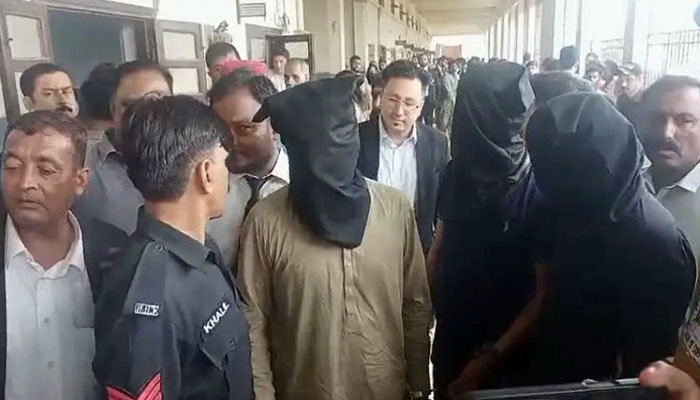
    Three suspects arrested in the murder case of young doctor Akash were killed during a police operation in Karachi after an alleged exchange of fire between law enforcement officials and criminal suspects. According to the Special Investigation Unit (SIU), the incident took place in Umar Brohi Goth area of Gulshan-e-Maymar. Police officials said the arrested suspects had provided information about their escaped accomplices, following which a raid was carried out to arrest the remaining members of the group. During the operation, the alleged criminals opened fire on police teams. Officials said a police officer was also injured in the firing. The SIU claimed that the three suspects already arrested in connection with Dr Akash’s murder were killed after being hit by bullets fired by their own accomplices during the clash. The case relates to a robbery incident in Karachi’s Clifton area on July 13. Dr Akash was killed when armed suspects opened fire outside a bank during a cash-snatching attempt. Police said the suspects had targeted people carrying large amounts of cash. During the incident, the criminals allegedly took away Rs25 million from a total amount of Rs50 million withdrawn from the bank. Investigators later found that the suspects arrested in the case were allegedly involved in other criminal activities, including robberies outside banks and attacks on traders in Karachi. The police investigation also revealed the possible involvement of an unidentified woman in the robbery case. Officials said further investigation was being carried out to determine her role and identify other members of the criminal network. Authorities said efforts are continuing to trace the remaining suspects linked to the gang. The police have vowed to take action against individuals involved in organised street crimes and cash robbery incidents across the city.

  • | |

    Sherry Rehman accuses India of using flood situati…

    Pakistan Peoples Party Senator Sherry Rehman has criticised India’s water policies, accusing New Delhi of using the flood situation as a tool of “water aggression” against Pakistan. In a statement, Sherry Rehman said India was adopting a contradictory approach by threatening to suspend the Indus Waters Treaty while also releasing floodwater towards Pakistan. She claimed that India opened the gates of the Salal Dam, putting millions of Pakistanis at risk of flooding. She stressed that river water management should be handled responsibly and should not become a source of conflict between the two countries. The senator said India’s alleged failure to provide timely information about water flows had created uncertainty, particularly regarding the flow of the Chenab River. She warned that sudden changes in the river’s water levels could affect Pakistan’s irrigation system and agriculture. The Chenab River supports millions of acres of farmland in Punjab, and any unexpected increase or decrease in water flow could damage crops and impact farmers’ livelihoods. Sherry Rehman said Pakistan’s agricultural economy depends heavily on the proper management of river systems. She added that uncertain water policies could increase risks for farmers and create challenges for the country’s water security. She urged India to respect existing water agreements and follow international commitments. She said western rivers under the Indus Waters Treaty cannot be diverted, stored, or transferred in a manner that affects Pakistan’s water supply.

  • | |

    Dar holds key talks with Australia, Oman on region…

    Deputy Prime Minister and Foreign Minister Ishaq Dar held important diplomatic meetings in Manila during the ASEAN Regional Forum 2026, discussing regional security, global developments, and ways to strengthen Pakistan’s relations with other countries. Dar met Australian Foreign Minister Senator Penny Wong and reviewed the current state of Pakistan-Australia relations. Both sides agreed to further expand cooperation through regular high-level contacts and closer engagement. The two foreign ministers also discussed recent regional tensions and international challenges. They stressed that dialogue, diplomacy, and respect for international law are essential for achieving long-term peace and stability. Australia appreciated Pakistan’s efforts to support dialogue and reduce tensions in the region. Both countries agreed to continue cooperation on matters of mutual interest. During another meeting, Dar held talks with Oman’s Foreign Minister Sayyid Badr bin Hamad Al Busaidi. The two leaders expressed satisfaction over the positive progress in Pakistan-Oman relations and agreed to strengthen bilateral cooperation. The discussions focused on increasing trade, promoting investment, improving business-to-business links, expanding people-to-people contacts, and enhancing cooperation through international forums. Both sides also exchanged views on regional and global developments. They emphasised the need to uphold ceasefires, respect international law, and work together to promote peace and security. Oman praised Pakistan’s constructive role in encouraging dialogue and supporting regional stability. The two ministers agreed to remain in close communication on important issues. Earlier in Manila, Dar also met senior officials of the Asian Development Bank and called for faster progress on financing for Pakistan’s Main Line-1 railway project. He highlighted the long-standing partnership between Pakistan and the development institution and discussed expanding cooperation in different sectors. Dar also held separate meetings with Russian Foreign Minister Sergei Lavrov and Bangladesh Foreign Minister Khalilur Rehman. The discussions covered bilateral relations, trade, energy cooperation, connectivity, and future diplomatic engagement. The ASEAN Regional Forum has brought together foreign ministers and senior officials from several countries to discuss major global and regional challenges, including security issues, energy supplies, trade, food security, and ongoing conflicts.

  • |

    PERA’s proposed training academy puts 200 acres of fertile farmland, homes and wildlife breeding facilities at risk

    CHAKWAL: A proposed training academy of the Punjab Enforcement and Regulatory Authority (PERA) near Kallar Kahar has sparked concern among local residents, farmers and wildlife conservationists, as the site selected for the project comprises around 200 acres of fertile agricultural land, several homes, livestock farms and wildlife breeding facilities. The Punjab government has allocated Rs6.786 billion for the construction of the PERA training academy near Kallar Kahar, while Rs10 million has reportedly been released for the current financial year.     The proposed site, located along the Kallar Kahar-Talagang Road, was selected despite the availability of alternative locations, raising questions about the decision to choose an area that is not only inhabited but also serves as an important habitat for wildlife. The move has also left local PML-N MNA Sardar Ghulam Abbas and officials of the Punjab Wildlife Department apparently unable to prevent the proposed construction at the selected site. For 91-year-old Dost Muhammad, who has spent his life overcoming hardships, the latest development has become a source of deep anxiety. His family of around 40 members, along with their livestock, now faces the prospect of eviction from their ancestral land following a recent demarcation carried out for the proposed academy.   A few days ago, Dost Muhammad and his sons were constructing a cattle shed on their land. However, they have now abandoned the work after officials from the Punjab Revenue Department marked the boundaries of the proposed site. According to a letter available with Minute Mirror, PERA had requested the deputy commissioner of Chakwal on June 9 to initiate the process of acquiring land at a “suitable location in the pleasant hilly area of Kallar Kahar” for the construction of its training academy.   Following the request of the PERA director general, the district administration identified 1,568 kanals, or approximately 200 acres, along the Kallar Kahar-Talagang Road. Residents say the demarcation was carried out without adequately considering that the land is fertile agricultural property and is home to around 20 families. The area also serves as an important habitat for wildlife and contains two wildlife breeding farms and a private game reserve. Dost Muhammad is not the only resident facing uncertainty. At least 19 other families living in the area are also reportedly at risk of losing their homes. The demarcation has also raised concerns among wildlife conservationists, as two breeding farms for urial, chinkara and partridge have reportedly fallen within the proposed project area. “We are six brothers. We purchased 24 kanals of land in 2018 and constructed our houses after obtaining a loan of Rs3 million under a scheme launched by Chief Minister Maryam Nawaz Sharif. Now our houses are facing demolition,” said Raja Mohammad Farooq, who recently completed construction of his house. The issue is particularly serious for farmers in the hilly Kallar Kahar tehsil, where cultivable land is already limited. “I own only four acres of land, from which I produce wheat for my family and fodder for my livestock throughout the year. My entire four acres have been included in the demarcated area. If the proposed academy is built on my land, where will I get wheat for my family and fodder for my livestock?” asked 62-year-old Ghulam Shabbir, a resident of Ratta village. Imtiaz Ahmed, who operates a cement-block plant and also keeps a flock of sheep, is similarly worried about his livelihood. “I sold four rams this year, but now my farm and plant are at risk of demolition,” he said anxiously. Malik Mukhtar Haider, who has been running a community-based conservation (CBC) initiative and two wildlife breeding farms for several years, said he had devoted his life to protecting wildlife and the natural environment. “I have spent my entire life working for the protection of wildlife and the natural environment, but the proposed construction of the PERA training academy has put my decades-long efforts at risk,” he said. Officials of the Punjab Wildlife Department have also expressed surprise over the selection of the site, questioning how an area serving as a wildlife refuge could have been chosen for the construction of a training academy. “The demarcated area is not only an important habitat for various wildlife species, including the rare Punjab urial, but also contains two breeding farms and flora and fauna that have been nurtured through more than two decades of sustained efforts,” Assistant Chief Wildlife Ranger Abid Hussain told Dawn. He questioned the rationale behind selecting the area and said the development appeared to undermine the conservation efforts being carried out by Malik Mukhtar Haider through his CBC initiative and breeding farms. “If government institutions themselves are bent on destroying wildlife habitats, then who will protect them?” he asked. Meanwhile, the district administration and local parliamentarians appear to have been unable to halt the proposed construction at the selected site. When contacted, Deputy Commissioner Chakwal Sara Hayat said the district administration had proposed three possible locations, but PERA had selected the present site. “We have to comply with the directions issued by the higher authorities,” she said. The proposed project has thus triggered a debate over the selection of public land for government infrastructure, with residents questioning why fertile agricultural land, inhabited settlements and an established wildlife habitat were chosen despite the reported availability of alternative sites.

  • |

    153mm rain puts Gujrat on high alert as new drainage interventions help avert major urban flooding

    GUJRAT: Torrential monsoon rain measuring 153 millimetres battered Gujrat, triggering a district-wide rain emergency and keeping the civil administration, Water and Sanitation Agency (WASA) and other civic departments on high alert. Despite the intense downpour, officials claimed that newly completed drainage interventions and a coordinated emergency response helped prevent widespread urban flooding in the city. Deputy Commissioner Noor-ul-Ain Qureshi remained in the field throughout the operation, inspecting drainage arrangements and monitoring the performance of five newly completed interventions executed by the Irrigation Department under the Punjab Development Programme. The projects, completed in a record five months, were designed to protect Gujrat from sheet flow entering the city from the Bhimber and Azad Jammu and Kashmir (AJK) side during heavy monsoon rains. According to the district administration, each of the five newly constructed drains has the capacity to carry 200 cusecs of water, diverting the incoming sheet flow towards Bhinder Nullah and Halsi Nullah. Officials described the projects as a significant step towards improving Gujrat’s flood resilience, saying they played an important role in reducing pressure on the city’s drainage network during the latest spell of heavy rain. Meanwhile, Managing Director WASA Gujrat Kashan Hafeez Butt supervised rain emergency operations across the city, with 20 emergency teams deployed in the agency’s three operational zones. Dewatering sets, suction machines and heavy machinery remained operational throughout the day to remove accumulated rainwater from roads, markets and residential areas. Among the worst-hit locations was Madina Bazaar Staff Gali, where rainwater accumulated to nearly one foot. WASA teams carried out continuous pumping operations before clearing the area. Water also collected at Dhakki Chowk, where approximately six inches of standing water was removed after several hours of drainage work. Officials said traffic on Rehman Shaheed Road, Shadman Colony and other major arteries remained largely uninterrupted due to the timely deployment of emergency teams. Field staff continued monitoring low-lying areas to ensure rainwater did not accumulate again as intermittent showers continued. Residents acknowledged that several streets experienced temporary waterlogging during the peak of the rainfall but said conditions improved as emergency crews reached affected areas. Commuters reported slow-moving traffic in parts of the city during the morning because of reduced visibility and rainwater on roads. The district administration maintained close coordination with WASA, the Irrigation Department, Rescue 1122 and other relevant agencies throughout the operation. Officials said emergency personnel would remain on alert as further monsoon rains are forecast, with machinery stationed at vulnerable locations for immediate deployment if required. Authorities also appealed to residents to cooperate by avoiding the disposal of garbage into storm-water drains, warning that blocked drainage channels significantly reduce the efficiency of the drainage system during heavy rainfall. The latest monsoon spell once again tested Gujrat’s urban drainage infrastructure. However, officials maintained that the combination of newly completed irrigation works, continuous field monitoring by the deputy commissioner and round-the-clock WASA operations enabled the city to withstand the 153mm rainfall without any major disruption to traffic or public life. The district administration said all departments would continue monitoring weather conditions and remain prepared to respond swiftly to any further rain-related emergencies.

  • |

    CM Murad decides to transform Sindh PPP Unit into private limited company

    KARACHI : Sindh Chief Minister Syed Murad Ali Shah has decided to restructure the Public-Private Partnership (PPP) Unit into a private limited company to build a more autonomous, commercially agile and investment-oriented PPP ecosystem for the next phase of development in the province. The decision was taken at a meeting chaired by the chief minister at the CM House on Wednesday. The meeting was attended by Special Assistant to the CM on Investment Syed Qasim Naveed, Chief Secretary Asif Hyder Shah, Principal Secretary to CM Agha Wasif, Planning and Development Board Chairman Najam Shah, Finance Secretary Fayaz Jatoi, Transport Secretary Asad Zamin and other senior officials. The chief minister was informed that Sindh’s PPP programme has emerged as Pakistan’s leading sub-national PPP initiative, with a growing portfolio of projects in roads and bridges, transport, economic zones, information technology, energy, water, livestock, education, health and environmental sectors. The programme has received international recognition at platforms including the UNECE PPP Forum and The Asset Infrastructure Awards. Sindh’s PPP programme was also ranked sixth in Asia by The Economist in 2018. The PPP Unit has additionally provided technical and legal support to other provinces for strengthening their PPP frameworks and project structuring. The meeting noted that the Unit’s transition into a private limited company would enable it to promote and facilitate PPP projects more effectively, assist procuring agencies, strengthen departmental PPP nodes, formulate and implement policies and guidelines, build capacity and monitor portfolio performance. The chief minister directed that the proposed institutional transformation be pursued to remove operational bottlenecks, retain specialised professionals and ensure continuity in PPP project development and implementation. He emphasised the need for a strong institutional structure capable of providing timely technical, financial and legal support to departments and implementing agencies. Mr Shah was informed that the existing PPP Unit faced challenges in retaining skilled staff because of limited competitive compensation and incentives. The absence of dedicated project implementation units and project directors in certain departments was also affecting the pace and quality of project delivery. The proposed PPP Private Limited Company will have greater commercial flexibility to undertake strategic activities, make equity investments where required, mobilise capital through financial instruments and support project financing. It will also be able to develop diversified revenue streams beyond government funding, subject to the approval and oversight of its board. The chief minister underscored that the company must operate with robust governance, transparent performance review mechanisms and clear statutory oversight. He directed that the new structure should strengthen PPP nodes in provincial departments, empower competent officers and ensure that projects are processed efficiently without compromising accountability. The meeting concluded that the restructuring would help improve administrative efficiency, facilitate innovative financing, enhance investor confidence and accelerate the delivery of development projects. The chief minister said the objective was to establish a capable, sustainable and responsive PPP institution that could contribute meaningfully to Sindh’s progress and prosperity.

  • |

    SEF, Sindh Boy Scouts launch initiative to expand scouting across Foundation-assisted schools*

    KARACHI: The Sindh Education Foundation (SEF), Government of Sindh has initiated a collaboration with the Sindh Boy Scouts Association by holding a Group Scout Leadership Seminar aimed at promoting leadership, discipline and community service among students enrolled in Foundation Assisted Schools. The seminar, held at the Sindh Boy Scouts Association headquarters in Karachi, brought together representatives from 32 Foundation Assisted Schools, including head teachers, faculty members and students. The event was attended by SEF Managing Director Gahanwer Ali Laghari, Deputy Managing Director Shahpara Rizvi, Regional Head Karachi Ashfaque Hussain Meerani, senior directors, assistant directors and other officials. The Sindh Boy Scouts Association was represented by Provincial Scout Secretary Syed Akhter Meer, and other office-bearers. Addressing the seminar, Provincial Scout Secretary Syed Akhter Meer welcomed the participation of SEF schools and said introducing students to the history and values of scouting would encourage them to become part of a global movement focused on leadership, character building and service. He also recalled the support extended to the scouting movement by the late Prof Dr Anita Ghulam Ali during her tenure at SEF, saying it was encouraging to witness the Foundation continuing the same commitment under the leadership of Managing Director Gahanwer Ali Laghari. Participants were also briefed on the history of the scouting movement in Sindh, its achievements and future roadmap through a presentation highlighting the organisation’s contribution to youth development. Former senior bureaucrat Ghulam Ali Pasha said leadership and discipline could not be developed through classroom education alone, stressing that scouting provides young people with practical exposure to teamwork, responsibility and community service. He described such initiatives as essential for preparing students to become confident and responsible leaders. Speaking on the occasion, SEF Managing Director Gahanwer Ali Laghari said the Foundation’s mandate extended beyond improving access to education and academic outcomes. “Alongside quality education, we want our students to develop leadership, discipline and a sense of responsibility. Through scouting, they will have an opportunity to become part of an international movement that promotes these values,” he said. Laghari announced that SEF and the Sindh Boy Scouts Association would jointly organise a series of scouting activities across Foundation Assisted Schools throughout the province. He said the initiative had been launched with schools in Karachi and would gradually be expanded to all SEF-supported schools. “Our objective is to engage the entire network of Foundation Assisted Schools, and we are hopeful that within the next one-and-a-half years, scouting activities will be introduced across the province,” he added. The initiative is expected to provide students with greater opportunities for leadership development, teamwork and community engagement alongside their academic education.

  • |

    PMD issues high flood alert as Head Marala records over 205,000 cusecs inflow

    SIALKOT: The Pakistan Meteorological Department (PMD) has issued a High Flood Level Advisory for the River Chenab, warning that high water flows are expected to persist over the next 6 to 8 hours before gradually receding as rainfall over the upper catchments continues to decrease. According to the latest flood monitoring data, Head Marala has reached a high flood level, with water inflow recorded at 205,488 cusecs and outflow at 187,388 cusecs, indicating sustained high water levels in the Chenab River system. The Flood Forecasting Division (FFD) said the high flood situation has been caused by heavy rainfall across the upper Chenab catchment, as observed through hydro-meteorological data and the Sialkot weather radar. Although rainfall has now weakened across the major sub-catchments, river flows are expected to remain high for the next several hours before gradually declining. The advisory states that the River Chenab at Marala will likely remain at High Flood Level for the next 6 to 8 hours, provided current rainfall trends continue. It further warns that Khanki and Qadirabad are expected to reach High Flood Level within the next 10 to 12 hours. Besides the Chenab, the Jammu Tawi River is currently experiencing a medium-level flood, with a recorded inflow of 11,868 cusecs, while the Manawar Tawi is flowing at a low flood level, carrying 8,123 cusecs of water. The PMD has cautioned that residents living in riverine (Kacha) areas adjacent to the Chenab may face hazardous conditions and should avoid unnecessary movement near riverbanks and flood-prone locations until water levels begin to recede. The advisory also warns that standing crops, fodder fields and livestock in low-lying floodplain areas remain vulnerable to inundation. Low-lying roads, river crossings, embankment approaches and transport routes close to the river may also experience localized disruptions due to the elevated water levels. The Flood Forecasting Division said it will continue to closely monitor hydro-meteorological conditions, river flows and weather radar observations, issuing further updates if the situation changes. Meanwhile, provincial and district administrations, irrigation departments and other concerned agencies have been urged to maintain enhanced monitoring of river conditions and remain fully prepared for any emergency. The PMD noted that decisions regarding rescue, relief and emergency response will be taken by the National Disaster Management Authority (NDMA), the Provincial Disaster Management Authority (PDMA) and the respective district administrations. Authorities have advised residents, particularly those living in riverine and low-lying areas, to stay alert, follow official instructions and avoid unnecessary travel near flood-affected locations until the situation improves.

  • | |

    NCCIA Punjab cracks down on online blackmailers, a…

    LAHORE: The National Cyber Crime Investigation Agency (NCCIA) Punjab has arrested three suspects in coordinated operations across Lahore, Faisalabad, and Multan for allegedly harassing, blackmailing, and targeting women through social media platforms. The operations were carried out under the special directives and supervision of NCCIA Punjab Director Muhammad Ali Waseem as part of an intensified campaign against cyber-enabled crimes involving women. During the raids, investigators seized mobile phones, SIM cards, and other electronic devices containing digital evidence, while further investigations are underway. In Lahore, NCCIA officials arrested Qaiser Bilal in connection with FIR No. 151/2026. Authorities said a mobile phone recovered from the suspect allegedly contained objectionable photographs of the complainant, threatening messages, and evidence of image sharing. Investigators further alleged that the suspect created a private TikTok account under the name “Miss.B” to upload the victim’s photographs and falsely posed as an officer of a sensitive government institution to intimidate and blackmail her. The case is being investigated by Sub-Inspector Umm Salma. In Faisalabad, officials arrested Soban Ahmed under FIR No. 100/2026. According to investigators, the suspect allegedly used social media platforms and WhatsApp to blackmail and threaten the complainant’s sister by exploiting objectionable material. A mobile phone and SIM cards believed to have been used in the offence were recovered during the operation. Sub-Inspector Umar Rehman is leading the investigation. Meanwhile, in Multan, NCCIA arrested Muhammad Imran in connection with FIR No. 123/2026. Authorities alleged that the suspect obtained objectionable images of the complainant and circulated them through multiple WhatsApp accounts while continuously harassing the victim and her family. Investigators recovered a mobile phone, two SIM cards, and the WhatsApp account allegedly used in the crime. A court has granted a four-day physical remand of the suspect to facilitate further investigation, which is being conducted by Sub-Inspector Saeed Ahmed. Director NCCIA Punjab Muhammad Ali Waseem reaffirmed the agency’s commitment to protecting women from online harassment, blackmail, and the misuse of digital platforms. He said the agency would continue taking strict legal action against those involved in cybercrimes targeting women and would use advanced digital forensic techniques to ensure offenders are brought to justice.