Opinion

  • A Humble Appeal: Let Us Not Waste the Blood of Our…

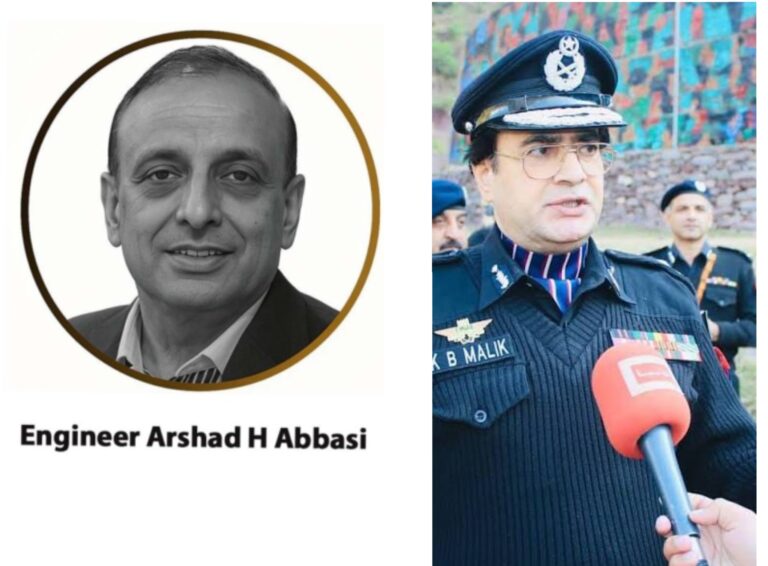
    By Malik Khuda Bakhsh Awan, retired Inspector General of Punjab Police and former IG of Azad Jammu & Kashmir & Engineer Arshad H. Abbasi, water and energy expert who has served in KPK and AJK, We write this not as critics sitting comfortably at a distance, but as two servants of this soil who have spent our working lives in the very regions now aflame with unrest — one of us measuring the water and energy that could have irrigated peace in KPK and AJK, the other commanding police lines in Punjab and standing watch over the mountains of Azad Kashmir. What we have seen convinces us of one thing above all: the fire in Balochistan, AJK and the erstwhile KPK is serious, but it is not yet beyond our control. It can still be reversed — if the Government of Pakistan acts with the courage to match the sacrifice already being offered on our behalf. Before we offer a single suggestion, we must first bow our heads. Every day, a young Jawan somewhere in Balochistan or the tribal belt tightens his boots before dawn, not knowing if he will return. Every week, a Frontier Corps patrol walks into an ambush it did not seek, and an FC officer’s name is added to a list none of us wants to grow longer. Every month, policemen in Quetta, Muzaffarabad and Peshawar guard checkposts that other citizens simply drive past without a thought. From the newest recruit to the most senior general, our security forces have offered blood, limb and years away from their families to hold this country together. Their courage is not in question. Their commitment is not in doubt. What we owe them now is not more praise — it is a strategy worthy of their sacrifice. That is the entire purpose of this letter. We do not want the martyrdom of our Army, Police and FC personnel to be spent on a war that could have been shortened, or avoided, by decisions made in Islamabad rather than only on the battlefield. History offers us hard evidence that this is possible, even in conflicts far older and far bloodier than ours. Lessons the world has already paid for, so we don’t have to. Colombia fought a Marxist insurgency for fifty years, financed by drugs and kidnapping — arguably a longer and more entrenched war than anything Pakistan faces today. Peace came in 2016 not because the state finally won every battle, but because it paired security operations with land redistribution for poor farmers and a transitional justice system that let fighters confess their crimes in exchange for reduced sentences, rebuilding public trust along the way. In Northern Ireland, three decades of sectarian killing between republicans and unionists ended largely because international partners poured investment into the poorest, most neglected border towns — the very places where despair had made paramilitary recruitment easy — while a new power-sharing government guaranteed both communities an equal, transparent voice. Sierra Leone’s civil war was fuelled by “blood diamonds.” It was tamed not merely by defeating the rebels but by legalising and regulating small-scale mining so that ordinary mining communities, not warlords, earned the benefit, backed by an internationally certified transparent supply chain and a strengthened anti-corruption commission. And in our own neighbourhood, the Philippines faced a decades-long Muslim separatist insurgency in Mindanao. It was calmed considerably by granting the Bangsamoro region genuine fiscal autonomy — its own revenue powers and a guaranteed development grant — replacing a corrupt, clan-captured funding system with one that visibly reached ordinary people. The pattern across every one of these conflicts, each objectively worse than what we face today, is the same. Peace did not arrive purely from military victory. It arrived when governments paired continued security pressure with transparent governance and genuine economic opportunity, so that the incentive to pick up a gun simply fell away. Our humble suggestions to the Government- First, unemployment among our youth is, in our respectful assessment, the single biggest driver of unrest in Balochistan, AJK and the tribal districts. A young man with a trade, a wage and a future does not need the BLA or the TTP to promise him meaning; he already has it. We therefore urge the government to treat job creation in these regions not as a welfare afterthought but as a core national-security investment, on par with any military allocation. Second, we ask for financial transparency in how resources from these very regions — gas, minerals, hydropower, forests — are spent. When local people can see, in plain terms, where the revenue from their own land goes, resentment gives way to ownership. Third, we ask for genuine, verifiable inclusion — local land and mining rights regularised in favour of communities rather than absentee interests, block grants that reach tehsil and union council level without being intercepted along the way, and reconstruction that is co-designed with elders and local government rather than imposed from a distant secretariat. Fourth, we ask for a dignified, well-resourced path for demobilisation and reintegration wherever it is possible — vocational training, stipends and honest employment for those willing to lay down arms, so that today’s militant does not become tomorrow’s freelance criminal. Fifth, and we say this with the greatest respect, every federal minister must spend a minimum of fifteen days, physically present, in Balochistan, AJK and KPK each year — not for a photo opportunity at a heavily guarded circuit house, but sitting with local elders, visiting FC and police posts, and looking our Jawans in the eye. A soldier who sees his federal government only through television screens begins to wonder if Islamabad remembers he exists. When a minister walks the same ground our forces are dying to defend, it tells every Jawan, every FC sepoy, every constable that his sacrifice is seen, valued and shared by those who lead him. This single change of habit would do more for morale on the front line than any speech delivered

  • Paying tribute to Miskeen Jahan Khan Khoso, a lege…

    Today, is the 45-death anniversary of Miskeen Jahan Khoso, one of the legends of Thar. Miskeen Jahan Khan Khoso was a man who dedicated his life to serving the people of Tharparkar. He was born on July 9, 1909, in a Village Sami Veri near Nangarparkar Taluka Head Quarter. His father’s name was Bijar Khan Khoso. He joined the government job in police department which, he inherited from his father and grandfather. Not tolerating the exploitation of poor, peasants and marginalized in hands of landlords and Patels, rock-hard young yet a passionate Jahan Khan changed his mind other way, he resigned from the police job in 1937. He dedicated rest of his life in serving the humanity, in this way he spent 43 years in rendering a noble work. Not tolerating the exploitation of poor, peasants and marginalized in hands of landlords and Patels, rock-hard young yet a passionate Jahan Khan changed his mind other way, Many times, cases were registered against him to intimidate and punish. He was convicted and jailed for two years under a notorious goonda act. Carrying stakes of newspapers, with trademark cape on head and an iron wrapped baton in the hand, he either walked on foot or travelled through camels, horses and khekhras (GMC trucks 6×6) thousands of miles in his life. He would remain away from family and village for months. He never ever favored nepotism, he equally fought against his brothers while came to know they were illegally occupying the land of poor Kolhi farmers. As usual, he stood with poor farmers and lodged FIR against his own brothers. Miskeen always identified himself as a humble and down-to-earth character. He was known as the social worker of Thar by the poor people of Nagarparkar for his relentless efforts to help them in their times of need. Miskeen’s dedication to his people knew no bounds. He would associate with the Kolhis, Meghwar and Bheels, making them feel at ease, even though he came from an affluent family. He was not just a social worker or philanthropist; he was a true friend to the poor people of Tharparkar. He raised his voice against all forms of oppression and cruelty inflicted upon these communities by local waderas and feudal lords. Miskeen fought against these powerful and influential people through the power of the pen and the spoken word. His unwavering dedication to his people often landed him in trouble. He was imprisoned and jailed for raising his voice against the injustices suffered by the poor people of Tharparkar. Despite facing numerous FIRs and cases, Miskeen never gave up on his cause. He would return to his people after his release from jail, listen to their issues, and take them to the He was nominated for an international award in recognition of his services to the poor, marginalized, and oppressed communities in America. However, due to financial constraints, his son was unable to attend the ceremony. Miskeen did not undertake these social services for any personal gain or consideration. He did everything voluntarily out of his love and concern for his people. That is why he is also known as the Edhi of Thar, named after the late Abdul Sattar Edhi, a legendary Pakistani philanthropist who dedicated his life to serving the underprivileged. Miskeen’s efforts continue to be remembered and appreciated by the people of Tharparkar even after his death. He did great service without having or getting resources from others. He was a true humanistic and poor-friendly and did not believe in conversion of religion. Today, many Non-Government organizations and philanthropists are praised for helping the poor in Thar, but it’s important to remember that Miskeen served the needy purely out of humanitarian concern, without seeking recognition. It is encouraging to see that Miskeen’s legacy lives on in Tharparkar. Many people, such as Mama Vishan Thari, have taken up the mantle of continuing Miskeen’s work in their own way. Mama Vishan Thari, also known as the Edhi of Thar, is a resident of Mithi city. For over a decade, he has run a blood bank near the civil hospital Mithi, providing free blood to those in need and saving hundreds of lives. He does not categorize based on religion, caste, or creed, believing that everyone is equal and deserves help regardless of their background. Miskeen passed away on 23rd July 1980, leaving behind a remarkable legacy in Tharparkar. Majestic and resilient like Karoonjhar itself, his life story is far too vast to be captured in a few words.

  • The Most Powerful State of Mind

    God had bestowed a vast and expansive empire upon Tsar Nicholas II. He was the King of Russia. He had only one son, who was born with a disease called hemophilia. This is a disease due to which the body’s ability to clot blood decreases; even a small wound causes excessive bleeding, placing the patient’s life in severe danger. The child was treated, but there was no improvement. One day, the famous Russian occultist Rasputin reached the child and performed some specific practices; astonishingly, the child recovered. Empress Alexandra was deeply impressed by this act and accepted Rasputin as her spiritual guide (Peer). The Empress not only provided him residence in the royal palace but also began taking his advice on state affairs. Rasputin was an extremely clever man. Through his words and practices, he captivated the royal family. When the First World War began in 1914, Russia suffered significant losses. Nicholas II left to take command of the army, because of which Empress Alexandra’s reliance on Rasputin increased further, and Rasputin also began taking an interest in political affairs. Gradually, he bound the King and the royal family within the spell of his words, and now he began interfering fully in the affairs of the country. Government ministers were unhappy with Rasputin’s immense popularity but were forced to accept his decisions. However, the public openly began criticizing the royal family because Rasputin was considered a corrupt person. This process continued in this manner. He would get his favored people appointed to important positions, because of which corruption reached its peak in the country; finally, the vessel of the public’s patience overflowed, and in 1917, protests began against the government. The royal family was still a follower of Rasputin, the result of which turned out to be very horrific. Public wrath intensified, Tsar Nicholas II was assassinated, and his regime was overthrown. The central character of this exemplary story was Rasputin, who, by conquering the minds of the royal family, made them make decisions as a result of which the world’s largest empire was destroyed. When an individual becomes so influenced by someone’s words or by a captivating sight that they forget everything and get lost in it, and their logical mind stops working, this state is called the “Alpha State.” In this condition, brain waves move at a specific speed and focus the individual’s attention on a single point. Taking advantage of this very state, certain short-sighted individuals fill the minds of innocent people with negative thoughts and incite them toward destruction. Rasputin’s example is the negative side of the “Alpha State”; however, it also has a positive side, which, if we learn to use, can yield astonishing results. There are five states of the mind, which in mind sciences are called Beta, Alpha, Theta, Delta, Gamma. Beta is the state of waking, in which we perform daily tasks. Alpha is the state of drowsiness and physical and mental relaxation. Theta is the state of sleep. Delta is the state of deep sleep, while Gamma is the state of extreme focus. In the Gamma state, a human can perform mental activities in a full-fledged manner. The Alpha State is the name of the intermediate condition between wakefulness and sleep (drowsiness). It acts as a bridge between the conscious and subconscious state. In this state, the brain’s alpha waves are between 8 to 12 Hertz. After reaching the Alpha State, a human’s brain and body become synchronized, the brain accepts things quickly, and the individual can organize their thoughts and memories in a better way. The “Alpha State” is a state of peace. When we were in the mother’s womb, even then we were in the “Alpha State.” There, all our needs were met, and we were free from all kinds of worries. The world’s greatest creation occurs in the “Alpha State.” Look at music. Behind other creations, there is some preparation or another, whereas music is something behind which there is nothing; a thought suddenly comes to the musician’s mind, and from it, a melody begins to form. This work also occurs in the Alpha State. Communication becomes very easy in the Alpha State. If you want to see an excellent example of this, look at the relationship between a mother and child. Sometimes the child is many miles away from the mother, but even without any contact, the mother senses their pain. In daily life, we pass through this condition many times. For instance, while watching a movie, we get completely lost in a scene; sometimes while reading a novel, we begin to consider ourselves a character of that very novel and become oblivious to our surroundings. Sometimes the words of a sweet-tongued speaker mesmerize us. Sometimes a beautiful sight captures us in its spell. It is said that a snake and flowing water also hypnotize humans. All these conditions are of the “Alpha State,” and whatever message enters the brain in this state becomes a part of our personality. Our brain keeps running all the time. It runs our senses. For example, if the eyes close, the brain becomes alert. To assess the situation, it instructs the ears to strengthen the process of hearing and assess what is happening. If the ears also close, it increases the capacity of smell, taste, and touch. In short, until it is satisfied that there is no danger, it does not become peaceful. Remaining alert all the time is not good for psychological and mental health; therefore, it is necessary for a human to go into the Alpha State for some time and make their brain peaceful. In today’s writing, we will try to clarify to what extent we can achieve the best results from the correct use of the “Alpha State.” First of all, it is necessary to understand how we can enter the “Alpha State” voluntarily. The easy way to enter the Alpha State is meditation. Sit in a comfortable place and take deep breaths. Focus your attention

  • The Mechanics of Feelings, Thoughts, and Awareness

    Feelings operate like an inner radar system that signals what type of frequency our mind is currently broadcasting. A story beautifully highlights this reality: A young student once felt highly anxious before a critical meeting with his spiritual guide. He arrived tense, clutching his notebook and worrying about his performance. When he finally sat before the mentor, his breathing was heavy. The mentor smiled warmly, placed a gentle hand on his shoulder, and offered him a simple cup of water. In that single instant, all the accumulated tension drained away from the student. He felt completely safe and filled with high-frequency positive energy. Driving back from the meeting, even when someone cut him off on the road or honked aggressively, he remained utterly untroubled. Even if his corporate boss started shouting the moment he walked into the office, his inner peace remained unshaken because he was overflowing with positive energy. Now consider the absolute opposite scenario. You wake up with a jolt to a loud crashing sound outside. Moments later, you hear your spouse shouting from the adjacent room—it is the third time she is attempting to wake up the kids, and they are completely ignoring her. She is furious, venting her frustration on them and calling out to you as well. When you step out, she glares at you and demands that you go fetch breakfast because the kitchen gas supply is down. Rubbing your eyes, you head to the crowded marketplace, wait in a frustratingly long queue, and finally bring food home, only to see her brow still furrowed with deep tension. You hurriedly change and leave for work. In this deeply negative emotional state, even the most beautiful scenery on your commute cannot move you, and the warm smiles or pleasant mood of your office colleagues will fail to lift your spirits because your primary emotional anchor is entirely negative. When your thoughts are positive, the whole world looks beautiful; when your thoughts are negative, everything tastes bitter. Statistics reveal that a human mind processes nearly 70,000 thoughts per day, while core human feelings can be classified into two fundamental pillars: positive and negative. These two emotional streams branch out into roughly 30 to 60 distinct emotional expressions. Consider what is easier to manage: tracking 70,000 chaotic daily thoughts or monitoring 60 distinct feelings? The answer is obvious. By focusing your energy on regulating your feelings, your thoughts naturally align themselves, preventing you from getting lost in a labyrinth of mental anxiety. A vital question often arises: Can an individual actively stop or cancel out a deeply ingrained, negative thought sequence? The ultimate answer is no. If you forcefully try to fight, delete, or suppress a negative thought patterns, you end up giving it more power, and it anchors itself deeper in your subconscious. Imagine a spiritual guide telling you, ‘Close your eyes and meditate for five minutes, but whatever you do, absolutely do not think about a black monkey.’ Within seconds, your mind will be entirely flooded with images of a black monkey. This is because the subconscious mind cannot process a negative command in isolation; it focuses heavily on the core imagery provided. Instead of trying to aggressively cancel out negative thoughts, the correct strategy is replacement. The moment a negative sequence takes root, shift your attention entirely to an opposing positive thought or an active feeling of deep gratitude. Our mind cannot actively host two completely contrasting emotional states simultaneously. By choosing to step out of the mental labyrinth and leaning into positive memory, appreciation, or prayer, you naturally starve the negative loops of energy. Developing deep concentration and continuous awareness is the master key to mastering this mental landscape. While it sounds simple, maintaining absolute focus on your inner state requires active practice, especially when daily life pulls your attention in a hundred different directions. Engaging in regular, meditative prayer or mindful contemplation helps quiet the chatter of the ego and firmly anchors your spirit in a high-frequency state of gratitude. True inner mastery begins the moment you consciously choose which feelings you allow to run your day.

  • Jalalpur Canal: Politics, Procedure and Sindh&#821…

    Just as the BRB Canal is often regarded as Lahore’s lifeline, the Indus River occupies a similar position for Sindh. It is, therefore, unsurprising that the river has remained at the center of the province’s political discourse for decades. Yet, since the passage of the 18th Constitutional Amendment, few issues have continued to unite Sindh’s population across political divides and enable a collective political stance at the federal level. Today, the province’s politics remains broadly divided between urban and rural Sindh. In rural Sindh, apart from disputes over canals and water resources, there appears to be no issue capable of sustaining political mobilization against either Punjab or the federal government. As a result, water politics has become the principal rallying point for several nationalist parties. At times, this has also led to exaggerated claims or misleading narratives. The political logic is evident: abandoning canal politics would require these parties to confront more entrenched issues within Sindh itself, including feudal dominance, decades of corruption and the continued exploitation of ordinary citizens. The recent trial inauguration of the Jalalpur Canal briefly generated political unrest in Sindh. However, the initial wave of anger faded almost as quickly as it emerged. As videos showing water flowing through the canal circulated on social media, several anti-Punjab groups directed their criticism primarily towards Punjab rather than questioning the Sindh government. Arguably, the first questions should have been asked of the province’s own elected representatives. Why was the public not adequately informed about the project’s legal and administrative status? And why was Sindh unable to pursue its case more effectively through political and institutional channels? The concerns expressed by Sindh are neither new nor insignificant. By the time the Indus reaches the province, river flows have already declined substantially, affecting agriculture, fisheries and the livelihoods of communities living in the lower riparian region. At the same time, the Indus Delta continues to deteriorate while groundwater levels have fallen to alarming levels. Against this backdrop, many in Sindh believe that any additional diversion of water through projects such as the Jalalpur Canal could further reduce the province’s already constrained water availability. Punjab, however, has consistently maintained that the Jalalpur Canal is not among the six canal projects over which Sindh has formally raised objections. It further argues that the Indus River System Authority (IRSA) issued the Water Availability Certificate for the project in 2014, when Sindh was represented on the authority by Mazhar Ali Shah. If Sindh considered the project objectionable, Punjab argues, why were those objections not raised at that stage? Likewise, why was the issue not pursued more effectively when the project was placed before the   Executive Committee of the National Economic Council (ECNEC) for approval and when construction subsequently commenced? Sindh, for its part, maintains that the Provincial Assembly adopted a formal resolution against the canal in 2021. Three years later, in 2024, the provincial government formally placed the matter before the Council of Common Interests (CCI). Punjab nevertheless rejected Sindh’s objections there as well, reiterating that the Jalalpur Canal did not fall within the six disputed canal projects that remain under contention between the two provinces. Politically, however, the episode exposed the Sindh government’s difficult position before its own electorate. The documentary record indicates that the provincial government had registered its reservations through official forums. Yet it failed to convert those institutional objections into an effective political narrative because Punjab’s position appeared stronger from both procedural and technical standpoints. This became particularly evident when Sindh Chief Minister Syed Murad Ali Shah acknowledged during a press conference that the Jalalpur Canal was not among the six canal projects to which Sindh had consistently objected. That admission effectively defused the anti-Punjab momentum that had briefly gathered pace following the canal’s trial inauguration. For years, the Pakistan Peoples Party (PPP) has sought to accommodate Sindh’s nationalist parties within the framework of mainstream politics by assuring them political representation at both the provincial and federal levels. At the same time, nationalist parties themselves appear conscious of the electoral limitations of their own rhetoric. Many recognise that slogans traditionally associated with nationalist politics, including “Pakistan Na Khappay”, may have limited appeal when competing with mainstream political parties in electoral politics.

  • How China Intimidated the United States of America

       For as long as the world can recall, the United States have controllably preserved their seat as the strongest one in the council of global superpowers- defeating the Nazis, USSR and setting their currency as the medium of trade and exchange. However, in recent events this strong hold seems to have become weakened as on the other side of the world a new power emerges, a power that the United States considers the biggest threat to their existence- the new super power China.   Ironically, China was still developing and submerged in poverty a few decades ago holding up its communist views and rejecting the new capitalist western world. Though they were not completely cut off on giving this new ideology a try, opening their first economic zone in Shenzhen in 1980 to pursue foreign investments and market based economic trade. Soon enough they realized the potential it had and once they started, they were quite impossible to stop.   It was in the 2010s that China had found numerous ways to include itself in the exporting and manufacturing industry. Every household was filled with items labeled “made in China”, however they were referred to as a low quality item hence cheaper. China nevertheless learnt, and they were fast learners. They knew that in a world dominated and feared by the United States they would have to have a friendlier approach. They started helping countries including Pakistan and many African nations with infrastructure projects in exchange for leverage and usage of their resources.   On the outside it seemed like a friendly deal, a helpful one even, but China knew that this was their way into achieving ultimate domination. The US was watching this very closely knowing very well what kind of abomination was taking place in front of their eyes, yet they could only spread propaganda about it, calling it “Debt trap Diplomacy” and “Predatory Lending”. The world did not give much thought since theyfinally had someone helping them without any threats and sanctions which they had experienced harshly in the past with the United States .   Uptil now, the USA still had the upper hand on oil and currency domination which was soon to get shaken up as well. Bill Clinton had put a ban on trading Iranian oil in his regime and so was done to Russia after they invaded Ukraine, meaning almost the whole world trading in US dollars could not buy Russian and Iranian oil.  Few of the other powerful currencies that could trade without the US dollar are euro, Japanese yen and Chinese yuan. Thus only China had the willingness to buy the sanctioned oil in their currency under different company names, trade routes which the US would find it difficult to identify and stop.   The United States has had  a history of having these geographical threats against major countries in order to secure their position. The same goes with China, with them using the strait of Malacca in southeast Asia as a passage they could close which would disrupt 80% of China’s oil trade. Chinese leaders have called this the “Malacca Dilemma” in the past.   Since the Iran war, it has come to light that China has once again found a path out of this misery and showed the world silently that this dilemma is far gone. When the whole world was panicking due to the Strait of Harmoz shutting down, China with no hurdles dropped their oil imports by 50% and started using their oil reserves which were more than double than usa. This was a direct showcase to the USA that even if they block straight out of Malacca- China will survive and wont go into an economic shutdown.   Now it is very evident that China has secured its position as an export leader, having significant oil reserves, defenses as well as the support of major countries through mutual diplomacy, and the US is forced down on its knees- especially after the Trump and Biden administration. The US has no options but to comply with China which was seen when Trump and his billionaire delegation visited China- which they were deemed to be intimidated by.

  • The Great Tragedy of Partition—IX   Was the tra…

    History does not become inevitable merely because it happened The Partition of British India is frequently narrated backwards. Because India and Pakistan emerged as separate states in August 1947, every disagreement preceding their creation is treated as another step towards an unavoidable conclusion. Political demands become fixed destinies, failed negotiations appear predestined to fail, and the violence accompanying the transfer of power is presented as the inevitable consequence of ancient communal hostility. The documentary record examined in this series suggests a different conclusion. To ask whether Partition was inevitable is, in fact, to combine three distinct questions. Was the political division of British India unavoidable? Was the accelerated timetable chosen for the transfer of power unavoidable? Was the mass displacement and violence accompanying Partition unavoidable? These questions are related, but they do not admit the same answer. The constitutional division of India was not historically inevitable from the beginning of the anti-colonial struggle. Competing political visions existed, but so did repeated attempts to accommodate them. The possibility of a united constitutional order survived the Lahore Resolution, the Cripps Mission and even the failure of the Simla Conference. The Cabinet Mission Plan of 1946 came remarkably close to obtaining acceptance from both Congress and the Muslim League by proposing a weak centre, autonomous provinces and compulsory provincial groupings. That arrangement might have survived; it might also have collapsed under the weight of its own ambiguities. History cannot establish with certainty what would have happened under a constitutional plan that was never fully implemented. It can establish that an alternative existed and that, for a brief period, both principal political parties considered it preferable to immediate Partition. The collapse of that opportunity did not result from one sentence, one leader or one political organisation. Congress feared that compulsory groupings would weaken the future Union and prevent the construction of an effective national government. The Muslim League feared that Congress would use its strength in the Constituent Assembly to dismantle the safeguards upon which Muslim-majority provinces had relied. British negotiators used ambiguity to secure agreement but failed to create a mechanism capable of resolving the conflicting interpretations that followed. Political trust disappeared faster than constitutional ingenuity could replace it. By early 1947, division had become increasingly probable. The Cabinet Mission framework had collapsed, the interim government was paralysed, communal violence had spread and the principal political parties no longer shared a common conception of India’s constitutional future. An increasingly probable outcome, however, is not the same as an historically predetermined one. It was the cumulative product of decisions taken, compromises rejected, assurances doubted and opportunities lost. The Second World War had accelerated this process. Britain’s strategic dependence upon India strengthened the bargaining positions of Indian political parties while weakening imperial authority. Congress demanded effective power and national independence. The Muslim League used the altered constitutional balance to secure recognition of Muslims as a political nation. The Communist Party of India (CPI), approaching the question from an entirely different intellectual tradition, acknowledged the “just essence” of the Pakistan demand through the principle of national self-determination. Muslim intellectuals were simultaneously debating what Pakistan would mean. The discussions in Tarjuman-ul-Qur’an and Tolu-e-Islam demonstrated that support for a Muslim homeland did not produce agreement about the nature of the future state. The political demand for Pakistan and the constitutional content of Pakistan were related questions, but they were never identical. British policy also evolved. The Raj did not simply devise Partition according to a predetermined imperial design. Nor can it be treated as a neutral referee unable to influence events. British constitutional arrangements had shaped political representation, while wartime policy altered the balance between Congress and the Muslim League. Cripps introduced the possibility that provinces might remain outside a future Union. Simla exposed the struggle over who could represent Indian Muslims. The Cabinet Mission attempted to preserve unity through decentralisation. Mountbatten ultimately concluded that division offered the fastest route to British withdrawal. Responsibility was therefore differentiated, but it was not absent. Congress and the Muslim League made decisions with consequences they could not fully control. British authorities retained formal power, controlled the timetable and supervised the division of the state. Provincial governments failed to protect vulnerable communities. Communal organisations, militias and local groups transformed political antagonism into killings, abductions and forced migration. Ordinary Hindus, Muslims and Sikhs, most of whom had exercised no influence over constitutional negotiations, paid the greatest price. This brings us to the second question. Even if political Partition had become unavoidable by the middle of 1947, was its hurried implementation equally unavoidable? The evidence permits a firmer answer. Britain had initially announced that power would be transferred by June 1948. Mountbatten brought the date forward to August 1947. This acceleration left only weeks to divide provinces, assets, armed forces, civil services, railways, irrigation systems and administrative records. The boundary awards were disclosed after the new states had formally come into existence. Political leaders could reasonably fear that prolonged uncertainty would intensify disorder, but haste was a choice made within difficult circumstances, not an irresistible law of history. The third question concerns the violence itself. No provision of the Indian Independence Act ordered a compulsory exchange of populations. Nothing in constitutional separation required refugee trains to become moving graveyards, women to be abducted or families to abandon ancestral homes. Violence arose from fear, organised attacks, retaliatory killings, administrative collapse and the failure to provide adequate security. Its precise course could not have been predicted, but its scale was not constitutionally necessary. The tragedy was therefore greater than Partition. It lay in the manner in which Partition was conceived, accelerated and implemented. The Indian Independence Act legally created two Dominions, but independence did not immediately erase the institutions of empire. Section 8 allowed the governmental machinery of the Government of India Act, 1935, as adapted, to continue until the new Dominions framed their own constitutions. Pakistan would remain governed under that inherited framework until its first Constitution came into force in 1956. Political sovereignty

  • Happy birthday Asian Nelson Mandela

    July 26th marks the birthday of an political prisoner who spend 1.5 decade in prison without conviction meaning he was innocent but was kept in prison unlawfully. But from prison torture cell he stood by the state. He is son of soil. His non-violent legacy is worth following by all political prisoners of world. This is the beauty of the modern world era that you can not hide anything from anyone. Welcome to present world best known as modern world era. This s all about technology and methods of gathering information compiling it and ultimately relaying it in more authenticated way. It took decades to evolve technology from computing, internet, gadgets and mobile revolution to the present world modern world era of artificial intelligence. Gen Z and Gen Alpha highly rely on AI tools. If you go through Google and AI tools and start searching term ‘political prisoners’ then you will find incumbent President of Pakistan Asif Ali Zardari as the one and only political prisoner in the history of world, who spent fourteen years and eight months in prison without any conviction. His tongue was cut and botched attempt was made to cut his neck and throat to kill him. He faced worst third degree torture in prison. He never gave a single call to his party workers to protest or attack the institutes. In 1990s and onwards United Nations Convention against Torture and Other Cruel, Inhuman or Degrading Treatment or Punishment (UNCAT) and Tokyo declaration were in place for necessary remedial but kudos to Asif Ali Zardari, he never opt for agitation. Asif Ali Zardari faced all kinds of tortures with patience and bravery and stood by the state of Pakistan under any circumstances, even when his wife two-times prime minister of Pakistan was assassinated in broad daylight in Rawalpindi on December 27, 2007, he gave he hope to nation ‘Pakistan Khappay’ Pakistan Zindabad Pakistan long live. He pledged that He with help of people of Pakistan and state institutions will make greater and stronger Pakistan. In 2008, when Asif Ali Zardari, assumed the charge of Presidency, he forgave all of his enemies and he announced general amnesty for all, in fact he also took initiatives to stop unfair and degrading treatment and third degree torture with others which he faced during his imprisonment. In year 2010, The President of Pakistan, Asif Ali Zardari, ratified the International Covenant of Civil and Political Rights (ICCPR) and the UN Convention against Torture and Other Cruel, Inhumane or Degrading Treatment or Punishment (CAT) and later it was his political party Pakistan Peoples Party which brought legislation Torture and Custodial Death (Prevention and Punishment) Act, 2022 to prohibit torture and other acts of cruel, Inhumane and degrading treatment. In year, 2023, It was also Sindh assembly/government to bring the legislation of the medico legal Act 2023. In his previous tenure of Presidency (2008-2013). He saved world from nuclear war in the wake of Mumbai attacks, strengthened ties with china and ensured revival of ties with Russia and Iran and started new era of relations with US and west on the grounds of equality as good friends. And his current tenure of Presidency is more vibrant and productive for people of Pakistan coupled with iron first lady Aseefa Bhutto Zardari’s input. Under his visionary leadership Pakistan is heading towards his dream of Greater Pakistan. May his 71st birthday bring Pakistan prosperity, peace and hub of global economy. Happy birthday Asian Nelson Mandela!

  • The Crisis of Leadership and Fading National Prior…

    ​To diagnose the profound structural, intellectual, and economic stagnation gripping contemporary Pakistani society, one cannot analyze it merely through the lens of conventional lamentation or superficial moralizing. This pervasive crisis of the state and society is not the byproduct of a sudden natural calamity, but rather the logical culmination of a long-standing political economy where the unequal distribution of state resources, flawed policymaking mechanisms, and elite capture have systematically closed off all avenues for collective intellect. The devastating budget cuts inflicted on the social sector—specifically education, healthcare, and research institutions—under the relentless guise of International Monetary Fund (IMF) bailout packages and structural adjustment have compounded this crisis. When foundational pillars of a state are subordinated to personal self-interest, temporary political loyalties, and non-productive extravagances instead of fostering a productive economy, a leadership crisis ceases to be an accidental anomaly and entrenches itself as a permanent, systemic reality. The roots of this historical tragedy undeniably lie in the colonial state apparatus engineered by the British Empire to secure its subjugation over this region; yet the tragic reality is that post-independence, the domestic elite simply stepped into the shoes of the white master, retaining this exploitative machinery intact while refining it to serve their own interests. ​A hard look at ground realities and economic indicators reveals a deeply alarming landscape. The state’s warped priorities are laid bare in the fact that the lion’s share of federal and provincial budgets is routinely swallowed by debt servicing, non-productive administrative and defense expenditures, and lavish exemptions for the privileged class. Conversely, human capital development—education, scientific research, and health—languishes at the very bottom of the national agenda, treated as an unwelcome afterthought. Data from the World Bank and UNESCO confirm that Pakistan allocates a mere 0.2 to 0.3 percent of its Gross Domestic Product (GDP) to Research and Development (R&D), whereas dynamic economies like South Korea invest upwards of 4.8 percent and Israel surpasses 5 percent. This truncated, abysmally low allocation compared to regional peers is a damning indictment. When a nation’s educational budget is starved, and university leadership is appointed through political patronage, personal recommendations, and favoritism rather than merit, vision, and academic pedigree, the system ceases to radiate light, breeding instead sycophancy, boot-licking, and intellectual sterility. Such a decayed framework might churn out compliant manual laborers and clerical cogs for offices, but it will never produce a conscious citizen or independent critic courageous enough to question flawed state policies. ​The most agonizing casualty of this policy paralysis is the relentless brain drain—the systematic migration of our brightest minds abroad. Immigration bureaus and professional research data confirm that Pakistan’s finest intellects—top-tier engineers, specialized surgeons and physicians, global IT experts, scientists, and dedicated researchers—are abandoning their homeland in droves for Europe, North America, and the Gulf states. The state has never paused to calculate the immense national cost of educating and training a youth only to witness that capital, and the future it represents, vanish across borders. When policymakers trample over merit to appease political cronies, the meritocratic class finds itself fighting a losing battle for sheer survival. This is not mere emigration; it is the intellectual execution of an entire generation, sacrificed at the altar of incompetent governance. Nations like Singapore, Malaysia, and South Korea reached a historic crossroads where they discarded empty political rhetoric in favor of rigid meritocracy, transparent governance, and rigorous education, whereas our polity cultivated a culture that treats politics as a lucrative enterprise and the state as spoils of war. The dividends of that mindset surround us today. ​Another compounding driver of this societal decline and intellectual regression is the entrenched feudal and imperial character of our state structure, which bars the common human and ordinary citizen from accessing basic constitutional and human rights. In a stratified society where the rule of law is selectively enforced against the weak while endless judicial backdoors remain open for the powerful, justice becomes an elusive mirage. The ordinary citizen must endure decades of legal labyrinths just to secure elementary justice, while the resource-hoarding elite exploit every legislative loophole to remain above the law. This glaring injustice has bred an overwhelming sense of alienation, systemic frustration, and moral decay. When the younger generation observes that honesty, hard work, and integrity hold zero currency in this system, and that influence, corruption, cronyism, and deception are the lone keys to advancement, the moral fabric of society shatters. This ethical erosion metastasizes into a national malignancy when state patronage actively paralyzes intellectual spaces and universities, stifling critical discourse and strangling freedom of thought. ​Escaping this deep quagmire and resolving the crisis of leadership requires courageous structural reforms. First and foremost, the state must fundamentally overhaul its national priorities, elevating scientific self-reliance, research autonomy, and intellectual sovereignty to the core of national security alongside physical defense. Pushing the cumulative budget for education, science, and research to a minimum of four percent of GDP without delay is non-negotiable if we harbor any genuine ambitions of building a knowledge economy. Second, purging public administration, the civil bureaucracy, and state enterprises of political interference while establishing the ironclad supremacy of merit is paramount to ensure decision-making is driven solely by professional capability. We must transition away from traditional public service delivery by handing policy formulation over to empowered task forces composed of domestic and international technocrats. Concurrently, genuine autonomy must be restored to the Higher Education Commission (HEC), backed by stringent constitutional safeguards against political appointments in academia. To stanch the bleeding of brain drain and transform it into a “brain gain,” the state must proactively craft an attractive, enabling ecosystem that leverages the capital and expertise of the overseas Pakistani diaspora through modern remote research initiatives. ​True, visionary leadership rises above the hollow temptation of cheap, temporary popularity to lay enduring foundations for generations unborn. Until those occupying our corridors of power step outside the narrow confines of personal, familial, and factional self-interest, and until society sheds emotional sloganeering in favor of scientific, logical, and critical inquiry, the vicious

  • Fundamental Right No. 10A: Right to Fair Trial in …

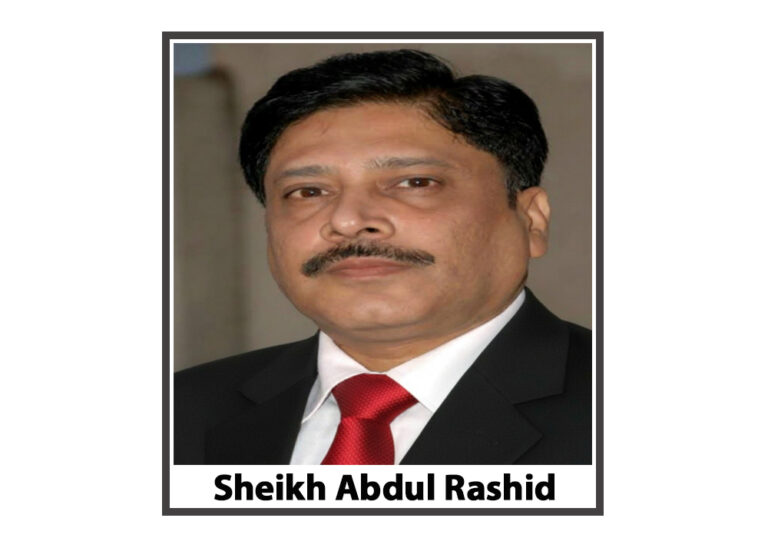
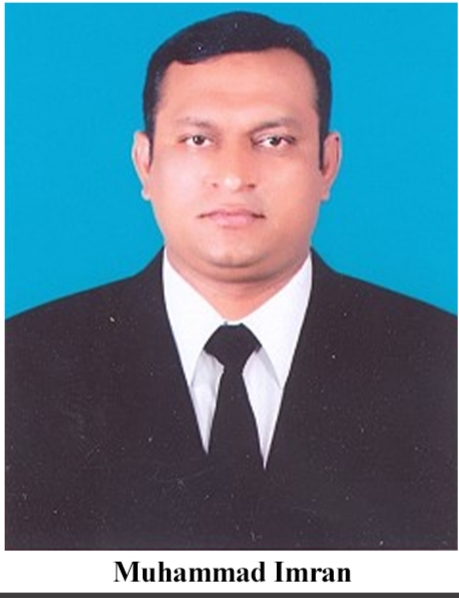
    By Muhammad Imran, Staff Member, SAHSOL-LUMS and Asma Rahmat, Final Year Law Student, SLC, Superior University and Muhammad Ameer Hamza, Final Year Law Student, SLC, Superior University    Historical Evolution and Constitutional Recognition: The right to a fair trial and due process is expressly guaranteed under Article 10A of the Constitution of the Islamic Republic of Pakistan, 1973, which was inserted through the Constitution (Eighteenth Amendment) Act, 2010. The Eighteenth Amendment was passed by the National Assembly on 8 April 2010, approved by the Senate on 15 April 2010, and received the assent of the President on 19 April 2010, whereupon it came into force. The insertion of Article 10A marked one of the most significant constitutional reforms introduced by the Eighteenth Amendment by expressly recognizing the right to a fair trial and due process as enforceable fundamental rights. Before the insertion of Article 10A, the Constitution did not contain an explicit guarantee of the right to a fair trial. Nevertheless, the superior judiciary consistently interpreted Articles 4, 9, and 25 of the Constitution as implicitly incorporating the principles of natural justice, procedural fairness, and due process. Article 4 guarantees the right of every individual to be dealt with in accordance with law, Article 9 protects the security of person, and Article 25 guarantees equality before the law and equal protection of the law. Through an evolving body of constitutional jurisprudence, the Supreme Court of Pakistan acknowledged that fairness in legal proceedings constituted an indispensable component of the rule of law and the protection of fundamental rights. However, the absence of an express constitutional guarantee often created uncertainty regarding the precise scope and enforceability of these procedural protections. The insertion of Article 10A fundamentally transformed Pakistan’s constitutional framework by elevating the right to a fair trial and due process into an independent and directly enforceable fundamental right. It converted principles previously implied through judicial interpretation into an explicit constitutional mandate, thereby strengthening the protection of individual liberties, reinforcing constitutional supremacy, and enhancing judicial oversight. Moreover, the amendment reflects Pakistan’s commitment to internationally recognized human rights standards, particularly Article 14 of the International Covenant on Civil and Political Rights (ICCPR), which guarantees the right to a fair and public hearing by an independent and impartial tribunal. Scope and Nature of Article 10A: Article 10A provides that: “For the determination of his civil rights and obligations or in any criminal charge against him, a person shall be entitled to a fair trial and due process.” The language of Article 10A demonstrates that its protection is not confined to criminal prosecutions. Rather, it extends equally to civil proceedings and all judicial, quasi-judicial, and administrative proceedings in which legal rights and obligations are determined. Consequently, the constitutional guarantee encompasses the entire continuum of justice, including investigation, arrest, detention, prosecution, adjudication, sentencing, appeal, and review. The constitutional requirement of “due process” ensures that every stage of legal proceedings must be conducted in accordance with established legal procedures, free from arbitrariness, discrimination, mala fide exercise of power, or abuse of authority. Essential Components of the Right to Fair Trial: The right to a fair trial under Article 10A embodies a comprehensive set of procedural safeguards that are indispensable for the administration of justice. These include the presumption of innocence until guilt is proved beyond reasonable doubt, the right to be informed promptly and clearly of the accusations, the right to adequate time and facilities to prepare a defence, the right to legal representation by counsel of one’s own choosing, the opportunity to examine and cross-examine witnesses, the right to produce evidence in defence, and the entitlement to a public hearing before an independent, impartial, and competent tribunal established by law. Equally important is the obligation that judicial decisions be reasoned, evidence-based, and transparent. The requirement to provide reasoned judgments promotes accountability, facilitates appellate review, enhances public confidence in the administration of justice, and ensures that justice is not only done but is also manifestly seen to be done. Relationship with Other Constitutional Guarantees: Article 10A does not operate in isolation but forms part of a broader constitutional framework safeguarding individual liberty and procedural justice. Article 4 guarantees that every individual shall be treated strictly in accordance with law, while Article 9 protects the fundamental rights to life and liberty. Article 10 provides specific procedural safeguards relating to arrest and detention, including the right to be informed of the grounds of arrest, the right to consult legal counsel, and the right to be produced before a magistrate within twenty-four hours. Article 25 further guarantees equality before the law and equal protection of the law. Read harmoniously, these constitutional provisions establish an integrated framework designed to prevent arbitrary state action, ensure accountability of public authorities, and uphold fairness throughout the legal process. Judicial Interpretation of Article 10A: The superior judiciary has consistently interpreted Article 10A as embodying both procedural and substantive dimensions of justice. The Supreme Court of Pakistan has repeatedly emphasized that compliance with Article 10A requires more than mere adherence to technical procedural formalities; rather, fairness must permeate every stage of legal proceedings. Investigations, collection of evidence, prosecution, trial, sentencing, and appellate review must all satisfy constitutional standards of due process. The courts have further held that statutory provisions or executive actions inconsistent with Article 10A are subject to constitutional scrutiny and may be declared unconstitutional where they undermine the fundamental right to a fair trial. Consequently, Article 10A has become a cornerstone of Pakistan’s constitutional jurisprudence, guiding judicial review in criminal justice, administrative law, disciplinary proceedings, and civil litigation. Constitutional Significance: The constitutional recognition of the right to a fair trial has significantly strengthened Pakistan’s legal system by providing an effective safeguard against arbitrary exercise of state power. It protects individuals against unlawful convictions, promotes judicial accountability, enhances public confidence in legal institutions, and reinforces the supremacy of the rule of law. Simultaneously, it serves as an important constitutional mechanism for balancing society’s interest in the effective prosecution of crime with the fundamental rights