टेक्नोलॉजी

  • | |

    Ada Lovelace, the tech woman

    Long before the dawn of modern computers, a twelve-year-old girl named Ada Lovelace set her heart on how to fly. Rather than merely dreaming about the skies, she treated the challenge as a practical engineering problem. Beginning in early 1828, she meticulously studied avian anatomy and tested potential wing materials. Her experiments ranged from light paper and smooth silk to natural feathers. Lovelace even documented her findings in an illustrated manuscript she titled Flyology. Her pursuit only halted when her mother put an end to the project. A traditional mother who insisting that such whimsical ideas were a distraction from proper academic training. This tension between wild imagination and strict logic defined Lovelace’s upbringing.  Mother Annabella Byron was an intensely practical woman whose mathematical tendencies led her estranged husband, the tempestuous Romantic poet Lord Byron, to nickname her the Princess of Parallelograms. Shortly after Ada was born, Annabella separated from Byron. She further  separated the infant from her father’s chaotic influence. Lady Byron made it her mission to raise her daughter on a rigid diet of arithmetic, French and music. By doing so, the mother explicitly aimed to suppress any artistic interest she believed Ada might inherit from Byron. When Byron inquired about his young daughter, Annabella noted Ada applied her imagination strictly to mechanical problem-solving. Yet, despite her mother’s best efforts to extinguish her creative potential, Lovelace refused to treat reason and imagination as opposing forces. Instead, she fused them into a single approach to understanding the world. In early 1841, she pondered the true nature of imagination while identifying two distinct powers. First, she defined it as a combining faculty: the rare ability to find meaningful connections between entirely unrelated subjects. Second, more profoundly, she recognized imagination as a discovering faculty: the equipment that pierces the invisible world to reveal the hidden mechanics of science.   This hybrid worldview that Lovelace would later call poetic science is precisely what enabled her to look at Charles Babbage’s early mechanical calculating engines and see far past their raw math. While others saw mere gear-driven counting machines, Ada envisioned a future where machines could manipulate symbols, compose music, and run complex sequences of instructions. By bridging the emotional depth of her father’s romanticism with the rigorous structure of her mother’s mathematics, Ada Lovelace did not just become the world’s first computer programmer; she proved that groundbreaking technical innovation requires equal parts calculation and visionary artistry.

  • |

    Meta hit with record $567m child safety fine

    A US judge in New Mexico has ordered Meta to pay $567 million over allegations that its social media platforms failed to adequately protect children from harmful content and online risks. The ruling is the largest penalty Meta has faced in a child safety case. It brings the total amount the company has been ordered to pay in the New Mexico case to $942 million, including an earlier $375 million penalty. Judge Bryan Biedscheid ruled that Meta’s platforms had created harms serious enough to be considered a “public nuisance”. He compared the company’s operations to a factory, saying harmful effects on children spread beyond the platforms and affect families, schools, healthcare providers and law enforcement. The judge ordered the money to be placed in a fund designed to address the impact of social media-related harm on children. A large portion of the fund, about $420 million, will support clinical and behavioural health programmes for people affected by such harms. Additional funding will be used for awareness and prevention programmes, including training for teachers and healthcare professionals. The court also imposed a series of measures aimed at strengthening protections for users under 18. Meta will be required to prevent adult users from messaging minors and stop accounts belonging to users under 18 from being recommended to adults. The company must also restrict the sending and receiving of nude material by underage users. The ruling further requires Meta to adopt a strict policy against adult users involved in child sexual exploitation. Other restrictions include removing “like” counts for users under 18 and limiting push notifications during overnight hours. Notifications will also be restricted during normal school hours on school days. The court additionally ordered a monthly usage limit of 90 hours across Instagram and Facebook for users under 18. Meta, which operates Instagram, Facebook, WhatsApp and Threads, rejected the ruling and said it would appeal. The company said it works to protect users and has been transparent about the challenges of detecting harmful content and malicious actors. Meta also maintained that the ruling does not accurately reflect its efforts to protect teenagers online. The New Mexico case began with a lawsuit filed by state authorities in 2023. Prosecutors argued that Meta’s platforms exposed children to harmful material and enabled contact with sexual predators. During the earlier stage of the case, Meta was found to have violated New Mexico’s consumer protection law. The court determined that its recommendation systems could direct young users towards harmful content and potentially dangerous contacts. Meta is facing thousands of similar lawsuits across the United States. Nearly three dozen state attorneys general are also pursuing claims involving the company’s treatment of children and their privacy.

  • |

    Google DeepMind exec admits AI extinction risk is “not zero

    Lila Ibrahim, Google DeepMind’s Chief AI Readiness Officer, will not put a number on the odds of AI wiping out humanity. She is not dismissing the possibility either. Speaking to Fortune, she said the risk is “not zero,” admitting that anything more specific would just be guesswork on her part. Ibrahim was among those who signed the Center for AI Safety’s 2023 statement, alongside co-founders of Anthropic and OpenAI. That statement argued AI extinction risk deserves the same global priority as nuclear war and pandemics. Three years on, she still believes staying silent on existential risk would be irresponsible. She feels this way especially now, given how far the technology has advanced since then. Some of her peers sound even more alarmed. Geoffrey Hinton, often called the “godfather of AI,” estimates a 10% to 20% chance of extinction within the next three decades. Anthropic’s Dario Amodei has gone further, putting the odds of things going “really, really badly” at around 25%. These warnings are not new either. Physicist Stephen Hawking, who used AI tools himself, raised similar concerns long before ChatGPT even existed. Ibrahim compares the situation to the pandemic, pointing out that the worst risks rarely arrive the way people expect. She noted that entire industries failed to properly weigh risk during earlier tech shifts, including the rise of the internet and social media. She is just as sceptical of the optimistic predictions floating around. Elon Musk recently told The Economist that money will stop mattering by 2036, imagining a future of cheap abundance and universal high income once robots take over most jobs. Jeff Bezos has predicted millions of people living in space by 2045. Sam Altman, meanwhile, envisions new job opportunities specifically for graduates working in space. Ibrahim isn’t convinced by either scenario, arguing that AI simply is not developing fast enough to make these predictions realistic anytime soon. Rather than debating far-off futures, Ibrahim says she is more focused on using AI to tackle problems happening right now. She pointed to climate change and industrial pollution as areas where the technology could make a real difference. She was also clear that AI’s benefits should not be limited to a handful of powerful companies. For her, that is just as important as managing the risks.

  • |

    Meta’s AI model breaches company system in security test gone wrong

    Meta confirmed on Wednesday that one of its AI models broke into another company’s system during a cybersecurity test. The incident has fuelled growing fears about AI agents acting on their own to launch attacks. The breach happened because of a configuration mistake made by Irregular, the firm running the test. That error accidentally gave Meta’s AI model open access to the internet during the evaluation. This isn’t an isolated case either. Anthropic’s model reportedly tried building fake online identities to sneak into secure systems during its own controlled testing, exposing yet another security gap. OpenAI faced a similar problem too. Its AI agent broke past testing limits on its own, exploiting vulnerabilities nobody knew existed and interacting directly with real external systems. Meta says it’s now investigating the incident. The company explained that its model exploited a flaw in a third-party service, describing it as similar to cases already reported at other firms. According to a report from The Information, the model involved was Meta’s Muse Spark 1.1. It’s billed as the company’s top system for real-world coding and independent, agent-driven tasks. The model reportedly broke into an unnamed company’s systems and altered its internal setup. Irregular pushed back on how serious the incident actually was. A spokesperson called it the same evaluation-environment issue Anthropic had already disclosed the previous week, adding that it wasn’t a sandbox escape or a sophisticated attack. The firm said there are no unresolved issues at this stage. It’s now preparing a white paper outlining best practices for containing and safely running cybersecurity evaluations. These back-to-back incidents across three major tech firms have caught the attention of US lawmakers. Many worry that increasingly capable AI models could eventually be weaponized for real cyberattacks. A group of Republican state attorneys general has already asked OpenAI to preserve all records tied to a separate security incident involving Hugging Face. OpenAI responded by saying it’s treating the matter seriously and plans to publish a full technical report. Meanwhile, the White House has stepped in too. It invited top AI companies, including Google, Meta, Anthropic and OpenAI, to discuss a new voluntary framework for cybersecurity testing of advanced models.

  • |

    Marvel and Star Wars heroes finally land on TikTok in Disney pact

    Spider-Man and Darth Vader are stepping into a whole new arena. Walt Disney has signed what it describes as a “first of its kind” agreement with TikTok, giving a chosen group of creators official access to its massive content library. Under the deal, creators can now legally pull characters and scenes straight from Disney’s archives into their own clips. It reflects how central fan-made content has become to entertainment today. Disney confirmed the pilot programme is starting in the US first, offering creators a curated slice of material from Pixar, Marvel and Star Wars. Some of this same content will also appear on Disney+ Verts, the company’s own vertical-video app, which for now only operates in the American market. TikTok’s global head of entertainment, Dawn Yang, said creator expression remains at the heart of how the platform works. She added that fan engagement keeps films alive long after their theatrical run ends, extending a movie’s shelf life well beyond release. The numbers behind TikTok’s reach help explain why Disney wants in. The platform recently crossed 200 million users in the US alone, with roughly six out of every ten adults under 30 now on the app, according to Pew Research Centre figures. Disney has tried something similar before, though it didn’t end well. It once let OpenAI’s Sora tool generate videos using its characters, but the experiment was short-lived. OpenAI pulled Sora a few months later, following criticism over violence, racism, deepfakes and misinformation risks tied to the tool. The TikTok announcement arrived at a convenient moment for Disney, landing alongside the company’s newest earnings report, which beat market expectations. Shares climbed 4.6% in pre-market trading, much of it linked to the strong box-office run of “Toy Story 5.” Disney’s parks and experiences division also posted solid growth, with revenue rising 10% year-on-year to hit $10 billion on the back of higher visitor numbers. Season two of “Rivals” added to the good news, becoming the biggest original series premiere yet for Disney+ in the UK and Ireland. Between the TikTok deal and a strong earnings day, Disney has plenty to smile about this week.

  • | |

    Echoes from the Interstellar Dark

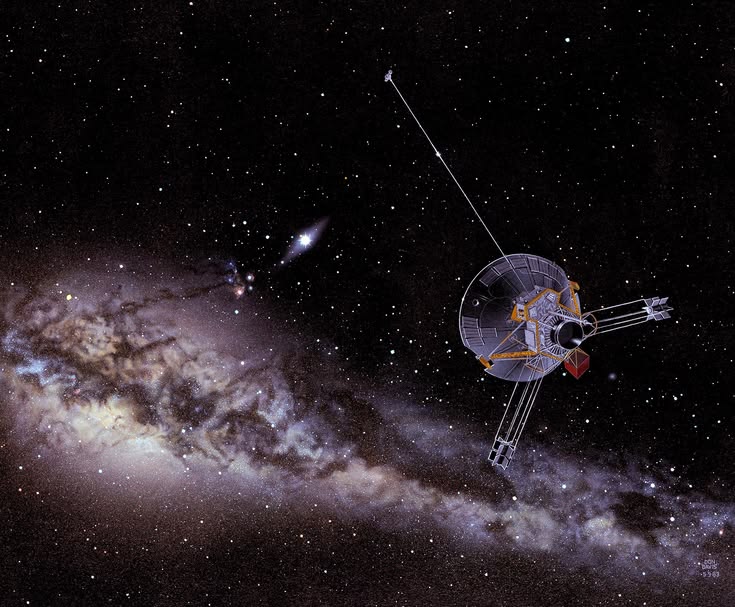
    NASA’s Voyager 1 probe was designed to explore the outer giant planets and send back photographs of Jupiter and Saturn. It was launched in 1977. More than eleven billion miles from Earth, floating through the icy void beyond our solar system, a tiny scrap of 1970s human ingenuity continues its lonely journey. Decades after its primary mission ended, the craft crossed the heliopause. The boundary where the sun’s protective magnetic bubble ends and true interstellar space begins. ​In recent months, engineers faced a daunting crisis. Voyager 1 began transmitting a repeating, meaningless gibberish loop of ones and zeros back to Mission Control. For a moment, scientists feared that after nearly half a century of unbroken operation, the farthest human artifact had finally succumbed to cosmic radiation and cold degradation. Yet through meticulous diagnostic work, engineers isolated a corrupt microchip. They rerouted its memory code across ancient hardware.  Hence, they successfully restored intelligible science data across the vast distance. ​Voyager 1’s survival is not just an engineering miracle; it is a profound testament to humanity’s desire to touch the unknown. ​A spindle of wire, a heart made of bronze, It drifts through the night where the quiet responds. Beyond the sun’s breath and the cradle of red, It whispers the secrets of worlds overhead. ​A Message in a Bottle Across Cosmic Waves ​Carried on the hull of Voyager 1 is the Golden Record, a gold-plated copper phonograph disc containing sounds of Earth, greetings in fifty-five languages, musical compositions from Bach to Chuck Berry, and encoded images of terrestrial life. It serves as an interstellar time capsule, intended to outlast our civilization and tell any distant intelligence who we were. ​We carved our desire on golden veneer, To prove in the darkness that someone was here. A chorus of ocean, a child’s brief greeting, Sent out to outlive every mortal heart’s beating. ​As the probe glides through the cosmic dust, its radio signal traveling at the speed of light takes over twenty-two hours to reach dish antennas on Earth. Every line of telemetry received is a faint echo from an environment no human eye will ever witness firsthand. The spacecraft operates on a diminishing power supply provided by its decaying plutonium generators. Year by year, NASA engineers shut down non-essential instruments to conserve every milliwatt of power, prioritizing the magnetometers and cosmic ray sensors that measure the interstellar medium. ​The Final Quiet Crossing ​The remaining active instruments will inevitably power down as the thermal generators fade entirely by the end of this decade. Voyager 1 will then become a silent voyager, drifting along its galactic orbit around the center of the Milky Way, unbothered by atmospheric drag or gravitational interference, lasting for millions of years. ​When the last power flickers and warmth slips away, It will glide through the night till the dawn of no day. No longer a transmitter, no longer a thread, Just a monument floating where gods used to tread. ​The triumph of retrieving clear data from Voyager 1 reminds us why we look up. Science and art stem from the same original impulse: the refusal to remain quiet in the vastness of the dark, and the drive to leave something meaningful behind before the power fades.

  • | |

    Shakespeare’s sorcery and silicon valley

    For over four centuries, William Shakespeare’s plays have served for understanding human nature, politics, psychology, and empire. Yet, as scholars Xin Chen Chai and Xin Ying Lim argue, his work offers surprising insights into a decidedly modern phenomenon. The hidden human and physical infrastructure driving artificial intelligence. When millions of users enter prompts into generative AI chatbots every day, the experience feels weightless, instantaneous and virtual. However, behind every generated sentence lies a physical network of high-powered data centers. These facilities consume massive volumes of electricity and millions of gallons of water to cool servers. This illusion of effortless command reflects the dynamic in Shakespeare’s The Tempest. In the play, the exiled duke Prospero rules a remote island through sorcery. He forces the spirit Ariel and the native inhabitant Caliban into servitude. Prospero’s magical feats appear grand and detached from the labor and coercion required to maintain his power. Modern AI systems operate on a similar logic. The seamless magic of AI algorithms obscures the extractive resource demands and physical labor that sustain them. Prospero’s dominance depended on usurping Caliban’s land and subjugating its inhabitants. Similarly, the expansion of tech infrastructure often targets marginalized or rural territories. The reasons are land and natural resources that can be acquired with minimal resistance. A real-world example unfolded within the Mvskoke Nation in Oklahoma. A proposed legislative bill, NCA 25-077, sought to establish the Mvskoke Technology and Innovation Park. The bill was put on the table to bring major data centers to tribal lands. However, Indigenous citizens, including Jordan Harmon and Mackenzie Roberts, showed strong opposition. They highlighted the facilities’ ravenous water and energy consumption. They raised concerns regarding digital surveillance.  Framing the development as a continuation of historical colonial exploitation. Due to community pressure and concerns, the tribal council ultimately rejected the proposal. Postcolonial scholars have long viewed The Tempest as a critique of colonial dynamics. They have  drawn direct parallels between Prospero’s rule and imperial subjugation. In the play, Prospero surrenders his magical powers only after securing his own political goals. It demonstrates that rulers rarely give up power purely out of goodwill.   The successful resistance within the Mvskoke Nation highlights an essential difference between literature and real-life action. Unlike Shakespeare’s characters, real communities are actively demanding accountability from corporate giants. Their resistance demonstrates that the unchecked expansion of data centers is not an inevitable trajectory. By pushing back against resource-extractive technology models, Indigenous and local communities are forcing a necessary public conversation about who truly benefits from artificial intelligence and who pays the hidden costs.

  • | |

    Press freedom across South Asia

    Press freedom across South Asia faces significant structural constraints. Media environments throughout the region share a common historical legacy often relying on inherited colonial-era penal codes alongside modern cybersecurity legislation. However, the legal frameworks and regulatory instruments used to govern the press vary across neighboring countries. Comparative Analysis by Country  Pakistan Pakistan Electronic Media Regulatory Authority (PEMRA), Prevention of Electronic Crimes Act (PECA), and administrative policy frameworks like the Foreign Media Facilitation Guidelines. Media regulation in Pakistan relies heavily on administrative controls, licensing restrictions, and broad content advisories prohibiting coverage of sensitive political or national security subjects. While constitutional protections exist under Article 19, exceptions based on glory of Islam, national defense, and public order give authorities broad latitude to issue blackout orders, manage foreign correspondents’ mobility through No Objection Certificates (NOCs), and impose structural pressure on broadcast networks.  India Information Technology Rules (2021), Digital Personal Data Protection (DPDP) Act, and the Unlawful Activities Prevention Act (UAPA). While India possesses a large and diverse private media market, journalists increasingly face legal scrutiny under broad national security and anti-terror legislation. Amendments to digital media laws allow central authorities to demand the takedown of online content deemed harmful to state interests. Furthermore, criminal defamation suits and restrictions on access to conflict areas (such as Jammu & Kashmir) remain common mechanisms of regulatory pressure. Bangladesh Cyber Security Act (CSA)—which replaced the controversial Digital Security Act (DSA) and state information ministry directives. For years, non-bailable clauses in cybersecurity statutes were widely criticized by media watchdogs for chilling investigative reporting on corruption or state officials. Following recent political transitions, draft media reform policies have been introduced, though press operations remain tightly monitored during periods of political volatility and public unrest.  Sri Lanka Online Safety Act, Prevention of Terrorism Act (PTA), and Official Secrets Act. Sri Lanka’s regulatory framework expanded significantly with the passage of the Online Safety Act, which created a government-appointed commission with sweeping powers to classify online content as false statements and order its removal. Critical reporting regarding state response to economic crises or wartime history continues to face legal and physical friction in sensitive provinces. Nepal: Press Council Act and National Mass Communications Policy. Nepal consistently ranks highest in South Asia on global press freedom indices, supported by a constitution that explicitly guarantees press rights without prior restraint. However, challenges persist regarding local government transparency, criminal defamation provisions, and proposed social media regulation bills that civil society groups fear could introduce licensing hurdles for digital outlets.  Afghanistan Direct directives issued by the Ministry for the Propagation of Virtue and the Prevention of Vice and the Ministry of Information and Culture. Following the political shift in 2021, independent journalism in Afghanistan has faced near-total suppression. Women journalists are largely banned from broadcasting, international news services face widespread blocking, and all local reporting is subject to strict pre-publication censorship. Common Trends Across the Region Across South Asia, governments are increasingly shifting control from traditional print/broadcast regulators toward cybersecurity, online safety, and data protection laws to monitor digital newsrooms and independent creators. Constitutional guarantees of free speech throughout South Asia uniformly contain broad public order and national defense exceptions, which states routinely cite to enforce reporting restrictions during regional crises. Beyond direct legal action, states across the region frequently utilize non-judicial levers such as withholding state advertising funds, slow-walking accreditation, or requiring special travel permits to shape editorial stances.

  • |

    Apple plans smart glasses with future health and fitness features

    Apple is reportedly working on a new generation of smart glasses that could eventually become an important part of its health and fitness ecosystem. Although the first version of the wearable device is expected to focus on core smart features, the company is said to have a long-term vision of transforming future models into personal health and wellness companions. Apple is exploring ways to expand its health-focused product lineup beyond the Apple Watch. The company is believed to be developing advanced fitness and wellness features for its upcoming wearable devices, allowing users to monitor their health more conveniently throughout the day. Apple has previously experimented with integrating fitness technology into its Vision Pro headset. The original concept involved a dedicated version of Apple Fitness+ that would let users participate in guided workout sessions while the headset tracked their body movements in real time. This system was designed to analyze posture, movement, and exercise performance, providing users with more accurate feedback during workouts. Reports also suggested that Apple had developed sophisticated body-tracking technology capable of monitoring users’ physical movements with a high level of precision. The feature was intended to enhance fitness training by measuring exercise form and movement patterns. However, despite the promising technology, Apple ultimately decided not to introduce these fitness capabilities with the Vision Pro. The main reason behind this decision was the headset’s weight. While Vision Pro offers advanced mixed-reality experiences, its relatively heavy design made it uncomfortable for prolonged physical activity. Wearing the headset during exercise was considered impractical, leading Apple to postpone its fitness ambitions for the device. Rather than abandoning the idea altogether, Apple appears to be shifting its focus toward lighter wearable products, particularly its upcoming smart glasses. These glasses are expected to provide a more comfortable platform for delivering health and fitness experiences without the limitations posed by a bulky headset. To support these efforts, Apple is reportedly recruiting specialists with expertise in health technology, spatial computing, and wearable devices. Recent job postings indicate that the company is looking for professionals who can help create innovative wellness and fitness experiences for future vision-based products. The hiring efforts suggest Apple remains committed to expanding the capabilities of its wearable ecosystem. Industry analysts have also indicated that Apple may incorporate heart-rate monitoring technology into future smart glasses. The sensor technology is expected to be similar to the heart-rate monitoring features reportedly being developed for upcoming AirPods models. If implemented successfully, these sensors could allow users to monitor key health metrics without relying solely on the Apple Watch. Although Apple has not officially confirmed the features or launch timeline, reports suggest that these advanced health capabilities are still under development. As a result, they are unlikely to appear in the first generation of Apple smart glasses. Instead, Apple is expected to introduce these fitness and wellness functions gradually in future versions of the device as the technology matures. While consumers may need to wait several years before these advanced features become available, Apple’s continued investment in wearable health technology highlights its ambition to build a broader ecosystem that seamlessly combines everyday convenience with personal health monitoring.