title Story

  • | | |

    Army major martyred, five terrorists killed

    A Pakistan Army major was martyred while leading an intelligence-based operation (IBO) against terrorists in the Razmak area of North Waziristan, the Inter-Services Public Relations (ISPR) said on Saturday. According to the military’s media wing, security forces launched the operation after receiving intelligence about the presence of terrorists in the area. During the exchange of fire, five terrorists affiliated with Fitna al Khawarij were killed. ISPR identified the martyred officer as Major Hafiz Ihsan Elahi, 34, a resident of Mianwali district. The military said the officer was leading his troops from the front and fought bravely during the operation before embracing martyrdom. The statement said the slain terrorists were actively involved in multiple attacks against security forces, law enforcement personnel and civilians. Security forces also recovered a cache of weapons, ammunition and other military equipment from the militants during the operation. Following the successful raid, sanitisation operations were launched in the surrounding areas to eliminate any remaining terrorists and ensure the area is fully cleared. The military said the operation forms part of Pakistan’s ongoing counterterrorism campaign under the Azm-i-Istehkam strategy approved by the Federal Apex Committee on the National Action Plan. The ISPR reiterated that Pakistan’s security forces remain committed to eliminating all forms of terrorism and will continue intelligence-driven operations against militants across the country. It added that the sacrifices of soldiers strengthen the nation’s resolve to safeguard peace and security. Pakistan has witnessed an increase in terrorist incidents since the banned Tehreek-i-Taliban Pakistan (TTP) ended its ceasefire with the government in late 2022. Since then, security forces have intensified intelligence-based operations in Khyber Pakhtunkhwa and Balochistan to dismantle militant networks.

  • | | |

    Khawaja Asif alleges money laundering network oper…

    Defence Minister Khawaja Asif has claimed that businesses established in Portugal by individuals linked to politics and the real estate sector are being used to facilitate money laundering from Pakistan. In a statement, the minister said that several people associated with political circles and the property business have set up commercial operations in Portugal. According to him, these businesses are allegedly providing services that enable money to be transferred out of Pakistan through illegal channels. Khawaja Asif further alleged that the same network is also involved in arranging documents for individuals seeking citizenship-related facilities in Portugal. He claimed that the businesses are being used not only for financial transactions but also to assist applicants in obtaining the paperwork required for immigration and citizenship purposes. The defence minister did not identify any individuals or organisations allegedly involved in the activities. He also did not present evidence to support the claims during his statement. His remarks come as authorities continue to focus on tackling financial crimes, including money laundering and the illegal movement of funds abroad. The allegations are expected to draw attention to the activities of overseas business networks and the use of foreign countries for financial transactions.

  • | | |

    Weak bureaucracy lies at heart of governance crisi…

    Recent remarks by Interior Minister Mohsin Naqvi, who said that Pakistan’s governance system has “collapsed,” have once again sparked debate over the country’s administrative failures. However, the real issue goes far beyond the number of provinces or administrative units and cannot be attributed solely to a lack of political will at the highest level. The core problem, according to the analysis, is the gradual weakening of Pakistan’s civil administrative structure, which has steadily lost its ability to govern effectively over the past several decades. Instead of identifying this institutional failure, the minister’s comments appear to focus on the symptoms of the crisis rather than its root causes. The repeated reliance on extraordinary measures, task forces, and parallel administrative structures itself reflects the inability of the regular civil bureaucracy to perform its responsibilities efficiently. Under the leadership of Army Staff Field Marshal Asim Munir,the military leadership has consistently emphasized economic revival, action against organized mafias, and restoring investor confidence. The establishment of the Special Investment Facilitation Council (SIFC) also emerged as a response to the inability of the civil bureaucracy to deliver timely economic solutions. However, such initiatives cannot permanently replace an efficient civilian administrative system. The governance crisis stems from the persistent decline in the effectiveness of Pakistan’s civil bureaucracy across the federation, provinces, divisions, and districts. Political interference, weak accountability, and poor human resource management have significantly undermined its performance. Punjab is often cited as a partial exception, where relatively limited political interference in routine administration has enabled the bureaucracy to function more effectively. This reinforces the argument that sustainable governance depends on institutional autonomy and merit-based administration rather than temporary or emergency arrangements. Governance experts have long advocated restoring the Establishment Division at the federal level and the Services and General Administration Departments (S&GADs) in the provinces to their original role as independent institutions responsible for managing human resources. Their objective is to ensure that appointments, promotions, and career planning remain protected from political influence and external pressure. The analysis further argues that Pakistan’s civil service should adopt a structured personnel management system similar to the military’s Military Secretary Branch at General Headquarters (GHQ), where recruitment, promotions, training, and career progression are managed through institutional discipline based on merit and performance rather than political considerations. The military’s internal human resource management system is often regarded as organized, merit-based, and largely insulated from political interference. In contrast, the civil Establishment Division is frequently viewed as a bureaucratic office where transfers and appointments are influenced by political lobbying, personal connections, and pressure from powerful groups instead of institutional needs. These practices have produced long-term consequences. Civil servants are often assigned to positions unrelated to their expertise, career planning remains weak or absent, and accountability mechanisms continue to be inconsistent and ineffective. As a result, governance across various sectors has suffered. The report notes that these shortcomings have been identified repeatedly over the years. More than 20 commissions and reform committees have reviewed Pakistan’s civil service structure during the country’s history. Between 1996 and 2008 alone, at least six major studies highlighted the same concerns, including politicization of the bureaucracy, the absence of merit-based appointments, and weak institutional management of human resources. Despite these findings, most recommendations were never implemented. Successive governments, whether civilian or military, have shown little willingness to reduce their influence over administrative appointments and transfers. Consequently, repeated attempts at civil service reform have failed to produce lasting institutional change. The analysis concludes that Pakistan’s governance crisis is not the result of a failure to identify the problem but rather a lack of political commitment to implementing meaningful institutional reforms. In this context, Mohsin Naqvi’s recent remarks do not fully address the deeper structural weaknesses within the state. The central issue is not merely that the system has collapsed, but that the country’s primary administrative engine—the civil bureaucracy—has been allowed to deteriorate without comprehensive reform. The proposed solution is not the creation of additional provinces but the rebuilding of the civil administrative system on the principles of merit, protection from political interference, and professional career management comparable to the military’s administrative framework.

  • | | |

    Second phase of AJK elections kicks off

    The second phase of the Azad Jammu and Kashmir (AJK) general elections began on Sunday with polling underway in Muzaffarabad division and all 12 refugee constituencies located across Pakistan. Polling started at 8am and will continue until 5pm without any break. Election officials opened polling stations early in the morning, while voters began arriving to cast their ballots. Security personnel were deployed across sensitive areas to ensure a peaceful voting process. This phase of the elections covers nine constituencies in Muzaffarabad division. These include five constituencies in Muzaffarabad district and two each in Neelum and Jhelum Valley districts. At the same time, polling is also being held for 12 refugee constituencies representing refugees from the Kashmir Valley and Jammu region. More than 340 candidates are contesting the elections in this phase. According to election authorities, 207 candidates are in the race for the nine seats in Muzaffarabad division, while another 137 candidates are contesting the refugee constituencies. More than 809,000 registered voters are eligible to vote in Muzaffarabad division. The refugee constituencies have over 438,000 registered voters. Thousands of election staff have been deployed to conduct polling and oversee the voting process. Authorities have established 1,483 polling stations across Muzaffarabad division. Among them, 533 have been declared highly sensitive, 741 sensitive and 209 normal. In addition, 1,057 polling stations have been set up for refugee constituencies in different provinces. The refugee constituencies are spread across Punjab, Khyber Pakhtunkhwa, Sindh, Balochistan and Islamabad. Polling arrangements have been completed in all regions where registered refugee voters are residing. In Rawalpindi and Islamabad, around 27,000 registered voters are casting their votes for three refugee seats. Election officials have established 175 polling stations, while enhanced security has been provided at sensitive locations. In Gujrat, Wazirabad and Mandi Bahauddin, nearly 2,000 police personnel have been deployed to maintain law and order during polling. More than 50,000 registered voters are expected to elect their representative in the constituency. Polling is also taking place in Karachi and several districts of Sindh for two refugee constituencies. Election officials have made arrangements to facilitate voters across the province. In Balochistan, polling stations have been established in Quetta, Pishin, Qila Saifullah, Hub, Loralai, Sibi, Mastung, Zhob and Barkhan for refugee voters. Similar arrangements have been made in Khyber Pakhtunkhwa, particularly in Swat and Mansehra, where polling is being held for another refugee seat. The second phase of the elections is taking place amid heightened political tensions between the Pakistan Peoples Party (PPP) and the Pakistan Muslim League-Nawaz (PML-N). Relations between the coalition partners have remained strained since the first phase of polling, with both parties accusing each other of electoral irregularities in several constituencies. Senior leaders from both sides held multiple meetings in recent days in an effort to resolve the dispute. However, the talks failed to produce an agreement before the second phase of voting. The PPP has demanded legal action and re-polling in selected constituencies, while the PML-N has rejected allegations of organized rigging and maintained that the election results reflect the will of the voters. Meanwhile, Prime Minister Shehbaz Sharif met PML-N President Nawaz Sharif to review the political situation and discuss developments related to the AJK elections. Senior party leaders also attended the meeting and discussed the coalition’s future strategy.

  • | | | |

    AJK polling postponed in LA-27 after landslides

    MUZAFFARABAD: Polling for the Azad Jammu and Kashmir (AJK) Legislative Assembly constituency LA-27 Muzaffarabad-I was postponed on Sunday after heavy monsoon rains and landslides cut off key roads, preventing election officials and polling materials from reaching voting stations on time. According to the AJK Election Commission, severe weather disrupted transportation routes across parts of the constituency, making it impossible for polling staff and election equipment to arrive before the scheduled start of voting. As a result, polling in the constituency was suspended for the day. The commission said the decision was taken after assessing the situation on the ground and consulting the district administration, which had been working to reopen blocked roads since early morning. However, despite continued efforts, several affected routes remained inaccessible due to landslides and debris caused by the intense rainfall. Election authorities announced that a new polling date for LA-27 Muzaffarabad-I would be declared later in the day, with an official announcement expected at 2pm. The Election Commission expressed regret over the inconvenience caused to voters and appealed for public cooperation, stressing that the postponement was necessary to ensure the safety of election personnel and to conduct the electoral process in a fair and orderly manner. While polling was halted in LA-27, voting in all other constituencies across Azad Jammu and Kashmir continued according to schedule under security arrangements. Election officials said polling activities elsewhere remained unaffected by the weather. The suspension highlights the challenges posed by the ongoing monsoon season in the mountainous region, where heavy rainfall frequently triggers landslides and road closures, disrupting transportation and public services. Authorities said they were closely monitoring weather conditions and coordinating with local administration to restore road access as quickly as possible so that polling in the affected constituency can be held without further delay. Voters in LA-27 have been advised to stay updated through official Election Commission announcements regarding the revised polling schedule and any additional instructions.

  • | | |

    Polling continues in second phase of AJK elections

    Voting is underway in the second phase of the Azad Jammu and Kashmir (AJK) Legislative Assembly elections, with polling taking place for nine constituencies in Muzaffarabad Division and 12 refugee constituencies located across different parts of Pakistan. Polling began at 8:00am and will continue without interruption until 5:00pm. Election authorities have urged voters to reach their designated polling stations before the closing time to cast their ballots. Extensive security arrangements have been made to ensure peaceful polling throughout the election process. Officials said 1,483 polling stations have been established across Muzaffarabad Division, while election staff and security personnel have been deployed to maintain law and order. The second phase is considered an important stage of the AJK elections, as thousands of voters are participating in the selection of representatives for the Legislative Assembly. Alongside the nine seats in Muzaffarabad Division, polling is also being held for 12 refugee constituencies representing Kashmiri refugees residing in various cities across Pakistan. These include six Jammu seats and six Kashmir Valley seats. In Karachi, polling is being conducted for LA-34 (Jammu-I) and LA-40 (Kashmir Valley-I). Election officials have established 34 polling stations to facilitate voters in the city. According to election authorities, 698 registered voters are eligible to vote in the Jammu-I constituency in Karachi, while the Kashmir Valley-I constituency has 4,200 registered voters. Polling is also in progress for three refugee constituencies in Rawalpindi and Islamabad, including LA-43 (Valley-IV), LA-44 (Valley-V) and LA-39 (Jammu-VI). Election officials said 12 candidates are contesting LA-43, while eight candidates are in the race for LA-44. A total of 14 candidates are contesting the LA-39 constituency. LA-43 has 3,346 registered voters, including more than 1,600 women voters. LA-44 has 6,996 registered voters, including 3,294 women, while nearly 37,000 voters are registered in LA-39, making it one of the largest refugee constituencies in the current election phase. To facilitate voting, the District Election Commission has established 10 polling stations for LA-43, 27 polling stations for LA-44 and 155 polling stations for LA-39. Election officials said polling is continuing under strict security, with law enforcement agencies deployed at polling stations and sensitive locations to ensure a peaceful voting environment. Authorities are closely monitoring the electoral process and have urged political workers and voters to follow election rules.

  • | | |

    New CCTV footage surfaces in Mir Raza murder

    New CCTV footage has emerged in the investigation into the murder of Mir Raza Ali Khan, whose body was found in Karachi’s Gulistan-e-Jauhar area two days after he went missing. The footage shows Mir Raza taking a firearm out of a drawer inside his home and placing it in his vehicle before leaving. He is then seen returning to the kitchen shortly afterward. Another CCTV clip recorded at 4:38am shows Mir Raza walking alone near the area where his body was later discovered. According to police, Mir Raza went missing on July 28 after leaving his home in PECHS. Investigators said he departed at 4:09am in an online taxi and was later found dead in Gulistan-e-Jauhar. Police said the victim was shot in the chest and his body was recovered in a severely mutilated condition. Investigators also revealed that all of his social media accounts had been deactivated a day before his body was found. Authorities have sought Mir Raza’s mobile phone records and data of people who were in contact with him before his disappearance. Police are also examining information obtained from the telecom company as part of the ongoing investigation. The driver of the ride-hailing taxi used by Mir Raza has also been questioned. In his statement, the driver told investigators that he dropped the victim near his destination in Gulistan-e-Jauhar before leaving. Earlier, police recovered Mir Raza’s mobile phone and a pistol holster from the crime scene, which are now being examined as evidence. Mir Raza’s father said his son was due to marry on August 30 at Bait-ul-Mukarram Mosque in Gulshan-e-Iqbal. He said Mir Raza was excited about starting a new chapter of his life, making the tragedy even more heartbreaking for the family. Police said the investigation is continuing from multiple angles and that all available evidence, including CCTV footage, digital records and witness statements, is being analysed to identify those responsible for the killing.

  • | | |

    Operation ’11 Garaj’ continues as 10 T…

    Pakistan’s security forces continued Operation “11 Garaj” with multiple intelligence-based operations in different parts of Khyber Pakhtunkhwa. The latest actions targeted militants belonging to the banned Tehreek-e-Taliban Pakistan (TTP), also referred to by the state as Fitna al-Khawarij. According to security sources, two militants were killed during an operation in the Shakro area of Bajaur district. The militants had allegedly established hideouts inside mosques and were using them as operational bases. Security forces launched the operation after receiving verified intelligence about their presence in the area. In another intelligence-based operation, security forces targeted militant hideouts in the Darbi Khel and Battan areas of Khyber district. Eight more TTP militants were killed during the operation. The actions were carried out after security agencies gathered confirmed intelligence regarding militant activities in the region. Officials said all the operations were based on credible intelligence and were aimed at dismantling terrorist networks operating in Khyber Pakhtunkhwa. The operations form part of the ongoing campaign under Operation “11 Garaj” to eliminate militant threats and prevent terrorist attacks. Security officials said the purpose of these operations is to clear the affected areas of terrorist elements, strengthen law and order, and ensure lasting peace for local communities. They added that intelligence-based operations will continue wherever the presence of militants is confirmed.

  • | | |

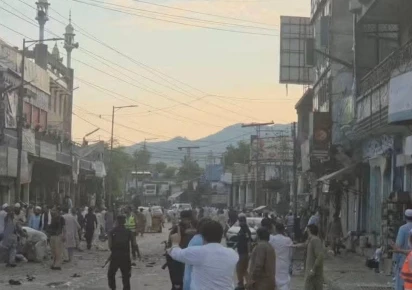
    Suicide blast outside Swat police station injures …

    A suspected suicide bomber detonated explosives outside the Kabal Police Station in Swat district on Sunday after reportedly failing to enter the premises, leaving several police personnel and civilians injured. According to senior police officials, the attacker tried to force his way into the police station but was intercepted by an alert police officer at the main entrance. Unable to gain access, the suspect blew himself up near the station’s gate, triggering a powerful explosion. Authorities said the police station is located close to the police lines and several other sensitive government installations, raising concerns that the attacker may have intended to target security facilities. Officials credited the swift response of police personnel with preventing the bomber from reaching the compound, which likely averted greater casualties and damage. Initial reports indicated that at least four police officers sustained serious injuries in the blast, while two civilians were also hurt. However, rescue officials later confirmed that more than 15 injured people had been transported to different hospitals for medical treatment, suggesting the number of casualties could rise as rescue efforts continued. Emergency response teams rushed to the scene immediately after the explosion, providing first aid to the injured and shifting them to nearby healthcare facilities. Security forces cordoned off the area, launched a search operation, and began collecting evidence to determine the nature of the attack and identify those behind it. Police officials also clarified that a protest by local youths was taking place in the wider area at the time of the incident, but the demonstration was located some distance from the blast site and was not directly affected.

  • | | |

    AJK election polling ends, counting underway

    Polling for the second phase of the 2026 general elections to the Azad Jammu and Kashmir (AJK) Legislative Assembly concluded on Sunday, with vote counting now underway across the contested constituencies. The election was held for eight constituencies in the Muzaffarabad Division and 12 seats reserved for Kashmiri refugees residing in different cities of Pakistan. Polling in LA-27 Muzaffarabad was postponed due to bad weather and landslides, while clashes in LA-31 left a Pakistan Peoples Party (PPP) worker dead. In Khawra, Member of the National Assembly (MNA) Salahuddin Junejo and two party workers were injured in a firing incident. Voting began at 8:00 a.m. and was originally scheduled to end at 5:00 p.m. However, the AJK Election Commission extended polling by one hour in the Muzaffarabad Division due to a high voter turnout, allowing voters to cast their ballots until 6:00 p.m. More than 1.2 million registered voters were eligible to vote in the second phase of the elections. A total of 208 candidates contested nine constituencies in the Muzaffarabad Division, which has 809,621 registered voters, while 143 candidates competed for the 12 refugee seats. Authorities established 1,483 polling stations across the Muzaffarabad region, with heavy security deployed at highly sensitive locations. Polling Postponed in LA-27 Although elections were scheduled in nine constituencies of Muzaffarabad Division, polling was held in only eight. The Election Commission postponed voting in LA-27 Muzaffarabad-II (Lachhrat) after severe weather and landslides disrupted access to several polling stations. Fresh polling in the constituency has been scheduled for August 4. Voting in some constituencies began late, while the PPP accused the Pakistan Muslim League-Nawaz (PML-N) of electoral irregularities. The party’s election cell submitted formal complaints to the Chief Election Commissioner. Clashes and Violence A PPP worker, identified as Mushtaq Shah, was killed during clashes in LA-31. In Khawra, PPP MNA Salahuddin Junejo, who represents NA-210 Sanghar-II, suffered a gunshot wound to his arm during a firing incident. Two party workers were also injured and all three were shifted to hospital for treatment. In LA-29 (Muzaffarabad-III), polling was temporarily suspended after clashes erupted between supporters of the PML-N and the PPP. In LA-43 (Rawalpindi Valley-IV), PPP candidate Javed Butt reportedly entered the Millat Colony polling station accompanied by an armed guard. According to reports, the guard was not stopped by police personnel. Security and Key Contests Constituencies LA-28, LA-29, and LA-31 were declared highly sensitive due to security concerns. Closely watched contests included prominent political figures such as Shah Ghulam Qadir of the PML-N, Sardar Tanveer Ilyas of the Istehkam-e-Pakistan Party (IPP), former Prime Minister Raja Farooq Haider, and AJK Legislative Assembly Speaker Chaudhry Latif Akbar. In the Rawalpindi Division, 35 candidates contested three refugee seats, representing 27,907 registered voters. Voting also took place in Karachi for two refugee constituencies representing Kashmir and Jammu. For security, around 4,000 police personnel were deployed. Out of 175 polling stations, 31 were declared sensitive. In Khyber Pakhtunkhwa, 41 polling stations were established across 21 districts for LA-45 Kashmir Valley-VI, where 7,655 registered voters were eligible to cast their ballots.