
title Story

  • | | |

    Military rejects talks with terrorists, vows conti…

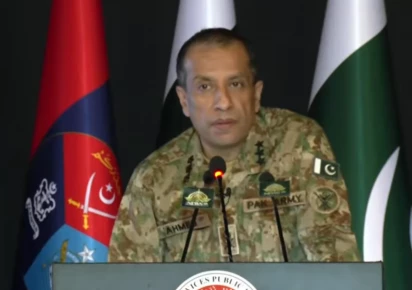
    Pakistan’s military has categorically ruled out any future negotiations with terrorist groups, declaring that security forces will continue operations until militancy is eliminated. The announcement was made by Director General of Inter-Services Public Relations (ISPR), Lieutenant General Ahmed Sharif Chaudhry, during a detailed media briefing on the country’s security situation and ongoing counterterrorism campaign. The military spokesperson said there was no possibility of holding talks with terrorists. He stressed that the state would not negotiate with those involved in violence against Pakistan. According to him, terrorists have only two choices: surrender before the law or face decisive action by the country’s security forces. Lt Gen Chaudhry said the armed forces would continue to engage directly with the people of Balochistan instead of individuals or groups involved in violence. He emphasized that the people of the province are the true stakeholders and that the military remains committed to protecting their lives and supporting their development. He also criticized certain influential elites and tribal leaders, claiming they had failed to promote the welfare of ordinary people. According to him, some powerful groups do not want children from poor families to progress through education and development. The military spokesperson further alleged that the Taliban administration in Afghanistan was providing support to terrorist groups carrying out attacks inside Pakistan. He said cross-border militancy remains one of the country’s major security challenges and continues to complicate efforts to maintain peace. Rejecting claims that the security situation in Balochistan is rapidly deteriorating, Lt Gen Chaudhry said a coordinated propaganda campaign was being carried out to create a false impression about conditions in the province. He maintained that while security challenges exist, the state is actively responding through intelligence-based operations and law enforcement measures. Speaking about Balochistan, he said the province’s unique geography presents operational challenges. Its vast territory, scattered population, and long distances between security posts require extensive coordination and resources. He added that security forces are dealing not only with terrorism but also with organized criminal activities, including drug trafficking, fuel smuggling, robbery, and other illegal networks that threaten stability. Addressing the issue of missing persons, the military spokesperson said the relevant commission had received hundreds of complaints. However, he noted that investigations had revealed that some individuals listed as missing were later found to have been killed during security operations, while others had joined militant organizations and were living in terrorist camps. Lt Gen Chaudhry presented detailed statistics on the country’s counterterrorism campaign. He said security forces have carried out 40,348 intelligence-based operations across Pakistan during the current year. These operations resulted in the killing of 2,084 confirmed terrorists, averaging approximately 10 militants eliminated every day. He added that security forces conduct nearly 194 operations daily as part of ongoing efforts to dismantle militant networks. Khyber Pakhtunkhwa remained the main focus of these operations, with 1,971 intelligence-based missions conducted in the province alone. The military also shared figures regarding casualties suffered during the ongoing campaign. According to Lt Gen Chaudhry, 819 people embraced martyrdom during the year. These included 303 personnel of the Pakistan Army, 194 members of law enforcement agencies, and 322 civilians who lost their lives in terrorist attacks and security-related incidents. The ISPR chief further revealed that 28 suicide attacks had been recorded across Pakistan during the current year. He claimed Afghan nationals were involved in the recent suicide attacks in Tank and Karachi, describing the incidents as evidence of continued cross-border terrorist involvement. Highlighting the importance of national unity, Lt Gen Chaudhry said Pakistan’s Constitution and legal system apply equally to every citizen. He stressed that loyalty to the state is a fundamental responsibility and said national peace, political stability, and economic development depend on a strong and secure Pakistan.
  • | | |

    Pakistan needs hard governance to defeat terror: D…

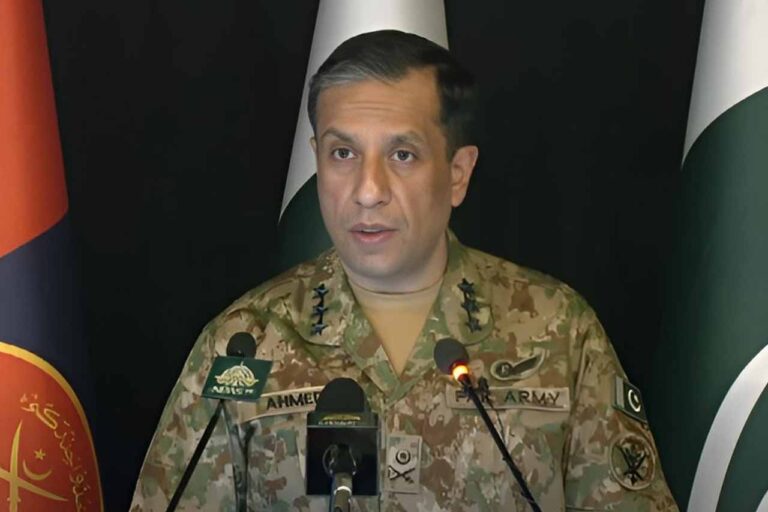
    Director General of Inter-Services Public Relations (ISPR) Lieutenant General Ahmed Sharif Chaudhry has said Pakistan must become a “hard state” where the Constitution and law are applied equally to everyone, stressing that strong governance is essential to defeating terrorism and ensuring lasting peace. He rejected claims that the security situation in Balochistan is worsening, calling them part of a deliberate campaign to create a false perception about the province. Addressing a detailed press conference on Friday, the military spokesperson said Pakistan’s security forces continue to make significant gains against terrorism through sustained intelligence-based operations across the country. Lt Gen Chaudhry said a total of 40,348 intelligence-based operations (IBOs) have been carried out so far this year by the armed forces, police, intelligence agencies and civil armed forces. More than 31,000 of these operations were conducted in Balochistan, reflecting the state’s continued focus on restoring peace in the province. He said Pakistan recorded 3,145 terrorism-related incidents during 2026. Of these, 1,971 incidents occurred in Khyber Pakhtunkhwa, 1,148 in Balochistan and 26 in other parts of the country. The ISPR chief said security forces killed 2,084 confirmed terrorists during operations this year, describing it as the highest average in the country’s history. On average, around 10 terrorists have been eliminated every day, while nearly 200 intelligence-based operations are conducted daily. Highlighting the sacrifices made in the fight against terrorism, Lt Gen Chaudhry said 819 Pakistanis lost their lives in terrorism-related incidents this year. The victims included 303 military personnel, 194 members of police and civil armed forces, and 322 civilians. He also revealed that 28 suicide attacks had taken place across the country during the year. According to him, most of these attacks involved Afghan nationals or individuals linked to groups operating from Afghan territory. The military spokesperson said the rise in terrorist attacks should not be viewed as a sign of weakness. Instead, he argued that militant groups have intensified attacks because of increasing pressure from proactive security operations and repeated battlefield setbacks. Lt Gen Chaudhry also accused the Afghan Taliban administration of allowing terrorist groups to operate from Afghan soil, claiming cross-border support remains a major factor behind terrorism inside Pakistan. Explaining his vision of a “hard state,” he said it does not mean military rule. Rather, it refers to a country where institutions function according to the Constitution, laws are enforced fairly, and no individual or group stands above the law. Referring to Article 5 of Pakistan’s Constitution, he said loyalty to the state and obedience to the Constitution are fundamental duties of every citizen. He added that discussions about rights must also include recognition of civic responsibilities. Speaking specifically about Balochistan, Lt Gen Chaudhry said the province’s real challenge lies with certain elites and tribal leaders who seek to preserve the existing power structure. He alleged that some influential groups oppose educational and economic progress because they fear losing their traditional influence. He further claimed that some individuals benefit from illegal activities, including smuggling and other criminal networks, and promote unrest whenever the state strengthens law enforcement or cracks down on such activities. The military spokesperson reiterated that Pakistan would not negotiate with terrorist groups or those using violence for political purposes. Instead, he said the armed forces would continue engaging directly with the people of Balochistan, whom he described as the province’s true stakeholders. Lt Gen Chaudhry also alleged that hostile foreign powers are attempting to exploit Balochistan’s strategic location and natural resources by supporting anti-state elements in collaboration with local actors opposed to reforms and development. Discussing the issue of missing persons, he said the Commission of Inquiry on Enforced Disappearances has received 10,901 complaints since its establishment. Of these, 9,372 cases have been resolved, with 4,896 individuals returning home, around 1,030 found in prisons, 308 confirmed dead, and nearly 2,400 complaints determined to be incorrectly reported. He added that 2,933 complaints originated from Balochistan, of which 2,767 have already been resolved.

  • | | |

    AJK violence won’t derail democracy: DG ISPR

    Pakistan’s military has defended the state’s handling of unrest in Azad Jammu and Kashmir (AJK) and the security situation in Balochistan, saying the government is exercising restraint while remaining committed to constitutional governance, counterterrorism efforts and national stability. Addressing a detailed press conference on Friday, Director General of Inter-Services Public Relations (ISPR) Lieutenant General Ahmed Sharif Chaudhry said political issues should be resolved through democratic and constitutional means, while security challenges require strong governance and public support. State urges constitutional path in AJK The military spokesperson said the state had acted with restraint in dealing with recent unrest in AJK, adding that the electoral process would continue without disruption. He stressed that the will of the people should be reflected through democratic institutions and that all individuals would be held accountable under the Constitution and the law. He said Pakistan remained committed to its long-standing position on Kashmir, describing the region as central to the country’s national policy. He also rejected claims that the Pakistan Army was an occupying force in AJK, saying security matters in the region were being handled by the AJK government, police and civilian law enforcement agencies. The DG ISPR alleged that India was attempting to fuel instability inside Pakistan through proxy campaigns and misinformation, while reaffirming Pakistan’s support for the Kashmiri people’s right to self-determination under United Nations resolutions. Good governance key to national security Responding to questions about governance reforms, the military spokesperson said effective administration was essential for ensuring peace and long-term stability. He noted that Pakistan’s rapidly growing population required a review of administrative structures and said reforms should be debated and implemented through constitutional and democratic processes. He said an administrative reset could be considered if it helped improve governance, but emphasized that any changes must reflect the will of the people and remain within the legal framework. Referring to the National Action Plan, he said most of its objectives—including countering extremist narratives, stopping terror financing, improving institutional capacity and tackling smuggling—depended on strong governance rather than military action alone. Security operations intensify against terrorism The DG ISPR said security forces had significantly increased intelligence-based operations across the country during 2026, conducting thousands of operations aimed at dismantling terrorist networks. According to him, more than 2,000 militants had been killed this year, while hundreds of security personnel and civilians had embraced martyrdom. He said the majority of recent suicide bombers were Afghan nationals and accused militant groups linked to the Afghan Taliban of supporting cross-border terrorism against Pakistan. He maintained that the rise in security incidents reflected a more aggressive counterterrorism strategy, with intelligence-led operations forcing militants into direct confrontation with security forces. Balochistan challenges linked to governance and propaganda Discussing Balochistan, the military spokesperson said the province’s security challenges stemmed from a combination of militancy, organized crime, entrenched elite interests and external interference. He argued that some influential groups resisted reforms to preserve their political and economic influence, while terrorist organizations exploited local grievances through propaganda. He highlighted ongoing development projects, including investments in education, healthcare, transport infrastructure and Gwadar’s development, saying the government had allocated substantial resources to the province. He also referred to data from the Commission of Inquiry on Enforced Disappearances, stating that most reported cases had already been resolved while investigations into the remaining cases were continuing.

  • | | |

    Murad rejects Naqvi’s proposal for new admin…

    KARACHI: Sindh Chief Minister Murad Ali Shah has strongly rejected Interior Minister Mohsin Naqvi’s proposal for creating new administrative units, calling it an outdated idea that the people of Sindh would never accept. Speaking to reporters in Bhit Shah on Friday, Murad said he had heard the interior minister’s statement but was unsure what exactly he was referring to. He said if Mohsin Naqvi believes the current governance system has failed, he is free to present proposals, but the idea of creating new administrative units is an old suggestion that has already been debated. The chief minister said Sindh is the land of Sufi traditions and its people would not support such a move. He stressed that any proposal affecting the province should reflect the will of its people. Murad also pointed out that different political parties are governing different parts of the country. He noted that Punjab is ruled by the Pakistan Muslim League-Nawaz (PML-N), Balochistan has a coalition government, Sindh is governed by the Pakistan Peoples Party (PPP), while Khyber Pakhtunkhwa is under the Pakistan Tehreek-e-Insaf (PTI). Commenting on the country’s youth, Murad said young people are Pakistan’s future and will lead the nation in the years ahead. He rejected any negative remarks about them, saying the youth are a valuable national asset and should be encouraged rather than criticised.

  • | | | |

    Pakistan hails Hamas disarmament progress, under p…

    Pakistan has welcomed recent progress under the Gaza Peace Plan, describing developments toward Hamas’ disarmament as a positive step that could help revive efforts for a lasting political solution and the creation of an independent Palestinian state. Prime Minister Shehbaz Sharif praised the mediation efforts of the United States, Egypt, Qatar, and Türkiye after US President Donald Trump announced that an agreement had been reached for the complete disarmament of Hamas. The announcement is viewed as a significant breakthrough in implementing the Gaza ceasefire framework, as the issue of Hamas’ weapons has remained one of the main obstacles since the truce was reached in October 2025. In a statement shared on social media, the prime minister said Pakistan supports the ongoing work of the Board of Peace and expressed hope that all commitments under the Gaza Peace Plan would now move toward practical implementation. He emphasized that sustained diplomatic efforts should lead to a credible, time-bound political process in line with United Nations resolutions, ultimately ensuring the Palestinian people’s right to self-determination through the establishment of an independent state. According to Hamas officials, a committee operating under the Board of Peace will supervise the storage of the group’s weapons as part of the agreed process. The organization has also urged mediators to ensure that Israel fulfills its obligations under the ceasefire, including the withdrawal of its forces from Gaza. Although the ceasefire has reduced large-scale fighting, violence has not completely stopped. Fresh Israeli strikes reportedly killed at least four Palestinians, including two children, highlighting the fragile security situation despite ongoing diplomatic efforts. Meanwhile, Egyptian media reported that Cairo is expected to host another meeting of the ceasefire mediators, including representatives from the United States, Qatar, and Türkiye, to discuss the next phase of the peace plan. Pakistan has consistently maintained its support for the Palestinian cause and continues to advocate for an independent Palestinian state based on the pre-1967 borders, with Al-Quds Al-Sharif as its capital. Islamabad, which has no diplomatic relations with Israel, has repeatedly urged the international community to work toward a peaceful resolution of the conflict through dialogue and adherence to international law.

  • | | | |

    Petrol down to Rs336.03, diesel to Rs392.38

    The federal government has announced a slight reduction in the prices of petrol and high-speed diesel for the next fortnight. According to a notification issued by the Petroleum Division, the price of high-speed diesel has been reduced by Rs0.66 per litre. Following the latest revision, the new price of diesel has been fixed at Rs392.38 per litre. The government has also lowered the price of petrol by Rs0.12 per litre. After the reduction, the new retail price of petrol now stands at Rs336.03 per litre. The revised fuel prices came into effect after the issuance of the official notification by the Petroleum Division. Petrol is widely used by private vehicles, motorcycles and small transport operators across the country, while high-speed diesel is mainly consumed by heavy transport, agricultural machinery and industrial sectors. Any change in fuel prices directly affects transportation costs, production expenses and the overall cost of living. Although the latest reduction is modest, it provides some relief to consumers and businesses that rely on petroleum products for their daily operations. The government reviews petroleum prices periodically, taking into account fluctuations in international oil markets, exchange rate movements and applicable taxes and levies before announcing revised rates. The latest adjustment reflects the government’s routine fuel price review mechanism.

  • | | |

    Naqvi’s remarks backed administrative reforms, s…

    ISLAMABAD: Interior Minister Mohsin Naqvi’s recent remarks about Pakistan’s governance system reflected ongoing discussions on improving administrative efficiency through the creation of new provinces or administrative units, according to informed sources. Naqvi made the comments while addressing the Pakistan Economic Summit 2026 on Thursday. During his speech, he described the country’s governance system as “broken” and urged political parties to develop a consensus on the issue of creating new provinces. His remarks triggered widespread debate among political leaders, analysts and journalists, with many questioning the message behind his statement. According to sources familiar with the matter, the minister’s comments should not be viewed as criticism of the federal government or as a sign of differences within the state institutions. Instead, they said the remarks were aimed at highlighting the need for administrative reforms to improve governance and ensure better delivery of public services. Speaking at the summit, Naqvi said the existing governance structure was no longer capable of addressing Pakistan’s growing challenges. He warned that unless major reforms were introduced, the country would continue discussing the same problems even after another 10 years. The interior minister stressed that Pakistan needed a long-term solution rather than temporary measures. He said the issue of creating new administrative units should be placed before the people so that a national consensus could be developed through public debate. Naqvi also referred to the prime minister’s reported long working hours, saying that working 18 to 20 hours a day reflected commitment but could not permanently solve structural governance problems. He said such efforts were similar to dealing with emergencies instead of addressing the root causes of the country’s administrative challenges. His remarks immediately sparked political speculation in Islamabad. Some observers interpreted the statement as an acknowledgment that the current governance model was not delivering the desired results. Others suggested the comments reflected dissatisfaction with the existing administrative structure. Some political analysts also linked the statement to speculation about differences between the civil government and the military establishment. However, informed sources firmly rejected that interpretation. A source with knowledge of the matter said there was no disagreement between Islamabad and Rawalpindi regarding the issue. The source emphasized that Naqvi’s speech was focused solely on promoting the idea of administrative reforms through the establishment of additional administrative units. According to the source, the purpose of the remarks was to encourage discussion among policymakers, political parties and the public about whether Pakistan should adopt a new administrative framework to improve governance across the country. Observers believe supporters of the proposal argue that Pakistan’s existing provincial structure has become too large and complex to effectively manage the country’s administrative and development needs. They maintain that smaller provinces or administrative units could bring government institutions closer to the people, improve service delivery, strengthen local administration and make governance more efficient.

  • | | | |

    Iran warns of Strait of Hormuz closure as regional tensions escalate

    TEHRAN: Iran has warned that continued US pressure in regional waters could force the closure of the Strait of Hormuz and other strategic maritime routes, as military and diplomatic tensions across the Middle East continue to intensify. Mohammad Bagher Zolghadr, Secretary of Iran’s Supreme National Security Council, said continued US actions in the region could have serious consequences for global shipping and energy supplies. According to Iranian state media, he warned that any further escalation could affect not only the Strait of Hormuz but also other key maritime chokepoints. He said such developments would have a significant impact on the global economy, international energy markets and trade, while also increasing political pressure within the United States. Meanwhile, Kuwait announced that its air defence systems intercepted drones launched from Iran early Saturday. The Kuwaiti military said the drones were successfully engaged before causing damage and confirmed that no casualties or destruction had been reported. Residents were advised to follow official safety instructions as authorities monitored the situation. In Yemen, the Houthi movement denied reports that it planned to charge commercial vessels for passing through the Bab al-Mandab Strait. The group’s Humanitarian Operations Coordination Center said no decision had been taken to impose transit fees and stressed that safe passage through the waterway remained free. The Houthis also urged shipping companies not to make payments to unauthorised individuals claiming to represent Yemeni authorities. The clarification came after reports suggested the group was considering introducing charges following its declaration of a maritime blockade targeting Saudi Arabia. Separately, the Houthis claimed that eight Saudi oil tankers had been forced to reroute around the Cape of Good Hope instead of using the Bab al-Mandab Strait. The group said the diversions were a result of its maritime blockade, although the claim has not been independently verified. Maritime security concerns also increased after a commercial tanker was struck by an unidentified projectile near the coast of Oman. The UK Maritime Trade Operations (UKMTO) said the projectile damaged the vessel’s engine room, leaving it unable to manoeuvre. No casualties or environmental damage were reported, while an investigation into the incident is underway. Iranian Foreign Minister Abbas Araghchi said Tehran is working with Oman to establish practical mechanisms for managing navigation through the Strait of Hormuz. During a telephone conversation with British Foreign Secretary Ed Miliband, Araghchi said outside interference would only worsen the regional situation and complicate efforts to maintain maritime stability. The British foreign secretary reiterated London’s support for diplomacy and said the United Kingdom was not involved in any war with Iran. He stressed that dialogue remained the best path to reducing tensions in the region. Meanwhile, reports from US media suggested that Washington and Israel are considering possible strikes on Iran’s energy infrastructure. According to the reports, discussions have focused on targeting energy facilities if diplomatic efforts fail. However, no final decision has been officially announced. Iranian officials responded by warning that the country has prepared plans to retaliate against any future military action targeting its territory. They said any attack would receive a strong response against strategic interests in the region.

  • | | | |

    RLNG prices jump up to 34.6% amid supply disruptio…

    ISLAMABAD: The Oil and Gas Regulatory Authority (OGRA) has increased the prices of re-gasified liquefied natural gas (RLNG) by up to 34.6% for July 2026, as continued disruptions in LNG supplies from Qatar forced Pakistan to rely on expensive spot market imports. According to an official notification, consumers of Sui Southern Gas Company (SSGC) will face the largest increase. The RLNG price for SSGC consumers has been fixed at $25.087 per MMBtu, following an increase of $6.4512 per MMBtu, representing a 34.6% rise. Consumers of Sui Northern Gas Pipelines Limited (SNGPL) will also pay higher rates. The regulator fixed the RLNG price at $25.8388 per MMBtu, an increase of $6.316 per MMBtu, or 32.35%, compared with the previous month. Officials said the latest increase was mainly driven by a sharp decline in LNG imports during July. Pakistan received only five LNG cargoes throughout the month, making it the third-lowest monthly import volume since the country started importing LNG. The reduced supply forced the country to purchase all available LNG cargoes from the international spot market, where prices are generally much higher and more volatile than long-term contractual rates. Energy officials said state-owned Pakistan LNG Limited arranged all five cargoes from the spot market. Meanwhile, Pakistan did not receive any LNG shipments under its long-term agreements with Qatar during the month. The interruption in Qatari supplies has continued since damage to energy infrastructure earlier this year, affecting LNG exports to several countries in Asia and Europe, including Pakistan. Experts said the absence of lower-cost LNG from long-term contracts has significantly increased Pakistan’s import bill and placed additional pressure on the country’s energy sector. Since the regional conflict in the Middle East began earlier this year, RLNG prices in Pakistan have risen by more than 144%, making energy substantially more expensive for industries, businesses and other consumers.

  • | | |

    99 years of PLA: Pakistan reaffirms China defence …

    The 99th anniversary of the founding of China’s People’s Liberation Army (PLA) was commemorated at General Headquarters (GHQ) in Rawalpindi, with senior Pakistani and Chinese officials reaffirming their commitment to strengthening bilateral defence cooperation. Chinese Ambassador to Pakistan Jiang Zaidong attended the ceremony as the chief guest. China’s Defence Attaché Major General Wang Zhong, officials from the Chinese Embassy, and senior officers from Pakistan’s armed forces were also present at the event. Chief of Army Staff and Chief of Defence Forces Field Marshal Syed Asim Munir welcomed the Chinese delegation and congratulated the PLA on completing 99 years of service. He praised the Chinese military’s role in strengthening China’s defence capabilities, supporting national development and contributing to international peace and security. Highlighting the close relationship between Pakistan and China, Field Marshal Munir said the friendship between the two countries is based on mutual trust and has remained strong despite changing regional and global challenges. He described the Pakistan Armed Forces and the PLA as reliable partners, saying both sides share a commitment to regional stability, peace and the protection of common strategic interests. During the ceremony, Ambassador Jiang Zaidong thanked the Pakistani leadership for hosting the event and appreciated the role of the Pakistan Armed Forces. He also acknowledged Pakistan’s sacrifices and efforts in the fight against terrorism. The Chinese ambassador reaffirmed Beijing’s support for Islamabad and expressed commitment to further expanding the “All-Weather Strategic Cooperative Partnership” between the two countries. The ceremony reflected the longstanding defence ties between Pakistan and China, with both sides emphasizing continued cooperation, strategic coordination and joint efforts to promote regional security.