US-Israel War on Iran

  • | | |

    Trump could resume Iran strikes, US senator warns

    US Republican Senator Jim Banks has warned that President Donald Trump could order fresh military strikes against Iran if Tehran does not quickly agree to end its nuclear programme and reopen the Strait of Hormuz. Speaking to Fox News, Banks said the Trump administration still prefers a diplomatic solution but expects Iran to return to negotiations and reach an agreement soon. He warned that if Iranian leaders refuse to come back to the negotiating table, the United States could resume heavy military attacks. According to Banks, the decision to delay further strikes does not represent weakness or a retreat by Washington. Instead, he said, Trump has given Tehran another opportunity to pursue a peaceful settlement and avoid further escalation. The senator also claimed that divisions exist within Iran’s leadership over how to respond to US pressure. He described the situation as a struggle between hardline military figures and elements within the ruling establishment who may favour negotiations. Banks argued that some Iranian officials now recognise the scale of America’s military capabilities and the potential consequences of continued confrontation. He said the pressure from the United States has created a situation in which parts of Iran’s leadership may be more willing to reach an agreement. The Republican senator’s remarks come amid heightened tensions over Iran’s nuclear programme and the strategic Strait of Hormuz, a vital global energy route. Any prolonged disruption in the waterway could have significant consequences for international oil supplies and global markets. Banks maintained that Washington’s objective remains to push Iran toward a deal while keeping military action as an option. His comments suggest that the Trump administration could increase military pressure if diplomatic efforts fail to produce progress in the near future.

  • | | |

    No date finalised for renewed US-Iran talks, sources say

    Efforts to revive direct negotiations between the United States and Iran are continuing through diplomatic channels, but no date or venue has been finalised for the next round of talks, according to informed sources. The sources said discussions are ongoing with the help of mediators from Pakistan and Qatar, who are working with both Washington and Tehran to arrange a fresh round of negotiations aimed at reducing tensions and restoring dialogue after months of conflict. Officials familiar with the process said there is currently no scheduled meeting between American and Iranian negotiators in Islamabad. They added that both Islamabad and Doha remain possible venues for future talks, although no final decision has been made. According to the sources, Pakistan’s Interior Minister Mohsin Naqvi is expected to visit Tehran in the coming days to discuss diplomatic efforts and explore ways to help restart negotiations between the two countries. Diplomatic contacts between the two sides have reportedly continued despite recent hostilities, with mediators exchanging messages in an effort to revive dialogue under the Islamabad Memorandum of Understanding signed earlier this year. The sources said both countries are expected to begin with indirect discussions through mediators before moving to direct negotiations. The initial phase is likely to focus on maintaining the current reduction in hostilities and building mutual confidence rather than addressing Iran’s nuclear programme. One of the main issues expected to dominate future discussions is the Strait of Hormuz, a strategically important waterway through which a significant share of the world’s oil supply passes. Mediators are reportedly working on proposals to ensure safe maritime navigation and reduce tensions in the Gulf. Meanwhile, Iran’s Foreign Ministry said there are currently no direct negotiations taking place with the United States. Iranian officials confirmed that Tehran is engaged in discussions with Oman regarding a temporary maritime route through the Strait of Hormuz but stressed that these talks should not be interpreted as an agreement to fully reopen the strategic waterway. Iran also maintained that any broader agreement would depend on changes in the regional security situation and an end to what it described as continued US pressure. Regional tensions remained high as Iranian media reported that the country’s Revolutionary Guard had shot down a US MQ-9 Reaper drone over the Strait of Hormuz. Separately, several oil tankers reportedly changed their shipping routes to avoid potential security threats near the Bab al-Mandab Strait, increasing transportation costs for energy shipments. At the same time, Israel launched military exercises involving naval and ground forces, saying the drills had been planned in advance. Israeli forces also continued military operations in southern Lebanon, while cross-border tensions remained elevated despite an existing ceasefire. US President Donald Trump recently said he had postponed a planned military strike against Iran after receiving requests from regional countries to allow more time for diplomacy. He expressed hope that negotiations could eventually lead to agreements on the Strait of Hormuz and broader regional security issues.

  • | | | |

    Trump warns Iran it has a ‘last chance’ to rea…

    US President Donald Trump has warned that Iran has a final opportunity to reach an agreement with the United States, saying he postponed planned military action to allow diplomacy one last chance. Speaking to reporters at the White House, Trump said several Gulf countries had urged Washington to delay military strikes against Iran in the hope that negotiations could produce a diplomatic breakthrough. According to the US president, those requests led him to postpone military action once again. Trump stated that multiple regional governments had contacted his administration, asking that Iran be given another opportunity to negotiate. He described the current moment as Iran’s “last chance” to avoid further escalation and urged Tehran to seize the opportunity for a peaceful resolution. When asked why this latest diplomatic effort differed from previous attempts, Trump replied that he wanted to give Iran one final opportunity before what he described as “complete destruction.” However, he did not provide additional details about the conditions that could trigger military action or a specific timeline. Despite his warning, Trump expressed optimism that negotiations could move forward quickly. He said the first phase of a potential agreement would involve reopening the Strait of Hormuz to unrestricted maritime traffic by Tuesday, while the second phase would focus on ending Iran’s nuclear program. The US president acknowledged that dismantling Iran’s nuclear program would not happen immediately and would require additional time to implement. He added that both the reopening of the Strait of Hormuz and measures related to Iran’s nuclear activities were included in a memorandum of understanding reportedly reached between the two sides in June. Trump’s remarks come amid renewed diplomatic efforts surrounding the long-running dispute over Iran’s nuclear program and regional security. Tensions between Washington and Tehran have remained high despite repeated attempts to revive negotiations. Earlier in the day, Trump also announced that talks with Iran were expected to take place. However, Iran has maintained that its current discussions are being conducted through Oman rather than in direct negotiations with the United States. The differing public statements highlight the continuing uncertainty surrounding the diplomatic process. No immediate response from Iranian officials was reported following Trump’s latest comments. It also remains unclear whether a formal agreement is close or whether the two sides have narrowed their differences on key issues, including nuclear activities and regional security. Observers say the coming days could prove significant as diplomatic contacts continue and both sides weigh the possibility of further negotiations against the risk of renewed confrontation in the region.

  • | | |

    China reaffirms support for independent Palestinia…

    China has reaffirmed its steadfast support for the establishment of an independent Palestinian state, while pledging to continue providing humanitarian and development assistance to the Palestinian people. Speaking to the media, Chinese Ambassador to Palestine Sun Xin said Beijing remains firmly committed to strengthening its ties with Palestine and advancing bilateral cooperation. He noted that China is eager to deepen its strategic partnership with Palestine and further expand collaboration in the years ahead. The ambassador said his meetings with Palestinian leaders gave him a firsthand understanding of the immense hardships and suffering faced by Palestinians. He stressed that China remains concerned about the humanitarian situation and is committed to supporting efforts that contribute to relief, reconstruction, and long-term development. Sun Xin also highlighted that this year marks the third anniversary of the strategic partnership between China and Palestine, describing it as an important milestone in the two sides’ growing relationship. He reiterated that China will continue to stand by the Palestinian people through humanitarian assistance and development initiatives while maintaining its support for an independent Palestinian state.

  • | | | | |

    Israel won’t leave Gaza until Hamas disarms, Pea…

    JERUSALEM: Israeli forces will not withdraw from the Gaza Strip until Hamas is fully disarmed, according to Nikolay Mladenov, following high-level talks with Israeli Prime Minister Benjamin Netanyahu. The remarks came after a meeting in West Jerusalem between Mladenov, who heads the US-backed Board of Peace, and Netanyahu, where the two sides discussed the future of Gaza, regional security and the implementation of a proposed peace framework. According to a statement issued by the Board of Peace, reports suggesting that Israel had agreed to withdraw from Gaza before Hamas is disarmed are inaccurate. The organization stressed that the Israeli military’s withdrawal would only take place once Hamas had surrendered all of its weapons, including both light and heavy arms, and dismantled its network of underground tunnels. “The objective is clear and leaves no room for ambiguity,” the Board of Peace said in a statement shared on social media. It added that the long-term goal is the complete removal of weapons from the Gaza Strip and the transition toward civilian governance capable of maintaining stability and security. The meeting also highlighted concerns raised by Israeli political leaders regarding the peace initiative recently announced by the US president. While details of the proposal have not been fully disclosed, Israeli officials reportedly voiced reservations about aspects of the plan during discussions with Mladenov. Meanwhile, Hamas rejected the latest position, insisting that implementation of any agreement would remain impossible unless Israel fulfills its own obligations under the proposed framework. The group argued that both parties must comply with agreed commitments for any lasting ceasefire or political settlement to succeed. According to a news agency report citing two people familiar with the discussions, Mladenov also urged Netanyahu to halt Israeli military operations in Gaza, emphasizing the importance of reducing violence and creating conditions for diplomatic progress. Despite a ceasefire announced in October 2025, Israeli military operations in Gaza have continued, with both sides accusing each other of violating understandings reached under previous agreements. The continued fighting has complicated international efforts to revive negotiations and address the humanitarian situation in the territory. The latest statements underscore the deep divisions that continue to hinder peace efforts, with disarmament, security guarantees and governance remaining among the most contentious issues in negotiations over Gaza’s future.

  • | | |

    Pezeshkian says Iran seeks peace, not wider conflict

    Iranian President Masoud Pezeshkian has said that Iran has no intention of prolonging the current conflict or expanding it beyond its existing scope. However, he made it clear that the country will continue to defend its sovereignty, territorial integrity and national interests against any threat. Speaking at a ceremony in Tehran, the president said Iran’s policy is based on protecting its borders while avoiding any unnecessary escalation. He stressed that the country does not seek war but will not hesitate to respond if its security or independence is challenged. Pezeshkian said maintaining national security is not only the responsibility of the armed forces but also depends on the unity and solidarity of the Iranian people. He urged citizens to set aside political and social differences and work together to strengthen the country during a difficult period. The president said internal unity is one of the strongest defenses against foreign interference. According to him, divisions within society can create opportunities for outside powers to influence domestic affairs. He added that a united nation is better equipped to face political, economic and security challenges. He emphasized the need to build a strong and stable society where people enjoy confidence in national institutions and where hostile elements cannot create unrest or weaken public trust. He said Iran must focus on strengthening its social fabric to prevent enemies from exploiting internal disagreements. Pezeshkian also called for greater national cooperation to overcome current challenges. He said every segment of society has a role to play in safeguarding the country’s future and preserving stability. The Iranian president reiterated that his government remains committed to protecting the country’s borders and national interests while pursuing policies that avoid a wider regional conflict. He said Iran’s priority is to maintain security, preserve national unity and prevent conditions that could lead to further instability.

  • | | |

    Hezbollah slams Israel talks as ‘humiliation’

    Hezbollah Secretary-General Sheikh Naim Qassem has strongly criticized direct negotiations between Lebanon and Israel, describing the dialogue as a series of “concessions” that have failed to serve Lebanon’s national interests. Speaking during an Arbaeen commemoration in the Lebanese city of Baalbek, Qassem said the ongoing negotiations had brought “humiliation and repeated compromises” rather than meaningful progress. He urged Lebanese leaders to avoid external pressure and instead pursue policies that safeguard the country’s sovereignty. The Hezbollah chief also criticized President Joseph Aoun, claiming the president had failed to play a neutral and unifying role during the current political situation. Qassem argued that Lebanon’s leadership should engage in dialogue with domestic political forces rather than making concessions to achieve foreign policy objectives. He further claimed that Israeli attacks were halted only after a memorandum linked to efforts between Iran and the United States helped reduce tensions. According to Qassem, Lebanon’s political leadership would not achieve lasting stability by following policies influenced by outside powers. Meanwhile, Iranian President Masoud Pezeshkian reiterated that Iran remains committed to defending its territorial integrity but has no intention of expanding the ongoing conflict beyond its borders. Addressing a gathering in Tehran, Pezeshkian said Iran would continue protecting its national security while focusing on strengthening internal unity. He stressed that a united society would leave no opportunity for foreign interference or attempts to create divisions within the country. The latest statements come as uncertainty continues over possible diplomatic contacts between Iran and the United States. US President Donald Trump recently said discussions with Tehran were underway and described them as a final opportunity to reach an agreement. However, Iranian officials denied that any negotiations were currently taking place or that formal meetings had been scheduled. The conflicting statements have added to uncertainty over future diplomatic efforts to ease regional tensions. The regional situation has also affected global energy markets. Saudi energy giant Aramco reported a sharp rise in second-quarter earnings, saying higher oil prices and supply disruptions linked to the regional conflict significantly boosted its financial performance. The company said it maintained production despite challenging conditions across the region.

  • | | |

    Khamenei’s resurfaced message explains Iran’s …

    Tehran: A message previously shared by Iran’s Supreme Leader, Ayatollah Ali Khamenei, has resurfaced on social media during the Chehlum commemorations of Hazrat Imam Hussain (RA), drawing renewed attention to Iran’s stance against reaching a deal with the United States. The post, published on the social media platform X from Ayatollah Khamenei’s account, quotes a saying attributed to Imam Hussain (RA), emphasizing the duty to stand against oppression. The message states that those who fail to confront tyranny risk sharing the same fate as the oppressor. It concludes by saying that this principle is the reason Iran refuses to compromise with the United States, linking the country’s political position to its ideological beliefs. The message was originally posted on October 13, 2019, but has now been republished to coincide with the Chehlum observance honoring the martyrs of Karbala, highlighting the continued significance of its message in Iran’s political narrative.

  • | |

    Ship attacked near Strait of Hormuz

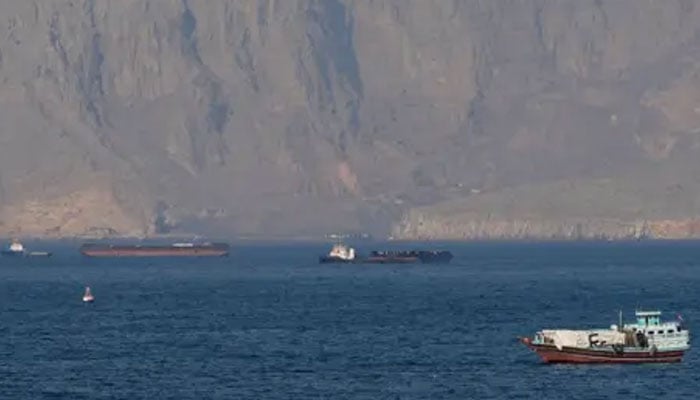
    A vessel came under attack by an unidentified projectile while sailing through the Strait of Hormuz near the coast of Oman, according to maritime security sources. The incident reportedly caused a fire in one section of the Liberia-flagged vessel. The crew attempted to bring the blaze under control, while authorities began assessing the situation and the extent of the damage. Maritime security sources said that one crew member went missing following the attack. The incident has raised fresh concerns about maritime safety in and around the Strait of Hormuz, one of the world’s most strategically important shipping routes. The latest incident comes as regional authorities continue efforts to maintain safe navigation through the waterway amid heightened security concerns. Meanwhile, Iran has confirmed that it is close to reaching an understanding with Oman on a new maritime arrangement for the Strait of Hormuz. Iranian Foreign Ministry spokesperson Esmail Baghaei said talks with Oman have made progress and that both sides are working on establishing a temporary safe passage through the strategic waterway. Baghaei said discussions between Iran and Oman remain ongoing, with the two countries coordinating efforts to facilitate safer maritime movement through the Strait of Hormuz. The development comes at a sensitive time for commercial shipping in the region, with any disruption in the Strait of Hormuz carrying potential consequences for international trade and energy supplies.

  • | | | |

    Iranian president rejects resignation rumours

    TEHRAN: Iranian President Masoud Pezeshkian has firmly denied reports claiming he had submitted his resignation, saying he remains fully committed to leading the country despite ongoing regional tensions and recent military escalation involving the United States. Speaking in a televised address, Pezeshkian dismissed speculation about stepping down, stating that he would publicly announce such a decision if it were ever made. He emphasized that he has no intention of resigning and will continue carrying out his responsibilities. The Iranian president also rejected reports suggesting differences with Mojtaba Khamenei and the country’s armed forces. He said the government, military leadership and state institutions were working in close coordination and remained united on national issues. His remarks came after opposition-linked media claimed that he had submitted his resignation several times amid growing political and security challenges. Iranian officials have not confirmed those reports. Meanwhile, diplomatic efforts to ease tensions between Lebanon and Israel continued as the two sides launched the seventh round of direct negotiations in Rome under United States sponsorship. According to Lebanese media reports, delegations from both countries are discussing the implementation of a US-backed framework agreement reached in June. The agreement outlines a gradual Israeli withdrawal from occupied Lebanese territory in exchange for the deployment of the Lebanese army and the disarmament of armed groups operating in those areas. The latest negotiations follow six previous rounds of talks aimed at reducing border tensions and advancing the implementation of the agreement. Separately, a report published by The New York Times claimed that Iran and Oman are close to reaching an arrangement to restore normal commercial shipping through the Strait of Hormuz, one of the world’s most important energy transit routes. According to the report, the proposed arrangement would establish separate shipping channels for vessels entering and leaving the Gulf. Iranian officials reportedly said the plan would include a service fee to cover environmental protection, maritime security and operational costs, with revenue shared between Iran and Oman.