US-Israel War on Iran

  • | |

    Iran’s ultimatum to Gulf neighbors amid US standoff

    Geopolitical conflict in the Middle East reached a state of alert today following a direct diplomatic ultimatum from Tehran to neighboring Arab nations. Iranian authorities have issued an explicit warning to Gulf states, urging them to exert diplomatic leverage over the United States administration to curb aggressive posturing, or face severe regional consequences, including potential retaliatory actions targeting critical infrastructure and trade corridors. The ultimatum highlights the delicate tightrope walked by oil-rich nations in the Arabian Peninsula, who find themselves caught in the crossfire of renewed political and economic pressure campaigns. As global energy markets closely monitor the developing situation, Tehran’s warning serves as a stark reminder of how rapidly regional proxy disputes can evolve into broader threats to global supply chains and economic stability. A High-Stakes Regional Warning In recent communications conveyed through diplomatic channels, Iranian officials emphasized that Gulf nations can no longer claim strict neutrality while allowing their territories, airspace, or strategic partnerships to support foreign military or economic pressure campaigns. Tehran made it clear that if aggressive measures against its economic interests and sovereignty continue, the operational security of neighboring states could be compromised. The tone of the warning reflects Tehran’s strategy to leverage the economic vulnerabilities of its neighbors. By raising the prospect of disruptions to regional oil production facilities, shipping lanes through the Strait of Hormuz, and commercial hubs, Iran aims to compel Gulf leaders to actively advocate for de-escalation in Washington. The Dilemma Facing Gulf States For neighboring countries such as Saudi Arabia, the United Arab Emirates, Qatar, and Kuwait, this ultimatum poses a major strategic dilemma. In recent years, these nations have pursued a dual policy: strengthening their defense alignments with Western partners while simultaneously opening diplomatic dialogue with Iran to reduce regional tensions. However, an intensified standoff severely limits their ability to maintain that equilibrium. Much of the Gulf’s economic diversification and energy output relies on uninterrupted commerce and stable maritime routes. Any direct target on infrastructure could disrupt worldwide energy prices and local economies. While these nations house key military installations and host international forces, they remain geographically exposed to short-range missile, drone, and naval capabilities possessed by regional forces. Gulf leadership must weigh the risks of pushing back against Western strategies versus the immediate security threats posed by an angered neighbor across the water. Global Energy Markets and Future Outlook The immediate ripple effects of these threats were felt across international markets, where Brent crude futures showed immediate volatility reflecting a built-in risk premium. Analysts warn that even minor disruptions in energy transport or localized incidents near vital waterways could trigger sharp price spikes, compounding existing global economic uncertainties.   As diplomatic envoys work behind the scenes to de-escalate the rhetoric, the situation remains fluid. The coming days will test whether Gulf states can successfully mediate between opposing forces to prevent localized tensions from spilling over into a wider, economically damaging regional conflict.

  • | | |

    Gulf shipping slumps as Houthi claims of Saudi tan…

    NEW DELHI: Commercial shipping through two of the world’s most strategic maritime routes declined sharply on Wednesday after Yemen’s Houthi movement claimed it had launched missile attacks on Saudi oil tankers, raising fresh concerns over security in the Gulf. Shipping data showed that traffic through the Strait of Hormuz and the Bab el-Mandeb Strait fell significantly compared with the previous day. According to maritime analytics firm Kpler, only two vessels passed through the Strait of Hormuz on Wednesday—a Panama-flagged coal carrier entering the waterway and a Marshall Islands-flagged commodity vessel departing. The previous day, eight vessels had transited the route. Before the outbreak of the US-Israel conflict with Iran and Tehran’s subsequent closure of the Strait of Hormuz, the waterway typically handled between 130 and 140 ships daily, making it one of the busiest energy transit routes in the world. Traffic through the Bab el-Mandeb Strait also dropped sharply. Kpler data showed that only one Bahamas-flagged dry bulk carrier crossed the chokepoint on Wednesday, compared with 20 vessels the day before. The Houthis announced that they had fired missiles at a Saudi oil tanker near the Red Sea port of Yanbu and targeted another Saudi tanker in the Gulf of Aden. Saudi authorities had not confirmed either attack at the time of reporting. The Iran-aligned group has maintained what it describes as a naval blockade against Saudi-linked shipping in the Red Sea since last month, saying the move is a response to an alleged Saudi siege on Yemen. Riyadh has rejected those allegations. The latest claims have heightened concerns over the safety of commercial navigation in the region, where maritime trade remains vulnerable to escalating geopolitical tensions.

  • | |

    Vance pledges military, diplomatic pressure on Iran

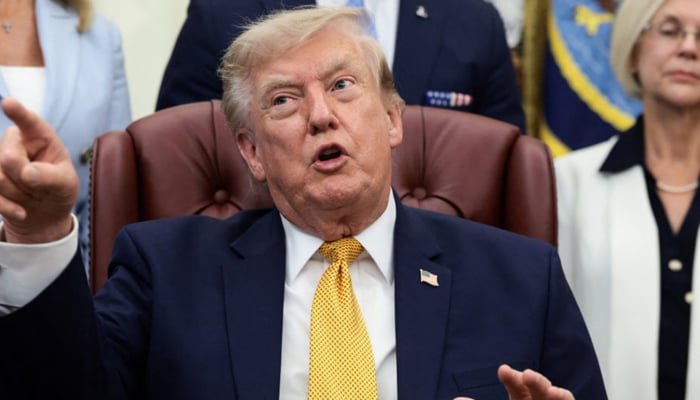
    The United States will use military, economic and diplomatic measures to bring the conflict with Iran to an end, Vice President JD Vance has said, stressing that Washington remains committed to preventing Tehran from acquiring nuclear weapons. In a television interview, Vance said negotiations with Iran remain difficult due to internal divisions within the country’s leadership. He claimed that while some factions in Iran want to end the conflict through diplomacy, others continue to support confrontation, making negotiations more complicated. Despite the challenges, Vance expressed confidence that a settlement could eventually be reached, although he acknowledged the process would take time. He said the US hopes regional stability will improve and global oil prices will ease once tensions decline. The vice president reiterated that the United States would continue using every available tool, including military strength, economic sanctions and diplomatic engagement, to achieve what he described as a lasting resolution. Meanwhile, President Donald Trump said he still prefers diplomacy over military action. Speaking at a public event, Trump said he would rather reach an agreement with Iran than resort to war, but warned that military action remains an option if negotiations fail. Trump also dismissed reports suggesting the United States is facing shortages of key military ammunition. He insisted that the country has substantial stockpiles of weapons and said defence manufacturers are rapidly expanding production to meet future requirements. The president further warned that individuals responsible for leaking classified information about US military capabilities would face legal action, saying authorities were actively pursuing those involved. The developments come as tensions remain high around the Strait of Hormuz, one of the world’s most important shipping routes for oil exports. At the same time, eight leading international shipping organisations have urged the United Nations to oppose any proposal to impose mandatory transit fees on vessels passing through the Strait of Hormuz. In a joint letter addressed to the UN and the International Maritime Organization (IMO), the organisations warned that introducing tolls would undermine the internationally recognised principle of free navigation and could increase shipping costs, fuel prices and inflation worldwide. The maritime groups also cautioned that allowing such charges could create a dangerous precedent for other international waterways and disrupt global trade. The appeal follows recent discussions between Iran and Oman on future arrangements for the Strait of Hormuz. Iranian officials said the two countries have reached preliminary understandings on several issues related to maritime traffic, although they clarified that the agreement does not mean the waterway will be fully reopened under a new system. Separately, reports in US media claimed President Trump had questioned senior defence officials over alleged shortages of military munitions during a recent Cabinet meeting. According to the reports, concerns over weapon supplies had influenced military planning regarding Iran.

  • | | | |

    Rome talks continue despite fresh Israel-Lebanon c…

    JERUSALEM: Fresh violence erupted along the Israel-Lebanon border on Wednesday after two Israeli soldiers were killed during a military operation in southern Lebanon, prompting retaliatory Israeli airstrikes even as diplomatic talks aimed at reducing tensions continued in Rome. The latest escalation comes despite a US-brokered security arrangement reached in June, which was intended to ease hostilities between Israel and Lebanon following months of cross-border clashes. According to Israeli authorities, the two soldiers were killed and four others wounded when an explosion ripped through a building they had entered during a security sweep inside southern Lebanon. Israeli Army Radio, citing a security source, reported that investigators were still trying to determine whether the explosive device had been planted before or after the ceasefire agreement. Soon after the incident, the Israeli military described the explosion as a “blatant ceasefire violation” and launched a series of retaliatory strikes targeting areas in southern Lebanon. Lebanese officials said one civilian was killed and at least 12 others were injured after Israeli strikes hit the town of Tibnin, around 25 kilometres from Mansouri. Before the attack, the Israeli military issued an evacuation warning for residents in the area—the first such online warning directed at Lebanon in more than a month. However, Israel’s tone appeared to soften a day later. In a statement mourning the soldiers, Defence Minister Israel Katz did not directly accuse Hezbollah or refer to a ceasefire violation, signalling that Israeli authorities may be seeking to avoid a wider military escalation. Israel continues to maintain a buffer zone inside southern Lebanon, saying its forces are operating there to eliminate threats posed by the Iran-backed Hezbollah movement and to enhance border security. Meanwhile, diplomatic efforts remain underway in Rome, where Israeli and Lebanese officials are participating in talks that began on Tuesday and are scheduled to continue through Thursday. The negotiations are focused on strengthening the June security arrangement and preventing further violence along the volatile frontier. The renewed bloodshed underscores the fragile nature of the ceasefire and highlights the challenges facing mediators seeking lasting stability in the region. While both sides have expressed interest in preventing a broader conflict, sporadic violence continues to threaten the progress made through recent diplomatic initiatives. With negotiations still in progress and tensions remaining high, regional observers fear that any further incidents along the border could quickly undermine the fragile peace and derail ongoing efforts to maintain security between the neighbouring countries.

  • | | |

    Israeli lawyer calls Silwan demolitions ‘ethnic …

    JERUSALEM: A new British media report has renewed international attention on the disputed East Jerusalem neighbourhood of Silwan, where the demolition of Palestinian homes and land disputes continue to fuel tensions between Israeli authorities and Palestinian residents. According to the report, a prominent Israeli lawyer described Israel’s policy of removing Palestinians from their ancestral homes in Silwan as comparable to “ethnic cleansing,” adding to the growing debate over housing rights and displacement in the occupied territory. The report states that the continued threat of home demolitions has left many Palestinian families living in constant uncertainty, affecting their daily lives, financial stability and emotional well-being. Residents say they fear losing homes that have been in their families for generations. Palestinians living in Silwan argue that Israeli authorities frequently classify their properties as unauthorised constructions, leading to demolition orders that they consider unfair and discriminatory. Many residents say obtaining building permits is extremely difficult, leaving families vulnerable to eviction and the destruction of their homes. The issue of demolitions in East Jerusalem has remained one of the most contentious aspects of the Israeli-Palestinian conflict, drawing criticism from international human rights organisations and foreign governments. Rights groups have repeatedly expressed concern that such actions contribute to the displacement of Palestinian communities and alter the demographic balance of the area. The latest report also comes amid continued regional tensions, with accusations of ceasefire violations and ongoing diplomatic efforts to prevent further escalation in the conflict. Israeli authorities have consistently maintained that demolitions are carried out in accordance with municipal planning and building regulations, arguing that structures built without the required permits are subject to legal enforcement regardless of the owners’ identity. Silwan, located just south of Jerusalem’s Old City, remains one of the most sensitive areas in the decades-long conflict, with competing historical, religious and political claims. As international scrutiny grows, the situation in Silwan continues to highlight the broader challenges surrounding housing rights, land ownership and the future of Palestinian communities in East Jerusalem.

  • | | |

    Trump says US has ample weapons, ammunition stockpiles

    US President Donald Trump has said the United States possesses extensive stockpiles of weapons and ammunition, dismissing concerns about shortages during recent military operations. In a statement, Trump said the country is continuing to manufacture weapons on a large scale while also procuring additional supplies as needed. He added that defense companies are building a record number of plants and factories to strengthen America’s military production capacity. Trump also warned that those responsible for leaking what he described as “treasonous statements” would be identified and face lengthy prison sentences. His remarks came after reports in the US media claimed that he had questioned Defense Secretary Pete Hegseth over alleged shortages in US weapons stockpiles during the conflict with Iran. According to the reports, the issue had limited Washington’s military options against Tehran. The reports stated that Trump raised the matter during a Cabinet meeting held at Camp David in Maryland last week, where he reportedly sought an explanation from Hegseth about the significant decline in ammunition reserves. However, US officials have denied the media reports, rejecting claims that the country faced a critical shortage of weapons or that military options against Iran were constrained because of depleted stockpiles.

  • | | |

    Two Israeli soldiers killed in southern Lebanon bl…

    Beirut: The Israeli military has confirmed that two of its soldiers were killed during operations in southern Lebanon, underscoring the continued volatility along the Israel-Lebanon border as cross-border hostilities show little sign of easing. In a statement issued on Wednesday, the Israel Defense Forces (IDF) identified the slain personnel as Major Harel Baron Stock, 34, a commander, and Sergeant Major Tamir Vaknin, 33. The military said both were killed in an explosion that occurred in the Lebanese town of Majdal Zoun, near the border. The IDF added that four other soldiers were seriously wounded in the same incident. The injured personnel were evacuated to nearby hospitals, where they are receiving medical treatment. Israeli authorities did not immediately provide further details on the nature of the explosion or whether it was caused by an explosive device or another form of attack. The incident comes amid continuing Israeli military operations across southern Lebanon, where strikes have intensified in recent months. The border region has witnessed repeated exchanges of fire, increasing fears of a broader escalation that could further destabilize the Middle East. Lebanese media have reported extensive damage in several southern districts following ongoing Israeli attacks. Large numbers of residents have been displaced, although many families have recently begun returning to their homes despite widespread destruction in affected areas. Security analysts say the latest casualties highlight the dangers faced by troops operating in the tense border zone, where military activity and intermittent clashes continue to pose risks to both soldiers and civilians. The deaths of the two Israeli soldiers are likely to renew attention on the fragile security situation along the Israel-Lebanon frontier, as diplomatic efforts to reduce tensions remain limited. With military operations continuing on both sides, concerns persist that any major incident could trigger a wider regional confrontation, further complicating an already volatile conflict.

  • | | | |

    Iran, Oman move closer to Hormuz shipping agreement

    TEHRAN: Iran and Oman have reached a preliminary understanding on the geographic coordinates of a proposed shipping route through the Strait of Hormuz, marking progress in negotiations aimed at regulating navigation through one of the world’s most strategically important waterways. Iranian Foreign Ministry spokesperson Esmaeil Baghaei said discussions between Tehran and Muscat had advanced positively and that both sides had agreed on the geographical framework of the proposed route. He added that a joint statement outlining the key points of the understanding was in its final stages and could be issued if the process is not disrupted by external factors. Despite the progress, Baghaei emphasised that the agreement alone would not automatically guarantee security in the Strait of Hormuz. He noted that ensuring stability in the region would require broader cooperation and continued diplomatic engagement. According to regional officials familiar with the negotiations, the proposed arrangement would give Iran a greater role in overseeing vessels entering the Gulf through the strategic waterway. However, several technical and operational issues still need to be resolved before any final agreement can be implemented. The Strait of Hormuz remains one of the world’s busiest energy transit routes, carrying a significant share of global oil and gas exports. Any changes to shipping arrangements in the area are closely watched by international markets due to their potential impact on global trade and energy supplies. Officials involved in the negotiations described the talks as constructive, while indicating that further consultations would continue before a formal announcement is made. Both Iran and Oman have maintained that dialogue remains the preferred path for addressing issues related to maritime navigation and regional stability.

  • | | | |

    Trump says US-Iran talks to resume Monday

    US President Donald Trump has announced that fresh negotiations between the United States and Iran are expected to begin on Monday, saying he decided to suspend planned military action after being encouraged by signs of progress toward a possible agreement. Speaking to reporters aboard Air Force One, Trump said discussions with Tehran would resume through diplomatic channels, expressing hope that negotiations could help prevent further escalation in the region. He did not disclose the venue of the talks or identify the officials expected to participate. Earlier, Trump stated that he had delayed what he described as a large-scale military operation after receiving requests from Iran and several key US allies in the Middle East to give diplomacy another opportunity. According to him, regional partners believed a negotiated settlement was within reach and urged Washington to avoid immediate military action. Trump said Saudi Arabia, the United Arab Emirates and Qatar had all encouraged restraint, arguing that continued dialogue offered the best chance for reducing tensions. He added that discussions were expected to cover issues related to the Strait of Hormuz as well as Iran’s nuclear programme. Despite Trump’s comments, Iranian authorities have not officially confirmed the planned negotiations. Iran’s semi-official Mehr News Agency rejected claims that Tehran had requested the United States to postpone military action, describing the assertion as inaccurate. Iranian Foreign Minister Abbas Araghchi, however, said negotiations involving Oman over the future of the Strait of Hormuz were progressing toward a final stage, indicating that diplomatic contacts remain active. Trump also declined to set a deadline for reaching an agreement, saying his administration was prepared for different outcomes but preferred a peaceful resolution over military confrontation. The announcement had an immediate impact on global energy markets. Oil prices fell sharply in early Asian trading as investors reacted to the possibility of reduced tensions in the Gulf region. Brent crude and US benchmark oil both recorded notable declines following Trump’s remarks. The Strait of Hormuz remains one of the world’s most strategically important shipping routes, with roughly one-fifth of global crude oil and liquefied natural gas supplies passing through the narrow waterway. Any disruption in the area has the potential to significantly affect international energy markets.

  • | | |

    Iran says every threat will strengthen its militar…

    TEHRAN: Iran’s acting Defence Minister, Seyed Majid Ibn al-Reza, has declared that Tehran will continue strengthening its military capabilities by treating every threat from its adversaries as genuine, even as the United States signals a renewed diplomatic effort. His remarks came after US President Donald Trump announced that Washington had postponed a planned military strike against Iran in favour of restarting negotiations aimed at reducing tensions in the Middle East. In a statement posted on social media platform X on Monday, Ibn al-Reza said Iran viewed recent statements from its enemies as part of a broader campaign of psychological and cognitive warfare. However, he stressed that Tehran would not dismiss any warning, regardless of its nature. “We consider every threat to be real and deserving of a serious response,” the acting defence minister said, adding that Iran’s strategy was to transform every external challenge into an opportunity to reinforce its military preparedness and national defence. He said the Iranian armed forces would neither be caught off guard nor remain passive in the face of rising regional tensions. Instead, every warning or hostile statement would serve as a catalyst for expanding the country’s defensive capabilities and maintaining operational readiness. The comments underscore Iran’s continued emphasis on deterrence at a time when uncertainty surrounds the future of US-Iran relations and broader security dynamics across the Gulf. Earlier, President Trump announced that the United States had suspended plans for military action against Iran after requests from Tehran and several Middle Eastern countries to give diplomacy another chance. Writing on his social media platform, Truth Social, Trump claimed the US military had been fully prepared for an operation of unprecedented scale, describing it as one of the largest potential military actions since the Second World War. According to Trump, the proposed negotiations focus on two key objectives: ensuring the immediate and uninterrupted reopening of the Strait of Hormuz for global shipping and addressing concerns over Iran’s nuclear programme. The Strait of Hormuz remains one of the world’s most strategically important maritime routes, carrying a significant share of global oil exports. Any disruption in the waterway has the potential to affect international energy markets and regional stability. While Washington has presented the renewed talks as an opportunity to prevent further escalation, Iranian officials continue to insist that the country will not relax its military vigilance during the diplomatic process. The latest exchange of statements reflects the delicate balance between diplomacy and deterrence, with both sides signalling a willingness to negotiate while simultaneously emphasizing military preparedness amid persistent regional tensions.