| |

Iran’s ultimatum to Gulf neighbors amid US standoff

Geopolitical conflict in the Middle East reached a state of alert today following a direct diplomatic ultimatum from Tehran to neighboring Arab nations. Iranian authorities have issued an explicit warning to Gulf states, urging them to exert diplomatic leverage over the United States administration to curb aggressive posturing, or face severe regional consequences, including potential retaliatory actions targeting critical infrastructure and trade corridors.

The ultimatum highlights the delicate tightrope walked by oil-rich nations in the Arabian Peninsula, who find themselves caught in the crossfire of renewed political and economic pressure campaigns. As global energy markets closely monitor the developing situation, Tehran’s warning serves as a stark reminder of how rapidly regional proxy disputes can evolve into broader threats to global supply chains and economic stability.

A High-Stakes Regional Warning

In recent communications conveyed through diplomatic channels, Iranian officials emphasized that Gulf nations can no longer claim strict neutrality while allowing their territories, airspace, or strategic partnerships to support foreign military or economic pressure campaigns. Tehran made it clear that if aggressive measures against its economic interests and sovereignty continue, the operational security of neighboring states could be compromised.

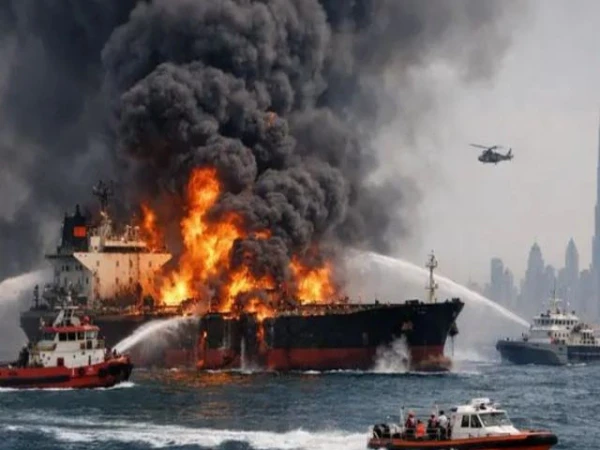
The tone of the warning reflects Tehran’s strategy to leverage the economic vulnerabilities of its neighbors. By raising the prospect of disruptions to regional oil production facilities, shipping lanes through the Strait of Hormuz, and commercial hubs, Iran aims to compel Gulf leaders to actively advocate for de-escalation in Washington.

The Dilemma Facing Gulf States

For neighboring countries such as Saudi Arabia, the United Arab Emirates, Qatar, and Kuwait, this ultimatum poses a major strategic dilemma. In recent years, these nations have pursued a dual policy: strengthening their defense alignments with Western partners while simultaneously opening diplomatic dialogue with Iran to reduce regional tensions.

However, an intensified standoff severely limits their ability to maintain that equilibrium.

Much of the Gulf’s economic diversification and energy output relies on uninterrupted commerce and stable maritime routes. Any direct target on infrastructure could disrupt worldwide energy prices and local economies.

While these nations house key military installations and host international forces, they remain geographically exposed to short-range missile, drone, and naval capabilities possessed by regional forces.

Gulf leadership must weigh the risks of pushing back against Western strategies versus the immediate security threats posed by an angered neighbor across the water.

Global Energy Markets and Future Outlook

The immediate ripple effects of these threats were felt across international markets, where Brent crude futures showed immediate volatility reflecting a built-in risk premium. Analysts warn that even minor disruptions in energy transport or localized incidents near vital waterways could trigger sharp price spikes, compounding existing global economic uncertainties.


As diplomatic envoys work behind the scenes to de-escalate the rhetoric, the situation remains fluid. The coming days will test whether Gulf states can successfully mediate between opposing forces to prevent localized tensions from spilling over into a wider, economically damaging regional conflict.

Similar Posts

  • | | |

    Iran claims 200+ US troops killed as Tehran warns …

    TEHRAN: Iran’s Islamic Revolutionary Guard Corps (IRGC) has claimed that more than 200 US military personnel were killed and many others wounded during Iranian retaliatory attacks amid the latest escalation between Tehran and Washington. The claim, however, has not been independently verified, and no immediate confirmation or denial of the reported US casualties was available from American officials. IRGC spokesman Brigadier General Hossein Mohebbi rejected figures released by Washington, arguing that they did not reflect the full extent of losses suffered by US forces during the conflict. Speaking to Iran’s semi-official Tasnim news agency, Mohebbi said Iranian forces had targeted US military facilities across the region. He claimed that eight American military centers were struck and that around 20 protective shelters at one location were destroyed. The IRGC spokesman challenged Washington to allow journalists access to the affected military sites, saying such visits would reveal the extent of the damage. He accused US authorities of withholding information about casualties and military losses. Iran claims major US aircraft losses Mohebbi also claimed that Iranian attacks during roughly two weeks of fighting destroyed 11 US warplanes and helicopters on the ground. According to the IRGC account, the reported losses included an F-15 fighter jet, a P-8 maritime patrol aircraft, a C-17 transport aircraft and eight aerial refueling planes. Iran also claimed that 17 reconnaissance and operational drones were destroyed, including eight described as brand-new. The claims represent a potentially significant escalation in Tehran’s portrayal of the conflict. Independent confirmation of the reported aircraft losses has not emerged, and the locations of the alleged strikes have not been publicly specified. The statements came as tensions between Iran and the United States remained high, even as diplomatic contacts appeared to be continuing. Reports indicate that Washington and Tehran have exchanged messages through intermediaries, although major differences and deep mistrust remain. IRGC issues warning to Israel Iran also issued a fresh warning to Israel, saying Tel Aviv could face serious consequences if it re-enters the conflict. The IRGC said Iranian forces were closely monitoring the possibility of Israeli involvement and had prepared their strategy accordingly. The latest claims add another layer of uncertainty to an already volatile situation. With casualty figures and battlefield damage disputed by the opposing sides, the coming days could determine whether the confrontation moves toward diplomacy—or another dangerous round of escalation.

  • | | | |

    Trump weighs massive strike on Iran

    US President Donald Trump is considering launching a new large-scale military operation against Iran, raising fears of a further escalation in tensions across the Middle East. According to reports, the proposed operation could be larger than previous US military strikes carried out against Iranian targets earlier this year. Trump said he was close to making a decision but stressed that no final order had been issued. He said the United States was fully prepared to act if necessary and claimed military plans were already in place. US officials, however, said no formal authorization for a new attack has yet been given. The US president also said Israel could join any future military operation if requested, although he maintained that American forces were capable of carrying out such an operation on their own. Trump accused Iran of refusing to accept the latest diplomatic proposal presented through mediation efforts. He claimed Tehran was delaying negotiations despite increasing military and economic pressure. The remarks came amid continued efforts by international mediators to prevent the conflict from expanding. The US president also warned that Washington would hold Iran directly responsible if Yemen’s Houthi movement launched further attacks on commercial shipping. His warning followed Houthi claims that they had targeted two Saudi oil tankers in the Red Sea using missiles and drones. Trump said any future attacks on commercial vessels would trigger a strong military response against both the Houthis and Iran. He accused Tehran of supporting the armed group and said the United States would not tolerate threats to international shipping routes. Iran responded sharply to the US statements. Foreign Ministry spokesman Esmaeil Baghaei warned American military personnel against targeting civilian infrastructure, saying attacks on facilities such as bridges and power stations would violate international law. He stressed that military personnel remain legally responsible for carrying out unlawful orders. US Secretary of State Marco Rubio said Washington’s main objective remains preventing Iran from acquiring nuclear weapons. He accused Tehran of repeatedly violating previous agreements and said the Iranian leadership continued to support armed groups across the Middle East instead of addressing domestic economic challenges. Rubio also urged Yemen’s Houthis to avoid becoming more deeply involved in the regional conflict. He said further attacks on Saudi Arabia or international shipping would only increase instability and could trigger broader military action. Meanwhile, Oman said it is working with Saudi Arabia, regional partners and the United Nations to revive Yemen’s political peace process. Omani officials called for restraint from all sides and emphasized the importance of protecting freedom of navigation in the Red Sea. Regional tensions continued to grow as Bahrain activated emergency warning sirens following reports of a possible Iranian attack. Authorities advised residents to remain calm and move to safe locations, although no casualties or damage were immediately reported. Jordan’s armed forces also announced that their air defence systems had intercepted several missiles and drones over the past 24 hours. Military officials said three missiles and six drones were destroyed before reaching populated areas, while another missile landed in an uninhabited location without causing damage. The Houthis said they carried out missile and drone attacks on two Saudi oil tankers as part of what they described as a maritime blockade. Shipping companies have already begun changing routes to avoid the Bab el-Mandeb Strait, increasing concerns over global oil supplies and international trade. Iranian military officials warned that if US attacks continue, Tehran will introduce new military strategies designed to make future operations more difficult for its opponents.

  • | | |

    Trump cuts military drills with South Korea over I…

    WASHINGTON: US President Donald Trump has expressed frustration with South Korea after Seoul declined to join Washington’s campaign against Iran, ordering the Pentagon to reduce joint military exercises with Seoul. Trump said he recently asked South Korea’s president whether the country wanted to participate in efforts to denuclearise Iran, but received a blunt response: “No, thank you.” The US president said he instructed Defence Secretary Pete Hegseth to cut back the military exercises with South Korea. Although the drills had already begun, Trump said it was too late to cancel them completely and criticised the decision to proceed with exercises he considers costly. The Ulchi Freedom Shield exercise began on Monday and is scheduled to continue through Aug 27. About 18,000 South Korean troops are taking part, with training focused on cyber and drone threats. Trump also argued that the exercises send an “inappropriate and hostile” message to North Korea. He pointed to his relationship with North Korean leader Kim Jong Un, saying Pyongyang had not posed a threat to the United States during his presidency and had maintained a respectful attitude. The decision has raised questions about the future of the US-South Korea alliance. Washington and Seoul regard joint military exercises as a crucial part of maintaining readiness and deterring North Korean aggression. Trump’s latest comments suggest the alliance could face pressure as his administration reshapes US military commitments and seeks stronger allied support for its Middle East policies. South Korea has proceeded with the scheduled exercises, while the move to scale them back could fuel debate over regional security and Washington’s long-term commitment to the Korean peninsula.

  • | | | |

    Iran rules out US talks until demands are met

    Iran has ruled out direct negotiations with the United States for now, saying Washington must first comply with the terms of an interim agreement reached in June. Iranian Foreign Minister Abbas Araghchi said on Sunday that Tehran and Washington were not holding direct talks. He said messages were still being exchanged through intermediaries. Araghchi also reiterated Iran’s position on the Strait of Hormuz. He said the strategic waterway would not reopen simply because Iran and Oman reached an agreement on shipping arrangements. According to Iranian reports, Tehran and Muscat are close to finalising an understanding on a temporary shipping route. However, Iran says the route can only be used after other conditions are met. The Strait of Hormuz has remained at the centre of the wider conflict. Iran has repeatedly linked its reopening to demands directed at Washington. Iranian officials have called for an end to US threats and military action. They have also demanded the lifting of sanctions and blockades and the release of Iranian assets. Iran’s Revolutionary Guard has separately warned that the strait will remain closed until Tehran’s conditions are accepted. The force accused its opponents of shifting their focus toward reopening the vital waterway. The strait is one of the world’s most important energy routes. A significant share of global oil and gas shipments normally passes through it. Oman, meanwhile, said discussions with Iran over arrangements for shipping through the waterway had been positive and constructive. Muscat also urged all sides to avoid actions that could undermine the negotiations. Iranian President Masoud Pezeshkian has suggested that the current situation could provide an opportunity for an agreement. He said Iran remained united and strong despite the ongoing conflict. The diplomatic uncertainty comes as tensions continue to affect commercial shipping in the region. The United Arab Emirates said Iran had attacked a vessel linked to its state-owned oil company while it was travelling through the Strait of Hormuz. No injuries were reported. The United Kingdom Maritime Trade Operations agency also reported that a vessel caught fire after being struck by an unidentified projectile. The fire was later brought under control, with no environmental damage reported. Iranian authorities have not immediately commented on the individual incident. Saudi Arabia reports fires at energy facilities Tensions have also spread across the Gulf. Saudi Arabia said firefighters had extinguished a blaze at an Aramco facility in Jizan. The Saudi Energy Ministry said there were no fatalities. Yemen’s Houthi movement claimed responsibility for an attack on the site, saying it had used a drone in response to alleged Saudi strikes in Yemen. A separate explosion was also reported in the industrial area of Jubail. Regional sources said gas facilities were targeted and that a fire broke out. The exact cause remained unclear. It was not immediately established whether the incidents in Jizan and Jubail were connected. US defence industry ordered to increase weapons production Meanwhile, the United States has asked its defence industry to accelerate weapons production amid shortages linked to the war with Iran. US Deputy Defence Secretary Steve Feinberg reportedly instructed defence companies to submit plans aimed at speeding up deliveries and increasing production of critical military equipment. The demand comes amid reports of pressure on US ammunition supplies, including stocks of Patriot missile interceptors. The Trump administration has maintained that the United States has substantial weapons reserves and that additional supplies are being manufactured and delivered. The conflict has also triggered threats from armed groups in the region. The leader of Iraq’s Harakat Hezbollah al-Nujaba, Akram al-Kaabi, has threatened retaliation for US-Saudi strikes on sites belonging to Iraq’s Popular Mobilisation Forces. The group has warned that further military action could lead to a response. Iranian military officials, meanwhile, have claimed that the United States and Israel failed to achieve their objectives against Iran. They have praised the country’s military preparedness and vowed to continue resisting pressure. With the Strait of Hormuz still closed and negotiations remaining indirect, the prospect of restoring normal shipping remains uncertain. Iran insists that reopening the waterway depends on Washington accepting its conditions. The United States, meanwhile, has linked the lifting of its blockade to Iran fulfilling commitments under any future agreement.

  • | | |

    Iran says Hormuz cannot be seized by ‘tweet or w…

    Iran has rejected US threats over the strategically vital Strait of Hormuz, with Deputy Foreign Minister Kazem Gharibabadi declaring that the waterway cannot be taken over through a presidential order, social media post, aircraft carrier or election speech. Gharibabadi’s remarks came after US President Donald Trump threatened to declare the Strait of Hormuz US territory, according to Iranian media reports. The comments have added another layer of tension to an already volatile confrontation between Washington and Tehran. Writing on X, Gharibabadi said the strategic waterway could not be brought under American control through political statements or military pressure. He argued that decisions concerning the strait remained in Iran’s hands. “The Strait of Hormuz was, is and will remain Iranian,” Gharibabadi said, stressing that Tehran would determine when the passage could be opened or closed. The deputy foreign minister also said Iran was not intimidated by American threats and would continue its blockade until Washington acknowledged what he described as its “strategic defeats” and abandoned what he called unrealistic expectations. Trump has separately warned that he could soon announce plans to designate the Strait of Hormuz as US territory. His reported comments have intensified concerns over the future of one of the world’s most important energy corridors. The Strait of Hormuz connects the Persian Gulf with the Gulf of Oman and the wider Arabian Sea. A major disruption to traffic through the narrow waterway could have significant consequences for global energy markets because substantial volumes of oil and gas pass through it. Iran’s latest statement therefore carries significance far beyond its dispute with Washington. Any prolonged confrontation around the strait could affect commercial shipping, energy supplies and international markets. The exchange of threats also highlights the broader strategic struggle between Iran and the United States, with both sides showing little sign of backing down. For Tehran, the message is clear: control of Hormuz is being presented as a matter of sovereignty and national security, while Washington’s threats are being dismissed as insufficient to alter Iran’s position.

  • | | |

    Gulf shipping slumps as Houthi claims of Saudi tan…

    NEW DELHI: Commercial shipping through two of the world’s most strategic maritime routes declined sharply on Wednesday after Yemen’s Houthi movement claimed it had launched missile attacks on Saudi oil tankers, raising fresh concerns over security in the Gulf. Shipping data showed that traffic through the Strait of Hormuz and the Bab el-Mandeb Strait fell significantly compared with the previous day. According to maritime analytics firm Kpler, only two vessels passed through the Strait of Hormuz on Wednesday—a Panama-flagged coal carrier entering the waterway and a Marshall Islands-flagged commodity vessel departing. The previous day, eight vessels had transited the route. Before the outbreak of the US-Israel conflict with Iran and Tehran’s subsequent closure of the Strait of Hormuz, the waterway typically handled between 130 and 140 ships daily, making it one of the busiest energy transit routes in the world. Traffic through the Bab el-Mandeb Strait also dropped sharply. Kpler data showed that only one Bahamas-flagged dry bulk carrier crossed the chokepoint on Wednesday, compared with 20 vessels the day before. The Houthis announced that they had fired missiles at a Saudi oil tanker near the Red Sea port of Yanbu and targeted another Saudi tanker in the Gulf of Aden. Saudi authorities had not confirmed either attack at the time of reporting. The Iran-aligned group has maintained what it describes as a naval blockade against Saudi-linked shipping in the Red Sea since last month, saying the move is a response to an alleged Saudi siege on Yemen. Riyadh has rejected those allegations. The latest claims have heightened concerns over the safety of commercial navigation in the region, where maritime trade remains vulnerable to escalating geopolitical tensions.

Leave a Reply

Your email address will not be published. Required fields are marked *