cristiano ronaldo hints
| | |

Cristiano Ronaldo hints at retirement, says upcomi…

Football superstar Cristiano Ronaldo has hinted that his retirement could be closer than expected, saying the upcoming year will probably be the final year of his playing career.

The 41-year-old Portugal captain made the comments in an interview with lifestyle magazine Vogue, saying he wants to leave behind a “spectacular legacy” when he eventually walks away from football.

Ronaldo has enjoyed one of the most successful careers in football history. Since making his senior debut for Sporting in 2002, he has won major trophies with Manchester United, Real Madrid, Juventus and his current club, Al-Nassr. He has also won the Ballon d’Or five times.

Despite his extraordinary list of achievements, Ronaldo was unable to add a FIFA World Cup title to his collection after Portugal fell short at the 2026 tournament.

The forward has scored 976 goals for club and country during a career spanning more than two decades. He is now continuing with Al-Nassr as he approaches the remarkable milestone of 1,000 career goals.

Ronaldo also acknowledged that retirement would leave a major gap in his life. He said he plans to spend more time travelling, playing and watching padel, and enjoying life away from professional football.

His comments have intensified speculation about when one of football’s greatest careers will finally come to an end.

Similar Posts

  • | | |

    Schools reopen across Sindh as summer vacation end…

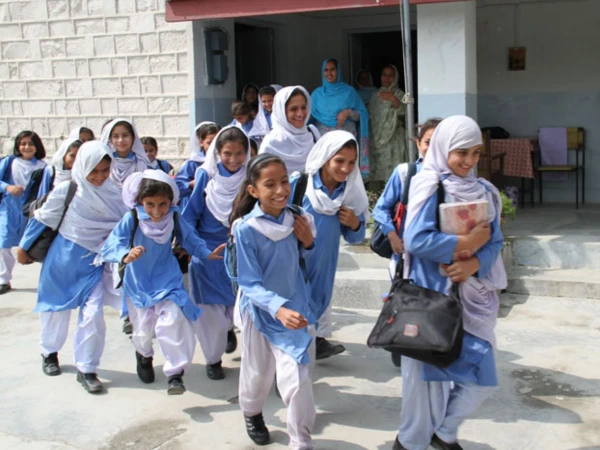
    KARACHI: Schools and colleges across Sindh, including Karachi, reopened on Friday after a two-month summer vacation, bringing students and teachers back to classrooms and restoring the familiar bustle of the academic year. The reopening marks the end of the summer holidays that ran from June 1 to July 31 under the Sindh Education Department’s academic calendar. Along with the resumption of classes, educational institutions have also returned to a six-day working week, as the weekly Saturday holiday has officially been withdrawn from August 1. Although academic activities resumed across the province, attendance on the first day remained lower than usual in many government and private schools. Several private institutions announced that they would begin regular classes from August 3, allowing additional time to complete administrative preparations before welcoming students. Schools were filled with excitement as children arrived with their parents or in school vans after the long vacation. Teachers greeted students warmly and organized engaging classroom sessions, interactive learning exercises and science-based activities to help them settle back into the academic routine. Many schools also used WhatsApp groups and email to inform parents about updated school timings, class schedules and other important guidelines for the new session. Education officials encouraged parents to ensure regular attendance as the academic calendar gets back on track. The reopening of schools also had an immediate impact on city life. Morning traffic increased significantly across Karachi, with major roads witnessing the return of school transport, private vehicles and commuters during peak hours after weeks of relatively lighter traffic. Education experts believe that the return to regular classroom learning will help students regain academic momentum following the extended summer break. Schools are expected to focus on completing course outlines on schedule while maintaining extracurricular and practical learning activities throughout the new term. The Sindh Education Department had announced summer vacations from June 1 to July 31, with educational institutions officially resuming normal operations from August 1 under the revised weekly schedule.

  • Saudi crown prince pushes Trump for diplomacy

    Iranian military officials have rejected US President Donald Trump’s claim that Tehran asked for a planned American attack to be called off. The officials called the claim a lie. They said Trump was trying to pressure and blackmail Gulf rulers through threats. The officials said Iranian forces remain at the highest level of readiness and are prepared for any situation. They warned that if a confrontation becomes unavoidable, the outcome on the battlefield will settle who truly holds power. A source close to Iran’s negotiating team also denied that any agreement had been reached to reopen the Strait of Hormuz. Another military source told a local news agency that the strait will stay closed as long as the United States continues what Iran calls hostile actions. The source added that ships will only be allowed through a specific route and only with permission from the Islamic Revolutionary Guard Corps. Trump had said on Saturday that he called off a planned military strike on Iran after Tehran and other Middle Eastern countries asked for more time to complete a peace deal. He said Israel had also agreed to this arrangement. On his social media platform, Trump claimed both sides had agreed on the outline of a deal. He said the plan includes a complete and immediate reopening of the Strait of Hormuz and an end to what he called Iran’s nuclear threat. Meanwhile, Saudi Crown Prince Mohammed bin Salman spoke with Trump by phone and stressed the need to avoid a wider regional war. The Saudi Press Agency reported that the crown prince called for dialogue and de-escalation to protect regional stability. Both leaders also discussed cooperation between Saudi Arabia and the United States. Iran’s acting defence minister said all threats from adversaries are treated as real, even when they may be part of psychological pressure tactics. He said Iran will not be caught off guard and will use such threats to strengthen its military readiness. US Secretary of State Marco Rubio said American strikes have made Iran more willing to negotiate, including on its nuclear program and the Strait of Hormuz. He claimed the strikes had severely weakened Iran’s navy, air force and missile systems, though he admitted Iran still has missiles and drones capable of causing damage. Rubio said the US is now negotiating from a position of strength. Iran earlier warned the US against what it called adventurous action and said it would respond firmly to any fresh attacks. Iran’s foreign minister discussed the situation with senior officials from Turkey, Pakistan and Saudi Arabia, warning that any aggression would receive a proportionate response. A media outlet linked to Iran’s security establishment warned that any US strikes on Iranian energy sites would lead to Iranian strikes on oil and gas fields in Saudi Arabia, the UAE, Qatar and Israel. Oil prices have remained high since the conflict began in February. Brent crude rose sharply in July, and analysts expect prices to climb further as tensions in the region continue.

  • | | |

    US rejects Iran’s Hormuz demands

    The United States has rejected Iran’s demands concerning the management and monitoring of maritime traffic in the strategically important Strait of Hormuz, with US officials saying that Tehran’s proposals have not received approval from Oman or the broader international community. American officials said the agreement under discussion focuses only on coordination between the countries involved and does not include any taxes, transit fees, or other financial charges. They described Iran’s demands as unnecessary and maintained that the proposed arrangement should remain limited to practical coordination aimed at facilitating the movement of vessels through the strategic waterway. The US officials’ remarks came after Iranian Deputy Foreign Minister Kazem Gharibabadi revealed that Tehran had proposed a joint monitoring mechanism with Oman for shipping activity in the Strait of Hormuz. According to Gharibabadi, Iran has suggested that each country should manage maritime traffic on its respective side of the strait. Under the proposal, Iranian authorities would oversee vessels and shipping movements in the section under Iran’s responsibility, while Oman would monitor traffic moving through the opposite side. Gharibabadi presented the proposal as an effort to improve coordination and maintain smooth maritime traffic through the strategically located waterway. The Iranian government has long emphasized the importance of regional countries taking greater responsibility for security and navigation in the Gulf and surrounding waters. However, US officials have challenged Iran’s position and said the demands made by Tehran do not form part of the limited coordination framework currently under discussion. They also indicated that neither Oman nor the wider international community has accepted Iran’s proposed conditions. The Strait of Hormuz plays a crucial role in global energy trade. The narrow waterway connects the Persian Gulf with the Gulf of Oman and the Arabian Sea, making it a key route for international oil and gas shipments. Any disruption or uncertainty surrounding navigation in the strait could have consequences for global energy markets, shipping costs, and regional security. The latest disagreement comes amid broader tensions between Iran and the United States over regional security and maritime activity. Tehran has repeatedly stressed its role in maintaining security in the Gulf, while Washington has continued to monitor developments in the area and protect freedom of navigation for commercial and international shipping. The dispute over the proposed arrangement highlights the continuing differences between the two sides over the management of maritime traffic in the Strait of Hormuz. While Iran views its proposal as a framework for shared regional oversight and coordination, the United States maintains that any agreement should focus strictly on coordination and should not impose additional demands, taxes, or fees on international shipping. The issue remains significant because of the strait’s importance to the global economy. Any escalation between Iran and the United States or disagreement over maritime access could draw international attention and raise concerns about the safety and uninterrupted movement of commercial vessels through one of the world’s most important shipping corridors.

  • EASA issues urgent advisory warning airlines to avoid Jordanian airspace

    The European Union Aviation Safety Agency (EASA) has issued a security bulletin urging commercial airlines to suspend all operations within Jordanian airspace. The safety agency highlighted an escalation in cross-border military strikes and ballistic missile trajectories as primary drivers behind the severe risks currently facing civilian flights in the region. The newly released directive instructs European carriers and EASA-authorized foreign operators to avoid the Amman Flight Information Region (FIR) across all flight levels. Alongside this new warning, EASA officially extended its existing airspace warnings for several neighboring Middle Eastern territories through August 31, 2026. According to official EASA statements, security conditions across the region have deteriorated rapidly since mid-July. The airspace over and around Jordan has become increasingly hazardous due to active kinetic military engagements, including drone deployments, ballistic missile transit, and the frequent activation of heavy air defense systems. The regulatory agency highlighted several critical factors endangering high-altitude commercial flights. The heightened operational state of regional air-defense units increases the probability that radar systems could accidentally target civilian airliners. Active aerial engagements create unpredictable hazard zones caused by mid-air missile interceptions, anti-aircraft fire, and descending shrapnel. Rapid combat developments often leave local aviation authorities without adequate time to issue timely rerouting orders or close vulnerable corridors. Because Jordanian authorities have not yet published definitive local flight restrictions or comprehensive safety mitigations, European regulators felt compelled to intervene directly to protect commercial flights. Jordan’s addition to the no-fly advisory list reflects a widespread expansion of flight restrictions across key aviation transit hubs in the Middle East. EASA had previously reinstated and strengthened safety advisories for several other nations and maritime zones following intensified conflicts involving U.S. assets and Iranian forces. The full list of airspaces currently subject to EASA’s strict operational warnings includes Jordan (Amman FIR); Iran, Iraq, and Lebanon; Bahrain, Kuwait, Qatar, and the United Arab Emirates; overwater corridors in the Gulf of Oman. All related advisories, which were previously scheduled to expire on July 29, have now been synchronized and extended until at least August 31, 2026. The decision to bypass Jordan forces international airlines to implement extensive flight path revisions. Carriers are diverting long-haul journeys around extended no-fly zones, leading to longer flight durations, increased fuel consumption and higher operating costs.  Also, the potential schedule shifts for passengers traveling along major international routes. EASA emphasized that all affected air operators must continuously track real-time Notice to Air Missions (NOTAMs) and conduct rigorous safety evaluations prior to dispatching aircraft near or around adjacent flight zones. European regulators stated they will continue to monitor regional security developments closely and modify their airspace guidelines as conditions evolve.  

  • | |

    Pakistan’s military tightens grip on Islamis…

    Munir’s family background feeds into this shift as well. He is the son of an imam and considers himself a devout, conservative Muslim, and religious identity remains deeply woven into Pakistan’s state institutions. Even so, he has pushed the country toward international engagement through cryptocurrency partnerships, foreign investment deals, a mediating role in the conflict between the United States and Iran, and a mutual defence pact with Saudi Arabia. Data shared with a foreign news agency by the Armed Conflict Location and Event Data Project, a group that tracks conflict incidents worldwide, shows the scale of the shift. Pakistan averaged more than seven blasphemy related riots or attacks annually between 2021 and 2024, but recorded only one such incident over the past twelve months. Economic pressure appears to have played a significant role in prompting the crackdown. Two Pakistani government sources said officials grew alarmed during the summer of 2025 that rising hostility from fundamentalist groups toward France and other European countries threatened to jeopardize a European Union duty waiver covering Pakistani exports. Nearly a third of Pakistan’s total exports go to the EU, and losing that preferential access could have dealt a severe blow to the national economy. Neither the European Commission nor Pakistan’s commerce ministry responded to requests for comment on the matter. Washington has added its own pressure over religious freedom concerns. The US Commission on International Religious Freedom, a government watchdog, recommended last year that Pakistan be placed back on a list of countries of particular concern due to its blasphemy laws, a designation Islamabad has firmly rejected. Analyst Abdul Basit of Singapore’s S. Rajaratnam School of International Studies said worsening insurgent violence in Balochistan and Khyber Pakhtunkhwa, Pakistan’s two most mineral rich provinces, likely added urgency to Munir’s campaign, particularly since he has pitched foreign investment in the country’s mining sector to American officials over the past year. Basit noted that religious groups have lost favor within the state’s priorities, though he cautioned that the militias driving these regional insurgencies are not formally tied to the newly banned Islamist organizations, even if both draw recruits from the same pool of young, radicalized men. Elizabeth Threlkeld, who directs the Stimson Center’s South Asia program, said the open question going forward is whether Pakistan can sustain this level of focus over time. Crackdown targets country’s largest fundamentalist movement The largest of the groups swept up in the crackdown, Tehreek e Labbaik Pakistan, built its identity around the slogan “Death to blasphemers” before authorities banned it late last year. Many of its leaders now sit in jail, its mosques have been sealed shut and its financial accounts frozen. A previously undisclosed government document that laid the groundwork for the ban argued the organization had become a serious threat to Pakistan by damaging both domestic stability and the country’s standing internationally. A spokesperson for the group pointed to a statement it issued last year describing the ban as illegal and unconstitutional. The move against Tehreek e Labbaik follows earlier crackdowns on groups such as Lashkar e Taiba and Jaish e Muhammad, which Pakistan pursued under pressure from the Financial Action Task Force, the international body that monitors terrorism financing. Basit linked the newest crackdown to a period of internal reflection within Pakistan over its historical backing of the Afghan Taliban, whom Islamabad now blames for stoking Islamist insurgencies against the Pakistani state from across the border. The Taliban government in Kabul has dismissed that accusation as baseless, and a spokesperson for its foreign ministry declined to comment further, describing Pakistan’s crackdown as an internal matter. For Pakistan’s Christian, Shia and Ahmadi communities, the change in atmosphere has been dramatic. In the past, suspects in blasphemy related killings, including police officers, were sometimes greeted with rose petals or celebratory receptions, and individuals accused of burning churches or minority mosques often received public praise. Blasphemy remains a capital offense under Pakistani law, and even a rumor of an accusation has historically been enough to spark riots or lynchings. Human rights organizations say victims’ families have rarely obtained justice, since judges and lawyers have often been too frightened to take on such cases. Officer Malik said everyone who confronted the crowd during last month’s incident in Karachi felt genuine fear. The Christian family targeted that day was eventually moved to safety, and an initial investigation has since found the accusations against them to be false. Group’s military links trace back a decade Tehreek e Labbaik formed in 2015 while its founder was imprisoned for shooting and killing a Pakistani provincial governor in 2011 over his support for a Christian woman accused of blasphemy. That gunman, a former police bodyguard, was later convicted and executed months after the group’s founding. Analysts have long suspected the group’s creation received at least tacit support from Pakistan’s military establishment, including its intelligence services, as a tool to keep civilian governments and mainstream political parties in check. Following violent riots led by the group in 2017, then army chief General Qamar Javed Bajwa referred to its protesters as the country’s own people. Pakistan’s Supreme Court later ordered the military and intelligence agencies to stay out of politics but stopped short of directly tying them to the organization. Analysts and former officials say the effects of years of tolerance for the group will not disappear simply because of a ban, and that the shock felt by its supporters could still trigger backlash. Ihsan Ghani, who served as Pakistan’s counter terrorism chief during the 2017 riots, said he worries the group could resurface at full strength if its usefulness to the state changes again. He compared decades of state backed nurturing of the movement to something that cannot simply be switched on and off at will. Within Pakistan’s minority communities, the sudden shift still feels fragile. One of the Christian women rescued during last month’s incident in Karachi said she and her family are now physically safe, but admitted the fear has not fully faded.

Leave a Reply

Your email address will not be published. Required fields are marked *