death penalty handed

Death Penalty Handed Down To Erawan Shrine Bombers After 11-year Legal Saga

BANGKOK, Thailand — A Thai court has sentenced the surviving defendants in the devastating 2015 Erawan Shrine bombing to death, bringing a definitive close to an 11-year legal saga over one of the deadliest terrorist attacks in the kingdom’s history. The Bangkok South Criminal Court delivered the final verdict this morning, finding Adem Karadag and his co-defendant Yusufu Mieraili guilty of premeditated murder and handing down the maximum penalty with no grounds for commutation.

Bangkok blast suspect identified, police release images

The delivery of the verdict was marked by dramatic scenes inside the courtroom. Mieraili vehemently refused to accept the court’s decision, shouting his dissent and declaring a moment of mourning to protest what he termed a “lack of justice.” Despite his vocal objections and continued claims of innocence, the presiding judges upheld the death penalty, concluding that the sheer severity of the premeditated murders precluded any reduction in sentencing.

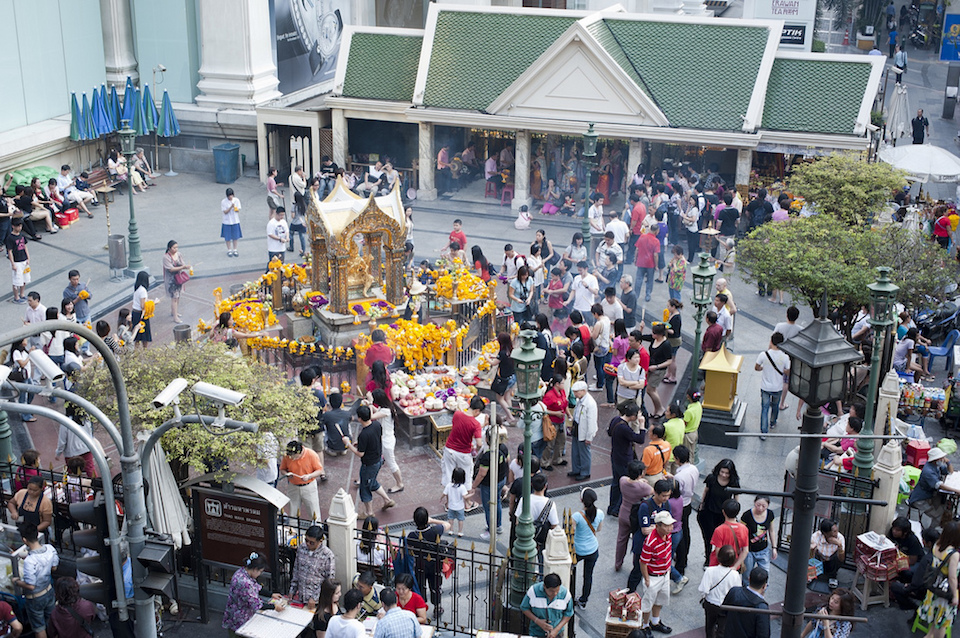
The ruling addresses the horrific attack that occurred on August 17, 2015, at the Erawan Shrine, a highly revered site located at the bustling Ratchaprasong Intersection in the heart of Bangkok’s premier shopping district. A small but exceptionally powerful bomb, deliberately packed with ball bearings to maximize casualties, detonated in the crowded area. The explosion claimed the lives of 20 people and left 123 others injured. The victims represented a wide array of nationalities, including citizens from Thailand, China, Hong Kong, Malaysia, Singapore, Japan, Indonesia, the Philippines, Oman, and the Maldives, underscoring the profound international impact of the tragedy.

The path to this verdict was a protracted legal marathon that spanned more than a decade. The case was built upon a massive foundation of evidence, including testimony from over 400 prosecution witnesses and more than 45 defense witnesses, alongside the submission of over 10,000 pages of documentary evidence and extensive physical exhibits. The proceedings were fraught with significant delays. In 2016, the trial was halted when the defense struggled to secure a Uyghur translator, a complication that arose during the proceedings in the military court at the time. The trial eventually resumed in November 2022 after years of further stagnation caused by the global COVID-19 pandemic and ongoing logistical difficulties in securing appropriate linguistic interpreters.

The legal net had previously narrowed following the acquittal of Thai national Wanna Suansan in November 2024. She had been accused of complicity in murder, attempted murder, and possession of an illegal explosive device, but a Bangkok court ruled that the evidence presented was insufficient to sustain the charges.

The bombing itself was widely understood to be an act of geopolitical retaliation. The attack targeted a shrine deeply popular with ethnic Chinese tourists and occurred just weeks after Thailand’s then-military government forcibly repatriated 109 Uyghur migrants to China. Human rights organizations have long highlighted the severe cultural and religious repression faced by the Uyghur Muslim minority in China, providing the geopolitical context for the militants’ grievance against the Thai state.

Six injured as car rammed into the Erawan Shrine

With the death sentences now handed down, the case moves into the final stages of the Thai judicial process, where it is subject to automatic appellate review. The resolution of the Erawan Shrine bombing case marks a significant milestone for Thailand’s justice system, delivering a long-awaited ruling for the victims and their families across the globe.

-Thailand News (TN)
Similar Posts

  • |

    MQM-P calls for administrative units based on popu…

    Muttahida Qaumi Movement-Pakistan (MQM-P) Chairman Dr Khalid Maqbool Siddiqui has called for the creation of new administrative units across Pakistan based on population size, arguing that the country needs a more effective system of governance to meet the needs of its growing population. Speaking at a press conference in Karachi, Siddiqui said the business community across the country had also raised concerns similar to those voiced by his party regarding the existing administrative structure. He argued that Pakistan’s administrative system needed reforms to ensure better governance and a more balanced distribution of resources. Siddiqui said the provincial structure had changed after the abolition of the One Unit system, but the country had failed to restore an administrative framework that fully addressed the needs of its population. He stressed that his party’s demand for new administrative units did not target the country’s territorial integrity or seek to undermine the existing provinces. “We demand the creation of administrative units in Pakistan according to the population,” Siddiqui said, emphasizing that the objective was to improve administration and ensure that people received better public services. Addressing concerns over the boundaries of potential new administrative units, the MQM-P chief said his party had never called for a debate over the division of Pakistan’s territory. He described Pakistan as the “motherland” and said all four provinces remained an integral part of the country. Siddiqui maintained that the country itself was indivisible, while the Constitution allowed for changes in the administrative structure. He said the Constitution provided a mechanism for altering provincial boundaries and creating new administrative arrangements, although he believed the existing procedure had become impractical under current circumstances. The MQM-P chairman also pointed to the significance of August 1, the beginning of Pakistan’s independence month. He said the month carried a strong ideological connection with the creation of Pakistan and should encourage political leaders to discuss reforms aimed at strengthening the country. Siddiqui further revealed that his party had already introduced a constitutional amendment in the National Assembly to address the issue. He argued that Pakistan needed to revisit its administrative framework and consider reforms that could make governance more efficient and bring government closer to the people. The MQM-P has repeatedly advocated the creation of additional administrative units, maintaining that a more decentralized system could improve governance, facilitate service delivery and ensure a fairer distribution of resources. The demand, however, remains a politically sensitive issue, particularly in the context of debates over provincial boundaries and autonomy.

  • Thai Youtuber ‘Hlun Solo’ Found Dead In Tbilisi Hotel Room

    TBILISI, Georgia / BANGKOK, Thailand — A 27-year-old Thai travel vlogger, widely known online as “Hlun Solo,” has been found dead in a hotel room in Tbilisi, the capital of Georgia, more than two weeks after his family last had contact with him. Search Underway for Missing Thai Travel YouTuber in Georgia Georgian police confirmed […]

  • |

    UET hosts HEC meeting on AI-driven higher educatio…

    LAHORE: The University of Engineering and Technology (UET) Lahore hosted a high-level meeting of vice chancellors from more than 80 universities across Punjab under the auspices of the Higher Education Commission (HEC). HEC Chairman Professor Dr Niaz Ahmad Akhtar chaired the meeting, while UET Lahore Vice Chancellor Professor Dr Shahid Munir hosted the gathering. Punjab University Vice Chancellor Dr Muhammad Ali Shah also attended the meeting and joined the senior academic leadership on stage. The meeting focused on the rapid transformation of higher education in line with the changing demands of technology, industry and the global job market. Participants discussed the federal government’s initiative to modernize university curricula and degree programmes, with a particular emphasis on artificial intelligence and emerging technologies. Dr Niaz Ahmad Akhtar urged universities to take immediate steps to update their curricula, teaching methods and academic programmes. He stressed the need to equip students with modern knowledge and practical skills that can help them compete in an increasingly technology-driven economy. The HEC chairman highlighted the importance of incorporating fields such as artificial intelligence, data science, robotics, cybersecurity and biotechnology into university education. He also called on universities to align their academic programmes with the evolving needs of industry and the employment market so they can produce graduates with relevant and marketable skills. During the meeting, participants exchanged views on the role of artificial intelligence in higher education, research and innovation. They also discussed digital learning, technology-enabled teaching and opportunities to strengthen international collaboration among universities. UET Lahore Vice Chancellor Professor Dr Shahid Munir said the university was ready to share its AI-related curriculum and coursework with other higher education institutions. He emphasized the importance of cooperation among universities to accelerate the adoption of modern technologies and strengthen the quality of higher education across the country. The meeting also highlighted the growing importance of research and digital education in preparing universities for future challenges. Academic leaders discussed ways to promote innovation, improve learning opportunities and create stronger links between higher education institutions and industry. As part of a plantation campaign at UET Lahore, HEC Chairman Professor Dr Niaz Ahmad Akhtar also planted a sapling on the university campus, underscoring the institution’s commitment to environmental sustainability. The meeting concluded with UET Lahore Vice Chancellor Professor Dr Shahid Munir presenting a commemorative shield to the HEC chairman in recognition of his visit and participation in the important academic gathering.

  • | |

    Azma Bukhari: Opposition can’t stop PML-N wi…

    Punjab Information Minister Azma Bukhari has expressed confidence that the Pakistan Muslim League-Nawaz (PML-N) will emerge victorious in the second phase of the Azad Jammu and Kashmir (AJK) Legislative Assembly elections. In a statement, Azma Bukhari said political opponents alleging electoral rigging would continue to make such claims, but the people would keep placing their trust in the PML-N through the democratic process. She maintained that the party’s candidates were expected to secure victories with comfortable margins. The minister said polling during the second phase of the AJK elections was conducted in a peaceful atmosphere, with voters actively participating and exercising their democratic right across the constituencies. Azma Bukhari claimed that many voters were supporting the PML-N because they appreciated the performance of Punjab Chief Minister Maryam Nawaz. She said the provincial government’s development initiatives had strengthened public confidence in the party and encouraged voters to support its candidates. Criticising the opposition, she said parties raising allegations about the electoral process had failed to gain significant public support. According to her, such criticism did not reflect the overall mood of the electorate. Highlighting the party’s development agenda, Azma Bukhari said the people of Azad Kashmir also deserved modern infrastructure and public welfare projects. She referred to improved road networks, electric bus services, and the Apni Chhat Apna Ghar housing programme as examples of initiatives that could also benefit the region.

  • Thai Doctor Struck By A Intoxicated British Motorcyclist In Koh Phangan Dies

    SURAT THANI, Thailand — A prominent Thai medical specialist has died after sustaining severe brain injuries in a hit-and-run collision on Pha-ngan Island, allegedly caused by a heavily intoxicated British motorcyclist. Dr. Theerasuk Kawamatawong, 53, passed away following a prolonged coma, marking a tragic conclusion to the incident that occurred last month in Surat Thani […]

  • | | |

    AJK election polling ends, counting underway

    Polling for the second phase of the 2026 general elections to the Azad Jammu and Kashmir (AJK) Legislative Assembly concluded on Sunday, with vote counting now underway across the contested constituencies. The election was held for eight constituencies in the Muzaffarabad Division and 12 seats reserved for Kashmiri refugees residing in different cities of Pakistan. Polling in LA-27 Muzaffarabad was postponed due to bad weather and landslides, while clashes in LA-31 left a Pakistan Peoples Party (PPP) worker dead. In Khawra, Member of the National Assembly (MNA) Salahuddin Junejo and two party workers were injured in a firing incident. Voting began at 8:00 a.m. and was originally scheduled to end at 5:00 p.m. However, the AJK Election Commission extended polling by one hour in the Muzaffarabad Division due to a high voter turnout, allowing voters to cast their ballots until 6:00 p.m. More than 1.2 million registered voters were eligible to vote in the second phase of the elections. A total of 208 candidates contested nine constituencies in the Muzaffarabad Division, which has 809,621 registered voters, while 143 candidates competed for the 12 refugee seats. Authorities established 1,483 polling stations across the Muzaffarabad region, with heavy security deployed at highly sensitive locations. Polling Postponed in LA-27 Although elections were scheduled in nine constituencies of Muzaffarabad Division, polling was held in only eight. The Election Commission postponed voting in LA-27 Muzaffarabad-II (Lachhrat) after severe weather and landslides disrupted access to several polling stations. Fresh polling in the constituency has been scheduled for August 4. Voting in some constituencies began late, while the PPP accused the Pakistan Muslim League-Nawaz (PML-N) of electoral irregularities. The party’s election cell submitted formal complaints to the Chief Election Commissioner. Clashes and Violence A PPP worker, identified as Mushtaq Shah, was killed during clashes in LA-31. In Khawra, PPP MNA Salahuddin Junejo, who represents NA-210 Sanghar-II, suffered a gunshot wound to his arm during a firing incident. Two party workers were also injured and all three were shifted to hospital for treatment. In LA-29 (Muzaffarabad-III), polling was temporarily suspended after clashes erupted between supporters of the PML-N and the PPP. In LA-43 (Rawalpindi Valley-IV), PPP candidate Javed Butt reportedly entered the Millat Colony polling station accompanied by an armed guard. According to reports, the guard was not stopped by police personnel. Security and Key Contests Constituencies LA-28, LA-29, and LA-31 were declared highly sensitive due to security concerns. Closely watched contests included prominent political figures such as Shah Ghulam Qadir of the PML-N, Sardar Tanveer Ilyas of the Istehkam-e-Pakistan Party (IPP), former Prime Minister Raja Farooq Haider, and AJK Legislative Assembly Speaker Chaudhry Latif Akbar. In the Rawalpindi Division, 35 candidates contested three refugee seats, representing 27,907 registered voters. Voting also took place in Karachi for two refugee constituencies representing Kashmir and Jammu. For security, around 4,000 police personnel were deployed. Out of 175 polling stations, 31 were declared sensitive. In Khyber Pakhtunkhwa, 41 polling stations were established across 21 districts for LA-45 Kashmir Valley-VI, where 7,655 registered voters were eligible to cast their ballots.

Leave a Reply

Your email address will not be published. Required fields are marked *