hira mani8217s witty
| |

Hira Mani’s witty response to Katrina Kaif comparison

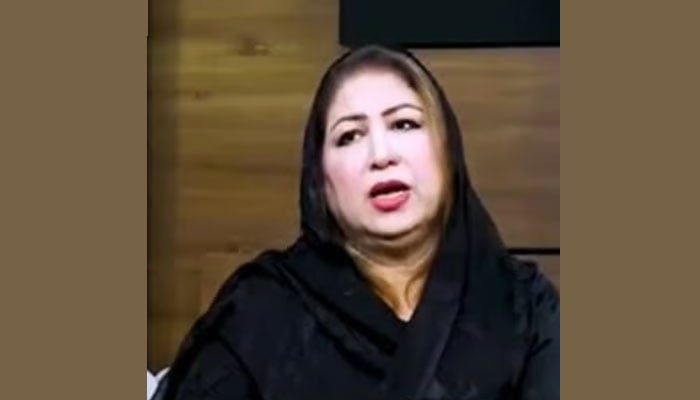
Popular Pakistani television actress and singer Hira Mani sparked widespread amusement across social media after offering a quick, lighthearted response to a flattering comment from a fan.
​Known for her candid and spontaneous online persona, the actress caught the attention of digital audiences during a recent interaction on her social media page. The exchange began when a fan posted a dramatic compliment under one of her photos, playfully writing that she was “Katrina Kaif ki bhi maa” (superior even to Katrina Kaif).
Rather than ignoring the comment or posting a conventional thank-you, Hira embraced her signature sense of humor. She quickly responded with a playful remark that was widely shared across online entertainment portals:
​”Who is Katrina Kaif? People call me Hira Mani!”

​The swift reply garnered thousands of likes and sparked a flurry of reactions from fans and followers. Social media users commended the actress for handling the exaggerated compliment with humor and confidence, praising her approachable style.
​The comment section quickly turned into a lively discussion. While many followers complimented her appearance and television work, others joined the banter, jokingly noting that as a mother of two sons, she is already a mother in real life.
​Hira Mani remains a frequent subject of media attention due to her television roles and active social media presence. Industry observers often note that her direct and unscripted interactions with followers help maintain her strong connection with audiences.

Similar Posts

  • | |

    Brittany Cartwright speaks out on Jax Taylor’s new romance

    LOS ANGELES: Reality television star Brittany Cartwright has shared her thoughts on former husband Jax Taylor’s new relationship, saying she is now focused on protecting her peace and raising their son following their separation. In a recent interview, Cartwright addressed Taylor’s reported romance with their former publicist, Lori Krebs. While commenting on the relationship, she said she does not wish harm on anyone but suggested the pair may not be happy together. The television personality also criticised her former husband, claiming he relies heavily on others for support. She further questioned the public role played by Krebs, saying she had never seen a publicist seek so much attention. Cartwright said she has more to say about the situation but is choosing the right time to speak publicly. She explained that her priority remains her personal well-being and the welfare of her young son. Speaking on her podcast, she said she intends to share her side of the story when she feels ready. Until then, she wants to focus on her family and maintain a peaceful environment for her child. The reality star added that many people already have an idea of what has happened, but she prefers not to discuss further details at this stage. Cartwright and Taylor ended their five-year marriage in February 2024 after a long relationship that was widely followed by fans of reality television. The former couple share a five-year-old son and have continued to co-parent following their separation.

  • | | |

    Pakistan needs hard governance to defeat terror: D…

    Director General of Inter-Services Public Relations (ISPR) Lieutenant General Ahmed Sharif Chaudhry has said Pakistan must become a “hard state” where the Constitution and law are applied equally to everyone, stressing that strong governance is essential to defeating terrorism and ensuring lasting peace. He rejected claims that the security situation in Balochistan is worsening, calling them part of a deliberate campaign to create a false perception about the province. Addressing a detailed press conference on Friday, the military spokesperson said Pakistan’s security forces continue to make significant gains against terrorism through sustained intelligence-based operations across the country. Lt Gen Chaudhry said a total of 40,348 intelligence-based operations (IBOs) have been carried out so far this year by the armed forces, police, intelligence agencies and civil armed forces. More than 31,000 of these operations were conducted in Balochistan, reflecting the state’s continued focus on restoring peace in the province. He said Pakistan recorded 3,145 terrorism-related incidents during 2026. Of these, 1,971 incidents occurred in Khyber Pakhtunkhwa, 1,148 in Balochistan and 26 in other parts of the country. The ISPR chief said security forces killed 2,084 confirmed terrorists during operations this year, describing it as the highest average in the country’s history. On average, around 10 terrorists have been eliminated every day, while nearly 200 intelligence-based operations are conducted daily. Highlighting the sacrifices made in the fight against terrorism, Lt Gen Chaudhry said 819 Pakistanis lost their lives in terrorism-related incidents this year. The victims included 303 military personnel, 194 members of police and civil armed forces, and 322 civilians. He also revealed that 28 suicide attacks had taken place across the country during the year. According to him, most of these attacks involved Afghan nationals or individuals linked to groups operating from Afghan territory. The military spokesperson said the rise in terrorist attacks should not be viewed as a sign of weakness. Instead, he argued that militant groups have intensified attacks because of increasing pressure from proactive security operations and repeated battlefield setbacks. Lt Gen Chaudhry also accused the Afghan Taliban administration of allowing terrorist groups to operate from Afghan soil, claiming cross-border support remains a major factor behind terrorism inside Pakistan. Explaining his vision of a “hard state,” he said it does not mean military rule. Rather, it refers to a country where institutions function according to the Constitution, laws are enforced fairly, and no individual or group stands above the law. Referring to Article 5 of Pakistan’s Constitution, he said loyalty to the state and obedience to the Constitution are fundamental duties of every citizen. He added that discussions about rights must also include recognition of civic responsibilities. Speaking specifically about Balochistan, Lt Gen Chaudhry said the province’s real challenge lies with certain elites and tribal leaders who seek to preserve the existing power structure. He alleged that some influential groups oppose educational and economic progress because they fear losing their traditional influence. He further claimed that some individuals benefit from illegal activities, including smuggling and other criminal networks, and promote unrest whenever the state strengthens law enforcement or cracks down on such activities. The military spokesperson reiterated that Pakistan would not negotiate with terrorist groups or those using violence for political purposes. Instead, he said the armed forces would continue engaging directly with the people of Balochistan, whom he described as the province’s true stakeholders. Lt Gen Chaudhry also alleged that hostile foreign powers are attempting to exploit Balochistan’s strategic location and natural resources by supporting anti-state elements in collaboration with local actors opposed to reforms and development. Discussing the issue of missing persons, he said the Commission of Inquiry on Enforced Disappearances has received 10,901 complaints since its establishment. Of these, 9,372 cases have been resolved, with 4,896 individuals returning home, around 1,030 found in prisons, 308 confirmed dead, and nearly 2,400 complaints determined to be incorrectly reported. He added that 2,933 complaints originated from Balochistan, of which 2,767 have already been resolved.

  • | |

    US lawmakers discuss stronger Pakistan-US cooperat…

    ISLAMABAD: Deputy Prime Minister and Foreign Minister Ishaq Dar met a US Congressional delegation in Islamabad on Tuesday. The two sides discussed ways to strengthen relations between Pakistan and the United States. The delegation included US Representatives Ryan Zinke and Michael Baumgartner. Dar welcomed the lawmakers and said Pakistan-US relations were gaining positive momentum. The meeting focused on several areas of mutual interest. These included trade, investment, information technology and energy. Both sides discussed opportunities to expand cooperation in these sectors. They also explored ways to increase economic and commercial engagement between the two countries. Dar stressed the importance of regular parliamentary exchanges. He said continued contact between lawmakers could help build mutual trust and improve understanding between Pakistan and the US. The foreign minister also highlighted the importance of stronger institutional links. He said regular engagement could help both countries develop closer and more productive relations. The visiting US lawmakers praised the role of the Pakistani community in the United States. They acknowledged the diaspora’s contributions to the US economy and society. The Pakistani community was also described as an important bridge between the two countries. Its role can help promote stronger people-to-people and economic ties. Regional and international issues were also discussed during the meeting. The two sides exchanged views on developments affecting regional peace and security. The US delegation appreciated Pakistan’s efforts to promote regional peace and stability. Pakistani officials said Islamabad remained committed to dialogue and peaceful solutions to regional challenges. The meeting comes as Pakistan seeks to expand its economic engagement with the United States. Islamabad has been encouraging greater investment and cooperation in emerging sectors. Trade and investment remain key areas of focus in the evolving relationship. Pakistan is particularly interested in attracting US investment in technology, energy and other high-growth sectors.

  • |

    Delhi pushes electric vehicle drive to tackle worsening air pollution

    Delhi has launched one of India’s boldest electric vehicle plans as authorities step up efforts to reduce dangerous air pollution in the capital. The new policy, introduced on July 1, aims to ensure that most newly registered vehicles in the city are electric by 2027. Officials believe the move will improve air quality and reduce harmful emissions, although experts say its success will depend on expanding charging facilities and strengthening the electricity network. Across several parts of Delhi, electric vehicle charging stations are becoming increasingly busy as more residents switch to battery powered scooters, cars and commercial vehicles. Even so, many drivers say the city still lacks enough charging points to support widespread use. Shyam Singh, who uses an electric scooter for work, said the existing infrastructure is not sufficient, especially for people who travel long distances. He explained that limited battery range and the shortage of charging stations remain major concerns for potential buyers. Under the new policy, existing petrol and diesel vehicles will not be banned, but the government expects their numbers to decline over time as electric vehicles become more common. Buyers will receive financial incentives including subsidies, exemptions from registration fees and some road taxes. People who scrap older fuel powered vehicles will also qualify for additional cash rewards. Authorities estimate the policy will cost around 150 billion rupees and is designed to encourage faster adoption of cleaner transport across the city. The plan focuses heavily on two and three wheelers, which make up nearly 70 percent of vehicles on Delhi’s roads. From 2027, all newly registered three wheelers and small commercial trucks must be electric. The same requirement will apply to newly registered two wheelers from the following year. Larger passenger cars and heavy vehicles running on conventional fuels will still be allowed for now. Electric vehicles currently account for only about five percent of the nearly 8.7 million vehicles registered in Delhi. However, registrations have grown steadily over the past year, with more than 100,000 new electric vehicles added, most of them scooters and auto rickshaws. Experts say the latest policy sends a clear signal that the city is committed to reducing dependence on fossil fuel powered transport. Energy specialists have described Delhi’s strategy as one of the most ambitious electric vehicle policies introduced by any Indian state. Jaideep Saraswat of the Vasudha Foundation said the firm deadlines make it clear that the transition to electric transport is unavoidable. He believes the policy will encourage both manufacturers and consumers to prepare for a future where electric vehicles dominate the market. Delhi has struggled with severe air pollution for years, particularly during winter when smog often reaches hazardous levels. The city regularly experiences school closures, restrictions on construction and emergency health measures because of poor air quality. Vehicles contribute around one quarter of pollution across the National Capital Region, while two and three wheelers alone account for almost half of transport related emissions within the city. Analysts say Delhi has already taken important steps toward cleaner transport in the past, including shifting many public vehicles to compressed natural gas. According to energy experts, electric vehicles represented around 12.7 percent of new vehicle sales in Delhi during the 2026 financial year, compared with the national average of 8.3 percent. They believe the latest policy builds on that progress by linking financial incentives with strict registration deadlines for conventional vehicles. Despite the optimism, several challenges remain. Some residents are still hesitant to switch because they worry about battery life, charging convenience and the effect of seasonal flooding on electric vehicles. Others believe more advanced and affordable models will become available in the coming years, making it worthwhile to delay their purchase. Experts also stress that expanding charging infrastructure is only part of the solution. Delhi must increase the use of renewable energy to power electric vehicles and modernize its electricity grid to handle rising demand. Fast charging stations, battery storage systems and better electricity management will all be necessary to support large scale adoption. Specialists also believe cooperation with neighboring states will be essential to reduce emissions from the wider power network and create a cleaner transport system for the entire region.

  • |

    Rubio warns Iran’s Hormuz demands could threaten global trade and regional security

    US Secretary of State Marco Rubio has warned that Iran’s demand to control shipping through the Strait of Hormuz could create a dangerous international precedent with serious consequences for global trade and economic stability. Speaking at a meeting of Southeast Asian foreign ministers in Manila, Rubio said allowing any country to control an international waterway and impose tolls through force would undermine international law and encourage similar actions in other regions. Rubio addressed ministers from the Association of Southeast Asian Nations at the start of their annual gathering, where concerns over renewed fighting in the Middle East dominated discussions. He assured regional partners that despite Washington’s focus on the conflict with Iran, the United States remains fully committed to its relationship with ASEAN and its security partnerships in Asia. He warned that if Iran is allowed to demand payment from ships passing through the Strait of Hormuz while threatening attacks against those that refuse, it could encourage other countries to adopt similar tactics in strategic waterways around the world. Rubio said such a development would pose a serious threat not only to the Middle East but also to the Indo Pacific region, where global shipping routes are equally vital. The US secretary also accused Iran of backing away from commitments made under an earlier ceasefire arrangement. He said Tehran has contacted Washington through both direct and indirect channels to discuss possible negotiations. While the United States remains open to a diplomatic solution, Rubio said it would not tolerate attacks on commercial shipping or American personnel in the region. The ASEAN meeting has brought together senior diplomats from major global powers including the United States, China, Russia, India, Japan, and Australia. Many participating countries expressed concern over the impact of the Iran conflict on energy supplies and international markets. Russian Foreign Minister Sergey Lavrov said Moscow hopes for a quick resolution to tensions between Washington and Tehran. He stated that continued conflict hurts the global economy and affects Russia as well. Lavrov added that stable energy prices are important for long term economic planning and said Russia supports efforts to end the crisis peacefully. Australian Foreign Minister Penny Wong also called for an immediate ceasefire and renewed negotiations. She warned that the security situation in the Middle East could worsen without warning and stressed that the reopening of the Strait of Hormuz is essential for restoring stability in global energy markets. The International Energy Agency has described the current situation as a major warning for Southeast Asia’s energy security. The region depends heavily on oil and liquefied natural gas transported through the Strait of Hormuz. According to the agency, Asian countries imported about 80 percent of the crude oil and nearly 90 percent of the liquefied natural gas passing through the waterway last year. Any prolonged disruption could increase energy prices and place additional pressure on economies across the region. On the sidelines of the summit, Rubio also met foreign ministers from the Quad partnership, which includes the United States, Australia, India, and Japan. The group reaffirmed its commitment to maintaining maritime security and ensuring freedom of navigation while expressing concern over China’s growing influence in regional waters. Japanese Foreign Minister Toshimitsu Motegi criticised attempts to change the regional balance through force, referring to disputes in the South China Sea and East China Sea. Penny Wong echoed those concerns, saying that actions increasing regional instability must be addressed through dialogue and international cooperation. Rubio also held talks with Chinese Foreign Minister Wang Yi. The two discussed a recent confrontation between Chinese and Philippine forces in disputed waters. Rubio described the incident as an escalation and said disagreements between Washington and Beijing must be managed carefully to avoid wider conflict. He added that both sides also discussed trade issues ahead of a planned meeting between US President Donald Trump and Chinese President Xi Jinping later this year. Rubio is expected to meet Russian Foreign Minister Sergey Lavrov again to discuss the war in Ukraine and explore whether there is an opportunity to revive diplomatic efforts aimed at ending the conflict. Officials said the meetings in Manila highlight the growing connection between security challenges in Europe, the Middle East, and the Indo Pacific as world leaders seek ways to prevent further instability.

  • |

    Australia drop Weatherald, recall Renshaw for Bangladesh Test

    MELBOURNE: Australia have made a change to their squad for the second Test against Bangladesh, dropping opener Jake Weatherald and recalling Matt Renshaw after a shock nine-wicket defeat in Darwin. Weatherald’s removal is the only change to Australia’s 13-man squad, but it could have wider implications for the team’s batting order. The 30-year-old struggled in the opening Test, scoring 23 in the first innings before being dismissed for a duck in the second. His difficult start has added to concerns over his Test credentials. Weatherald has now played six Tests and has managed 224 runs at an average of 20.36, leaving selectors with little choice but to make a change as Australia look to level the two-match series. Renshaw, meanwhile, returns to the Test setup after an absence of more than three years. The left-hander last played a Test for Australia in 2023 and has earned his recall after an impressive Sheffield Shield campaign. The Queensland batter scored 499 runs in six Sheffield Shield matches last season at an average of 49.90, including three centuries. His domestic form had already put him firmly in contention for a return to the national red-ball side, and the latest selection gives him another chance to revive his Test career. Renshaw’s return could also add experience and stability to an Australian batting line-up that was exposed by Bangladesh in Darwin. Australia were beaten by nine wickets in the first Test, suffering a result that put Bangladesh 1-0 ahead in the series. Travis Head is expected to continue opening the innings, while Renshaw is in line to partner him at the top of the order. The combination will be closely watched as Australia attempt to respond to their unexpected home defeat. Attention will also remain on Marnus Labuschagne, who is under pressure to produce a substantial score. Labuschagne managed only 32 runs across the first Test, and his place is increasingly being discussed amid competition for batting positions. Australia will need a much stronger collective performance in the second Test. Bangladesh demonstrated in Darwin that they can challenge the hosts in their own conditions, making the upcoming contest an important test of Australia’s ability to recover quickly. The second Test is scheduled to begin in Mackay on Saturday, with Australia aiming to draw the series and Bangladesh seeking another historic result. The changes ensure the second Test will carry significant pressure for Australia’s top order. Australia squad: Pat Cummins (c), Scott Boland, Alex Carey, Cameron Green, Josh Hazlewood, Travis Head, Josh Inglis, Marnus Labuschagne, Nathan Lyon, Matthew Renshaw, Steve Smith, Mitchell Starc, Beau Webster

Leave a Reply

Your email address will not be published. Required fields are marked *