household electricity bills

Household Electricity Bills To Fall From September Under New Tariff Structure

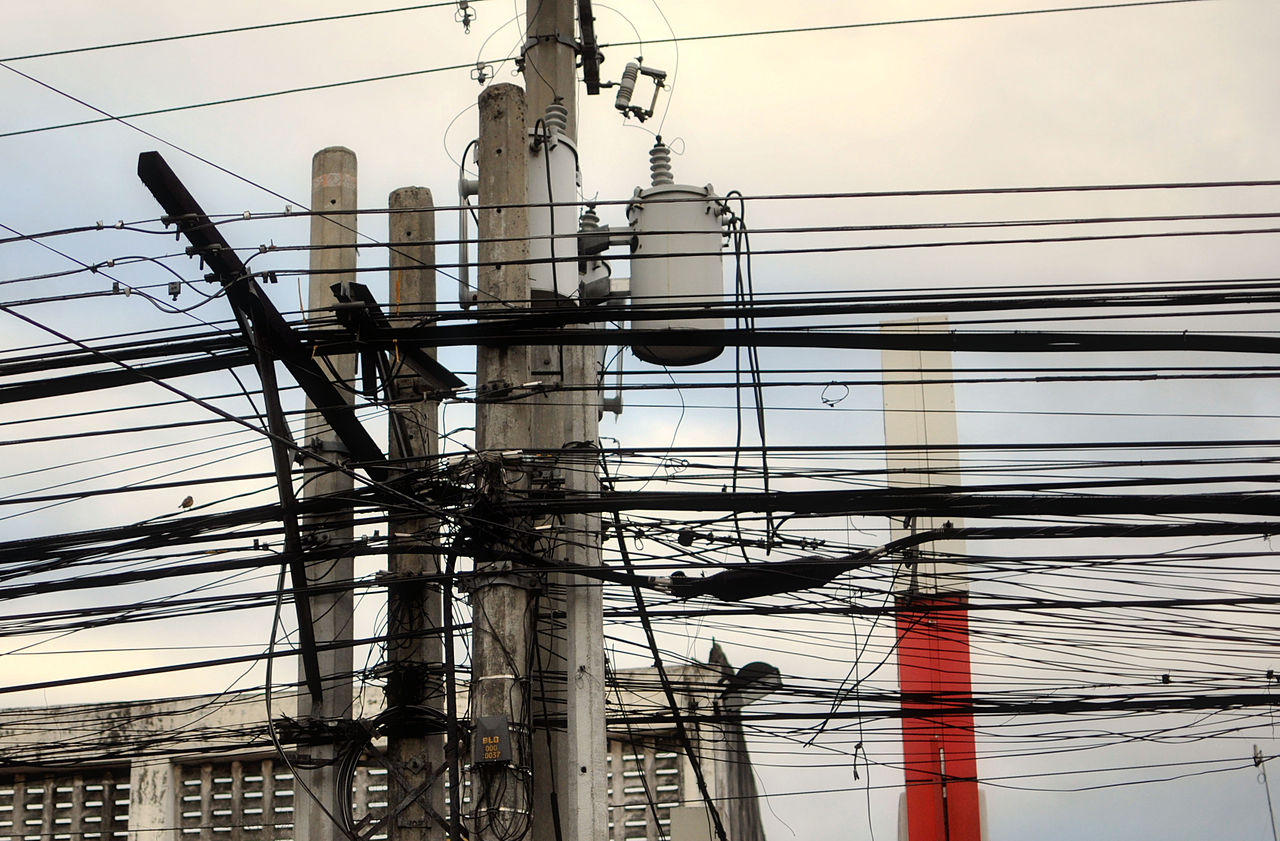
BANGKOK, Thailand – Thailand’s new electricity tariff structure will take effect with September 2026 bills, cutting the average rate for all customer groups and introducing lower charges for households using less power, with the government stating the measures are intended to ease living costs by tackling underlying electricity expenses and reshaping tariffs in a sustainable way.

Thai Cabinet maintains current electricity and diesel prices

Government spokeswoman Rachada Dhanadirek announced that under the new residential pricing system, the first 200 units of electricity used each month will cost no more than 3.00 baht per unit, with consumption from units 201 to 400 charged at 4.1584 baht per unit, and usage from the 401st unit onwards costing 4.3583 baht per unit, in a progressive structure designed to make bills better reflect actual consumption.

Across all customer categories, the average electricity tariff, including the Ft charge, will fall from 3.95 baht to 3.86 baht per unit, representing a reduction of 9 satang per unit, while the government will also separate the burden linked to public electricity charges from consumers’ bills, producing a further reduction of 0.0634 baht per unit. More than 21 million households are expected to benefit from the changes, with total savings estimated at 18 billion baht.

R
achada stated that the principle is clear: people who use less electricity should pay less, and actual residents must be able to access the entitlement, with the government wanting this reduction in electricity charges to have a tangible effect on people’s bills while making the tariff structure fair and sustainable over the long term.

Thai Electricity Consumption Hits Record High

The new structure reflects the government’s ongoing efforts to address the cost of living while promoting more efficient energy use across all sectors of society. The reductions are expected to provide welcome relief for households, particularly those with lower consumption patterns, as the country continues to navigate economic challenges and rising energy costs.

-Thailand News (TN)
Similar Posts

  • |

    Saudi Arabia unveils plans for Multinational Marit…

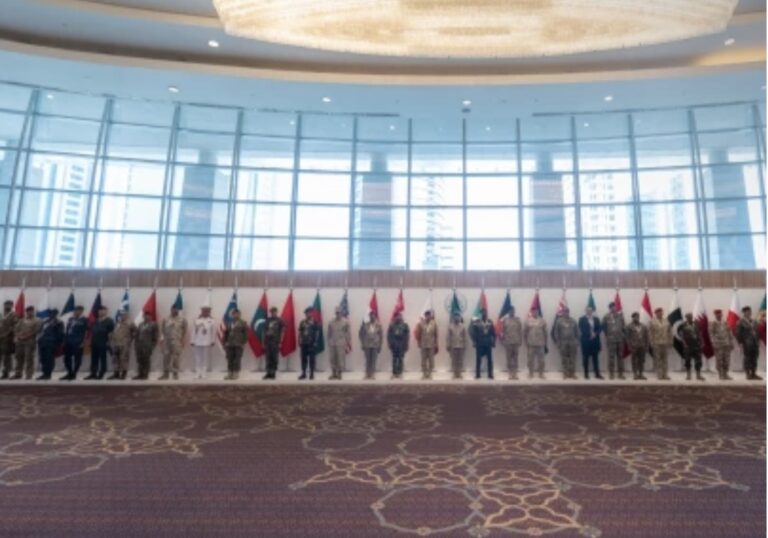
    Saudi Arabia and 13 other countries, including Pakistan, on Thursday announced the creation of a multinational maritime defence coalition aimed at safeguarding freedom of navigation, international trade and energy supply routes in the Bab al-Mandab Strait, the Red Sea and the Gulf of Aden. The Saudi defence ministry said representatives from 43 countries and the European Union attended an international meeting that discussed the proposed coalition, with Saudi Arabia serving as its founding and leading state and hosting its headquarters. The ministry said the coalition would strengthen maritime security, safeguard freedom of navigation, secure international trade routes and energy supply lines, and protect shared maritime interests in the strategic waterways. Fourteen countries, including Turkey, Pakistan, Egypt, Sudan and Djibouti, issued a joint statement supporting the proposed coalition. Among the six Gulf Arab states, Oman and the United Arab Emirates were not listed among the countries backing the statement. The founding states said participation in the coalition’s activities would remain a sovereign decision for each member state, stressing that the alliance is “purely defensive in nature, does not target any state, alliance or international organization, and will conduct all its activities in full compliance with international law while respecting state sovereignty and protecting freedom of navigation.” The joint statement said the coalition was established as a “framework for maritime defence cooperation” aimed at enhancing maritime security, protecting freedom of navigation, securing international trade and energy supply routes, and safeguarding interests in the Bab al-Mandab Strait, the Red Sea and the Gulf of Aden. The announcement comes amid heightened tensions in the Red Sea, where Yemen’s Houthi rebels have launched a series of attacks on Saudi-linked shipping. Saudi Arabia has responded with air strikes on what it said were Houthi military facilities in Yemen’s Hodeidah used to threaten commercial shipping. The Red Sea tensions mark the latest front in the wider Iran war, with attacks on shipping spreading beyond the Gulf and pushing oil prices higher. The Bab el-Mandeb Strait, linking the southern Red Sea with the Gulf of Aden and the Indian Ocean, is a key maritime chokepoint for global trade and energy shipments. The European Union launched a naval mission in the Red Sea in 2024 to help restore and safeguard freedom of navigation after the Houthis disrupted maritime traffic by attacking vessels in what they said was solidarity with Palestinians during the Gaza war. The new Saudi-led coalition represents a significant expansion of international efforts to secure the region’s vital waterways.

  • | | |

    Lab report finds 176 substandard samples of oil, g…

    ISLAMABAD: A laboratory assessment has found that 176 out of 491 samples of packaged edible oil, ghee and milk failed to meet national quality standards. According to a statement issued by the Ministry of Planning, a total of 491 samples of packaged cooking oil, ghee and milk products were tested. Of these, 315 samples were found to comply with national standards, while 176 were declared substandard. The ministry said approximately 36% of the tested samples failed to meet the required quality standards. The assessment showed significant variations across different products. Of the 204 samples of vanaspati ghee tested, 98 were found to be below the required standards. Similarly, 40 out of 146 samples of blended cooking oil failed the quality assessment, while 26 of 104 samples of packaged liquid milk were declared substandard. The report also found quality concerns in milk powder, refined palm oil and refined canola oil. Eight of the 18 milk powder samples failed to meet national standards, while three of four refined palm oil samples were found to be substandard. In the case of refined canola oil, one out of 13 tested samples did not meet the required standards. The findings have highlighted concerns over the quality of commonly consumed food products and the need for stronger monitoring and enforcement to ensure that packaged edible oils, ghee and dairy products available in the market comply with national quality requirements.

  • | |

    Rawalakot election possible on August 20 or 21 if …

    Azad Jammu and Kashmir (AJK) Chief Election Commissioner Ghulam Mustafa Mughal has said that elections in Rawalakot could be held on August 20 or 21 if the ongoing protest is resolved within the next three to four days. Speaking to the media in Muzaffarabad, Mughal said polling in Bagh and Haveli was scheduled to take place first due to security concerns. He said security personnel had already arrived in the two districts, while polling material was being transported under the supervision of the military. He added that eight security personnel would be deployed at each highly sensitive polling station to ensure the safety of voters and election staff. The chief election commissioner said efforts were also under way to restore internet services in Bagh and Haveli on August 9 and 10. Mughal said the Election Commission expected to be in a position to announce the polling date for Rawalakot within the next seven days. However, the final schedule would depend on the resolution of the ongoing protest. “If the protest is resolved within three or four days, elections in Rawalakot can be held on August 20 or 21,” he said. Responding to allegations made by political leaders, Mughal said the Election Commission could not engage in a war of words with politicians. He said the commission would provide the facts once the electoral process had been completed and would determine whether any irregularities had occurred and who was responsible.

  • | |

    Spider-Man: Brand New Day star Jacob Batalon revea…

    Jacob Batalon is shining a spotlight on one of the most talked-about additions to Spider-Man: Brand New Day. The actor, who reprises his beloved role as Ned Leeds, recently opened up about the film’s innovative “Spidey Tracker” and explained why the feature perfectly reflects his character’s personality. Speaking to People magazine, Batalon shared that Ned’s intelligence has always been one of his defining qualities, making the new technology a natural extension of his journey.  “I think what’s really cool about Ned is that they never really lost his intelligence,” Batalon said during the interview. Since making his Marvel Cinematic Universe debut in Spider-Man: Homecoming, Ned has been known as Peter Parker’s trusted “guy in the chair,” using his technical skills to help Spider-Man behind the scenes. Even after the emotional events of Spider-Man: No Way Home, the latest film continues to showcase Ned’s sharp mind in a fresh and exciting way.  In Spider-Man: Brand New Day, Ned develops the Spidey Tracker, an app designed to help locate Spider-Man across New York City. Ironically, because of Doctor Strange’s memory spell in No Way Home, Ned no longer remembers that Peter Parker is Spider-Man. As a result, he unknowingly spends his time tracking his former best friend without realizing their shared history. The emotional twist adds another layer to the character while staying true to the franchise’s ongoing storyline.  Beyond its role in the movie, the Spidey Tracker has also become a real-world experience for fans. Sony Pictures and Samsung partnered to launch an interactive version of the tracker, allowing fans to follow Spider-Man-themed events, explore global sightings, and connect with the film’s promotional campaign. Batalon praised the collaboration, saying Samsung’s foldable devices fit perfectly with Ned’s tech-loving personality and made the fictional app feel even more believable.  The actor also reflected on how much the Spider-Man franchise has meant to him over the past decade. Batalon expressed gratitude for growing alongside Tom Holland and Zendaya, describing his co-stars as family. He said the films not only shaped his career but also allowed him to build lasting friendships both on and off the screen.  Ned has long been a fan favorite because of his humor, loyalty, and intelligence, and Spider-Man: Brand New Day continues to build on those strengths. Rather than changing who the character is, the new film gives him another opportunity to showcase the skills that audiences have loved since 2017. With the Spidey Tracker serving as both a clever story element and an engaging fan experience, Batalon believes the feature captures everything that makes Ned special. As Spider-Man: Brand New Day continues its successful theatrical run, Batalon’s latest comments offer fans a deeper appreciation for one of the franchise’s most relatable characters. His enthusiasm for Ned’s evolution suggests there is still plenty of room for the character to grow in future Marvel adventures. 

  • | | |

    Iran sets tough conditions for Strait of Hormuz re…

    Iran has warned that the strategically vital Strait of Hormuz will remain closed until the United States meets a series of conditions under a June memorandum of understanding, raising fresh concerns about the future of a conflict that has already disrupted global energy markets. Iranian Parliament Speaker Mohammad Bagher Ghalibaf said on Tuesday that Tehran would not reopen the waterway until what he described as the full terms of the agreement had been implemented. According to Iranian state media, Ghalibaf said the blockade must first be lifted, Iran’s frozen assets released, oil sanctions removed and military threats and operations on all fronts brought to an end. He also insisted that other provisions of the memorandum must be fully implemented. “Iran is prepared to impose a heavier defeat on the enemy than before,” Ghalibaf said, warning that Tehran’s response would depend on the actions and aggression of its opponents. The statement came as diplomatic efforts to secure a permanent end to the Iran-US conflict appeared increasingly fragile. Iran Claims Victory in War and Diplomacy Iranian Foreign Minister Abbas Araghchi separately declared that Tehran had won both the military confrontation and the diplomatic battle. Speaking at an event, Araghchi said Iran had resisted sustained military pressure before entering negotiations. He claimed that those who initially demanded Iran’s unconditional surrender later sought talks with Tehran. “We fought with strength, and we negotiated with strength,” Araghchi said, according to Iranian media. Araghchi also accused Israel of undermining efforts to implement the June memorandum, saying it had worked to prevent the agreement from being reached and subsequently obstructed its implementation. His comments followed US President Donald Trump’s call for Iran to surrender and “raise the white flag”, further highlighting the sharp divide between Washington and Tehran. Hormuz Becomes Central Dispute The Strait of Hormuz has emerged as one of the most important points of disagreement between the two sides. The narrow waterway links the Persian Gulf with the Gulf of Oman and is a crucial route for global oil and liquefied natural gas shipments. Shipping activity has already fallen dramatically during the conflict. Reuters reported that only a handful of commodity vessels crossed the strait over the weekend, compared with more than 130 daily ship transits before the war began. Iran says provisions of the June memorandum give it authority to manage parts of the waterway, while Washington rejects that interpretation. The disagreement has contributed to renewed tensions after an earlier ceasefire failed to produce a lasting settlement. Vessel Hit by Unknown Projectile The latest tensions were accompanied by another maritime incident. The UK Maritime Trade Operations centre said a vessel travelling outbound through the Strait of Hormuz was struck by an unknown projectile. The impact damaged the ship’s engine room and caused a crew casualty. The remaining crew members were assisted by the Omani Coast Guard, while authorities began investigating the incident. No environmental impact was reported. UKMTO urged vessels operating in the area to exercise caution and report suspicious activity. Back-Channel Diplomacy Continues Despite the increasingly hostile rhetoric, reports indicate that Washington and Tehran have continued exploring indirect channels. Media reports said the Trump administration had established a back channel involving figures connected to Iran’s Islamic Revolutionary Guard Corps. The reported effort reflected US concerns over whether Iranian negotiators had sufficient authority to deliver an agreement acceptable to the country’s powerful security establishment. US special envoy Jared Kushner also indicated that discussions between Washington and different parts of the Iranian government were more extensive than publicly acknowledged. The developments suggest that diplomacy has not completely collapsed, even as official statements from both sides remain confrontational. Iran Faces Economic Pressure Iran’s leaders also face significant economic challenges. The conflict has added pressure to an economy already struggling with inflation, sanctions, currency weakness, energy shortages and structural problems. Disrupted trade, damaged infrastructure and lost production have increased the financial burden of the war, while prolonged restrictions on shipping through Hormuz threaten Iran’s ability to generate export revenue. Global markets have also felt the impact. Brent crude rose sharply during the conflict, reaching a peak of $126 a barrel before later easing. The prolonged disruption has raised concerns over fuel prices and inflation in countries dependent on Gulf energy supplies. Ghalibaf Heads to Iraq Against this backdrop, Ghalibaf is expected to travel to Iraq for talks on regional developments and bilateral cooperation. His discussions are expected to cover security, border management, counterterrorism, economic cooperation and implementation of existing agreements between Tehran and Baghdad. The visit comes after a drone attack targeted the residence and private office of Iraqi Kurdish Regional Government Prime Minister Masrour Barzani. Iran denied involvement and condemned the incident. Araghchi said nothing justified the attack and warned against attempts to create divisions between Iran, Iraq and the Kurdish region. With the Strait of Hormuz still at the centre of the dispute, the coming days could prove crucial. Tehran’s insistence on sanctions relief, the release of frozen assets and an end to military threats leaves little room for compromise unless Washington and its allies are prepared to make substantial concessions. For now, the strategic waterway remains a powerful bargaining tool for Iran — and a major source of uncertainty for the global economy.

  • | |

    Ishaq Dar arrives in Manila for ASEAN Forum

    Deputy Prime Minister and Foreign Minister Ishaq Dar arrived in Manila, Philippines, on Wednesday to attend the 33rd ASEAN Regional Forum (ARF) Ministerial Meeting. The visit reflects Pakistan’s continued engagement with regional and international partners on key political, economic, and security issues. Dar reached Manila with a high-level delegation. During his visit, he will participate in the ARF plenary session and hold several bilateral meetings with foreign ministers and senior officials from participating countries. These meetings are expected to focus on strengthening diplomatic ties, expanding economic cooperation, and discussing regional developments. Upon his arrival, Dar was welcomed by senior officials of the Philippine Department of Foreign Affairs, Pakistan’s Ambassador to the Philippines Asima Rabbani, and officials of the Pakistani Embassy. The ASEAN Regional Forum is one of the region’s most important diplomatic gatherings. It brings together foreign ministers and senior representatives from ASEAN member states and partner countries to discuss peace, security, and regional cooperation. This year’s meeting will focus on several pressing international issues. Participants will exchange views on growing geopolitical tensions, regional security challenges, energy security, food supply concerns, trade cooperation, and the impact of ongoing global conflicts. The situation in Myanmar will also be high on the agenda. Leaders are expected to review efforts to implement ASEAN’s Five-Point Consensus and discuss ways to support peace and stability in the country. The continuing tensions between the United States and Iran are also expected to feature prominently during discussions. Delegates will assess the impact of the conflict on regional security, global energy markets, and international trade. Senior diplomats from major world powers are attending the forum. These include representatives from the United States, China, India, Japan, Australia, South Korea, Russia, the United Kingdom, and the European Union. The meeting provides an opportunity for bilateral engagements and dialogue on shared global challenges. ASEAN countries are also expected to discuss measures to strengthen regional energy cooperation. Member states are exploring ways to improve oil-sharing mechanisms to reduce the impact of possible disruptions in global energy supplies.

Leave a Reply

Your email address will not be published. Required fields are marked *