india behind antipakistan
| | |

India behind anti-Pakistan propaganda network: Tar…

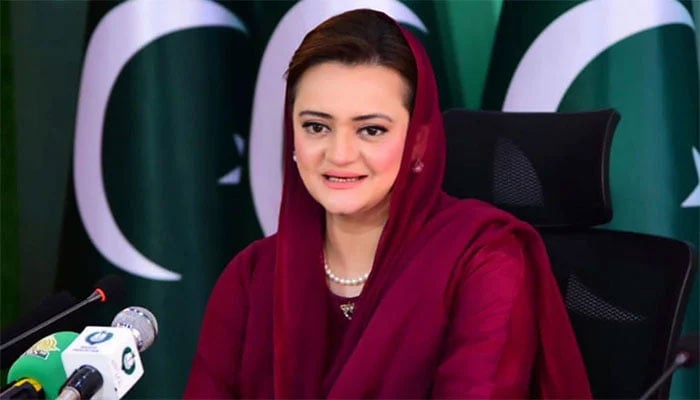
ISLAMABAD: Federal Minister for Information and Broadcasting Attaullah Tarar has alleged that an entire network involved in spreading misleading propaganda and disinformation against Pakistan and Pakistani agencies has links to India.

Speaking at a press conference in Islamabad, the minister said most of the content being circulated was related to the banned Action Committee in Kashmir.

Tarar claimed that evidence of Indian funding for elements associated with the banned Action Committee was now in the public domain. He said numerous Indian social media accounts had emerged with evidence linking them to the campaign.

According to the minister, posts shared through these accounts were aimed at provoking people against the state. He alleged that social media platforms were being used to promote groups involved in mob mobilisation and attempts to take the law into their own hands.

The minister said efforts had been made to encourage such elements through social media. He alleged that the campaign was designed to create unrest and chaos in Kashmir.

Tarar said Pakistan’s recent successes had not been acceptable to its adversaries. He said Pakistan had achieved gains not only on the military front but also on the diplomatic front.

The information minister said the government would continue defending Pakistan’s national interests on every front. He stressed that efforts to spread disinformation and destabilise the country would not be allowed to undermine Pakistan’s interests.

Tarar’s remarks came amid continued debate over social media campaigns and alleged foreign influence in Pakistan’s internal affairs. The minister urged the public to remain alert to misleading content and propaganda being circulated online.

Similar Posts

  • | | |

    Another promise fulfilled’: PM Shehbaz unveils m…

    Prime Minister Muhammad Shehbaz Sharif on Thursday announced a comprehensive package of reforms aimed at modernising consular services for overseas Pakistanis, with government officials describing the measures as the fulfilment of another commitment made to the Pakistani diaspora. The new initiatives are designed to make consular services faster, more transparent and more accessible through digitalisation and streamlined procedures. The reforms include QR code-based complaint registration at Pakistani embassies, a simplified attestation process for Power of Attorney and property-related documents, a one-step Apostille attestation system, an evening shift at the Ministry of Foreign Affairs in Islamabad, and a courier-based document attestation service. The government is also integrating the databases of the Higher Education Commission (HEC), Inter Board Committee of Chairmen (IBCC), NADRA and the National Police Bureau to speed up document verification. In addition, a mobile application is being developed to enable digital verification of birth, death, marriage and family registration certificates, along with other official documents. Prime Minister Shehbaz Sharif said overseas Pakistanis are a valuable national asset and reiterated his government’s commitment to providing efficient, transparent and citizen-friendly services for Pakistanis living abroad. The reforms were welcomed by overseas Pakistanis, many of whom said the initiatives would help reduce delays and simplify access to essential consular services.

  • Rocket Barrage from Cambodia Kills Thai Civilian, Draws Official Condemnation

    BANGKOK – Thai authorities have issued a strong condemnation of Cambodia following a rocket attack that struck a civilian community in Si Sa Ket province on Sunday, resulting in the death of a Thai national. The Royal Thai Army reported that Cambodian forces fired BM-21 multiple rocket launchers into tambon Sao Thong Chai in Kantharalak […]

  • | |

    AJK voters rally behind PML-N ahead of August 2 po…

    ISLAMABAD: Senior Punjab Minister Maryam Aurangzeb has expressed confidence that the people of Azad Jammu and Kashmir (AJK) are firmly backing the Pakistan Muslim League-Nawaz (PML-N), saying recent public gatherings reflect growing support for the party ahead of the August 2 elections. In a statement issued on Tuesday, Aurangzeb said the people of Mirpur had demonstrated their trust in the PML-N during the visit of former prime minister Nawaz Sharif and Punjab Chief Minister Maryam Nawaz on July 24. She described the enthusiastic public response as a clear indication of the party’s popularity in the region. She further stated that voters would reinforce this support through the ballot box by electing PML-N candidates under the party’s election symbol, the lion. According to Aurangzeb, the people believe that the progress and prosperity of Azad Jammu and Kashmir are closely tied to the PML-N’s development agenda. Referring to earlier political activity, she said Muzaffarabad had already conveyed its support for the party on July 21. Aurangzeb added that the people of Kashmir would make their final decision on polling day, August 2, by voting in favour of the PML-N.

  • | |

    Barbie sequel talks hit roadblock as negotiations …

    The huge success of Barbie made a sequel seem almost inevitable. After all, the 2023 film became a global phenomenon, earning more than $1.4 billion at the worldwide box office and turning into one of Warner Bros.’ biggest hits ever. Fans quickly began asking when Barbie and Ken would return to the big screen. However, the road to a second film has become more complicated than many expected. Recent reports suggest that negotiations for a Barbie sequel have reached a major roadblock. Warner Bros. is reportedly still working to secure new agreements with key members of the original team, including director Greta Gerwig, co-writer Noah Baumbach, and stars Margot Robbie and Ryan Gosling. None of them were contractually committed to a sequel after the first film, meaning fresh deals must be negotiated before production can move forward.  Adding to the pressure is a reported deadline tied to the film rights. According to recent reports, Warner Bros. has until December to finalize arrangements for a sequel before certain rights could revert to Mattel, the company behind the iconic Barbie doll. That deadline has increased the urgency of the ongoing talks.  The creative side of the project has also played a role in the delay. Following the release of the original film, Greta Gerwig repeatedly said she did not have an idea for a sequel. She explained that she had poured everything into the first movie and was not thinking about a follow-up at the time. More recent reports, however, indicate that Gerwig and Baumbach may now have a potential story in mind, but they are reportedly keeping those details private while negotiations continue.  Money is believed to be another major factor in the discussions. Reports claim that salary demands and profit-sharing arrangements are among the issues slowing progress, with all sides trying to reach an agreement that reflects the original film’s enormous success.  Despite the current challenges, a sequel has not been ruled out. Industry insiders believe there is still strong interest from both the studio and the creative team to continue the franchise if the right deal can be reached. For now, fans will have to wait as negotiations continue behind the scenes, hoping Barbie’s next adventure eventually makes its way to theaters.

  • | |

    Rs 71 billion ‘Apna Ghar’ push, 1.5 la…

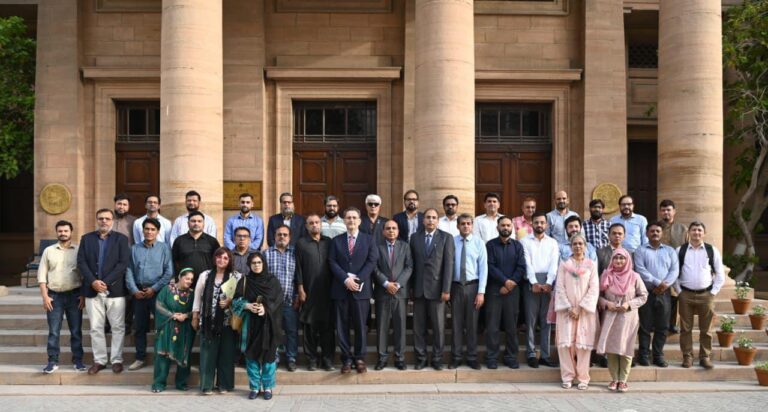
    KARACHI: For millions of teachers, clerks, nurses and daily-wage workers, owning a house has felt like a distant dream. Caught between skyrocketing rents and banks that rarely lend to them, they have spent years waiting for a break. Now, with the Prime Minister’s “Apna Ghar” scheme offering subsidized 20-year loans, that wait may finally be over — if the government can fix the loopholes that sank similar programs in the past. With rents climbing and home ownership slipping further out of reach, the government’s new housing finance push is back in focus. The Prime Minister’s “Apna Ghar” housing scheme unveils a 20-year financing plan backed by Rs 71 billion in federal subsidies allocated in the budget. The urgency is clear: Pakistan faces a housing shortfall of over 10 million units, with demand growing each year due to urbanization and population growth. The State Bank of Pakistan arranged a workshop on the Prime Minister’s Housing Scheme — Wazir-e-Azam Apna Ghar Program — to roll out salient features including financing structure, loan amount, tenure, income requirements, and monthly installment. According to SBP officials Ghulam Muhammad Abbasi, Executive Director, and Dr. Muhammad Saleem, Additional Director, the scheme aims to finance 150,000 houses by June 2027. Under the program, banks will provide loans of up to Rs 10 million for purchase of a ready-made house, flat, or plot, or for construction on a plot. A house of up to 250 square yards and a flat of up to 1500 square feet will be eligible. The loan tenure is 20 years, with a fixed markup of 5% for the first 10 years. Who can apply and how? Salaried individuals can apply with a salary slip, while non-salaried applicants including shopkeepers and daily wage workers can use electricity bills, mobile top-ups, children’s fee challans or other expense receipts as income proof, the State Bank said. An applicant can apply with 3 to 4 co-borrowers — father with sons, brothers with sisters, or husband with wife. The main applicant must not own any property; if found otherwise, the loan will be cancelled. An online portal has been created for applications, and forms are also available at bank counters. “Banks will not charge any processing fee, nor any penalty on balloon payment,” an SBP official added. “Banks will process an application in 15 days. For any complaint, applicants can lodge it on the Prime Minister’s portal against the bank or officer.” To accelerate home ownership and boost construction, the government has expanded the scheme to include overseas Pakistanis. Overseas Pakistanis/Non-Resident Pakistanis holding NICOP/POC may also obtain financing. Participating Financial Institutions may also extend financing for private developer-led housing projects. Housing: A basic need slipping away For Pakistan’s lower and middle class, owning a home has become unaffordable. Rising property prices, inflation, and lack of access to formal credit have widened the 10-million-unit housing gap. Most families either live in rented accommodations, spending 40-50% of income on rent, or in informal settlements without basic facilities. For this segment, “Apna Ghar” could be the first real chance to move from rent to ownership — provided installments stay within budget. The Benefits: Housing for the missing middle 1. Affordability: 5% fixed markup for 10 years is significantly lower than market mortgage rates. 2. Inclusion: Alternate income proof and NICOP/POC access opens doors for informal workers and overseas Pakistanis. 3. No hidden costs: Zero processing fee and a dedicated portal reduce bureaucratic hurdles. 4. Economic boost: Financing 1.5 lakh units will give a direct push to construction, cement, steel, and labor. The Shortcomings and Challenges The scheme may end up benefiting the middle class more than the poor it targets. Most low-income families live in katchi abadis with no legal land titles, which banks require. Without land regularization, the poorest remain excluded. Other challenges: 1. Scale vs Need: 150,000 homes by 2027 address only 1.5% of the 10-million-unit shortage. 2. Bank appetite: Banks have historically avoided mortgage lending due to documentation and recovery risks. 3. Land and title issues: The scheme assumes legal plots, a major bottleneck in cities like Karachi. 4. Affordability ceiling: Rs 10 million cap and installments may still be unaffordable for the poorest. 5. Implementation: SBP’s 15-day timeline will be tested, as past schemes struggled with delays. Skepticism on the ground But for many, doubt runs deep. “We pay Rs 25,000 rent every month. Owning a house feels like a dream,” said Ali, a private school teacher from Nazimabad. “Every time the government announces a scheme, I hear the same thing — in the end, the rich will take loans in the name of their drivers and peons. Let a few months pass. Then we’ll know if this system is transparent or just another test case.” That reflects three questions: Will it reach the right people? Will the process be clean? Will the intent hold? With the scheme only a few months old, experts say implementation will be the real test. Transparency concerns Applicants and housing experts pointed out banks’ history of demanding informal payments to process files. With “Apna Ghar” relying on banks, many wonder how SBP will ensure it remains bribe-free and trackable. The SBP Executive Director said an online portal has been launched and complaints can be registered directly with the Prime Minister’s or SBP portal. “Strict action will be taken against banks charging fees or demanding bribes,” he said. Economic boom Apna Ghar can bring Economists say the push can do more than provide roofs — it can revive construction and the economy. The sector contributes nearly 2.5% to GDP and employs over 8 million people directly. Every house is estimated to create 8-10 direct and 20-25 indirect jobs. With demand for 150,000 units against a backlog of 10 million, orders for cement, steel, bricks and labor are expected to rise. SBP notes housing has one of the highest fiscal multipliers. If targeted well, it could cut into the housing backlog while acting as a grassroots stimulus. An opportunity For Shahbaz-led government to

  • | |

    Punjab launches Integrated Safe City network

    LAHORE: Punjab Chief Minister Maryam Nawaz Sharif on Friday formally inaugurated the Punjab Integrated Safe City Network, describing it as a major step towards protecting citizens and reducing crime across the province. Punjab has become the first province in the country to establish an integrated Safe City network covering all 41 districts and two tehsils. Officials said coordinated efforts by the police, Crime Control Department (CCD) and Safe Cities Authority had contributed to an estimated 80 per cent decline in crime. Safe Cities Authority Managing Director Ahsan Younas briefed the chief minister on the province-wide smart surveillance system. He said artificial intelligence (AI) was strengthening monitoring and enabling authorities to respond more quickly to potential threats. The network combines intelligent surveillance, Emergency Helpline 15, traffic management, real-time command and control, and predictive policing. It also offers services through the Virtual Women Police Station, Child Safety Centre and Blood Bank, along with traffic and environmental monitoring facilities. The government plans to install another 1,500 panic buttons across Punjab and equip every police station with the facility. Smart screens will also be installed at public locations. AI-powered cameras will support facial identification and weapon detection, helping law-enforcement agencies improve surveillance and respond to security threats. Maryam Nawaz said the government would expand the Safe Smart Cities project to every union council in Punjab. She said the province had made significant progress in technology, smart policing and predictive policing. The chief minister said the government had transformed every district into a Safe City within the past two and a half years. She termed the ability to monitor the entire province through a single system a major achievement. She said AI-based surveillance and predictive policing were helping authorities identify developments early and take timely action. Speaking about the security situation, Maryam Nawaz said more than 70 areas of Punjab had previously been considered no-go zones, where people avoided travelling after sunset. She claimed that the government had now eliminated such areas across the province, including the riverine belt. She added that the riverine region had recorded no serious crime or kidnapping for ransom for nearly 10 months. The administration also recently organised a cricket tournament there, which she described as a sign of improving law and order. The chief minister said the provincial government would spend Rs30 billion on development projects in the riverine belt, including healthcare and other facilities, with the aim of bringing the area closer to the development standards of Punjab’s cities.

Leave a Reply

Your email address will not be published. Required fields are marked *