iran urges voters
| |

Iran urges US voters to vote out Trump’s allies in election

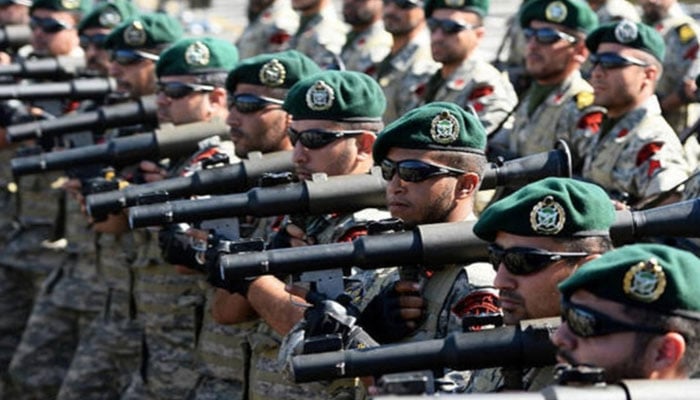
Iran’s Islamic Revolutionary Guard Corps urged Americans to vote out US President Donald Trump’s allies in Congress as US forces were due to withdraw from their remaining bases in neighboring Iraq on Wednesday, September 30, in a departure celebrated by Tehran.

Meanwhile, Qatar continued to promote its shuttle diplomacy aimed at ending the seven-month-old war between Iran and the United States. Trump once again predicted a swift surrender for Iran.


Iran urges US voters to vote out Trump’s allies in election

The 26-page letter by the Guards, published on Tuesday, September 29, urges Americans to use their political power to remove current leaders from office and reject US support for Israel and military intervention abroad.

Must Read

US forces exit Iraq, emboldening Iran’s proxies and Islamic State


US forces exit Iraq, emboldening Iran’s proxies and Islamic State

While the missive was unlikely to sway US voters who may not even see the text published by Iranian media, it identifies issues that US political analysts say are working against Trump and the Republican Party ahead of November 3 congressional elections, when the opposition Democrats could retake control of one or both legislative chambers, potentially impeding Trump’s political agenda.

“Remove from power the evil, deceitful, and violent politicians who are responsible for America’s current state,” the letter said. “Make sure your politicians understand that the world has changed.”

Trump campaigned in 2024 pledging to avoid new wars, end existing conflicts and bring down inflation, but the war with Iran, which Trump launched alongside Israel, has contributed to higher global fuel prices and spread in the Middle East.

A Reuters/Ipsos poll published September 21 found just 17% of respondents approved Trump’s handling of the cost of living – the top issue Americans say will determine how they vote in November. Only 34% approved of the strikes on Iran.

Must Read

Trump approval falls to record low as high costs bite, poll finds


Trump approval falls to record low as high costs bite, poll finds

Trump, who broke with Republican orthodoxy in 2016 when he called the US invasion of Iraq a major mistake, allowed the final withdrawal from Iraq on Wednesday, which was agreed in 2024 by former President Joe Biden.

The withdrawal comes 23 years after US-led forces toppled Saddam Hussein, then triggered upheaval that culminated with the rise of Islamic State.

Qatari mediation

The US war in Iran has drawn in Iranian allies in the region, including the Houthis in Yemen, Hezbollah in Lebanon and militias in Iraq, which Riyadh blamed for the September 10 attack that knocked the East-West Pipeline in Saudi Arabia offline.

Iran, which says its ultimate aim is to force American forces to leave the entire Middle East, casts the US withdrawal from Iraq as a triumph for its “axis of resistance” of allied armed groups across the region.

The US and Iran have not found an off-ramp from the war despite rounds of talks and several ceasefires.

Negotiations appeared to intensify during last week’s UN General Assembly meeting in New York, but have so far not yielded any agreement to reopen the strategic Strait of Hormuz, through which 20% of global oil and liquefied natural gas passed before the war started in February.

Qatar has again emerged as would-be peacemaker after previously playing a supporting role in producing a June memorandum of understanding that led to a brief ceasefire. US and Iranian officials spoke separately with Qatari mediators on Monday, but it was unclear if exchanges took place on Tuesday.

“We are exchanging messages between the parties, and we’re working towards establishing a common ground in order to get into a deal that would save all of us from the repercussions of the conflict,” Qatari Foreign Ministry spokesperson Majed al-Ansari told reporters.

Trump meanwhile repeated his position that Iran must not obtain a nuclear weapon and that the war would be over soon.

The conflict has degraded Iran’s conventional forces and damaged its already ailing economy, but Tehran has fought back with missile and drone strikes on US allies in the Gulf and by restricting oil tanker traffic in the strategic Strait of Hormuz, which has pushed up world energy prices.

“I don’t know if they are going to give up yet but they’ll give up,” Trump told reporters on Tuesday.

“They are doing very poorly,” he added.

At the United Nations General Assembly last week, Iran floated a peace proposal that would trigger a seven-day countdown to reopening the strait and a pause in fighting.

Trump on Saturday rejected the plan although Iranian Foreign Minister Abbas Araqchi said on Sunday that Washington had not officially relayed a US rejection through mediators.

Trump has cited weakening Iran’s nuclear capabilities as one of his war objectives, along with ending its ability to attack its neighbors and creating conditions for Iranians to topple their leadership.

Iran, which does not have nuclear weapons, denies seeking them. The US is nuclear-armed. Tehran says it has the right to develop nuclear technology for peaceful purposes as a party to the nuclear Non-Proliferation Treaty. – Rappler.com

Similar Posts

  • | |

    Pakistan, Kuwait agree to expand bilateral cooperation

    Pakistan and Kuwait have agreed to strengthen cooperation in several key areas, including trade, investment, energy, labour, agriculture, information technology, health, mining and minerals, and defence. The understanding came during delegation-level talks held at the Ministry of Foreign Affairs in Islamabad on Wednesday. Deputy Prime Minister and Foreign Minister Ishaq Dar and Kuwait’s Foreign Minister Sheikh Jarrah Jaber Al-Ahmad Al-Sabah co-chaired the meeting. Sheikh Jarrah arrived in Islamabad on Tuesday for a two-day official visit aimed at reviewing Pakistan-Kuwait relations and discussing regional and international developments of mutual interest. According to the Ministry of Foreign Affairs, the two sides reviewed the full range of bilateral ties and explored ways to expand economic cooperation and strengthen partnerships across various sectors. The two foreign ministers also agreed to improve institutional coordination by building stronger links between relevant institutions and maintaining regular high-level exchanges. Pakistan and Kuwait further reaffirmed their commitment to working closely at multilateral forums on matters of shared interest. During the talks, Sheikh Jarrah thanked the Pakistani government and people for their warm welcome and hospitality. He also appreciated Pakistan’s support to Kuwait during the COVID-19 pandemic.

  • | |

    One killed as fire breaks out on Indonesian ferry …

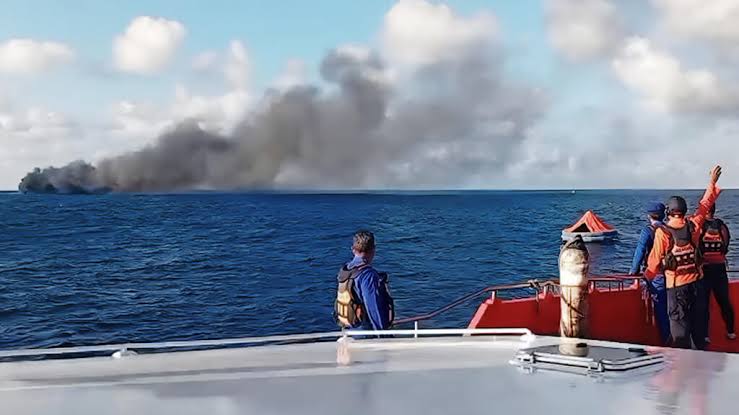
    Indonesian rescue teams pulled more than 200 people to safety on Wednesday after a ferry that departed from the resort island of Bali caught fire in waters near Lombok, officials said, as crews continued searching for any passengers still unaccounted for. By Wednesday afternoon, authorities had confirmed one Indonesian national dead among the 212 people evacuated to ports in Bali and Lombok, according to Muhammad Hariyadi, head of the local search and rescue agency. Most of those rescued were Indonesian citizens, with one Australian national also among the evacuees. The KM Putri Yasmin had departed Padangbai port in Bali bound for Lembar port when the fire broke out, Hariyadi said. Authorities have not yet determined what caused the blaze or whether the vessel was carrying more passengers than permitted. Hariyadi said rescue teams deployed multiple boats to carry out evacuations and coordinate with other vessels near the site of the incident, with more than 200 personnel involved in the response. The fire broke out in the Lombok Strait at 4:39 a.m. local time on Wednesday, Hariyadi said. Earlier in the day, Padangbai port official Heri Wiyanto told a local broadcaster that the ferry’s manifest listed only 114 passengers and 17 crew members, raising questions about whether the vessel exceeded its registered capacity. The incident comes less than a month after a separate ferry fire killed five people off the coast of Madura island, when the KM Mutiara Sentosa 2 caught fire while also carrying more passengers than its manifest indicated. Indonesia, a nation made up of roughly 17,000 islands, depends heavily on ferries for transportation between islands, since sea travel remains cheaper and more widely available than flying in many parts of the archipelago. Enforcement of maritime safety standards varies widely across the country, however, contributing to a comparatively high rate of ferry accidents in Indonesian waters.

  • | | |

    China’s Saindak copper mine in Pakistan faces su…

    China’s long-running copper mining project in Pakistan is facing growing operational challenges as repeated militant attacks in Balochistan disrupt supply routes connected to the mine. The Saindak copper and gold mine, located in Balochistan’s Chagai district, is considered one of China’s oldest mining investments in Pakistan and remains its only major copper interest in the country. Analysts say ongoing security issues have created difficulties for transporting materials and maintaining regular operations. The attacks along key routes have raised concerns about what some analysts describe as an “economic blockade,” potentially affecting the movement of supplies required for mining activities and the shipment of copper produced at the site. Copper is a strategically important commodity for China, which is the world’s largest consumer of the metal due to its extensive manufacturing, energy, and technology industries. Any disruption to supply sources can create concerns for industries dependent on stable copper availability. The Saindak project has long been viewed as an important symbol of Pakistan-China economic cooperation. The mine has contributed to Pakistan’s mineral sector while providing China with access to copper resources. However, security challenges in Balochistan have repeatedly affected development projects and infrastructure networks. The province has witnessed several militant attacks targeting government installations, security forces, and economic projects. Officials and security agencies have increased efforts to protect strategic assets and transportation routes, but continued instability remains a major challenge for investors operating in the region. Experts say maintaining security around mining operations is essential not only for the continuity of the Saindak project but also for attracting future foreign investment in Pakistan’s mineral resources. As global demand for critical minerals continues to rise, the stability of resource-rich regions like Balochistan will remain a key factor in determining the future of mining cooperation between Pakistan and international partners.

  • |

    Nine dead after Thai teenager mounts deadly rampage at home and school

    The death toll from a mass shooting in Thailand has risen to nine after a 12-year-old girl died in hospital from injuries sustained during Friday’s attack. Police confirmed that the 14-year-old perpetrator spent up to two years researching firearms online and consuming violent media. The teenager shot and killed his two grandparents at their Bang Bua Thong residence in the early hours of Friday morning before travelling to Debsirin Nonthaburi School, northwest of Bangkok. Armed with a legally registered 9mm handgun belonging to his grandfather, a knife, and additional ammunition, the student opened fire inside the school, killing staff and injuring dozens before turning the weapon on himself. Over a dozen victims, mostly aged between 12 and 14, remain hospitalised with critical injuries. Deputy Commissioner of Province 1 Police Region Atthapol Anusit stated that detectives have interviewed 17 witnesses so far. While police noted the boy had shown signs of school-related stress, relatives claimed they were unaware of any prior behavioral issues. In response to the tragedy, Thailand’s Ministry of Education announced plans to implement comprehensive campus safety reforms within three months, including emergency response training, weapons restrictions, and mental health screening mechanisms. Meanwhile, Prime Minister Anutin Charnvirakul pledged to introduce stricter legislative controls on gun ownership across the country.

  • | | |

    Prince Harry, others face multi-million legal bill after Daily Mail lawsuit defeat

    In his ruling rejecting the case, Judge Matthew Nicklin says the claimants had needed to prove that information published about them had been obtained unlawfully, but had failed to do so, and that suspicion alone was not enough

  • | |

    Iran says it is ready for war again

    Iran has claimed that it has significantly strengthened its military and defense capabilities during the ceasefire with the United States, warning that its armed forces are fully prepared if diplomacy fails and hostilities resume. Speaking to Iranian state television, a military spokesperson said the armed forces used every moment of the ceasefire to reinforce the country’s defenses. According to the spokesperson, Iran upgraded existing weapons, developed new air defense systems, restored facilities damaged during the conflict, and accelerated work on advanced military technologies. The spokesperson also revealed that Iran deployed a new generation of drones during the recent conflict. While officials did not disclose technical details, they said more information about the drones will be released at a later stage. According to Arab media reports, Iran’s acting defense minister said missile and drone production continued without interruption throughout the ceasefire. He claimed that drone manufacturing has increased to nearly three times its pre-war level, reflecting Tehran’s efforts to rapidly rebuild and expand its military capabilities. The acting defense minister also stated that the Iranian armed forces maintained their command structure despite the deaths of several senior military commanders. He added that revised battlefield strategies enabled Iranian forces to surprise their opponents during the conflict. Meanwhile, a spokesperson for the Islamic Revolutionary Guard Corps (IRGC) said Iran improved both the production speed and accuracy of its missile program during the ceasefire. However, officials declined to reveal the size of the country’s remaining weapons stockpiles or provide details about military losses suffered during the fighting. Several U.S. media outlets have also reported that Iran still possesses roughly 70 percent of its pre-war missile inventory and about 40 percent of its drone arsenal. Analysts believe those remaining capabilities could allow Tehran to sustain a prolonged campaign of asymmetric warfare if tensions escalate again. Arab media further reported that Iran could soon receive around 400 shoulder-fired air defense missile systems manufactured in China. However, both China and Pakistan have rejected those reports, while Iranian authorities have not issued any official comment on the claim. A former Iranian military commander also argued that thousands of U.S. and Israeli strikes failed to eliminate Iran’s military capabilities. He said the country continues to improve the range, precision, and destructive power of its domestically produced missiles while bringing newly developed weapons from underground missile and drone facilities into operational service. The latest statements highlight Iran’s determination to strengthen its military readiness despite international pressure, while also signaling that Tehran remains prepared for another confrontation if diplomatic efforts with Washington fail.

Leave a Reply

Your email address will not be published. Required fields are marked *