islamabad build two
| |

Islamabad to build two new underpasses

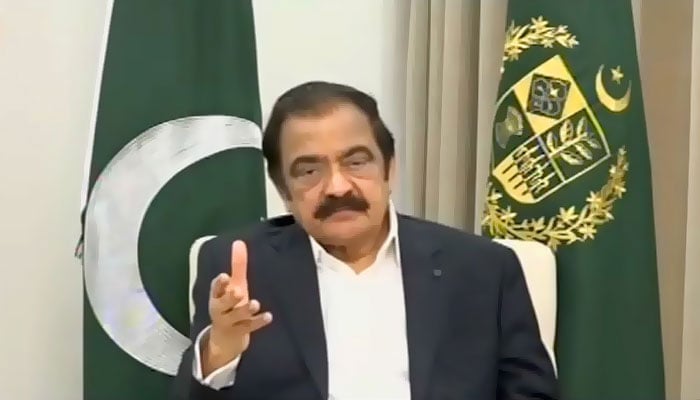
Pakistan’s Interior Minister Mohsin Naqvi chaired a high-level meeting at the Capital Development Authority (CDA) headquarters to review the progress of ongoing development projects and approve new infrastructure initiatives aimed at improving Islamabad’s traffic system and public services.

During the meeting, officials briefed the minister on the status of several major development schemes and presented plans for upcoming projects across the federal capital. Participants also reviewed timelines for ongoing construction work and discussed measures to ensure projects are completed without unnecessary delays.

To ease traffic congestion and improve the flow of vehicles, Mohsin Naqvi announced the construction of two new underpasses at Kashmir Chowk and Faisal Mosque. He said work on both projects will begin next month and emphasized that the government is committed to expanding the city’s road infrastructure to meet growing transportation demands.

The interior minister also expressed dissatisfaction over the absence of a fully operational Emergency 1122 service in Islamabad. He directed the relevant authorities to immediately complete all legal and administrative requirements needed to establish the Capital Emergency Services as a fully functional institution. He further instructed officials to launch work on four new emergency response centers on a priority basis to strengthen rescue and emergency services in the capital.

In addition to infrastructure development, the meeting focused on improving the CDA’s financial sustainability. Officials discussed proposals to increase the authority’s permanent revenue, develop a long-term revenue model, and implement practical measures that would help the organization achieve greater financial independence.

Naqvi stressed that strengthening the CDA’s financial position is just as important as delivering development projects. He also instructed officials to complete the Expressway Service Road project within the approved deadline, saying timely completion of public infrastructure remains a top government priority.

Similar Posts

  • | |

    Makkah pact hailed as boost for regional peace and…

    LAHORE: Senior journalists, defence analysts and experts have described the Makkah Joint Defence Pact between Pakistan, Saudi Arabia and Türkiye as a significant step towards strengthening regional peace, collective security and strategic cooperation. The views were expressed during a panel discussion titled “Makkah Pact: Peace, Security and Stability,” organised by the Press Information Department (PID) Lahore. PID Lahore Director General Shafqat Abbas said the agreement was not directed against any particular country but was intended to strengthen peace, stability, mutual confidence and collective security. He stressed that dialogue, diplomacy and cooperation should remain the preferred means of resolving regional disputes. He said Pakistan, Saudi Arabia and Türkiye brought different strengths and experiences to the partnership, creating opportunities for closer cooperation in defence, diplomacy, economics and strategic affairs. According to him, modern national power extended beyond military strength and depended equally on a strong economy, quality education, scientific advancement, technology, skilled human resources and effective diplomacy. Shafqat Abbas called for greater efforts to convert Pakistan’s defence capabilities and achievements into economic opportunities through investment in education, research, technology, skills development and exports. He said a combination of strong defence and economic stability could enable Pakistan to play a more influential role internationally. Senior journalist and analyst Mujeebur Rehman Shami highlighted Pakistan’s achievements in defence, diplomacy and foreign relations since independence. He praised Pakistani diplomats for enhancing the country’s international standing despite limited resources and stressed the urgent need to improve education, technical skills, research and scientific development. He also called for higher exports, improved productivity and stronger economic policies, saying that Pakistan’s defence successes should ultimately contribute to broader economic progress. Senior journalist Salman Ghani said the pact combined the unique strengths of its three members, describing Pakistan as a country with significant defence capabilities, Saudi Arabia as a major economic power and Türkiye as an important player in defence technology and military production. He said the partnership could open new avenues for investment, economic cooperation and regional stability. Defence analyst Colonel (retd) Abid said Pakistan’s political and military leadership had played an important role in developing the agreement. He noted that the pact carried implications beyond defence and could influence regional diplomacy, economic relations and strategic cooperation. Former Vice Chancellor of Home Economics University Dr Faleha Afzal said the agreement had further demonstrated Pakistan’s potential role in promoting peace and stability and expressed hope that other Muslim countries would eventually participate in similar cooperative initiatives. Columnist Malik Salman stressed the importance of mutual trust and collective security among Muslim countries, while urging Pakistan to maintain a balance between defence preparedness and economic development. Government College University Lahore Urdu literature professor Dr Farzana Riaz said the pact could create new opportunities for unity and cooperation among Muslim countries and encourage joint efforts to address shared regional challenges. Journalist Noorullah said the agreement could contribute to greater peace and stability in the region, but stressed the need for a comprehensive strategy to convert Pakistan’s strategic and defence strengths into tangible economic and diplomatic gains. The participants agreed that closer cooperation among Pakistan, Saudi Arabia and Türkiye could have wider implications for regional peace, defence coordination, diplomacy and economic development. They called on Muslim countries to overcome differences, focus on common interests and pursue peace, development and collective security through dialogue and coordinated efforts. Concluding the session, Shafqat Abbas thanked the participants and said discussions of this nature were important for increasing public understanding of major national and international developments and encouraging informed debate.

  • Death toll in Kabal suicide bombing rises to 17; Chief Minister, IGP visit Swat, JIT announced

    SWAT: The death toll from the suicide bombing at the main gate of Kabal Police Station in Pakistan’s northwestern Swat district has risen to 17 after two more injured victims succumbed to their wounds, officials said on Monday. The deceased include seven police personnel and 10 civilians, while more than 23 injured people remain under treatment at various hospitals. Funeral prayers for the victims were offered before they were laid to rest in their native villages. Markets across Kabal remained completely shut as residents observed a day of mourning. Police have registered a First Information Report (FIR) against unidentified terrorists at the Counter Terrorism Department (CTD) Police Station in Kabal. The case includes charges of murder, attempted murder, and terrorism-related offences under Pakistan’s Anti-Terrorism Act. Preliminary investigations indicate that the suicide bomber used between six and eight kilograms of explosives. Inspector General of Police (IGP) Khyber Pakhtunkhwa Zulfiqar Hameed paid an emergency visit to Swat following the attack. He visited the injured police personnel and civilians receiving treatment at Saidu Sharif Teaching Hospital, inquired about their condition, praised their courage, and wished them a speedy recovery. The IGP also directed doctors and medical staff to ensure the best possible treatment for the injured. Additional Inspector General CTD, Regional Police Officer Malakand, and District Police Officer Swat accompanied him during the visit. Later, the IGP chaired a high-level security meeting at the Regional Police Office Malakand to review the overall law and order situation in the region and assess the progress of the investigation into the attack, including efforts to identify the perpetrators and their facilitators. Officials informed the meeting that the suicide bomber had been identified and that investigators were using modern forensic and technological methods to expedite the probe. The IGP instructed authorities to ensure the swift arrest of everyone involved and bring them to justice. Speaking to reporters, Zulfiqar Hameed announced that a Joint Investigation Team (JIT) would be constituted to investigate the bombing. He said the families of the fallen police personnel would receive the full martyrs compensation package. He added that stringent security arrangements had already been in place due to potential threats and that police officers displayed exceptional bravery by preventing the suicide bomber from reaching the main target, thereby averting even greater casualties. He reaffirmed that terrorists would not be allowed to regroup and said police continue to receive modern weapons, equipment, and operational support. Meanwhile, Khyber Pakhtunkhwa Chief Minister Muhammad Suhail Khan Afridi arrived in Swat along with Special Assistant for Home Tariq Saeed, Chief Secretary Shahab Ali Shah, and the provincial police chief. The chief minister met the families of the victims, offered condolences, and prayed for the departed. He also visited the injured at Saidu Sharif Teaching Hospital and directed hospital authorities to ensure they receive the best available medical care. The chief minister later chaired a high-level meeting on the security situation in Swat, where he was briefed on the bombing, the region’s overall security environment, and the ongoing counterterrorism operations. Addressing the meeting, Afridi said the people and police of Khyber Pakhtunkhwa were paying the price for what he described as the federal government’s flawed security policies. However, he stressed that the sacrifices made by police personnel and innocent civilians in the fight against terrorism would not go in vain. He called for unity among the public, police, and all political and religious stakeholders to defeat terrorism, describing the current campaign as a decisive phase in eliminating the threat. The chief minister said the provincial government was providing all necessary resources to the Khyber Pakhtunkhwa Police and the Counter Terrorism Department (CTD), including a Rs20 billion allocation to strengthen the police force’s operational capacity. Reaffirming his government’s commitment to restoring peace, Afridi expressed confidence that Khyber Pakhtunkhwa would overcome the security challenge and declared that the 2026–27 fiscal year would be a year of peace, development, and prosperity for the province.

  • | | |

    Rana slams Naqvi’s ‘confusing’ provinces rem…

    Prime Minister Shehbaz Sharif’s Adviser on Political Affairs, Rana Sanaullah, said it was true that former prime minister Nawaz Sharif had instructed party leaders not to respond to Interior Minister Mohsin Naqvi’s recent statements. He added that the Pakistan Muslim League-Nawaz (PML-N) strongly disagreed with both the content and tone of Naqvi’s remarks. Speaking on a television programme, Rana Sanaullah described Mohsin Naqvi’s comments as “meaningless” and lacking context. He said he had listened to Naqvi’s speech but could not understand what message he was trying to convey. “It appeared that he wanted to make a significant point but failed to explain it properly. Once he made the statement, his subsequent remarks contradicted one another. I simply could not understand what he was saying or why he was saying it,” Rana Sanaullah said. He stressed that whenever a person makes a public statement, it reflects their personal opinion, adding that it was up to Mohsin Naqvi to clarify the intent behind his remarks and take responsibility for their interpretation. Responding to Naqvi’s proposal regarding the creation of new administrative units or provinces, Rana Sanaullah said such matters could not be decided merely through public statements. “You cannot simply talk about new provinces and expect them to come into existence. The Constitution clearly defines the procedure for creating new provinces or administrative units,” he said. He maintained that the issue should first be debated in Parliament, while the final decision would rest with the leadership of the political parties. Rana Sanaullah recalled that during the PML-N government in Punjab from 2013 to 2018, the party had formally proposed the creation of new provinces. He said he had personally presented both the resolution and the proposal for establishing a commission to examine the matter. He explained that a national commission would have to be formed to review all aspects of creating new provinces, including financial resources, administrative arrangements and constitutional requirements. “The commission would also need to consult on representation in the National Assembly, provincial assemblies and the Senate. This is a highly complex issue that requires serious deliberation by experienced policymakers,” he said. Rana Sanaullah added that Pakistan could adopt smaller provinces, a stronger local government system, or even both, but such decisions should be made collectively by political parties after thorough consultation

  • | |

    SSGC rules out gas leak after Karachi odor complai…

    KARACHI: The Sui Southern Gas Company (SSGC) has reassured residents that the unusually strong smell of natural gas reported in several parts of Karachi is the result of routine testing linked to a new pipeline project and not due to any gas leak. In a statement issued on Sunday, the utility company said the odor was caused by the temporary addition of a higher-than-normal concentration of odorant during the commissioning of a new gas pipeline near Abul Hasan Ispahani Road. According to SSGC, the testing of odorisation plants forms a standard part of the commissioning process to ensure that natural gas can be easily detected by smell in the event of future leaks. The company emphasized that gas system pressures remain stable and that no leakage has been detected anywhere in the network. The stronger odor prompted numerous complaints from residents across different neighborhoods, many of whom feared a possible gas leak. However, SSGC clarified that the smell was expected during the testing phase and did not pose any immediate safety risk. “The system is operating under normal conditions, and no gas leakage has been reported,” the company said, urging consumers to remain calm and continue their daily activities without concern. Officials explained that odorants, which are harmless chemical compounds, are intentionally added to naturally odorless gas to help people quickly identify leaks. During commissioning and testing, the quantity of odorant may temporarily increase, resulting in a stronger smell than usual. The clarification comes amid heightened public sensitivity over gas safety following several incidents in recent years involving gas leaks and explosions in Karachi. In April this year, a local court held SSGC responsible for negligence in connection with a 2022 gas explosion in Orangi Town’s Millat Colony, which claimed the lives of two residents. The court directed the company to pay Rs30 million in compensation to the affected family after concluding that repeated complaints about gas leakage had not been addressed adequately. Against that backdrop, Sunday’s reports of a strong gas smell quickly attracted public attention and triggered concerns on social media. SSGC said it remains committed to maintaining a safe and reliable gas distribution system and advised consumers to report any actual signs of leakage, such as hissing sounds or damaged pipelines, through its emergency helpline. The company added that technical teams would continue monitoring the network while pipeline commissioning and testing activities are completed.

  • | |

    Pakistani passport ranks fourth weakest globally

    Pakistan’s passport has been ranked the fourth weakest in the world in the latest Henley Passport Index. The Pakistani passport stands at 101st place in the global ranking. Its holders can access 29 destinations without obtaining a visa in advance or through visa-on-arrival facilities. The Henley Passport Index evaluates passports based on the number of destinations their holders can enter without securing a visa before travelling. The index covers 199 passports and 227 travel destinations. The latest ranking shows that Pakistan’s passport remains ahead of only three passports. These belong to Iraq, Syria and Afghanistan. The ranking highlights the limited international mobility available to Pakistani passport holders compared with citizens of many other countries. Pakistan’s neighbouring countries have performed better in the latest index. China ranks 60th globally. India is placed at 81st. Iran stands at 96th. Despite its low overall ranking, Pakistani citizens can travel to several destinations without obtaining a visa before departure. Visa-free access is available for Pakistani passport holders to Barbados, the Cook Islands, Dominica, Haiti, Micronesia, Montserrat, Rwanda, St Vincent and the Grenadines, The Gambia, Trinidad and Tobago, and Vanuatu. Pakistani travellers can also obtain visas upon arrival in a number of countries. These include Burundi, Cambodia, the Comoro Islands, Djibouti, Guinea-Bissau, Madagascar, the Maldives, Mozambique, Nepal, Niue, Palau, Samoa, Senegal, Sierra Leone, Timor-Leste and Tuvalu. In addition, Pakistani citizens can obtain electronic travel authorisations for Kenya, Seychelles and Sri Lanka. The passport ranking is widely used as an indicator of international travel access. A higher position generally means that passport holders can enter more destinations without obtaining a visa in advance. Singapore continues to hold the strongest passport in the latest ranking. It tops the index with access to 192 destinations. Japan, South Korea and the United Arab Emirates share second place. Their passport holders can access 188 destinations. Sweden ranks third, with access to 187 destinations. The latest figures underline the significant gap between Pakistan and the countries at the top of the global passport ranking.

  • | | |

    US-Pakistan trade surpasses $8 billion, says Natal…

    US Chargé d’Affaires in Pakistan Natalie Baker has said that bilateral trade between the United States and Pakistan exceeded $8 billion in 2025. Baker visited Lahore on August 11 and 12, where she held meetings with Punjab Chief Minister Maryam Nawaz Sharif, Adviser Ali Dar, business leaders and technology experts. According to the US Embassy, discussions during the visit focused on artificial intelligence (AI), higher education, innovation, trade and investment opportunities between the two countries. Baker said the United States remained committed to working with Pakistan’s private sector, universities, innovators and government institutions to strengthen economic and technological cooperation. She noted that Pakistan’s technology sector was expanding rapidly, creating opportunities for greater collaboration in trade, investment, AI and emerging technologies. The US diplomat highlighted software development, digital services and artificial intelligence as areas with significant potential for cooperation between the two countries. Emphasising the importance of stronger commercial ties, Baker said bilateral trade had crossed the $8 billion mark in 2025. She also stressed the potential of US educational expertise to create new opportunities for Pakistani students while contributing to stronger economic ties between Pakistan and the United States. Baker’s Lahore visit focused on exploring new areas of partnership and strengthening existing economic and technological links. Discussions with government officials, business representatives and technology experts also highlighted the growing role of innovation and digital industries in Pakistan’s economy. The US diplomat said continued cooperation between the two countries could help expand investment, support technological development and create new opportunities for businesses and students in both countries.

Leave a Reply

Your email address will not be published. Required fields are marked *