low breastfeeding linked

Low breastfeeding linked to child deaths

Bottle feeding and the use of formula milk are becoming more common in Pakistan while breastfeeding rates remain low.

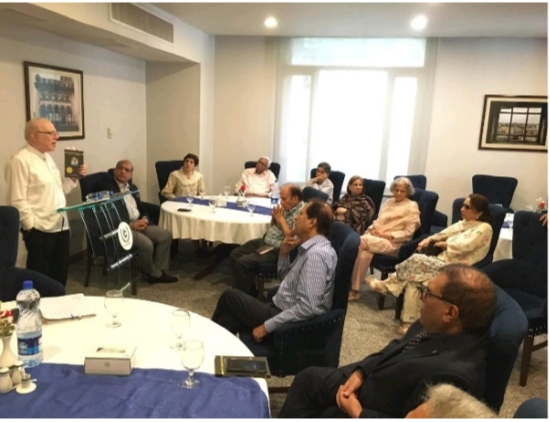
Health experts have warned that this trend may be putting many young children at greater risk of illness and death. Experts at a media workshop held at the Karachi Press Club said only about one in five newborn babies in Pakistan receives breast milk within the first hour after birth.

According to experts from the Sindh Institute of Child Health and Neonatology around 33,700 child deaths every year in Pakistan are linked to inadequate breastfeeding. Many of these deaths are connected to illnesses such as diarrhea and pneumonia which can often be prevented or treated.

Many babies do not get exclusive Breastfeeding Health experts said only around 48% of babies under six months are exclusively breastfed in Pakistan.

Children who are not breastfed may face a much higher risk of serious infections and other health problems. Experts strongly recommend starting breastfeeding within the first hour after birth and giving babies only breast milk for the first six months unless a doctor advises otherwise.

Families should support new mothers

Experts stressed that breastfeeding should not be seen as the mother’s responsibility alone. Fathers, families doctors hospitals and workplaces all have a role in helping mothers breastfeed successfully.

Providing mothers with proper support time and a comfortable environment can help more babies receive the benefits of breast milk and contribute to a healthier generation.

Similar Posts

  • | |

    TikToker Ayesha Shamsu’s murder case solved

    Police have claimed to have solved the murder case of TikToker Ayesha Shamsu in Taxila, saying she was allegedly killed by her father, brother and cousin in the name of so-called honour. Rawalpindi SSP Operations Tariq Mehboob said during a press conference that Ayesha Gulamna, also identified as Ayesha Shamsu, was allegedly targeted by her family members because they objected to her activities on TikTok. According to the police official, the suspects were identified with the help of surveillance cameras and other technological tools. Ayesha was shot dead in Taxila on the evening of August 14. Her sister and brother were also wounded when the suspects allegedly opened fire. Police said they have arrested the alleged main suspect and two shooters in connection with the killing. A total of five suspects, including Ayesha’s father, have been taken into custody. The initial investigation suggested that Ayesha’s family disapproved of her presence and activities on social media. Police said the family had previously attempted to stop her from using TikTok, but she continued her online activities. The suspects allegedly decided to kill her after their attempts to prevent her from using the platform failed. SSP Tariq Mehboob said further legal proceedings would be initiated against the suspects and a formal challan would be submitted before the court. Police have vowed to pursue the case and ensure that those responsible for the killing face legal consequences.

  • | | |

    Jamaat-e-Islami storms streets over petrol levy

    Jamaat-e-Islami (JI) has staged sit-ins in Karachi, Lahore and Peshawar against the petroleum levy, rising fuel prices and inflation. In Karachi, a JI rally led by Karachi chief Munim Zafar reached Fawara Chowk. The party had announced a sit-in outside the Governor House to protest the petroleum levy. JI workers are moving towards the Governor House from the Sindh High Court. Party activists have been raising concerns over the impact of the petroleum levy and rising fuel prices on the public. Following the sit-in at Fawara Chowk, the road leading towards the Press Club and Arts Council remains open for traffic. Police personnel have also been deployed near the Governor House to maintain security and manage the situation. In Lahore, JI workers staged a sit-in at Faisal Chowk on Mall Road, near the Chief Minister’s House. JI Pakistan chief Hafiz Naeemur Rehman also reached the protest site and joined the demonstrators. The protest in Lahore was led by JI Punjab chief Javed Kasuri and other party leaders. The protesters are demanding relief from rising petroleum prices and the petroleum levy. The party has also criticised the increasing burden of inflation on ordinary citizens. JI leaders have called for measures to reduce the financial pressure faced by the public. In Peshawar, JI workers staged a sit-in outside the Governor House. The protest has resulted in the closure of the road up to the Sadar Khyber Pakhtunkhwa Assembly Chowk. JI Deputy Emir Liaquat Baloch is scheduled to address the protesters in Peshawar. Party leaders are expected to highlight their demands regarding petroleum prices, the levy and inflation. The demonstrations are part of JI’s wider campaign against the petroleum levy and rising prices. The party has announced protests in different cities to pressure the government to provide relief to consumers. JI leaders have argued that increases in petroleum prices affect the prices of transport, food and other essential goods. They have demanded that the government reconsider the petroleum levy and take steps to control inflation.

  • | |

    Pakistan, Türkiye unite for Palestine

    Pakistan and Türkiye have reaffirmed their unwavering support for the Palestinian people while expressing deep concern over the worsening humanitarian crisis in Gaza, continued military operations in the occupied Palestinian territories, and repeated violations at the Al-Aqsa Mosque compound. The commitment came during a telephone conversation between Deputy Prime Minister and Foreign Minister Ishaq Dar and Turkish Foreign Minister Hakan Fidan. The two leaders reviewed the latest regional and international developments, with the situation in Palestine dominating their discussions. Both foreign ministers voiced serious concern over the continued violence in Gaza and the occupied West Bank, warning that the deteriorating humanitarian conditions require immediate international attention. They also condemned repeated violations at the Al-Aqsa Mosque compound in occupied East Jerusalem and stressed the need to protect religious and historical sites. The ministers reiterated their support for the legitimate rights of the Palestinian people and discussed Jordan’s proposal to convene a meeting of Arab and Islamic countries aimed at coordinating diplomatic efforts to address the crisis and strengthen international support for Palestine. The discussion follows Pakistan’s recent diplomatic engagements with several regional partners, including Egypt, where officials also called for an immediate ceasefire, unrestricted humanitarian assistance, and greater diplomatic coordination to end the ongoing conflict. Meanwhile, fresh violence was reported in Gaza despite an existing ceasefire, with Palestinian medical officials reporting casualties and injuries following new attacks. Military operations and raids also continued across the occupied West Bank, adding to concerns over the worsening security and humanitarian situation.

  • | |

    Doctor suspended after performing laparoscopic sur…

    Islamabad: The Medical Tribunal has upheld a one year suspension of Dr Irfan Ashraf after finding that he performed laparoscopic surgery despite not completing the required training for independent laparoscopic procedures and operated at a healthcare facility that lacked an Intensive Care Unit and other essential facilities needed to deal with serious complications. The Tribunal also upheld a Rs100,000 fine and a ban preventing Dr Irfan Ashraf from performing laparoscopic procedures until he completes proper certified training. The judgment, announced on July 8, 2026, came in an appeal filed by Muhammad Zahid Niaz, whose father Niaz Ahmad died after a chain of medical treatment that began with laparoscopic surgery at Saleem Polyclinic in Mian Channu on December 31, 2016. The case took a serious turn when the disciplinary inquiry examined the actual training record of Dr Irfan Ashraf. The inquiry found that although he had taken part in laparoscopic procedures during his postgraduate training, most of his experience was as an observer or assistant. According to the judgment, Dr Irfan Ashraf had not completed the required number of procedures at the higher training levels needed to show independent surgical ability. The record showed that he had not completed even a single Level V procedure, which represents the stage at which a trainee is expected to perform laparoscopic surgery independently without supervision. The Tribunal said this was not simply a case where a normal surgical complication had occurred. The main concern was that Dr Irfan Ashraf undertook an elective laparoscopic operation without having demonstrated the required independent competence and at a facility that did not have the necessary backup facilities. The patient, Niaz Ahmad, suffered an injury to the common bile duct and hepatic vascular structures during the surgery. He was later taken to Bahawal Victoria Hospital in Bahawalpur for further treatment. He subsequently received treatment at Sheikh Zayed Hospital in Lahore and underwent an interventional radiological procedure at Lahore Medical Complex. Despite prolonged treatment at several hospitals, he died on March 4, 2017. The Punjab Healthcare Commission had earlier investigated the matter. It found that Saleem Polyclinic did not have the required infrastructure, qualified human resources and licensing needed for such surgical procedures. The Commission imposed a financial penalty on the owner of the healthcare establishment and referred the conduct of Dr Muhammad Saleem Akhtar and Dr Irfan Ashraf to the medical regulator for disciplinary action. The medical disciplinary committee later appointed Prof Dr Tanwir Khaliq, an experienced general surgeon, as an independent medical expert. He examined the medical record and assessed the standard of care, the management of laparoscopic complications and the facilities available at the clinic. Prof Dr Tanwir Khaliq concluded that the operation had been performed at a relatively small healthcare facility without an ICU and other essential backup facilities. He also found that Dr Irfan Ashraf was not sufficiently proficient in laparoscopic surgery, particularly when dealing with complications. The Tribunal noted that Dr Irfan Ashraf himself acknowledged that Saleem Polyclinic did not have an ICU or the facilities required to manage serious complications from laparoscopic surgery. The Tribunal also noted that Dr Irfan Ashraf had been working as a Senior Registrar at Bahawal Victoria Hospital, where better surgical support was available. When questioned about why the operation was carried out at the private facility, the explanation was that the patient wanted the surgery there. The Tribunal rejected this reasoning. It said a patient’s preference cannot remove a surgeon’s professional responsibility to determine whether a healthcare facility is safe enough for the planned procedure. The case also raised questions about what doctors tell patients about their professional skills. The disciplinary committee found that Dr Irfan Ashraf had represented himself as independently competent to perform laparoscopic surgery even though his training record did not show that he had completed the required independent procedures. The Tribunal said the evidence supported three major findings against Dr Irfan Ashraf. He performed an elective laparoscopic operation at a facility that could not properly manage foreseeable complications. He represented himself as independently competent despite incomplete training. He also exposed the patient to avoidable risk by choosing a facility without the necessary support instead of a properly equipped tertiary hospital. However, the Tribunal did not hold every doctor involved in the patient’s treatment responsible. Dr Muhammad Saleem Akhtar, the owner of Saleem Polyclinic, received a warning rather than a disciplinary punishment. The Tribunal found that there was no evidence that he personally performed the operation or took part in the surgical decision making. The Tribunal said ownership of a healthcare facility alone was not enough to impose the same disciplinary punishment on Dr Muhammad Saleem Akhtar as the operating surgeon. However, the warning required him to ensure that his facility was not used for procedures beyond its capacity. Dr Khurram Shafiq Khan was also cleared of professional negligence. His involvement came later, after the patient had already suffered complications from the earlier surgery. His role was connected with an embolization procedure to control bleeding from the hepatic artery. After examining his role, the disciplinary committee found no clear connection between the procedure performed by Dr Khurram Shafiq Khan and the patient’s eventual death. The Tribunal found no reason to disturb that decision. Muhammad Zahid Niaz had appealed because he believed the punishment against Dr Irfan Ashraf was too weak considering that his father’s treatment ultimately ended in death. He also wanted stronger action against Dr Muhammad Saleem Akhtar and Dr Khurram Shafiq Khan. The Medical Tribunal, chaired by Justice (Retired) Safdar Saleem Shahid, rejected the request for harsher punishment. The Tribunal said a tragic medical outcome does not automatically mean that every doctor involved was negligent. It explained that medical procedures can have known complications even when reasonable care is taken. The important question is whether a doctor failed to meet the level of skill and care expected from a competent doctor in similar circumstances. In the case of Dr Irfan Ashraf, however, the Tribunal found that the disciplinary committee had enough evidence

  • Dera police arrest alleged inter-provincial robbers after encounter

    Dera Ismail Khan: Police in the City Circle arrested an alleged inter-provincial robber and his accomplice in an injured condition following an exchange of fire during a police operation. According to police, DSP City Syed Sagheer Gillani received information that an alleged inter-provincial robber was travelling with an accomplice from Peshawar to Punjab via Dera Ismail Khan. Acting on the tip-off, the DSP, along with a police contingent, set up a checkpoint at Sheikh Yousaf Chowk. Police said that when officers signalled a suspicious vehicle to stop, one of the occupants allegedly opened fire on DSP Gillani with a pistol instead of complying. Police returned fire, injuring both suspects. Their vehicle reportedly went out of control, veered off the road and crashed into a nearby wall. After the exchange of fire ended, police searched the vehicle and identified the injured suspects as Safdar Ali and his accomplice, Ahsan, son of Sajjad, a resident of Faisalabad. According to the police spokesperson, the two suspects were wanted by police in Punjab and Dera Ismail Khan in connection with 51 serious criminal cases, including murder, robbery, theft and illegal arms trafficking. Police further stated that the suspects were also wanted in robbery and theft cases registered at City, Town and Paharpur police stations in Dera Ismail Khan. The injured suspects were taken to hospital for medical treatment after the completion of legal formalities, while further investigation is underway. Meanwhile, District Police Officer (DPO) Dera Ismail Khan commended the police team for the successful operation, stating that indiscriminate action against criminal elements would continue and that every possible measure would be taken to maintain peace and security in the district.

  • | | |

    Dar, Araghchi discuss regional tensions and Makkah…

    Pakistan’s Deputy Prime Minister and Foreign Minister Ishaq Dar held a telephone conversation with Iranian Foreign Minister Abbas Araghchi. The two leaders discussed the latest situation in the region. They also exchanged views on the recently concluded Makkah Defence Agreement between Pakistan, Saudi Arabia and Türkiye. The conversation comes as the regional security situation remains sensitive. Both sides discussed developments in the region and efforts to promote peace and stability. According to reports, Araghchi briefed Dar on recent discussions with Oman. The talks focused on a proposed new trade corridor in the Strait of Hormuz. The Strait of Hormuz remains an important international trade and energy route. Developments in the area have raised concerns about regional security and the movement of commercial shipments. During the telephone call, Dar also explained Pakistan’s position on the Makkah Defence Agreement. He told his Iranian counterpart that the agreement was aimed at strengthening strategic cooperation between the participating countries. Dar also stressed that the pact was intended to support peace and stability in the region. The agreement involving Pakistan, Saudi Arabia and Türkiye has attracted regional attention. Questions have also been raised about its possible impact on the wider security environment. Iran has previously sought clarification about the nature and objectives of the defence cooperation. Pakistani officials have maintained that the agreement is focused on strategic cooperation and regional stability. The latest conversation between Dar and Araghchi provided an opportunity for both countries to discuss these developments directly. The two foreign ministers also discussed diplomatic efforts aimed at preventing further instability in the region. Their conversation highlights the importance of continued engagement between Pakistan and Iran. Both countries share close regional ties and have an interest in maintaining peace and stability.

Leave a Reply

Your email address will not be published. Required fields are marked *