life struggle

My life and my struggle 

I have been suffering from this mental illness for so many years, and I don’t know what to do. Sixty-five percent of my life has been spent suffering from obsessive compulsive disorder and schizophrenia. My mother is Mahrukh Butt, and she is with me here in Lahore. I don’t know when these sufferings will end. It has crossed the limits, you know. I am in Lahore, Pakistan right now.

The day before yesterday I was so unwell. I was in Lahore at my home, and I heard voices for more than five hours, and I was getting a severe headache, and I was going through hell, and I still am. I don’t know what to do. The sufferings have no intention of stopping. We are born into this world with no fault of our own, and there is only misery in this life.

I hear voices almost every day for hours, and as you know, I have been having compulsions for more than fifteen years now, and that is not a joke. They tell me that if I don’t do the compulsions, then something bad will happen to me. I want to go to Karachi with my friend Alina Mehmood, who is six years older than me and used to come to our house in Islamabad when my father was alive, when we used to have parties at our house in Khudadad Heights. The party used to start at ten at night and go on till four in the morning, and the music was playing, and everything was rocking.

I will go to Karachi by plane, and that will cost over forty thousand rupees, and I will go to Dolmen Mall and also to Liberty Books, though it is very expensive. The music in the background reminds me of London and Bangkok. My relative Hassan Raza Sherazi has gone to England, and I will go straight to Islamabad when he comes back, as a matter of fact.

The thing I love to do is travel by plane. I love going to Thailand, and also writing books and articles. We went to New York City twice, to my father’s friend’s house in the suburb of Millburn. I love to write articles for Pakistani newspapers, although I get no money for doing so, as a matter of fact.

A few months ago, I was in my bedroom here in Lahore, and I was waiting for the aliens to come and abduct me, but no one came. They had to take me to their planet or to the moon, although the American government is actually covering up aliens and these sorts of conspiracy theories, and they do not want the public to know the reality and the truth behind aliens. But I know that they exist.

I am in Lahore, Pakistan right now. I spent twenty-five days in Islamabad, Pakistan, and now I have shifted into my house in Cantt. I really want to go to Karachi, Pakistan, as I need a break.

Similar Posts

  • The Recommend Self

    From Syed Tahir For centuries, one question has remained at the centre of human reflection: Who am I? The question appears simple, yet it contains one of the deepest mysteries of human existence. Identity is not merely a collection of facts about an individual. A name, profession, nationality or social position may describe a person, but they cannot fully explain the self behind them. Human beings are not born with a complete identity. They create one. Through memories, relationships, choices and experiences, individuals gradually construct an understanding of who they are and what they value. The self is not a fixed object. It is an ongoing process of becoming. The Digital Age is quietly transforming this process. For the first time in history, external systems do not merely observe human behaviour. They increasingly predict preferences, organise choices and influence the environments through which identity itself develops. This transformation is subtle because it rarely appears as control. It appears as convenience. A song suggested before we search for it. A film selected before we decide what we want to watch. A news story placed before our attention. A product displayed before desire fully develops. A community recommended before we consciously seek belonging. The language is harmless. The implications are profound. The central paradox of the digital age is that the systems designed to understand us are gradually becoming capable of influencing the people we become. The algorithm does not need to tell us who we should be. It only needs to shape the choices through which we construct ourselves. Human identity has always been influenced by external forces. Families transmit values. Schools develop habits of thought. Communities provide belonging. Cultures offer narratives through which individuals understand their place in the world. But these influences are usually visible. Digital influence is different. It often operates quietly. A recommendation does not present itself as authority. It presents itself as assistance. It does not say, “Become this person.” It simply arranges the possibilities from which a person chooses. This is why the question of algorithmic identity is not only about technology. It is about human agency. Because freedom is not merely the ability to make choices. Freedom also requires understanding how those choices are shaped. The challenge of the digital age is that recommendations can gradually become substitutes for exploration. Human growth has always depended upon encounters with the unexpected. A person discovers a passion through an unfamiliar book. A new idea changes a lifelong assumption. A conversation with someone different expands the boundaries of understanding. The unexpected has always played a central role in shaping identity. Yet algorithms operate through patterns. They learn from what we have already watched, searched, liked and chosen. Their purpose is to provide more of what appears relevant to us. This creates extraordinary convenience. But convenience can also create limitations. If every choice is shaped by previous preferences, the individual may gradually encounter less of what challenges, surprises or transforms them. The algorithm is excellent at recognising who we have been. Human beings are defined partly by who they can still become. This distinction lies at the heart of the debate about digital identity. A person is not simply the sum of past behaviour. Human beings possess the ability to change their beliefs, abandon old habits and discover new purposes. A system based on previous choices can predict tendencies. It cannot fully understand transformation. The philosopher Charles Taylor, in Sources of the Self, argued that human identity develops through the meanings and values people attach to their lives. Individuals understand themselves through relationships, moral commitments and ideas about what makes life meaningful. Identity requires reflection. It requires asking: Why do I value what I value? The digital environment complicates this question because it increasingly reduces the distance between desire and satisfaction. Instead of allowing individuals to wander, discover and sometimes struggle with uncertainty, it often provides immediate suggestions based on existing behaviour. The result is a subtle shift. We move from discovering ourselves to being continuously reflected back to ourselves. The system becomes a mirror. But a mirror that recommends what it wants us to see. This does not mean recommendations are harmful. They can introduce people to knowledge, entertainment and communities they might never have found otherwise. The problem begins when recommendation replaces curiosity. A map is valuable because it helps us navigate. But a life cannot be lived entirely through maps. Some of the most meaningful journeys begin when people choose paths they were never advised to follow. The transformation of identity becomes even more visible in the way people now present themselves to the world. Long before social media existed, the sociologist Erving Goffman examined how individuals manage impressions in everyday life. In The Presentation of Self in Everyday Life, he argued that people often present different versions of themselves depending on their surroundings and audiences. The digital age has not created this tendency. It has amplified it. Online platforms have turned identity into something increasingly visible, measurable and constantly evaluated. The self is no longer only experienced privately. It is displayed through photographs, opinions, achievements and carefully selected moments. A person does not merely exist. A person appears. This creates a new tension between being and performing. The question slowly changes from: “Who am I?” to: “How am I perceived?” The desire for recognition is deeply human. Every society has valued reputation, belonging and acceptance. The problem begins when external approval becomes the primary measure through which individuals understand themselves. Experiences become shaped by their visibility. Achievements become symbols. Opinions become signals of belonging. The private self begins competing with the public self. The danger is not self-expression itself. Digital platforms have allowed millions of people to share ideas, build communities and express identities that may have remained unheard in previous eras. The challenge begins when performance replaces reflection. A person can become highly visible without becoming deeply self-aware. This is where the philosophy of Martin Heidegger becomes relevant. In Being and Time,

  • Emotional Dolphin moment

    A touching video from Australia has left many people emotional after showing a mother dolphin swimming with her dead baby. The viral footage shows the female dolphin gently carrying her calf while other dolphins stay close appearing to support her during the difficult moment. According to the marine conservation group Geographe Marine Research the mother dolphin named Friggle gave birth to the calf about two weeks before the video was recorded. The organization said the video was filmed last month. Friggle had reportedly lost four calves in the past and this calf was also born during winter a season when young dolphins have a lower chance of survival. Experts say it is not unusual for mother dolphins to carry their dead calves for several days after they die. This behavior is believed to be part of their grieving process. Eventually the mother must let go of the calf so she can find food and continue to survive.

  • |

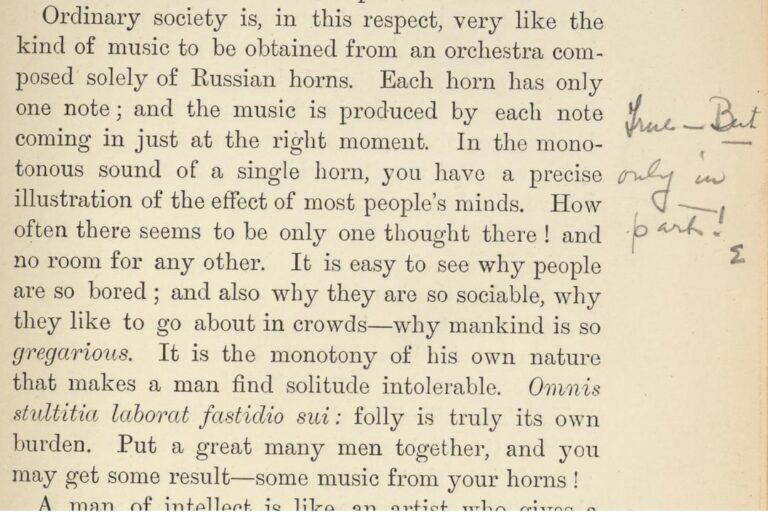
    Why marginalia is devised for conversation

    For centuries, books were treated as sacred, untouchable artifacts. Readers were taught to open a spine with reverence, turn pages by the edges, and never, under any circumstance, mark the paper. But in the modern reading culture, a quiet revolution has taken root: marginalia is no longer viewed as defacement. Today, it is recognized as a vital form of active intellectual engagement. Marking up a book transforms reading from a passive act of consumption into an active. Reading is a two-way dialogue between the reader and the writer. When you read with a pencil, pen, or sticky tab in hand, your relationship with the text fundamentally shifts. You cease to be a distant spectator observing someone else’s thoughts. In other words, you become a collaborator. Underlining a sentence, drawing an exclamation point next to a surprising plot twist, or a counterargument in the margin forces your brain to process language at a deeper level. It requires you to articulate why a passage resonated or failed. Furthermore, annotated books serve as personal time capsules. When you reopen a novel you marked up five or ten years ago, it offers an unfiltered reflection into who you were at that exact moment in your life. You might find yourself cringing at an old marginal note. Then you agree passionately with a circled phrase, or realizing that a passage you completely ignored years ago now carries personal meaning. The book becomes a physical record not just of the author’s story, but of your own cognitive and emotional evolution. Edgar Allan Poe once wrote: ‘In getting my books, I have been always solicitous of an ample margin … for the facility it affords me of pencilling suggested thoughts, agreements and differences of opinion …’ Practically speaking, marginalia also sharpens critical thinking. Students, scholars, and casual readers alike find that tracking themes through custom color-coded tabs or brief summary notes at the end of chapters drastically improves retention and comprehension. It prevents the common phenomenon of eye-scanning where your eyes move across sentences while your mind wanders elsewhere. Annotation demands presence. Ultimately, scribbling in the margins strips away the artificial pedestal we often place books upon. It reminds us that literature is not meant to sit pristine and untouched on a display shelf. Literature is meant to be wrestled with, questioned, celebrated, and lived in. The next time you open a book that challenges or moves you, don’t hold back. Pick up a pen, claim the empty white space on the page, and join a conversation that has been taking place across centuries.  

  • | |

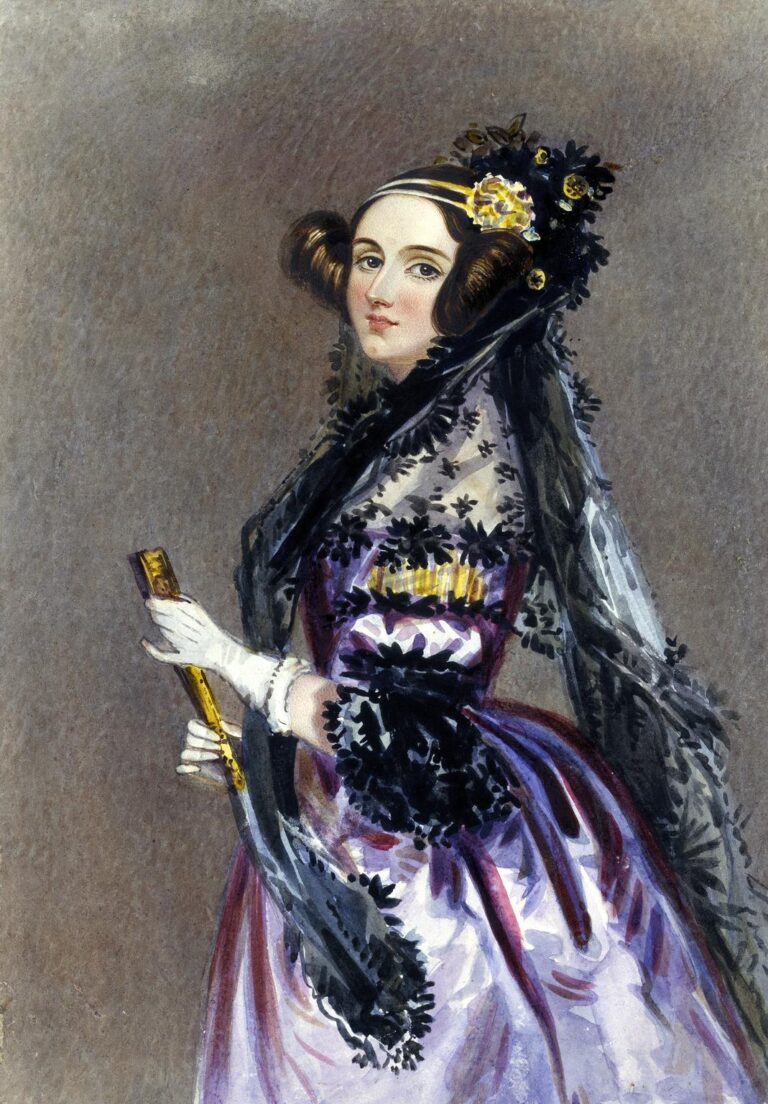
    Ada Lovelace, the tech woman

    Long before the dawn of modern computers, a twelve-year-old girl named Ada Lovelace set her heart on how to fly. Rather than merely dreaming about the skies, she treated the challenge as a practical engineering problem. Beginning in early 1828, she meticulously studied avian anatomy and tested potential wing materials. Her experiments ranged from light paper and smooth silk to natural feathers. Lovelace even documented her findings in an illustrated manuscript she titled Flyology. Her pursuit only halted when her mother put an end to the project. A traditional mother who insisting that such whimsical ideas were a distraction from proper academic training. This tension between wild imagination and strict logic defined Lovelace’s upbringing.  Mother Annabella Byron was an intensely practical woman whose mathematical tendencies led her estranged husband, the tempestuous Romantic poet Lord Byron, to nickname her the Princess of Parallelograms. Shortly after Ada was born, Annabella separated from Byron. She further  separated the infant from her father’s chaotic influence. Lady Byron made it her mission to raise her daughter on a rigid diet of arithmetic, French and music. By doing so, the mother explicitly aimed to suppress any artistic interest she believed Ada might inherit from Byron. When Byron inquired about his young daughter, Annabella noted Ada applied her imagination strictly to mechanical problem-solving. Yet, despite her mother’s best efforts to extinguish her creative potential, Lovelace refused to treat reason and imagination as opposing forces. Instead, she fused them into a single approach to understanding the world. In early 1841, she pondered the true nature of imagination while identifying two distinct powers. First, she defined it as a combining faculty: the rare ability to find meaningful connections between entirely unrelated subjects. Second, more profoundly, she recognized imagination as a discovering faculty: the equipment that pierces the invisible world to reveal the hidden mechanics of science.   This hybrid worldview that Lovelace would later call poetic science is precisely what enabled her to look at Charles Babbage’s early mechanical calculating engines and see far past their raw math. While others saw mere gear-driven counting machines, Ada envisioned a future where machines could manipulate symbols, compose music, and run complex sequences of instructions. By bridging the emotional depth of her father’s romanticism with the rigorous structure of her mother’s mathematics, Ada Lovelace did not just become the world’s first computer programmer; she proved that groundbreaking technical innovation requires equal parts calculation and visionary artistry.

  • Keep your laptop cool

    A charger should not be chosen only because its connector fits your laptop. Its voltage, current and power rating must also match the laptop’s requirements. Using a cheap or poor quality charger can cause charging problems and may damage the battery or other components.  In some cases faulty chargers can also create electrical or fire hazards. Do not ignore excessive heat If your laptop becomes unusually hot while charging do not ignore it. High temperatures can reduce battery health and may affect other internal components. Stop demanding tasks for a while, move the laptop to a cooler place and make sure its vents are not blocked.  A good cooling pad may also help in some situations. Avoid heavy work while charging Using a laptop while it is charging is not automatically harmful.  Normal activities such as browsing the internet writing documents or watching videos are usually fine. However heavy gaming 4K video editing or running demanding software can put a lot of load on the processor and cooling system.  If the vents are blocked or full of dust the laptop may become even hotter. Do not regularly drain the battery to zero Repeatedly allowing a modern lithium-ion or lithium polymer battery to reach 0% is generally not the best everyday habit. Try to charge the laptop before the battery becomes completely empty. If the battery percentage seems inaccurate follow the manufacturer’s instructions for battery calibration if that feature or procedure is recommended. Be careful with public charging Avoid using unknown chargers power banks or cables in public places.  Poor quality charging equipment can damage your device while unfamiliar USB connections may also create security and data risks. Keep the laptop clean dust can build up around cooling fans and air vents over time. This can reduce airflow and cause the laptop to heat up. Clean the vents regularly using a suitable cleaning method recommended for your laptop.  Avoid forcing dust deeper into the device. Use a Proper battery and Charger A laptop battery is more than a simple power source. It includes safety features and charging controls designed for a specific device. If the original battery needs replacement choose a compatible good-quality battery from a reliable source rather than using an unverified replacement. If the battery becomes swollen the bottom of the laptop starts to bulge the device suddenly shuts down or it becomes unusually hot stop using it and have it checked by a qualified technician.  Do not try to open or remove a swollen battery yourself. Check the Charging cable The charging cable is just as important as the charger. Do not use a cable that is cut burned damaged unusually hot or has a loose connection. A damaged cable can cause unstable charging and may create electrical or safety risks. Small habits can protect your laptop Charging a laptop is simple but careless habits can slowly affect its battery and overall performance. Using the right charger keeping the device cool avoiding blocked vents and taking care of the battery can help your laptop stay in good condition for longer.

  • Scientists discover mysterious black hole star in deep space

    Scientists claim to have discovered a fascinating cosmic mystery. According to them, it is a “black hole star” about the size of our solar system and glowing with extremely bright red light. An international team of researchers made the discovery using images captured by NASA’s James Webb Space Telescope (JWST) which revealed the mysterious red glow. The black hole star is located in the constellation Cetus, billions of light-years away from Earth. Scientists believe it may have formed around 660 million years after the Big Bang. It appears similar to a massive star but is estimated to release 100 billion times more energy than an ordinary star. Such enormous energy output has previously been associated with black holes rather than stars. Scientist Rohan Naidu of the Massachusetts Institute of Technology (MIT) who was part of the research team said that they had discovered an entirely new type of cosmic phenomenon. He explained that the object is shining with an amount of energy normally associated with black holes while at the same time displaying characteristics typically linked to stars. First observed by James Webb Space Telescope Scientists have been using the James Webb Space Telescope to study distant galaxies in the universe. Their interest in this phenomenon increased after the discovery of the galaxy Maisie’s Galaxy (CEERS 1) and other early-universe objects. In a study published in the journal Nature, researchers named the red-light phenomenon MAM-BH1. They said its completely red appearance and disappearance at specific wavelengths are so dramatic that it cannot easily be compared with other known cosmic objects. Computer simulations suggested that rather than being an extremely massive star, the object is actually a black hole that shines like a star. If the scientists’ interpretation is confirmed, it could indicate that many of the mysterious red dots observed across the universe may also be black hole stars. Rohan Naidu believes that these types of black hole stars could play an important role in the evolution of galaxies.

Leave a Reply

Your email address will not be published. Required fields are marked *