narathiwat province thailand8217s
| | |

Narathiwat Province in Thailand’s Deep South Escalates Martial Law Powers After Deadly Attack Kills Five Border Rangers

NARATHIWAT, Thailand

Security forces in Thailand’s southern border province of Narathiwat have intensified the application of martial law powers following a deadly assault on a checkpoint that left five paramilitary rangers dead and several civilians injured.
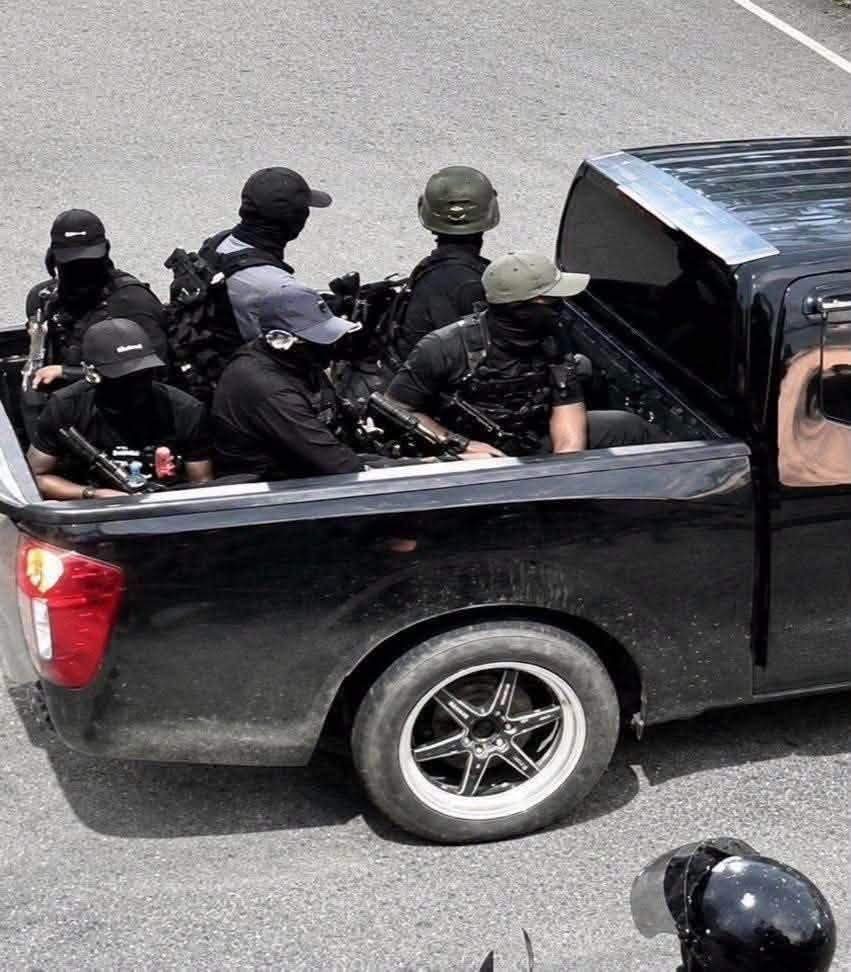
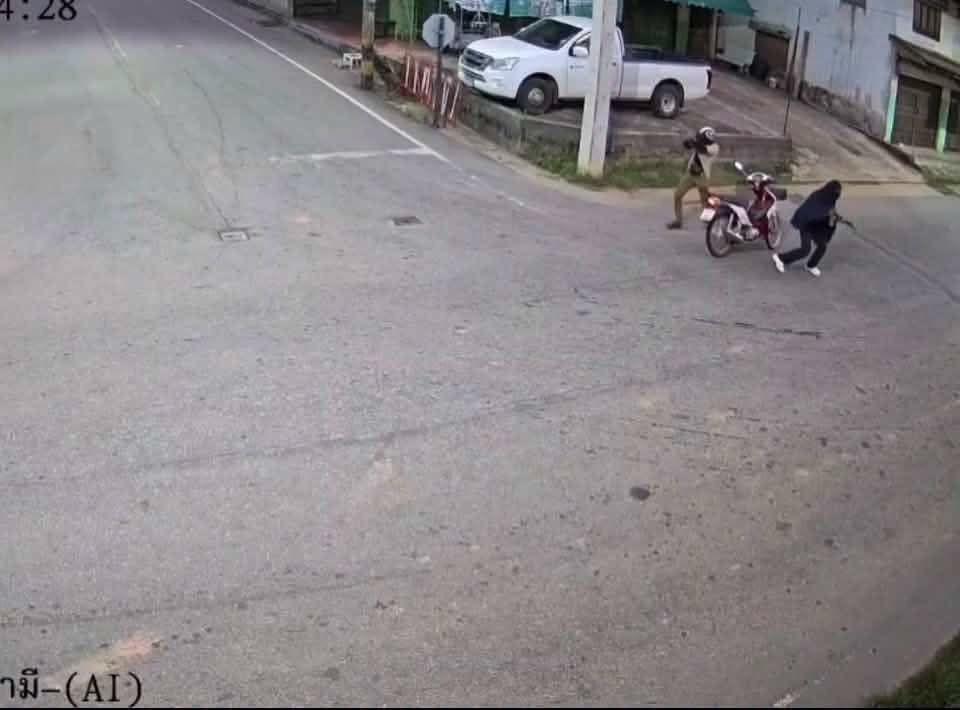
On the evening of July 22nd, 2026, at approximately 6:45 p.m., a group of about six attackers dressed in black clothing arrived in a black four-door pickup truck at the Bukeh Sami municipal checkpoint in Tanyong Mat subdistrict, Ra-ngae district. The post was manned by personnel from the 4509th Ranger Company under the 45th Ranger Regiment Task Force. The assailants opened fire with assault rifles, including AK-47s, and threw pipe bombs at the position. Five rangers were killed at the scene. They were identified as Sergeant Major First Class Theerayut Somakerd and volunteer rangers Wimon Dabthong, Nattasit Kaewsena, Salahuding Pi, and Sakiriya Jena. Reports indicate six civilians were also wounded, including at least one child around 10 years old.

The attackers fled along Highway 4055 toward Dusong Yo, later abandoning and burning the getaway vehicle in the Sakor subdistrict, Si Sakhon district, to destroy evidence. Closed-circuit television footage captured the rapid assault, which lasted roughly 90 seconds. Attackers also seized weapons, body armor, and mobile phones from the fallen personnel.

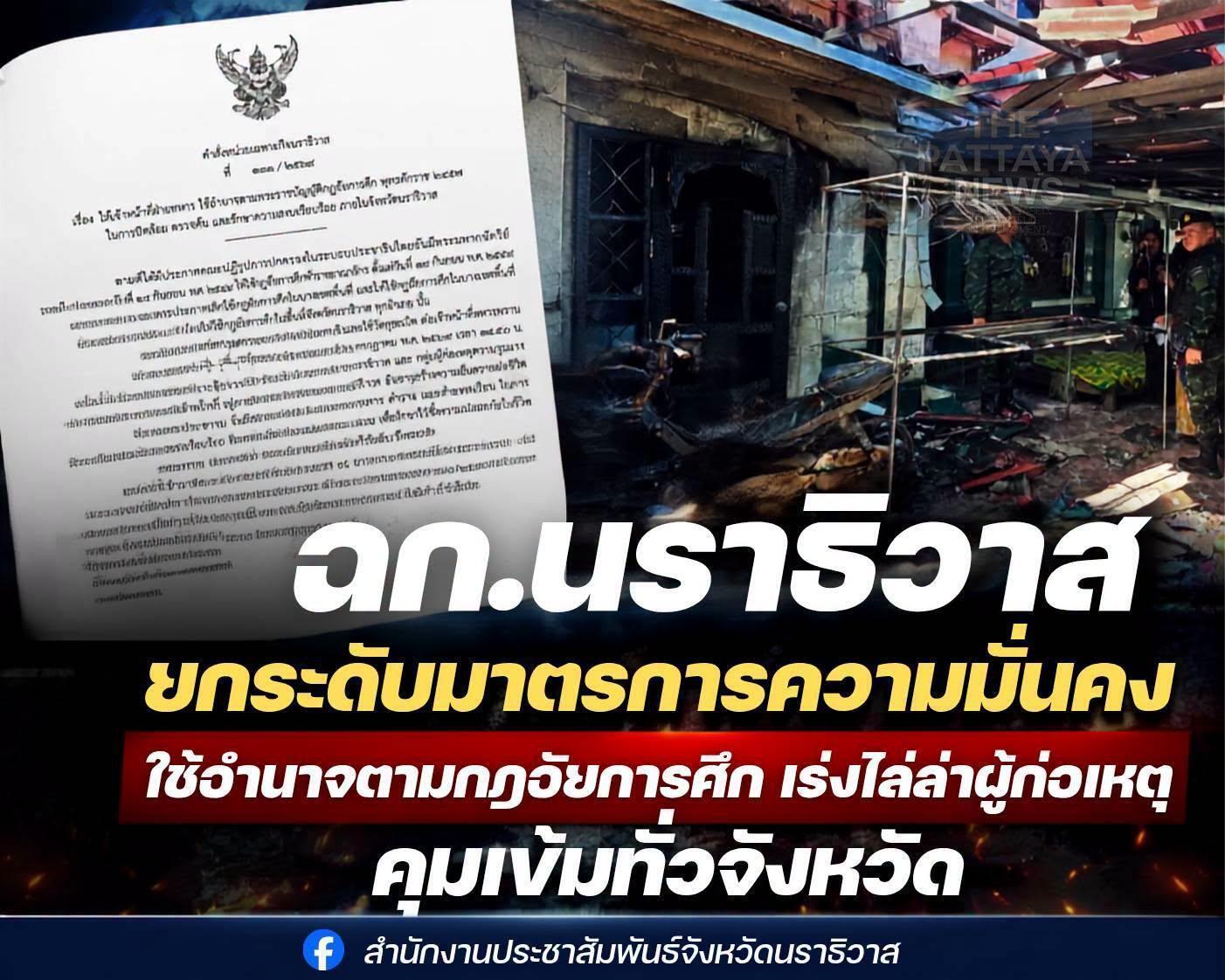
In response, the Narathiwat Task Force issued Order 131/2569 (dated July 22nd, 2026, and reported publicly on July 24th), signed by Maj. Gen. Yod-awat Puengphak, the task force commander. Citing the Martial Law Act of 1914 (sections 6, 8, 9, 11, and 15), the order heightens operational measures across the entire province. Military personnel are authorized to establish checkpoints, search vehicles and premises suspected of links to unrest, arrest and detain suspects, and use force, including weapons, when facing immediate threats to personnel, in accordance with rules of engagement focusing on necessity and proportionality. Civilian authorities are directed to support military operations. The measures took effect immediately and remain in force until further notice. Martial law has been in place in the province under prior announcements, with earlier restrictions including nighttime curfews and tighter border controls introduced in January 2026 amid ongoing violence.
Army Chief of Staff Gen. Chaiyapruek Duangprapat, who also serves as secretary of the Internal Security Operations Command (ISOC), traveled to Narathiwat on July 23rd. He convened security agencies, inspected the site, and ordered intensified proactive operations. “I will have people hunt them in every village and every forested mountain area. Those who provide hiding places, and any country that provides hiding places, should know that we will pursue them to the ends of the earth,” he said. “Those responsible should be careful when they eat, sleep or walk. The time has come for you to become the hunted.” He directed ISOC Region 4 Forward Command to tighten security and accelerate the manhunt while operating within the law.

Prime Minister Anutin Charnvirakul, speaking at Government House on July 23rd, said he was closely monitoring the situation and had ordered the military, police, and Interior Ministry the previous night to resolve the incident, track the suspects, and protect residents. He described the attack as “very bad” and stressed the need to restore public confidence through every possible measure. Local officials, including Narathiwat Governor Boonchuai Hormyamyen, have coordinated enhanced intelligence sharing and safety plans while providing support to victims’ families.

ISOC Region 4 Forward Command condemned the attack as inhumane and paid tribute to the fallen rangers for their service protecting residents in the restive southern border provinces. Authorities continue to collect evidence, pursue leads on the attackers (suspected insurgents), and urge the public to report information via official hotlines while maintaining heightened vigilance. The incident forms part of persistent unrest in Thailand’s Muslim-majority Deep South.


Similar Posts

  • |

    Medical students mark UHS VC Rathore’s retirement

    On the occasion of ‘Rathore Liberation Day,’ the Public-Private Medical Students Union Pakistan organized a symbolic cake-cutting ceremony outside the University of Health Sciences (UHS) to mark the retirement of former Vice Chancellor Ahsan Waheed Rathore. The ceremony was led by the Union Vice President, Dr. Azan Afzal. Dr. Azan Afzal stated that Ahsan Waheed Rathore’s tenure was the darkest chapter in the history of UHS. His authoritarian approach, anti-student policies, administrative incompetence, and decisions that undermined merit placed the future of thousands of students at stake. Rathore’s retirement marks a day of liberation for students. It is hoped that the government will appoint a competent, honest, and student-friendly Vice Chancellor this time instead of making another political appointment.

  • | |

    PM “Apna Ghar” housing scheme sees 52%…

    The number of applicants for Pakistan’s Prime Minister Apna Ghar Housing Scheme has increased by 52%, according to the Ministry of Finance, reflecting growing demand for housing finance across the country. The development was discussed during a meeting of the Steering Committee on Access to Finance chaired by Federal Finance Minister Muhammad Aurangzeb on Tuesday. The meeting reviewed progress in several priority sectors, including housing, agriculture, small and medium-sized enterprises (SMEs), exports, information technology and renewable energy. According to officials housing finance increased from Rs294 billion at the end of June to Rs307 billion by mid-August. Applications under the Prime Minister Apna Ghar programme have risen by 52% since June, reaching approximately 139,000 applications. The number of approved applications also increased by 84%, exceeding 46,000. Officials said approved financing under the programme has nearly doubled rising from Rs144 billion to Rs279 billion. The number of loans disbursed through the Apna Ghar programme increased by 59% to more than 7,600 loans, with the total amount disbursed exceeding Rs38 billion. The meeting also reviewed regulatory and legal measures aimed at expanding access to housing finance. These include revised prudential regulations introduced by the State Bank of Pakistan. Under the updated framework housing finance includes a 90:10 loan-to-value ratio a 65% debt-burden ratio and new procedures for assessing informal income. Officials also discussed measures to simplify property valuation and documentation, expand digital processing and make long-term housing finance more accessible. The approval of the Financial Institutions (Recovery of Finances) Amendment Act 2026 was described as an important legal reform for improving the recovery and enforcement framework for mortgage-based lending. The government has also set ambitious targets for agriculture and SME financing. It aims to increase financing in these sectors to Rs1.5 trillion by June 2027 and Rs2 trillion by June 2028. Finance Minister Muhammad Aurangzeb stressed the need to direct the financial sector toward productive investment, business expansion, home ownership, agricultural productivity and export-led economic growth.The number of applicants for Pakistan’s Prime Minister Apna Ghar Housing Scheme has increased by 52%, according to the Ministry of Finance, reflecting growing demand for housing finance across the country.

  • | | |

    Thousands of migrants leave Spain’s Ceuta after …

    Thousands of migrants have returned to Morocco after spending several days in Spain’s North African enclave of Ceuta following one of the largest attempted border crossings in the territory’s history. Many migrants said they left because of hunger, exhaustion, and disappointment after finding limited support and few opportunities in Ceuta. Spanish soldiers and Civil Guard officers guided groups of migrants back toward the Moroccan border crossing on Saturday. Many of those returning were young men who appeared physically exhausted after days of wandering through the city with little food or shelter. Some were barefoot, while others carried Red Cross blankets after receiving emergency assistance. Among those returning was 23-year-old Abdel Latif, who said he had hoped to find work and a better future in Europe. He explained that unemployment in Morocco pushed him to attempt the dangerous journey, but he decided to leave Ceuta after struggling to find food and support. The massive influx saw tens of thousands of migrants enter Ceuta over a period of two to three days. Local officials estimated that around 60,000 people reached the enclave, while Spain’s Interior Ministry reported a lower figure. The surge created a major humanitarian and political challenge for Spanish authorities. Many migrants attempted to reach Ceuta by swimming around border barriers in the Mediterranean Sea. Several people collapsed after completing the dangerous crossing, with Red Cross teams providing emergency treatment. At least dozens of migrants reportedly died while attempting to reach the Spanish territory. Spanish officials said that the majority of those who entered Ceuta had already returned to Morocco. Authorities have increased security measures along the maritime border, including the installation of floating barriers to prevent further crossings. Ceuta, home to around 84,000 residents, is one of only two European land borders located in Africa, along with Melilla. The territory has long been a major destination for migrants hoping to enter Europe in search of employment and improved living conditions.   Many migrants said their motivation was driven by economic hardship. Some described difficult working conditions and low wages in Morocco, saying they were searching for stability and better opportunities. Meanwhile, daily life in Ceuta has gradually returned to normal, with shops reopening and traffic resuming after the disruption caused by the migrant surge. However, some residents remain concerned about future migration pressures, while others say security improvements have restored a sense of stability. The latest events have once again highlighted the complex challenges facing Europe and North Africa in managing migration, border security, and humanitarian needs.

  • | |

    Pakistan’s Cnergyico ramps up US crude purch…

    Cnergyico, Pakistan’s largest oil refiner, has increased its purchases of US crude as the federal government works to diversify the country’s energy supply following disruptions tied to the war in Iran that exposed how heavily Pakistan depends on Gulf shipping routes. The government is also pushing to expand imports from the United States as part of a broader effort to narrow its trade surplus with Washington and secure relief from tariffs imposed by President Donald Trump. Cnergyico, which made its first purchase of US crude last year, is now weighing spot purchases alongside longer term supply contracts with Vitol and other suppliers, basing those decisions on pricing, reliability and supply security, Vice Chairman Usama Qureshi said. The refiner imported roughly 8.1 million barrels of US crude over a nine month stretch, including 7.1 million barrels worth about $750 million during the fiscal year that ended in June, according to Qureshi. Central bank data showed Pakistan’s payments for US imports climbed by $914 million to reach $3.27 billion during that fiscal year, meaning Cnergyico’s crude purchases accounted for roughly 80 percent of that overall increase. Qureshi said the refiner could expand its US crude purchases further if Pakistan’s proposed EXIM Bank trade finance facility gets extended to Cnergyico. Islamabad pitched that facility last month as a mechanism allowing Pakistani buyers to delay payments to US exporters for as long as three years. Pakistan has traditionally sourced most of its oil from Saudi Arabia and the United Arab Emirates, with roughly 90 percent of its oil and liquefied natural gas imports passing through the Strait of Hormuz before the war disrupted that route. Rising fuel costs have added pressure on Islamabad to respond, particularly as fresh protests over inflation and fuel prices broke out this week. The government has also pursued alternative supply routes, including Saudi crude delivered via the Yanbu port on Saudi Arabia’s Red Sea coast. Qureshi said Cnergyico is evaluating construction of a second offshore mooring facility linked to its existing storage network, which would allow the company to import and export refined products using large tankers outside Karachi’s congested ports. That project forms part of a broader $1.2 billion upgrade aimed at meeting Euro V fuel standards, reducing furnace oil output and expanding refining capacity to around 200,000 barrels per day. Fawad Basir, head of research at KTrade Securities, said the disruptions in the Middle East have underscored the risks of relying on a single supply corridor. He said using Very Large Crude Carriers to import US oil could reduce freight costs by 25 to 30 percent, while adding a second Single Point Mooring facility would speed up vessel turnaround times. Cnergyico currently processes 156,000 barrels of crude per day and operates Pakistan’s only single point mooring terminal near Karachi, giving it the unique ability among the country’s refiners to handle large tankers directly. The company plans to build a second offshore terminal to accommodate larger or more frequent shipments and intends to upgrade its refinery over the next five to six years. The refiner, which has been running at an average utilization rate of just 30 to 35 percent amid weak domestic demand, is betting that demand for refined oil products will strengthen in the years ahead.

  • | |

    UN condemns Swat blast as Pakistan warns of Afghan…

    UNITED NATIONS: The United Nations Security Council has strongly condemned the deadly suicide bombing in Swat, describing the attack as “heinous and cowardly” as Pakistan renewed its warning that terrorist groups continue to operate from alleged safe havens inside Afghanistan. The attack took place outside a police station in Kabal, Swat, on August 2, killing at least 16 Pakistani nationals, mostly civilians, and leaving dozens injured, according to the UN statement cited by Pakistan’s Dawn. The Tehreek-i-Taliban Pakistan (TTP) claimed responsibility for the bombing. In a statement issued through the office of the UN secretary general’s spokesperson, Security Council members expressed deep sympathy to the families of those killed and wished the injured a speedy recovery. The council also stressed that those behind the attack must be held accountable, calling for perpetrators, organisers, financiers and sponsors of terrorism to be brought to justice. The UN body reiterated its longstanding position that terrorism, regardless of its motivation, location or perpetrators, remains a serious threat to international peace and security. It also urged member states to cooperate with Pakistan in accordance with international law and relevant Security Council resolutions. Pakistan Raises Alarm Over Afghan Sanctuaries The condemnation came shortly after Pakistan raised concerns at a UNSC briefing over what it described as the growing threat from terrorist organisations operating from Afghan territory. Pakistan’s Permanent Representative to the UN, Ambassador Asim Iftikhar, said several groups continue to maintain safe havens inside Afghanistan and pose an increasing threat to Pakistan and regional security. He specifically named the banned TTP, Balochistan Liberation Army (BLA) and its Majeed Brigade, Islamic State Khorasan (IS-K), East Turkistan Islamic Movement (ETIM), and Al Qaeda affiliates. Pakistan urged the international community to ensure that Afghan soil is not used to launch terrorist attacks against neighbouring countries, while calling for stronger international cooperation to counter cross-border terrorism. The latest developments have added fresh pressure to an already sensitive security relationship between Pakistan and Afghanistan. They also came after the fourth US-Pakistan Counterterrorism Dialogue in Washington, where officials from both countries reaffirmed their commitment to combating terrorist organisations. For Pakistan, the UNSC condemnation provides international recognition of the seriousness of the Swat attack, while Islamabad continues to push for stronger action against militant networks it says operate across its western border.

  • | |

    Colombia earthquake, Shehbaz Sharif expresses deep…

    ISLAMABAD: Pakistan has expressed deep sorrow and solidarity with Colombia after a powerful 7.4-magnitude earthquake devastated parts of the country, killing more than 111 people and leaving widespread destruction in its wake. The earthquake struck western Colombia on Monday, with the epicentre near San José del Palmar in the Chocó region. The powerful tremor damaged hundreds of buildings and triggered desperate rescue operations as emergency workers searched through collapsed structures for survivors. Prime Minister Shehbaz Sharif expressed profound grief over the loss of precious lives and the destruction caused by the disaster. He extended heartfelt condolences to Colombian President Abelardo de la Espriella, the people of Colombia and families who lost loved ones in the tragedy. “Pakistan stands with the people of Colombia in this difficult hour,” the prime minister said in his message, conveying solidarity with those facing the devastating consequences of the earthquake. Sharif also expressed sympathy for those injured and affected by the disaster, saying Pakistan’s thoughts and prayers were with the victims, survivors and rescue teams working in difficult conditions. The earthquake caused severe damage across several western cities, including Pereira, Cali, Quibdó and Manizales. Hospitals were placed under pressure as injured people were brought in, while rescue workers and volunteers continued clearing rubble in search of those feared trapped. Authorities also reported damage to infrastructure and airports, while aftershocks added to fears among residents. Colombia’s government declared an emergency to speed up rescue and relief operations. The disaster has prompted an international response, with countries offering assistance as Colombia confronts one of its most serious seismic emergencies in years. For Pakistan, the tragedy has once again highlighted the importance of international solidarity during natural disasters. Prime Minister Shehbaz Sharif said the Pakistani government and people shared the grief of Colombian families and prayed for strength, patience and an early recovery for everyone affected. As rescue efforts continue, the focus remains on saving lives, supporting survivors and helping devastated communities rebuild.

Leave a Reply

Your email address will not be published. Required fields are marked *