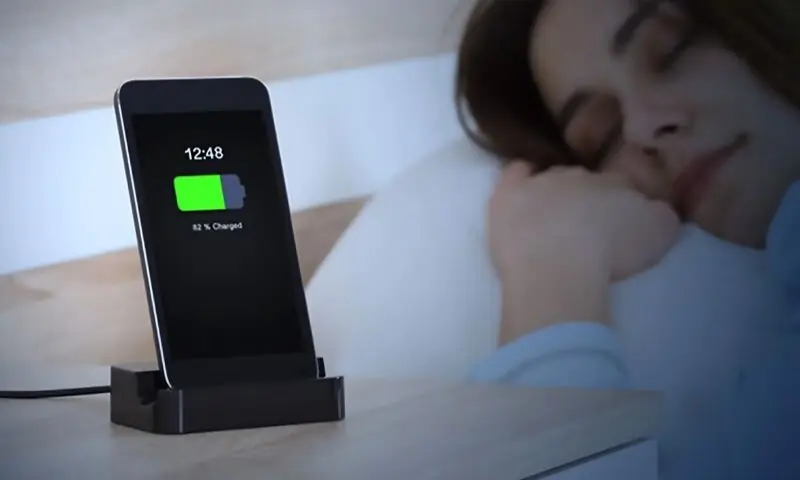
night morning charge

Night or Morning when to charge your phone?

Many smartphone users wonder whether it is better to charge their phone overnight or wait until the morning.

Some people plug in their phone before going to bed while others prefer charging it after they wake up.  According to technology experts both methods are generally safe but one may be better for your battery’s long term health.

Modern smartphones are designed with smart charging technology that helps protect the battery. Once the battery reaches 100%, the phone automatically reduces or stops charging to prevent overcharging.

This means leaving your phone plugged in overnight is usually not dangerous and it is very unlikely to cause the battery to explode or become damaged under normal conditions.

However experts say that keeping the phone connected to the charger for many hours is not always the best habit.

Even after the battery is full a small amount of voltage can remain which may slowly add stress to the battery over time. If this happens every night for months or years it could slightly reduce the battery’s overall lifespan.

For this reason many experts recommend charging your phone in the morning whenever possible.  You can unplug it as soon as it reaches the charge level you need helping reduce unnecessary stress on the battery.

Battery experts also suggest keeping your phone’s battery between 20% and 80% most of the time.  Staying within this range reduces chemical wear inside the battery and can help it last longer.

If overnight charging is your only option there is no need to worry.  Most modern Android phones and iPhones include features such as Adaptive Charging or Optimized Battery Charging.

These features learn your daily routine and slow down charging overnight reaching 100% only shortly before you usually unplug the phone. This helps reduce long term battery wear.

Heat is another important factor that affects battery life. Using your phone for heavy gaming video editing or other demanding tasks while it is charging can cause it to become very hot.

High temperatures can shorten the battery’s lifespan more quickly than charging overnight. Experts also recommend using the original charger or a trusted high quality replacement.

Cheap or low quality chargers and cables may not provide stable power and could affect battery performance. It is also a good idea to avoid charging your phone under a pillow blanket or in any place where heat cannot escape easily.

Another useful tip is to avoid letting the battery drop to 0% on a regular basis. Instead try to charge it when it falls to around 20%, and if possible unplug it when it reaches about 80%.

In the end overnight charging is much safer than it used to be because of modern battery technology. However if you want your phone’s battery to stay healthy for as long as possible charging when needed using adaptive charging features avoiding excessive heat and keeping the battery between 20% and 80% are the best habits to follow.

Similar Posts

  • Water during meals may increase food intake

    A new study suggests that drinking water again and again while eating may not help with weight loss. Instead it could actually make people eat more food. Many people believe that taking sips of water during a meal helps them feel full faster leading them to eat less. However the new research challenges that common belief. Researchers at Cornell University found that for every extra 100 milliliters of water people drank during a meal they ate about 40 grams more food on average. This equals roughly 50 extra calories. The study also found that people who frequently switched between eating and drinking water consumed more food overall than those who did not. Earlier studies have also shown that people with obesity are more likely to drink water for longer periods during meals drink it more quickly and take frequent sips throughout the meal. Researchers say these findings suggest that the relationship between drinking water during meals and the amount of food people eat may be different from what was previously believed. However they stress that more research is needed before any firm conclusions can be made.

  • Hala fruit explained

    Have you ever seen a fruit that looks like a brain when it’s whole and a bursting planet when it’s opened? That’s the Hala fruit one of the world’s most unusual fruits. The Hala fruit grows in Southeast Asia eastern Australia the Pacific Islands and Hawaii. It is made up of many separate sections called keys or cones giving it a very unique appearance. The fruit comes from the Pandanus tree which includes more than 750 species. A Hala tree can grow up to 14 meters (46 feet) tall. Hala fruit has a sweet and pleasant taste. It can be eaten fresh added to different dishes for extra flavor and is also used in traditional medicine. People have traditionally used the fruit to help relieve headaches and constipation and it is believed to support a healthy immune system. It is also rich in vitamin C making it a nutritious tropical fruit. Growing Hala fruit is not easy. The tree is very sensitive to cold weather and thrives only in warm humid climates where temperatures stay above 18°C (64°F) throughout the year.

  • Enjoy simple activities

    Every new year brings fresh hope and a chance to make life better. But happiness does not always come from big achievements. Small daily habits can also bring more peace joy, and satisfaction to our lives. Remember happy moments Make a habit of remembering the good things that happen in your life.  You can write down three things each day that made you happy. It could be success in an exam a kind message from someone or a pleasant moment with family. Keeping a record of positive moments can help improve your mood and encourage you to focus on the good things in life. Communicate better with your partner Good communication can make married life more peaceful and enjoyable.  Instead of turning every disagreement into a serious argument try to listen carefully and speak calmly. Even people who are not naturally cheerful can develop better habits and improve their relationships. Give importance to friendship Good friends can bring happiness and emotional support at every stage of life. As people grow older close and trustworthy friendships can become even more valuable. Make time for the people who care about you listen to you, and make you feel comfortable. Celebrate other people’s happiness Be happy for other people when they achieve something or experience a special moment.  Celebrating their success can make relationships stronger and create a warmer connection. Helping others feel appreciated can also give you a sense of happiness and satisfaction. Enjoy fun activities Make time for activities that you genuinely enjoy. Listening to your favourite music taking a long drive spending time outdoors reading, or trying something different can help refresh your mind. You do not always need an expensive trip or a major event to feel happy.  Simple activities can also bring peace. Learn to stay calm Constantly chasing happiness can sometimes create stress and disappointment.  Keep your expectations realistic and learn to appreciate what you already have. Accepting that life has both good and difficult moments can help you remain calm and emotionally balanced. Stay connected with older family members Talking to parents grandparents and other older family members can help you understand your family history and appreciate your life more. Their experiences and stories can offer valuable lessons and may also help you feel more connected and confident. Help others Volunteering and helping people can bring a strong sense of purpose and satisfaction.  You can help others by supporting someone in need, caring for animals gardening or taking part in community activities. Helping others can improve your sense of connection and make everyday life more meaningful. Find happiness in small things A happier life does not require everything to be perfect. Start noticing the small moments that bring peace and joy. Spend time with loved ones appreciate what you have take care of yourself and make room for activities you enjoy. Small positive habits can gradually make life more peaceful and fulfilling.

  • | |

    Jane Austen letter expressing affection for Mansfield Park

    A exceptionally rare, handwritten letter by legendary 19th-century British author Jane Austen has sold at auction for over $200,000. It has captivated literary historians and devoted readers across the globe. Written in early 1814, the intimate correspondence offers a fascinating glimpse into Austen’s personal thoughts during the final stages of writing her third major novel, Mansfield Park. The manuscript was acquired by a private collector after a competitive bidding battle. It highlights the enduring allure and profound market value of artifacts connected to Regency-era literature. Austen’s Private Collections In the letter, addressed to her beloved niece Martha Lloyd, Austen speaks with characteristic wit and self-effacing humor about her creative process. She candidly reveals The manuscript was acquired by a private collector after a competitive bidding battle. Austen harbored a quiet, tender affection for her newest heroine, Fanny Price. Scholars note that such direct expressions of emotion regarding her own craft are exceedingly rare in Austen’s surviving correspondence, as her sister Cassandra burned a vast majority of Jane’s personal papers following the author’s death in 1817 to protect her privacy. The document’s remarkable physical condition significantly contributed to its staggering sale price. Preserved in a family archive for generations before briefly passing through private collections, the single-sheet letter features Austen’s distinctively tidy, flowing script written in iron gall ink, complete with original wax seal remnants and postal markings from Chawton, Hampshire. Experts from the auction house confirmed the paper’s authenticity through detailed watermarking analysis, verifying that the sheet originated from a paper mill active in England during the Regency period. The Mid-80s Literary Period Beyond its physical preservation, the letter holds immense literary significance because it captures Austen at a pivotal moment in her career. Having spent years refining her craft in relative obscurity, the mid-1810s marked a period of intense productivity and emerging financial independence. Mansfield Park represented a deliberate artistic departure from the sparkling, lighthearted banter of Pride and Prejudice, diving into deeper moral complexity, social critique, and quiet emotional endurance. Austen’s reflection in this letter reveals her awareness of this shift and her defense of a softer, more gentle protagonist. Appreciation for Literary Heritage   The sale underscores a broader resurgence of interest in 19th-century women writers among modern collectors and readers. As public appreciation grows for literary heritage, original items connected to figures like Austen, the Brontë sisters, and Mary Shelley have seen exponential value growth at major international auction houses. For admirers of classic literature, this newly highlighted letter serves as a poignant reminder of Austen’s profound human warmth, proving that centuries later, her words continue to move hearts just as powerfully as her immortal fiction.

  • A glass of fruit juice may lift your mood

    Feeling stressed, low or unhappy from time to time is common.  A recent study suggests that adding a small glass of 100% fruit juice or a fruit smoothie to your daily diet may help improve your mood. Researchers from Newcastle University studied 42 people who normally ate very few fruits and vegetables.  The participants were divided into groups and followed for four weeks. The researchers then looked at changes in their diet and mood. The results showed that people who added a glass of natural fruit juice to their daily diet experienced better mood and lower levels of stress. Some people worry that fruit juice contains natural sugar and may be unhealthy. However during this short study researchers did not find any harmful effects on the participants physical health. Researcher Courtney Neal said that eating several portions of fruits and vegetables every day can be difficult for some people.  Having a small glass of 100% fruit juice or a smoothie can be an easy way to add more nutrients to the diet. Newcastle University lecturer oliver Shannon said the results were encouraging but more research is needed especially among people dealing with mental health problems. However this does not mean people should start drinking large amounts of juice. The study focused on small amounts of 100% fruit juice or smoothies while eating whole fruits and vegetables remains important. Experts also stress that depression is a complex mental health condition.  Fruit juice should not be considered a treatment for depression. Anyone experiencing long lasting sadness stress or loss of interest in daily life should speak with a doctor or mental health professional.

  • MIT robot can fly and swim

    Researchers at the Massachusetts Institute of Technology (MIT) have created a unique robot that can both fly through the air and swim underwater just like diving birds. The lightweight robot costs around $300 and was designed by MIT’s AeroAquatic Robotics team.  Scientists believe it could one day help monitor oceans study marine life and support environmental protection. The robot was inspired by diving birds which use the same wings to fly in the air and move through water.  While scientists have studied these birds for years building a robot that can perform both tasks efficiently has been a major challenge. To solve this the MIT team carefully studied how diving birds move and used those findings to design the new machine. The robot called the Flapping Aerial Aquatic Vehicle weighs only 250 grams.  It runs on a battery powered motor and has nylon wings and a tail coated with water resistant nanoparticles to protect them from moisture. According to the researchers the robot is programmed to flap its wings at a specific frequency allowing it to move smoothly in both air and water without changing its basic movement. It can fly at speeds of up to 13.4 miles per hour and swim at about 2.2 miles per hour. On a single battery charge it is designed to fly as far as 6 kilometers or swim up to 2 kilometers. The robot was tested for about one year first in a water tank in Massachusetts and later in Lake Geneva Switzerland where researchers evaluated its performance in real world conditions.

Leave a Reply

Your email address will not be published. Required fields are marked *