pakistans umair arif
|

Pakistan’s Umair Arif wins Hong Kong Junior Squash Open U17 title

HONG KONG: Pakistan’s young squash sensation Umair Arif produced a fighting performance to capture the Under-17 title at the Hong Kong Junior Squash Open on Sunday, overcoming England’s Luke McBride in a thrilling five-game final.

Arif recovered from a slow start to defeat McBride 3-2, showing composure and determination when the championship was on the line.

The Pakistani teenager struggled in the opening game, losing 4-11 as McBride established early control. But Arif quickly turned the contest around, winning the next two games 11-6 and 11-5 to move within one game of the title.

McBride refused to surrender and responded strongly in the fourth game, edging Arif 11-9 to level the match at 2-2 and force a decisive fifth game.

With the title hanging in the balance, Arif produced his best squash of the match. He controlled the final game and secured an emphatic 11-4 victory to complete the comeback and lift the Under-17 trophy.

The victory adds another promising achievement to Arif’s growing junior career. He has previously represented Pakistan at both the World Junior Squash Championships and Asian Junior Squash Championships, gaining valuable experience against some of the best young players in the sport.

Arif is also a fellow of the Bilquis and Abdul Razak Dawood Foundation, which supports promising young talent.

His latest triumph will further raise expectations around his future, particularly as Pakistan continues to nurture a new generation of squash players.

The hard-fought Hong Kong final was a reminder of Arif’s fighting spirit — and his ability to respond when the pressure is at its highest.
Similar Posts

  • |

    Asian Football Confederation joins UEFA and CONCACAF in FIFA proposal standoff

    The Asian Football Confederation has taken a clear stand, and it is backing UEFA and CONCACAF on a growing football dispute. The issue centres on a FIFA proposal. It involves bringing private investment into the World Cup’s business operations. The AFC confirmed its position on Friday. In its statement, the AFC expressed solidarity with the two other confederations. It raised serious concerns over FIFA’s plan. The organisation represents 47 member nations. These include Australia, China, Japan and Saudi Arabia. Its statement made clear how seriously the body views the matter. The AFC did not stop there. It pointed out that talk of a possible World Cup boycott has already entered public discussion. According to the AFC, this alone should concern anyone who cares about the sport’s future. It added that this concern should apply across all confederations, not just a few. FIFA responded with its own statement soon after. It said every member association should get a fair chance to review the proposal. The governing body also acknowledged the feedback it had received from UEFA and CONCACAF. FIFA confirmed something significant in its response. All 41 member associations under CONCACAF had rejected the plan. This body oversees football across North and Central America. Their rejection focused specifically on selling a stake in the World Cup’s operations. FIFA also addressed reports around its consultation process. It said the process had been disrupted by what it called inaccurate media coverage. Still, it maintained respect for the concerns raised publicly. It reaffirmed its commitment to keeping things open and democratic. The organisation said it plans to continue with its consultation as scheduled. Its goal, according to the statement, is to let every member vote based on facts. FIFA wants to avoid decisions being shaped by speculation instead. This disagreement adds to a growing list of tensions. FIFA’s push for private investment has already faced resistance from two major confederations. Now, with the AFC joining them, the pressure on football’s global body appears to be increasing. For now, attention remains fixed on FIFA’s next move. All eyes are on how it plans to carry out its consultation process. Many are also watching to see whether these mounting concerns can be addressed, without deepening the divide among football’s governing bodies worldwide.

  • |

    Erdogan says Makkah defence pact could expand across region

    ANKARA: Turkish President Recep Tayyip Erdogan has said the vision behind the Makkah Joint Defence Agreement between Türkiye, Saudi Arabia and Pakistan extends beyond the three signatories and could eventually include other regional countries. Erdogan said the agreement was designed to strengthen collective security and promote lasting peace, stability and prosperity in the region. He stressed that the pact was not directed against any particular country. Speaking in an interview with an Arab newspaper, Erdogan said the three countries wanted to create a broader regional framework based on cooperation, mutual trust and collective responsibility. He said countries that support peace, stability and prosperity should be able to join the framework in the future. According to Erdogan, the agreement is based on the principle of collective deterrence. A security threat against one member would be treated as a concern for the other members. He said the arrangement could also encourage joint defence-industry projects and greater cooperation against terrorism. Erdogan argued that regional countries should take greater responsibility for addressing their own security challenges rather than relying on solutions imposed from outside the region. He described the agreement as the outcome of long-running consultations among the participating countries and said it reflected changing conditions in the region. The Turkish president also rejected the idea that the pact was simply a response to tensions between the United States and Iran. He said its broader objective was to establish a durable mechanism for regional security. Focus on Gulf security Erdogan said the agreement could contribute to stability in the Gulf, which he described as vital to international trade and the global economy. He highlighted the importance of energy supplies, maritime routes and trade links passing through the region. He also expressed concern over tensions surrounding the Strait of Hormuz, warning that prolonged disruption there could have consequences for economies around the world. Erdogan called for restraint and continued diplomatic engagement to ensure the waterway remains safe for international shipping. He said Türkiye preferred dialogue and negotiations over military escalation and believed diplomatic efforts were essential to resolving disputes in the region and beyond. The Makkah agreement formalises growing strategic cooperation between Pakistan, Saudi Arabia and Türkiye. The three countries describe the arrangement as defensive and aimed at strengthening collective deterrence rather than creating an offensive military bloc. Erdogan said stronger cooperation between Ankara and Riyadh would also contribute to regional stability. He pointed to expanding ties in defence, trade, investment, energy and tourism. Prime Minister Shehbaz Sharif has described the trilateral agreement as an extension of Pakistan and Saudi Arabia’s existing defence cooperation. Pakistan and Saudi Arabia had earlier signed a strategic mutual defence agreement under which aggression against either country would be treated as aggression against both. The latest trilateral framework builds on those longstanding security ties and introduces Türkiye into a wider mechanism for defence cooperation.

  • | |

    Pakistan records $6.24 billion net FDI since SIFC …

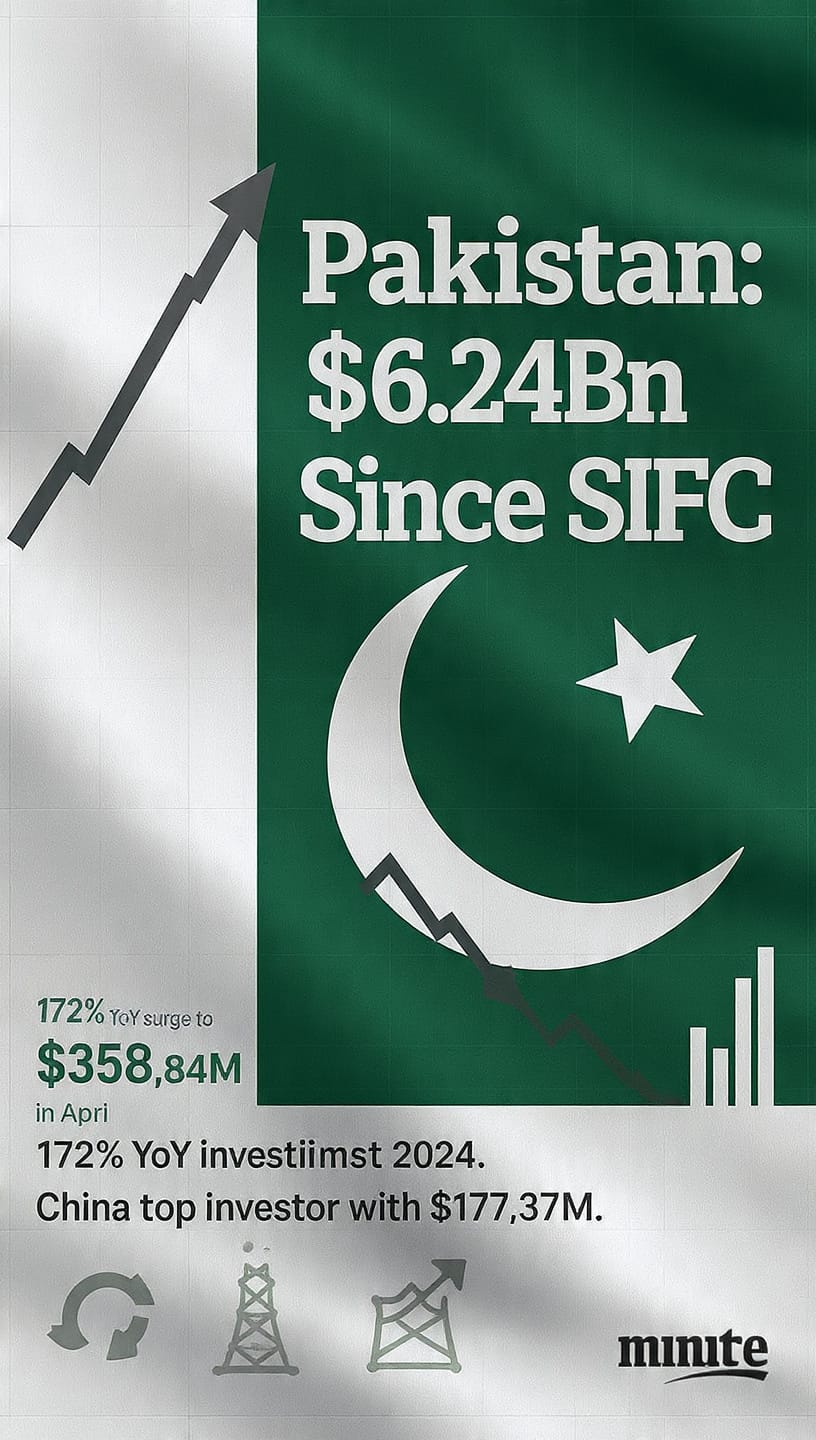
    ISLAMABAD: Pakistan has attracted approximately US$ 6.24 billion in net Foreign Direct Investment (FDI) from FY24 to July-April FY26 since the establishment of the Special Investment Facilitation Council (SIFC), according to data from the State Bank of Pakistan (SBP). The Minister Incharge of SIFC stated that gross FDI inflows during the same period stood at approximately US$ 10.41 billion, highlighting investor confidence in Pakistan’s investment regime. April 2024: Highest Monthly FDI in 51 Months   According to SBP data released in May 2024, FDI inflows surged 172% year-on-year (YoY) to $358.84 million in April 2024, compared to $131.9 million in April 2023. This marks the highest monthly FDI inflow in 51 months. On a month-on-month (MoM) basis, FDI jumped 39%, up from $258.04 million in March 2024. For the first 10 months of FY24 (July-April), total FDI inflows reached $1.46 billion, compared to $1.35 billion in the same period of FY23. Top Investors & Sectors Country-wise:   1. China: Largest investor with $177.37 million net FDI in April 2024 2. UAE: $51.93 million 3. Canada: $51.89 million Sector-wise:   The Power sector attracted the highest inflows with $194 million in April 2024, followed by other key sectors. Officials say the rise in FDI reflects the impact of SIFC’s facilitation for foreign investors in priority sectors including energy, infrastructure, and technology. Pakistan FDI: $6.24Bn Since SIFC* | April Hits 51-Month High Key points: 172% YoY surge to $358.84M in April 2024, China leading with $177.37M, Power sector top recipient. $6.24Bn net FDI since SIFC launch. Pakistan’s FDI jumps 172% YoY to $358.84Mn in April 2024 – highest in 51 months. China leads with $177Mn. Pakistan’s FDI surges 172% in April. $6.24Bn net inflows since SIFC. Power sector top recipient. _”Pakistan FDI: $6.24Bn Since SIFC | April Hits 51-Month High”_

  • | |

    JI threatens nationwide shutdown over petroleum le…

    Jamaat-i-Islami (JI) Emir Hafiz Naeemur Rehman has warned the government that his party could expand its ongoing protests into a nationwide wheel-jam and shutter-down strike if the petroleum levy is not abolished. Speaking at a press conference in Islamabad on Thursday, Rehman said the nationwide strike could begin after August 26, following 12th Rabiul Awwal. He said the party would also establish protest camps in different parts of the country as part of its campaign. If the government failed to respond to its demands, he warned that JI could consider marching towards Islamabad on foot. The JI chief said he would address the party’s sit-in in Lahore, while a public gathering was scheduled at its Karachi protest site on Friday. Rehman said rising inflation had placed a heavy burden on ordinary citizens. He criticised the petroleum levy, describing it as an unfair additional charge on consumers. According to him, consumers were paying around Rs80 per litre under the levy. He claimed the charge was originally introduced to support the modernisation of Pakistan’s oil refineries but that the government had collected more than Rs8 trillion through it while spending less than Rs100 billion on refinery upgrades. He called for the immediate abolition of the levy and urged Prime Minister Shehbaz Sharif to reduce petrol and diesel prices by Rs130 per litre. The government recently revised fuel prices, reducing the price of high-speed diesel while increasing the price of petrol. Rehman said the JI’s protests in Lahore, Karachi and Peshawar were gaining support from traders, religious scholars, young people and members of civil society. He said the demonstrations had grown beyond the petroleum levy issue and were now highlighting broader public concerns. He said JI would not attend government briefings as part of negotiations. Instead, he demanded that government representatives visit the protesters and engage with them directly. The JI leader also referred to the party’s previous campaign against independent power producers. He claimed that negotiations following that protest resulted in the closure of several power projects and new agreements that saved the national exchequer Rs3.36 trillion. He called for a review of the remaining independent power producers, arguing that negotiations could help bring down electricity costs within 12 to 18 months. Rehman also criticised the government over the country’s growing debt, taxes and electricity prices. He claimed Pakistan’s total debt had reached Rs98 trillion and urged authorities to reduce reliance on interest-based financing. He called for greater austerity in government spending and suggested limiting official vehicles to engines of up to 1,300cc. The JI emir also criticised what he described as excessive privileges for the political elite while ordinary citizens continued to face rising living costs and taxes. On provincial matters, Rehman accused successive governments in Sindh and Punjab of failing to resolve major economic and social problems. He also criticised Punjab’s education policy and raised concerns over the outsourcing of thousands of schools.

  • | | | |

    Mojtaba Khamenei appears in new video as health qu…

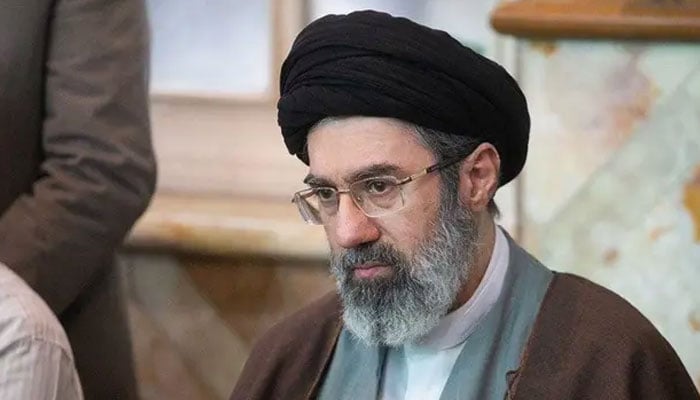
    TEHRAN: A new video showing Iran’s Supreme Leader Mojtaba Khamenei has emerged, offering a rare public glimpse of the Iranian leader amid heightened attention over his health and whereabouts. The footage was released by Iran’s semi-official Mehr News Agency and appears to show Khamenei sitting with several people and engaged in conversation. The agency did not disclose when or where the recording was made, nor did it identify the other individuals seen alongside him. Khamenei appears in normal condition in the short footage. The release comes after reports and speculation about his health had circulated in recent days, making the video particularly significant for observers following developments in Tehran. Iranian media presented the footage as evidence of the Supreme Leader’s continued presence and activity. The video does not provide independent confirmation of when it was recorded, however, leaving some questions unanswered about Khamenei’s current condition and location. The appearance comes as tensions surrounding Iran remain high. Iranian Foreign Minister Abbas Araghchi has reiterated Tehran’s determination to withstand pressure and continue what he described as resistance. “We are fully prepared for resistance despite all pressures,” Araghchi said, according to the statement cited by Iranian media. He also said Iran would not forget what he described as the unjust bloodshed of its martyrs, adding that those responsible would not be forgiven. Khamenei’s limited public appearances have attracted considerable attention since he became Iran’s Supreme Leader earlier this year. The latest footage is therefore likely to be closely examined both inside Iran and abroad as questions continue over the country’s leadership and its response to mounting regional pressures. For now, the exact timing and location of the recording remain undisclosed.

  • | | |

    Pakistan to lead new Turkey-Saudi defence pact

    ISLAMABAD: Pakistan is set to take the first three-year leadership of a new secretariat established under the defence agreement signed by Pakistan, Türkiye and Saudi Arabia in Makkah on Aug 7, giving Islamabad a prominent role in coordinating the emerging regional security framework. According to Turkish and international media reports, the secretariat will serve as the central mechanism for implementing decisions taken by the three countries and coordinating their growing defence cooperation. After Pakistan’s initial three-year term, leadership is expected to pass to Saudi Arabia and then Türkiye. The agreement is built around a collective-security principle under which an armed attack against one member would be regarded as an attack against all three. However, unlike NATO’s automatic response mechanism, the pact leaves the nature of any response to be determined according to the circumstances and the request of the affected country. A high-level council comprising foreign and defence ministers as well as military chiefs is also expected to oversee the arrangement. The council is expected to meet twice a year, while cooperation could range from intelligence sharing and logistics to direct military assistance when required. The partnership also places a strong emphasis on defence technology. The three countries plan to expand cooperation in unmanned systems, electronic warfare and artificial intelligence, alongside joint military exercises designed to improve coordination among their armed forces. Joint defence production, research and technology transfer are also part of the broader framework. For Pakistan, the first leadership term could prove strategically significant. Islamabad already maintains longstanding defence ties with both Ankara and Riyadh, and its role at the secretariat could give it greater influence in regional security diplomacy. Türkiye has stressed that the agreement is defensive and is not directed against any particular country. Turkish Foreign Minister Hakan Fidan said the pact is intended to strengthen regional security rather than replace existing alliances. With the Middle East facing continued instability, the new arrangement could become an important test of how effectively three regional powers can turn political solidarity into practical defence cooperation.

Leave a Reply

Your email address will not be published. Required fields are marked *