pti chairman says
| |

PTI Chairman says Imran Khan’s hospital transfer…


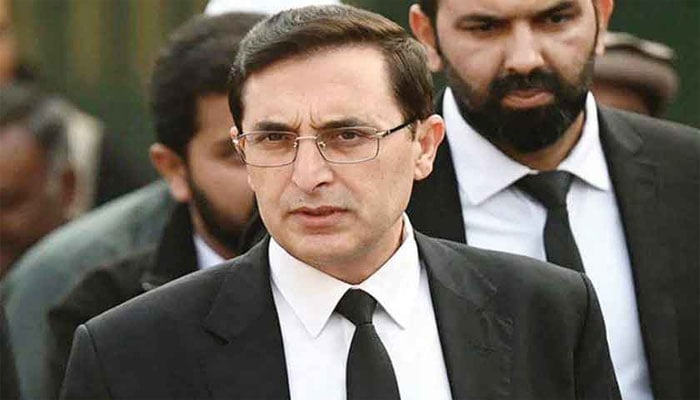
Pakistan Tehreek-e-Insaf (PTI) Chairman Barrister Gohar Ali Khan has said that the plan to transfer the party’s founder, Imran Khan, to a hospital was changed at the last moment, claiming that significant progress had already been made towards arranging the transfer.

Speaking to the media at Dahagal Naka on Adiala Road in Rawalpindi, Gohar said the party’s efforts had been disrupted at the final stage. He expressed regret that Imran Khan could not receive treatment at Shifa International Hospital, saying it would have been a positive development if the former prime minister had been treated there.

However, Gohar said he was not disappointed and would make another attempt to ensure that the party founder received appropriate medical treatment. He stressed that political dialogue and communication should not be abandoned, saying that efforts to maintain contact must continue.

The PTI chairman clarified that all discussions held so far had focused solely on Imran Khan’s health. He also rejected a video circulating on social media that purportedly showed a meeting between him and Imran Khan, describing the footage as fake.

Gohar urged political leaders and other stakeholders not to politicise Imran Khan’s health or turn the issue into a matter of political rhetoric. He maintained that the Supreme Court’s orders regarding the PTI founder’s treatment should have been implemented.

According to Gohar, Imran Khan’s medical treatment was a straightforward matter and there was no justification for preventing his transfer. He said whoever stopped the transfer or changed the plan at the last moment had made the wrong decision.

He acknowledged that the PTI also had concerns about Imran Khan’s security but said the government had never informed the party that security concerns were preventing his transfer to Shifa International Hospital.

Gohar further said the party’s core and political committees had already made their position clear through official statements, asking supporters and party workers not to go to Shifa Hospital. Instead, Imran Khan was transferred to the Pakistan Institute of Medical Sciences (PIMS). However, Gohar claimed that the required treatment was not provided there either.

He maintained that the Supreme Court’s directions could still be implemented if the relevant authorities were willing to act on them.

The PTI chairman also revealed that the party’s petition had been assigned a case number in the Supreme Court and that a request had been submitted for an early hearing. He said the united opposition would now adopt a joint strategy in both the National Assembly and the Senate.

Addressing allegations that the PTI had violated court orders, Gohar rejected the claim, saying the party had not disobeyed any Supreme Court directive. He clarified that Imran Khan’s sister had spoken publicly and confirmed that he had been taken to PIMS.

Gohar said the PTI’s contempt petition was intended to seek implementation of the Supreme Court’s orders. He described it as a civil contempt matter rather than an attempt to challenge the court.

He also mentioned that Noorain Niazi had been pleased after meeting Imran Khan the previous Tuesday.

Gohar concluded by saying that Imran Khan’s health and security remained the party’s primary concerns. He also stressed the importance of opposition parties remaining united, arguing that reforms were urgently needed in the judiciary, Election Commission and provincial affairs.

Similar Posts

  • | |

    12 Pakistani and foreign groups submit bids to acq…

    Twelve business groups, including eight prominent Pakistani conglomerates and four foreign firms, have formally expressed interest in acquiring majority stakes in the Faisalabad Electric Supply Company (Fesco), marking the government’s most serious attempt in a decade to privatise the profitable power distribution utility. The Privatisation Commission released the list of interested parties on Friday after the extended deadline for expressions of interest closed. The development represents a major milestone for Pakistan’s long delayed plan to sell off state owned power distribution companies, a process that stalled in 2016 when the previous government abandoned the sale just before bidding began. The federal cabinet has already authorised the sale of majority stakes in three of the country’s most profitable power distribution companies, positioning Fesco as the first test case in the broader privatisation drive. Local business families dominate interest Eight of the twelve groups that submitted expressions of interest are well established Pakistani business families with deep roots in energy, textiles, automobiles and cement manufacturing. A consortium formed by Nishat Mills, controlled by one of Pakistan’s wealthiest businessmen, Mian Mohammad Mansha, and Pak Elektron Limited, owned by the Saigal family, has entered the race. Mansha also participated in the failed 2015 to 2016 bidding round for the same company. The Saigal family additionally submitted separate bids through Maple Leaf Cement and Kohinoor Textile Mills, giving the family multiple entry points into the process. Other major local contenders include Engro Energy Limited, part of the Dawood family’s diversified business empire, and Sapphire Fibers Limited, owned by the Abdullah family. Hub Power Holdings, controlled by the Habibullah Khan family and already a significant player in Pakistan’s power sector, has also thrown its hat in the ring, alongside Lucky Cement, owned by the Mohammad Ali Tabba family. Lucky Cement previously finished as runner up in the privatisation of Pakistan International Airlines. Shirazi Investments, which also holds interests in the automobile sector, and Artistic Milliners, owned by the Yaqoob family, rounded out the list of local applicants. K-Electric, Pakistan’s largest integrated power generation and distribution company, submitted documents as well, even as its Saudi and Kuwaiti shareholders pursue international arbitration against the government over a blocked 1.7 billion dollar Chinese investment in the company. Foreign firms from Turkey and China join the race Four international firms rounded out the list of interested parties. Three Turkish companies, Aktor Elektrik Enerji Yatirimlari, Genvera Enerji (part of the Celik Group) and Cengiz Enerji Sanayii ve Ticaret, submitted bids alongside Chinese firm Jiang Xi Electric Power Construction. Officials noted that firms qualifying technically and financially for Fesco will also be eligible to bid for two additional distribution companies, Gujranwala Electric Power Company and Islamabad Electric Supply Company, if they fail to win Fesco. This flexibility likely contributed to the strong turnout, as qualified investors gain multiple chances to enter Pakistan’s power distribution market. Government hails strong investor response Muhammad Ali, Adviser to the Prime Minister on Privatisation and Chairman of the Privatisation Commission, called the response a significant milestone in the broader privatisation of state owned distribution companies. He said the strong interest in Fesco reflects investor confidence in the growth potential of Pakistan’s electricity distribution sector and in the government’s commitment to running a transparent and competitive process. Ali added that the commission will now engage with prequalified investors through detailed due diligence and begin discussing the structure of the post-privatisation regulatory regime. He said the sale aims to improve operational efficiency, modernise ageing distribution infrastructure, strengthen customer service and reduce financial losses across the sector, ultimately supporting more competitive electricity distribution and more affordable, reliable power for consumers. The expressions of interest and accompanying statements of qualification will undergo evaluation against the prequalification criteria set by the commission. Groups that meet the requirements will move to the next stage, gaining access to a virtual data room to conduct detailed buy side due diligence on Fesco’s operations and finances. Concerns remain over guaranteed returns and uniform pricing Despite the enthusiastic response, some analysts have raised concerns about the government’s proposal to guarantee investors a minimum return of 13 percent, warning that such guarantees could discourage efficiency gains and slow technological upgrades at the privatised utility. Questions also remain over whether the government will maintain uniform electricity pricing nationwide after privatisation, a policy that would keep subsidy costs on the federal budget rather than shifting the burden fully to market pricing. Fesco is one of three companies included in the first batch of distribution company privatisations, alongside Gepco and Iesco. The deadline for expressions of interest in Gepco is set for 21 August 2026, while Iesco’s deadline falls on 7 September 2026. Fesco’s financial position underscores its appeal Financial data from the finance ministry’s Central Monitoring Unit shows Fesco held total assets worth 410.3 billion rupees as of June last year, against liabilities of 347 billion rupees. The company posted net positive equity of 63 billion rupees, which climbed 28 percent due to share deposits and asset revaluation gains. Non-current liabilities stood at 217.6 billion rupees, with staff retirement benefits accounting for the largest share at 123 billion rupees. Current liabilities totalled roughly 130 billion rupees, including trade payables of 118 billion rupees. The company reported a profit after tax of 9.4 billion rupees for the period. With twelve qualified groups now in the running, the Fesco privatisation stands as a critical test of investor appetite for Pakistan’s power sector reforms and could shape the pace and structure of future electricity distribution company privatisation efforts.

  • | | |

    Initial report suggests Mir Raza Ali was shot from…

    KARACHI: An initial medical report has reportedly indicated that businessman Mir Raza Ali sustained a gunshot wound from behind, while several signs of physical violence were also found on his body following his exhumation for a fresh post-mortem examination. According to investigation sources, the preliminary report has addressed all 14 questions raised by police surgeon Dr Summaiya Syed during the medical examination. The findings reportedly include a gunshot injury to the rear of the body, fractured ribs and multiple injuries to Ali’s head and face. The report also noted marks of violence on different parts of the deceased’s body. However, investigators have yet to officially receive the medical findings. SSP SIU Samiullah Somroo, who is leading the police investigation, said the investigation team had not been informed about the report or its findings. The exhumation process lasted around three hours and was conducted under the supervision of forensic experts. During the procedure, 17 samples were collected from the body for further examination. Four samples were preserved for DNA testing, while the remaining samples were collected for chemical analysis. Two additional reference samples were obtained from Ali’s parents to assist with DNA matching. Investigators said the collected samples have been preserved and will be submitted to the forensic laboratory at the University of Karachi on Monday. The chemical and DNA examination reports are expected to be available within three to four days. Ali’s body was exhumed earlier as part of efforts to determine the circumstances surrounding his death. After the medical examination was completed, his remains were reburied at a graveyard near Tariq Road. Ali, an IBA graduate and businessman, had returned home from his shop on the night of July 28. He later left the house again, telling his family that he would return within 10 minutes. He did not return, and his body was subsequently recovered from Gulistan-e-Jauhar. His father, Mir Hussain, has maintained that his son was murdered and rejected suggestions that he died by suicide. During the latest proceedings, members of the medical board collected various samples from Ali’s grave as part of the renewed examination. His family members and their lawyer, Jibran Nasir, were present at the graveyard, while a heavy police contingent was deployed to maintain security. The authorities had restored the original eight-member medical board responsible for supervising the exhumation after the family objected to the replacement of the panel with a five-member board. The disagreement had earlier prevented officials from carrying out the scheduled exhumation. Mir Hussain later said he was satisfied with the latest proceedings. He expressed hope that the fresh examination would provide clarity about what happened to his son. The family has also alleged that a fake audio recording attributed to Ali was circulated in an attempt to influence the case and create confusion around the circumstances of his death. The family’s lawyer had earlier raised concerns about changes to the medical board and questioned the decision to replace the original panel. He later said the family was satisfied with the renewed proceedings, which were conducted in the presence of the judicial magistrate, investigation officer and members of the medical team.

  • |

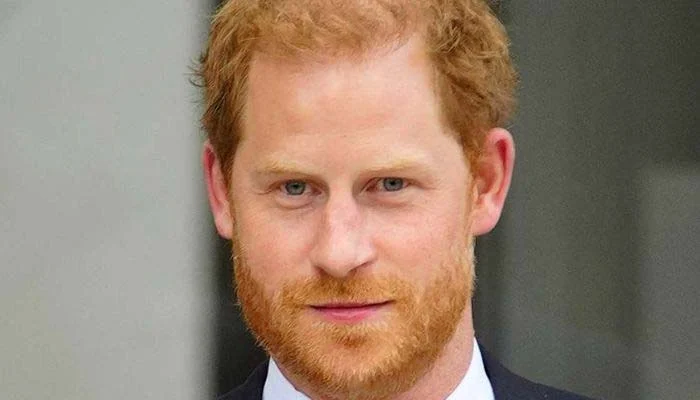
    Prince Harry faces financial ‘Armageddon’ after court defeat

    Prince Harry is once again facing sharp criticism from royal commentators. The backlash follows his defeat in a High Court privacy case against Associated Newspapers on July 7. Royal broadcaster Neil Sean weighed in on the mounting pressure surrounding the Duke of Sussex. He suggested much of the current turmoil is self-inflicted, pointing out that Harry has effectively made his struggles public for the world to see. Sean went further, describing Harry as someone visibly on edge right now. He questioned whether the prince’s current mindset appeared healthy given everything unfolding around him. According to Sean, the court defeat has left Harry navigating a genuinely difficult situation largely on his own. He suggested the fallout from the case has affected Harry far more deeply than he’d likely admit publicly. Sean noted that this marks unfamiliar territory for Harry, who has typically had support systems, like a private secretary, to help manage this kind of crisis. He said the experience of realising not everything he touches turns out successfully has clearly been difficult for him to process. Beyond the reputational damage, financial concerns are also mounting. Commentator Mark Dolan did not hold back, describing the situation as a full-blown financial disaster for the prince. Dolan estimated Harry could be facing costs anywhere between $10 million and $20 million as a result of the case. He said even a conservative estimate of $10 million would essentially wipe out all the money Harry earned from his memoir, “Spare.” Dolan raised pointed questions about whether Harry actually has the funds to cover those costs. He also wondered how Meghan Markle might be reacting to the situation, and what Harry’s next move could realistically look like. According to Dolan, the scale of the financial fallout makes this a defining moment for Harry, describing it as an existential crisis for the prince. With both reputational and financial pressures mounting simultaneously, commentators suggest this latest setback could prove especially difficult for Harry to recover from.

  • |

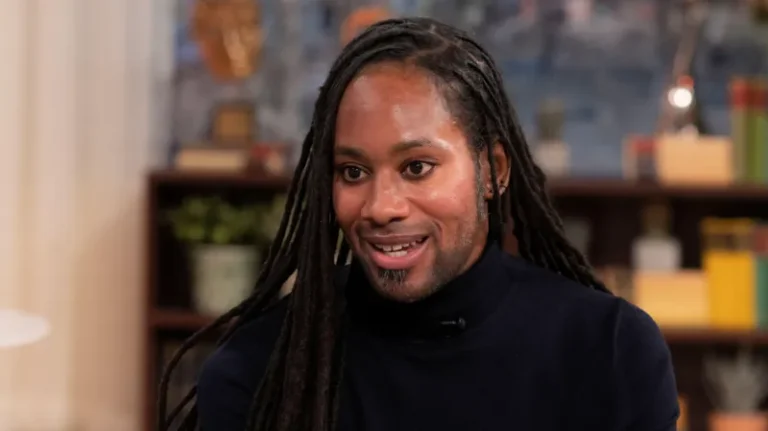
    Former Cambridge professor Jason Arday found dead following plagiarism controversy

    Jason Arday, a former University of Cambridge professor who recently resigned following a high-profile plagiarism row, has died aged 41. Emergency services discovered him unresponsive at an address in Battersea, south London, on Friday afternoon, with the Metropolitan Police treating the death as unexpected but non-suspicious. Arday resigned from his post as professor of sociology of education last week amidst allegations of plagiarism first raised by academic Nathan Cofnas. Whilst Arday denied plagiarism, he acknowledged errors in early work, explaining that his autism led him to rely on mimicry to process information, and noted that the intense public scrutiny had taken an unsustainable personal toll. His family expressed shock at his death, stating that a campaign of misinformation proved too much for him. In 2023, Arday made history as Cambridge’s youngest Black professor at age 37. Following his resignation, Cambridge initiated an independent review into his appointment, while former employers including the University of Glasgow launched investigations into his co-authored research. Public figures, politicians, and academic colleagues have paid tribute to Arday, whilst raising broader concerns regarding the media pressure and duty of care owed to prominent scholars.

  • |

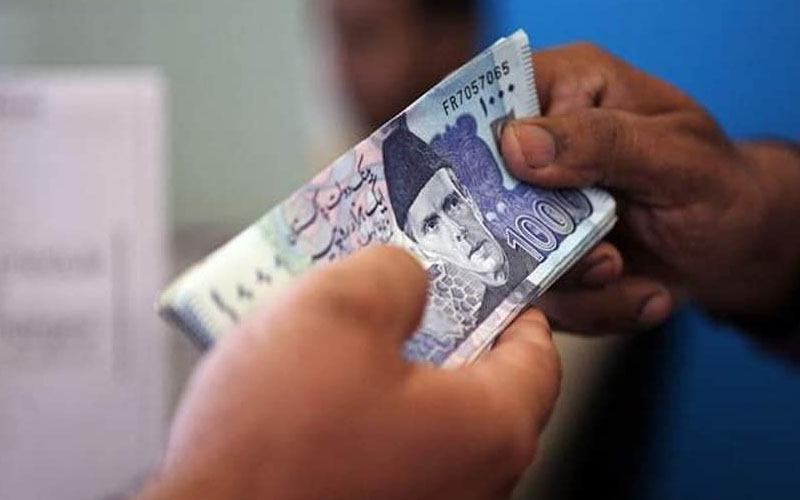
    Pakistan MPs get highest salaries in South Asia

    Islamabad – According to a comparative review of parliamentary salaries in South Asia, Pakistani lawmakers receive the highest monthly salaries in the region while Pakistan’s per capita income remains lower than that of several countries in the region. According to data released under the title “Parliamentarians’ Salaries and Benefits vs. Per Capita Income in the Region,” the monthly salary of a Pakistani parliamentarian stood at $3,530 as of July 2026, the highest in the region. The data shows that an Indian parliamentarian receives a monthly salary of $2,813 while the figure is $1,400 in Bangladesh, $1,100 in Sri Lanka and $600 in Nepal. According to the report, Pakistan’s annual per capita income stands at $1,500, compared with $2,954 in India, $3,037 in Bangladesh, $4,000 in Sri Lanka and $1,400 in Nepal. The report states that the monthly salary of a Pakistani parliamentarian is nearly six times higher than that of a Nepalese parliamentarian and more than twice that of a Bangladeshi parliamentarian. Gap between public income and Parliamentary salaries The data highlights a significant gap between the salaries of Pakistani lawmakers and the per capita income of ordinary citizens, sparking debate over financial priorities and the benefits provided to public representatives. Critics argue that such a wide gap between the income of public representatives and the economic conditions of ordinary citizens is a matter of concern. Supporters however, say parliamentary salaries take into account expenses related to electoral constituencies, security, travel facilities and legislative responsibilities. The report states that the figures were compiled based on the official salary structures as of July 2026 and per capita income estimates from the World Bank and International Monetary Fund (IMF).

  • |

    Ukraine submits peace proposals to US as Zelenskiy warns of autumn Russian draft

    Ukrainian President Volodymyr Zelenskiy announced that Kyiv has delivered fresh peace proposals to American negotiators aimed at ending the conflict with Moscow. He simultaneously warned that Russia intends to use its upcoming parliamentary elections to launch a new, large-scale military mobilisation. Speaking in his nightly address, Zelenskiy stated that the proposals handed to the United States focus on bolstering Ukraine’s defence capabilities, particularly air defence, while urging Washington to exert diplomatic and economic pressure on the Kremlin to halt the war. The movement in negotiations comes as U.S. envoys Steve Witkoff and Jared Kushner prepare for potential visits to both capitals, following a period where diplomatic efforts had largely stalled. Kyiv continues to press for an immediate ceasefire after nearly four and a half years of fighting, whereas Moscow insists any agreement require Ukraine to permanently cede four claimed regions. Zelenskiy also cited Ukrainian intelligence reports indicating that Russian President Vladimir Putin plans to exploit September’s parliamentary polls to orchestrate a rapid autumn draft. “They are preparing for mobilisation in the autumn, immediately after the imitation of parliamentary elections,” Zelenskiy said, estimating that Moscow aims to draft several hundred thousand additional personnel by the end of the year, alongside ongoing voluntary contract recruitment. The electoral warning follows a decision by Russia’s Supreme Court on Monday to bar the liberal Yabloko party, the country’s sole registered anti-war political group, from contesting the upcoming election. Kremlin officials have denied plans for a mandatory draft, pointing to 200,000 voluntary sign-ups recorded in the first half of the year.

Leave a Reply

Your email address will not be published. Required fields are marked *