punjab assembly orders
| |

Punjab Assembly orders probe into land transfer ir…

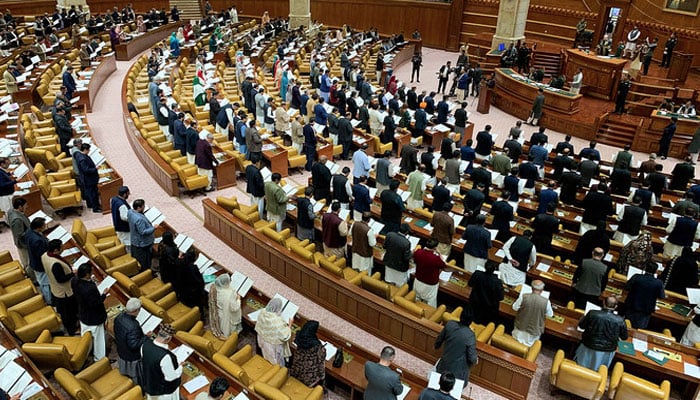
Lahore: The Punjab Assembly has ordered an investigation into a suspected irregularity involving the transfer of 30 kanal of land after a fee was reportedly collected for only 2 kanal.

The issue was raised during a session of the Punjab Assembly, prompting Speaker Malik Muhammad Ahmad Khan to express concern over the alleged shortfall in fee collection.

The Speaker questioned how land measuring 30 kanal could be transferred after charging a fee applicable to only 2 kanal. He also raised concerns about the potential loss caused to the national exchequer.

The Speaker said that if the reduction in the fee had been made under a court order, the relevant senior official of the Board of Revenue should appear before the court and explain the circumstances surrounding the decision.

The matter also drew the attention of Opposition Leader Rana Aftab Khan, who raised concerns over possible revenue losses and weaknesses in the land administration system.

The discussion highlighted questions about the procedures followed by the revenue authorities while assessing land and collecting transfer-related fees. Members stressed the need to determine how the discrepancy occurred and who was responsible for approving the transaction.

Considering the sensitivity of the matter, the Speaker referred the issue to the relevant assembly committee for detailed examination. He directed that the matter be properly investigated and that the facts behind the alleged irregularity be established.

The development has raised broader concerns about transparency in land transfers, assessment procedures and revenue collection in Punjab. The committee is expected to examine the relevant record and determine whether any official negligence or violation of rules occurred.

The investigation will also seek to establish whether the fee was reduced under a valid legal or judicial order and whether the provincial or national exchequer suffered a financial loss as a result.


Similar Posts

  • | |

    Akbar Islam exposes reality of working with Sana Javed

    Sana Javed’s reputation within the Pakistani entertainment industry has been complicated for several years. Before her marriage to cricketer Shoaib Malik, a wave of allegations from colleagues and crew members described her as rude and difficult to work with on set, a controversy that temporarily cost her significant public goodwill. Following her marriage, she stepped away from acting for a period, and her return to screens in the ongoing drama Bas Tera Saath Ho has been watched closely by audiences curious about how the comeback would land. Now, a co-star from the same production has stepped forward to share his firsthand experience of working alongside her, and what he had to say runs contrary to the narrative that had built up around her. Akbar Islam, who plays a supportive neighbour uncle in Bas Tera Saath Ho, was asked directly about his experience working with Sana Javed and whether the stories about her difficult behaviour on set reflected the reality he had encountered. His response was thoughtful and contextual rather than simply defensive of the actress. He said that what people interpret as rudeness is not always what it appears to be. Actors, he explained, need to maintain a certain aura on set. A professional distance, a sense of presence and composure, is part of how performers protect the quality of the work and the integrity of their characters. What some people read as aloofness or arrogance may simply be an actor holding that professional boundary. He said this was the context in which he understood what had previously been said about Sana Javed, and about her co-star Farhan Saeed as well. As for his own experience working with them on Bas Tera Saath Ho, he described it plainly as a great one. He added that dynamics differ from set to set and production to production, suggesting that past accounts may have reflected specific circumstances rather than a fixed truth about either actor’s character. Sana Javed’s performance in Bas Tera Saath Ho has been receiving positive attention from viewers, marking a steady rehabilitation of her public image following the controversy that preceded her comeback. The drama itself has been well received, with Akbar Islam’s own performance drawing warm feedback from audiences who appreciate the warmth and depth he brings to his supporting role. His remarks offer a counterpoint to the accounts that once dominated the conversation about Sana Javed, framing the earlier criticism through the lens of professional behaviour rather than personal failing, and suggesting that the version of her colleagues have encountered during the filming of Bas Tera Saath Ho has been a different and more positive experience altogether.

  • |

    19 dead as 49,000 rush Spain’s Ceuta border

    Spain and Morocco have strengthened security along the border of the Spanish enclave of Ceuta after an unprecedented surge saw around 49,000 migrants cross by land and sea within a single day, triggering a humanitarian and political crisis. Authorities from both countries reinforced border fences and increased security deployments on Friday, effectively halting further mass crossings. Moroccan security forces used water cannons to disperse crowds attempting to reach the enclave, while damaged vehicles and signs of violent clashes were visible near the border. Spanish officials confirmed that at least 19 bodies were recovered from the waters during the chaotic crossings, raising concerns over the growing human cost of irregular migration. Prime Minister Pedro Sánchez was expected to visit Ceuta alongside Interior Minister Fernando Grande-Marlaska to assess the situation and oversee the government’s response. Ceuta, a Spanish territory on Morocco’s northern coast, represents one of the European Union’s only land borders with Africa. While the enclave has experienced migration waves in the past, officials described the latest influx as the largest recorded in recent years. Spain’s government said migrants who entered the enclave illegally would be returned in accordance with Spanish law while respecting recent court rulings and international human rights obligations. Officials believe the sudden increase in crossings may have been influenced by a recent Spanish Supreme Court ruling that placed new limits on the immediate return of migrants intercepted while attempting to reach Ceuta and the nearby enclave of Melilla. On the Moroccan side, thousands of migrants gathered near the border town of Fnideq despite heavy security. Many searched for alternative routes after official crossing points were sealed, while others attempted to reach Ceuta by swimming along the coastline. The crowds included men, women, and children from Morocco as well as several Sub-Saharan African countries. The crisis has sparked political tensions across Europe. Italian Prime Minister Giorgia Meloni warned that Italy could consider extraordinary measures, including suspending participation in the Schengen border-free travel system with Spain, if migration pressures continue to escalate. Italy also criticized Spain’s immigration policies, arguing that recent measures to regularize the status of hundreds of thousands of undocumented migrants could encourage further irregular migration. Spain rejected the criticism, insisting that migration requires a coordinated European response based on solidarity rather than political rhetoric. Spanish officials stressed that migrants contribute to the country’s economy while reaffirming their commitment to tackling illegal border crossings.

  • | |

    Eight killed as torrential rains devastate Sindh

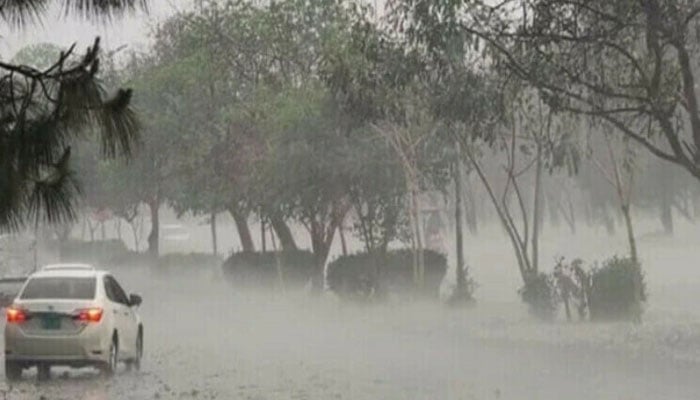
    Heavy monsoon rains continued to wreak havoc across Sindh, killing at least eight people and injuring another eight as widespread flooding disrupted life in several districts. The provincial government placed all rescue and emergency agencies on high alert and directed authorities to intensify relief efforts in the affected areas. The downpour caused severe urban flooding, inundated roads and residential areas, and damaged public infrastructure. Authorities warned that more rainfall could worsen the situation and urged residents to remain cautious. Hyderabad received an exceptionally high amount of rainfall, with a cumulative 360 millimetres recorded between August 1 and August 2. The continuous rain submerged roads, disrupted traffic and affected routine activities across the city. In Badin district, floodwaters created a major emergency after two breaches developed in the Mirwah Canal on Sunday morning. The breaches, measuring approximately 15 feet and eight feet wide, allowed water to flow into nearby settlements, flooding around 200 houses. Local authorities and rescue teams were deployed to assist affected families and assess the damage. The provincial government also took administrative action during the emergency. The Town Municipal Officer (TMO) of Umerkot was suspended for remaining absent from the district while the crisis unfolded. Sindh Chief Minister Syed Murad Ali Shah directed all rescue organizations to remain on high alert and ensure a rapid response to emergencies. He instructed the Local Government Department that no government officer should leave their place of posting without prior permission until the situation improves. The chief minister also directed Karachi Mayor Barrister Murtaza Wahab, district administrations, town municipal authorities and other civic agencies to keep the city’s drainage network fully operational. He emphasized that all available machinery and staff should be deployed to ensure the quick removal of rainwater and prevent prolonged flooding. Murad Ali Shah ordered the Provincial Disaster Management Authority (PDMA), the Irrigation Department, the Health Department, district administrations and rescue services to stay fully prepared for any further emergencies. He instructed officials to implement all precautionary measures immediately and provide timely assistance to affected residents.

  • | | | | |

    Iran ready for talks with US as Tehran sends message through Pakistan

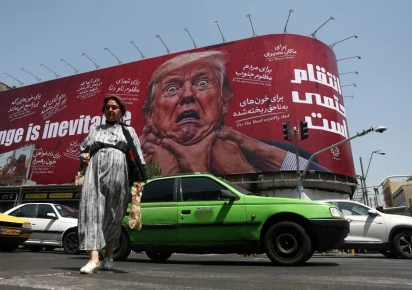
    Iran has reportedly conveyed to Pakistan that it is willing to resume negotiations with the United States, opening a possible new chapter in diplomatic efforts between the two countries, according to a report by Arab media. Sources cited in the report claimed that Tehran has informed Islamabad about its readiness to continue talks with Washington at possible venues including Geneva, Doha, or Islamabad. The discussions, according to the report, would proceed under the framework of a memorandum of understanding. The reported message suggests that Iran wants negotiations to be conducted in phases. According to sources, the first phase would focus on issues related to the Strait of Hormuz, followed by discussions on frozen assets and later the nuclear program. The report further claimed that Iran has rejected any initiative aimed at creating a new route or corridor through the Strait of Hormuz, which remains one of the world’s most strategically important waterways for energy transportation. Earlier, Iran and the United States had reportedly moved toward direct diplomatic engagement after signing an understanding in Islamabad on June 17, 2026. The agreement paved the way for high-level talks, including a meeting in Switzerland after decades without direct negotiations between the two sides. Representatives from Pakistan and Qatar were also present during earlier diplomatic efforts. Pakistan played a role in facilitating communication, while Qatar hosted one round of discussions in Doha. However, the negotiation process later faced setbacks after both sides accused each other of violating commitments and military tensions escalated. Former US President Donald Trump and Iranian officials blamed each other for the collapse of the dialogue process. Despite the tensions, both sides have indicated that diplomacy remains a possible path toward resolving disputes. Iran has maintained that it is open to negotiations but has rejected what it describes as pressure or threats. If confirmed, the reported Iranian message could mark a renewed opportunity for dialogue and place Pakistan in an important diplomatic role between Tehran and Washington.

  • | | | |

    Iran vows retaliation after fresh US strikes

    Iran has vowed to retaliate after the United States launched fresh overnight air strikes on multiple locations across the country, further escalating the conflict that has increasingly drawn several Middle Eastern nations into the fighting. The Islamic Revolutionary Guard Corps (IRGC) issued a strong warning, saying those responsible for the attacks would face punishment. Iranian media quoted the force as saying that the “aggressor” would be held accountable. The latest US strikes reportedly targeted several areas in southern Iran, including Bushehr province, which is home to the country’s only nuclear power plant. Explosions were also reported in Qeshm, Kish, Bandar Abbas, Abadan and other nearby locations. Iranian officials said a residential building on Qeshm Island was struck during the attacks. Local authorities confirmed that three members of the same family, including a child, were killed. Two other children from the same family were injured and shifted to hospital for treatment. The US military said the strikes were launched in response to recent Iranian missile attacks targeting American forces stationed in Jordan. Washington described the operation as a powerful response aimed at deterring further attacks on its troops in the region. The military action came shortly after US President Donald Trump warned that Iran would face severe consequences following attacks on American military facilities. Meanwhile, Jordan said its air defence systems intercepted and destroyed five Iranian missiles heading toward its territory. Officials said this was the fourth consecutive day that missiles or drones launched from Iran had been intercepted. No casualties or property damage were reported. Iran also strongly condemned recent joint US-Saudi air strikes carried out in Iraq. Tehran described the attacks as a violation of Iraq’s sovereignty and territorial integrity. It accused Washington of widening the regional conflict and expressed support for the Iraqi government. The Iraqi government also criticised the strikes and called on all parties to avoid further escalation. Iraqi officials stressed that the country should not become a battleground for regional disputes. Israeli Prime Minister Benjamin Netanyahu said it was difficult to predict Iran’s next moves regarding the Strait of Hormuz. However, he argued that alternative energy routes could eventually reduce the strategic importance of the vital shipping lane. The United Nations expressed deep concern over the renewed fighting. UN Secretary-General António Guterres urged both the United States and Iran to end hostilities and return to diplomatic negotiations. He also welcomed mediation efforts by regional countries seeking to reduce tensions. The IRGC claimed that two oil tankers attempting to sail through what it described as an unauthorised route in the Strait of Hormuz turned back after a fire reportedly broke out on one vessel. Iranian officials insisted the country maintained control over the strategic waterway and warned that restrictions would remain as long as foreign military threats continued. The United Arab Emirates also condemned drone attacks targeting Saudi oil facilities from Iraqi territory, calling them a serious violation of Saudi sovereignty and a threat to regional security. The conflict has expanded rapidly over recent days, with military activity reported in Iran, Iraq, Jordan, Egypt and the Gulf region. The growing instability has increased concerns over regional security and disrupted global energy markets. Oil prices climbed sharply as investors reacted to fears of further escalation and possible disruptions to shipping through the Strait of Hormuz, one of the world’s most important energy trade routes.

  • | |

    Spain accuses EU allies of ‘selfish’ r…

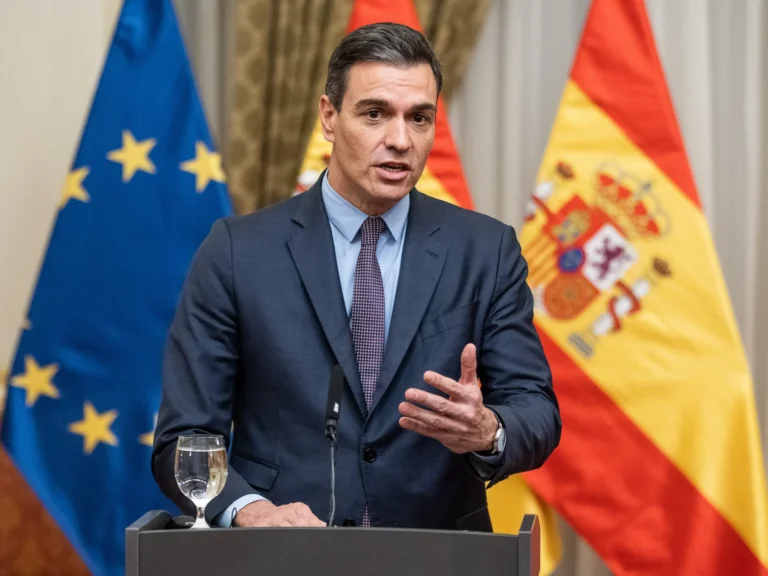
    Spain has accused several European Union governments of a selfish and unlawful reaction after nearly 60,000 migrants crossed into the Spanish enclave of Ceuta from Morocco, triggering a wave of statements from EU member states calling for tighter border restrictions. Prime Minister Pedro Sanchez, in a letter addressed to European Commission President Ursula von der Leyen, described the response from unnamed member states as selfish, polarizing and unlawful. According to a report by the British broadcaster, Sanchez said Madrid had restored order within 48 hours, returning most of the migrants to Morocco and preventing them from reaching mainland Europe. The diplomatic dispute was triggered largely by Italy’s response, which included a temporary suspension of visa free travel with Spain under the Schengen arrangement, along with pointed criticism accusing Madrid of encouraging human trafficking by granting citizenship to more than 500,000 people who had entered the country irregularly. Italian Foreign Minister Antonio Tajani wrote on social media that he supports closing the Schengen area to Spain and expressed confidence in the actions of Italy’s interior minister, Matteo Piantedosi. He said uncontrolled and irregular immigration represents a threat to national security, and argued that the situation unfolding in Ceuta demonstrates how Spain’s decision to naturalize large numbers of irregular immigrants was fundamentally wrong and only encourages trafficking. Italy was not alone in calling for a tougher stance. Czech Prime Minister Andrej Babis went further, calling for Spain to be suspended immediately from the 29 member Schengen arrangement. Finland and Denmark also voiced support for stricter border controls in response to the crisis. Notably, Ceuta itself lies outside the Schengen zone, meaning the enclave is not directly governed by the same free movement rules at the center of the diplomatic dispute between Madrid and its European partners. The clash highlights long standing tensions within the European Union over how to handle migration pressure at its external borders, an issue that has repeatedly strained relations between member states with differing approaches to asylum policy, border enforcement and integration in recent years.  

Leave a Reply

Your email address will not be published. Required fields are marked *