saboor alys daughter
|

Saboor Aly’s daughter Serena Ali begins her school journey

Saboor Aly has reached another memorable milestone in her journey as a mother. The Pakistani actress, who has built a successful career through her talent and dedication, is now celebrating an important moment in the life of her young daughter, Serena Ali.

Saboor is married to fellow actor Ali Ansari, and the couple welcomed their first child, a baby girl named Serena Ali, more than a year ago. Since becoming parents, the couple have largely kept their daughter away from the public eye. Saboor has been particularly careful about protecting Serena’s privacy and has avoided showing her face on social media.

However, the actress recently gave fans a glimpse into a special new chapter in her daughter’s life. Serena is now all set to begin her school journey, and Saboor shared pictures from the little girl’s first day. While the actress continued to maintain her daughter’s privacy, the photographs gave followers a glimpse of the emotional occasion.

Starting school is a major milestone for any child, and Saboor appeared to be marking the moment with pride and affection. Like many parents, she seems excited to watch her daughter take her first steps into a new environment and begin learning outside the home.

However, the announcement quickly sparked a debate among social media users. Some followers questioned whether Serena was too young to begin school, particularly because she is reportedly around one and a half years old.

One social media user expressed surprise over the decision, writing that Serena is “just 1.5 years old.” Another commenter described the decision as “wrong,” while someone else suggested that a mother should be a child’s first teacher and encouraged Saboor to educate her daughter at home.

The reactions highlight the different opinions surrounding early childhood education. While some parents prefer introducing children to structured learning environments at a young age, others believe toddlers should spend more time at home before starting any form of schooling.

It is also possible that Serena’s school experience may be more focused on early childhood activities, social interaction and development rather than conventional academic education. Many early-learning programmes are designed specifically for toddlers and emphasize play, communication and basic developmental skills.

Despite the mixed reactions, Saboor has not indicated that the criticism will change her approach to parenting. She has consistently maintained a protective attitude toward her daughter and continues to keep details of Serena’s personal life private.

For now, the actress appears to be embracing this new chapter while allowing her daughter to experience an important milestone away from excessive public attention. Saboor and Ali’s fans will undoubtedly continue to follow Serena’s journey, even if the couple choose to reveal only limited glimpses of her childhood.
Similar Posts

  • |

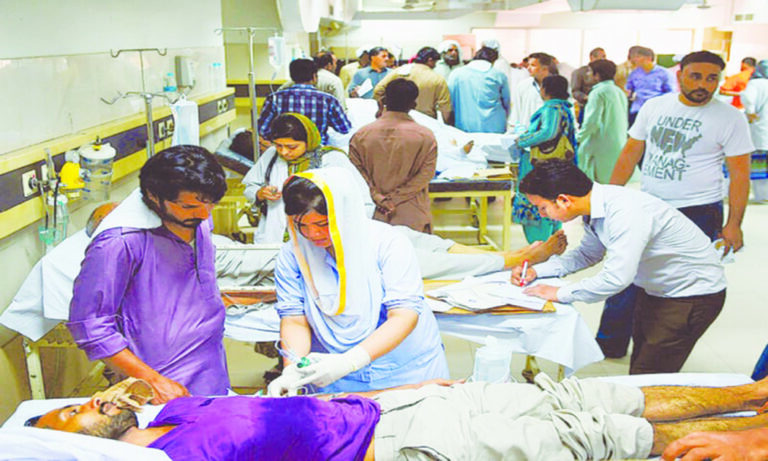
    Pakistan’s health system requires lasting reform

    By Raja Ashraf A country’s healthcare system is judged not only by the number of hospitals it has but also by whether people can access timely, affordable, and quality medical care. In Pakistan, public confidence in the health sector has weakened due to persistent challenges, including shortages of healthcare professionals, rising medicine prices, under-resourced hospitals, and the continued presence of unqualified medical practitioners. These issues require comprehensive and long-term reforms rather than short-term policy responses Healthcare is a fundamental right closely linked to Article 9 of Pakistan’s Constitution, which guarantees the right to life. The Supreme Court has interpreted this provision to include access to essential healthcare services. Pakistan is also a signatory to the International Covenant on Economic, Social and Cultural Rights, which commits the country to progressively ensuring the highest attainable standard of physical and mental health for its citizens. One of the most pressing concerns is the shortage of qualified doctors in rural and underserved regions. Although medical institutions produce thousands of graduates every year, many public health facilities outside major cities continue to face vacant positions. As a result, many communities struggle to obtain even basic healthcare services and are often forced to travel long distances for treatment. The migration of doctors, nurses, and other healthcare professionals to foreign countries has further weakened the healthcare system. Better salaries, improved working conditions, career opportunities, and greater security abroad encourage many skilled professionals to leave Pakistan, creating significant gaps in public hospitals and specialized medical services. The pharmaceutical sector also faces increasing challenges. Some multinational pharmaceutical companies have reduced their presence in Pakistan, raising concerns about future medicine availability and investor confidence. While local pharmaceutical manufacturers continue to meet much of the country’s demand, policymakers must create a stable regulatory and economic environment that supports both domestic production and responsible international investment. The rising cost of medicines has become another major burden for families already affected by inflation. Patients suffering from chronic illnesses such as diabetes, hypertension, and cardiovascular diseases often require lifelong treatment, making affordability a growing concern. At the same time, the continued circulation of counterfeit and substandard medicines highlights weaknesses in regulation and quality control, despite improvements in oversight by regulatory authorities. Public hospitals also frequently experience shortages of essential medicines and emergency supplies, forcing patients to purchase drugs from private pharmacies. This increases treatment costs and can delay critical medical care during emergencies. Ensuring uninterrupted medicine supplies in government hospitals should remain a national priority. Another persistent issue is the presence of unqualified medical practitioners, commonly known as quacks, particularly in areas where licensed healthcare providers are scarce. Tackling this problem requires stronger enforcement of existing laws alongside improved access to qualified medical professionals. Pakistan’s healthcare challenges extend beyond these issues to include inadequate public health funding, ageing hospital infrastructure, weak primary healthcare services, limited mental health facilities, and uneven implementation of health policies across provinces. Addressing these problems requires a comprehensive national strategy focused on increasing healthcare investment, improving working conditions for medical professionals, strengthening medicine regulation, modernizing pharmaceutical oversight, expanding preventive care, and reinforcing primary healthcare services. Investing in healthcare is not merely a public expense—it is an investment in human capital, economic growth, and national development. Pakistan possesses skilled healthcare professionals, reputable medical institutions, and a capable pharmaceutical industry. With sound policymaking, stronger governance, and sustained investment, these strengths can be transformed into a healthcare system that guarantees every citizen safe, affordable, and quality healthcare. The need for reform is no longer in question; the real challenge is ensuring that action is not delayed any further.

  • | |

    Iran shifts to offensive posture as Hormuz standof…

    Iran has moved from a defensive to what a senior Iranian official called a fully offensive strategy, citing a deadlock in efforts to reach a lasting end to its war with the United States, according to a person familiar with the matter who spoke to a foreign news agency on Monday. Progress toward peace talks and the resumption of oil tanker traffic through the Strait of Hormuz has stalled, with no indication that either side is moving closer to ending the conflict the United States and Israel launched on February 28. The official said Iranian entities must prepare to escalate tensions in the strait and across the wider region, adding that Tehran stands ready to make difficult decisions and would carry out a precise military strike to break the US naval blockade if diplomacy collapses. Washington did not immediately respond to those remarks, though President Donald Trump told Fox News earlier in the day that Iran should raise the white flag of surrender. Throughout the conflict, Trump has swung between threats of further escalation and claims that a peace deal sits within reach. Iran’s Islamic Revolutionary Guard Corps pushed back hard on one such claim Monday, rejecting as false Trump’s assertion that Washington maintains backchannel contact with IRGC officials on matters related to the war. Spokesman Hossein Mohibbi told Iran’s Tasnim news agency that no talks are taking place between IRGC officials and American counterparts, describing Trump’s claims as fantasies stemming from desperation over battlefield setbacks. Mohibbi said diplomatic matters fall to other Iranian institutions and remain outside the Guard’s purview, adding that current information from the Foreign Ministry confirms no talks are underway even at that level. He argued Trump’s statements amount to an attempt to influence global energy prices. Trump had told reporters earlier Monday that his administration keeps a backchannel with the IRGC and speaks directly with its officials inside Iran. Trump also issued a separate warning aimed at Oman, saying Washington would respond with force if the sultanate interferes with US Iran negotiations. Asked about Oman’s role in talks touching on Iran and the Strait of Hormuz, Trump told Fox News the United States would bomb Oman if it gets in the way. The comment came after Iran said Saturday that it had reached agreement with Oman on a shipping route map for the strait following weeks of technical talks. Trump separately confirmed the administration’s direct channel with the IRGC and repeated that Tehran should surrender, calling Iranian officials skilled negotiators who are nonetheless losing ground. Fighting also intensified elsewhere in the region. Yemen’s Houthi movement claimed Monday that it struck several Saudi naval vessels along with a weapons depot in a broad missile and drone assault. Spokesman Yahya Saree said a Saudi amphibious transport ship and accompanying vessels were hit in a precise aerial attack involving multiple ballistic missiles, claiming several ships sank while others caught fire. He said Houthi forces also used multiple drones to strike a Saudi weapons depot at the Sahn al Jin camp in Yemen’s Marib province. Saudi authorities had not confirmed the claims as of publication. Separately, Yemen’s army said Monday it detected two hypersonic ballistic missiles fired by Houthi forces toward the city of Mocha and the Red Sea, launched from a former air defense brigade headquarters east of Taiz. No information on casualties or damage was immediately available, and the Houthis did not comment. The launch followed a claim from Yemen’s National Resistance Forces that Houthi fighters had targeted Mocha with seven drones a day earlier, adding to fears of renewed full scale conflict in a country that had seen relative calm since April 2022 following nearly twelve years of civil war. On the Iranian side, IRGC Deputy Commander in Chief Major General Mostafa Izadi said Iranian forces shot down more than 200 enemy aircraft during the recent war with the United States and Israel, according to Iran’s Fars news agency. Izadi said the conflict left the Islamic system undamaged and demonstrated Iran’s strength to the world. Parliament speaker Mohammad Bagher Ghalibaf went further, declaring both a military and political victory over Washington and Israel on the day a 60 day ceasefire under the Islamabad memorandum was set to expire. Ghalibaf said the US and Israel failed to achieve any of nine publicly stated objectives in the war, calling it their biggest failure. Trump, meanwhile, reiterated on his Truth Social platform that Iran cannot possess a nuclear weapon in any form, describing this as Washington’s permanent top priority. Iran also pressed a separate grievance Monday, with Foreign Ministry spokesman Esmaeil Baghaei blaming pollution in Gulf waters on decades of US military presence and operations in the region. Baghaei said the environmental damage stems from American military activity over the past five decades and called for Washington to be held accountable, estimating losses in the trillions of dollars. His comments followed Iran’s request last week for compensation after an oil slick reached the island of Qeshm, which officials said has since been cleaned up. Separately, salvage efforts continued for a grounded tanker leaking Russian crude off Oman’s coast, with officials citing monsoon weather and the shallow, rocky seabed as major obstacles. Mohammed bin Abdullah al Rawahi of Oman’s transport ministry said the conditions expose salvage vessels to operational and navigational risks, compounded by flooding damage to one side of the tanker. Diplomatic efforts on Gaza also advanced Monday, with Israeli Prime Minister Benjamin Netanyahu due to meet Trump envoy Jared Kushner a day after a rare meeting between Kushner and Hamas officials in Cairo. A diplomatic source said Hamas leader Khalil Al Hayya attended some sessions with Kushner and Gaza peace envoy Nickolay Mladenov. Trump said in late July that a deal had been reached on the complete disarmament of Hamas and other armed groups, though Netanyahu, facing an October re election vote, has publicly rejected the plan. Trump separately welcomed the signing of the Makkah Joint Defence Agreement by Turkiye, Pakistan and Saudi Arabia, saying on Truth

  • | |

    Aamir Muqam invites Rawalakot sit-in leaders for d…

    ISLAMABAD: Federal Minister for Kashmir Affairs and Gilgit-Baltistan Aamir Muqam has extended an offer of dialogue to protesters staging a sit-in in Rawalakot, urging demonstrators to engage in peaceful negotiations while distancing the federal government from recent controversial remarks about the region. Speaking during a televised interview, Muqam said the people of Rawalakot have always been, and will continue to remain, Kashmiris, emphasizing their historical identity and longstanding contributions to Pakistan. “The people of Rawalakot are Kashmiris, have always been Kashmiris, and will remain Kashmiris,” the minister said, stressing that the government values the sacrifices made by the residents of Poonch and other parts of Azad Jammu and Kashmir. His remarks came amid growing political tensions following comments attributed to Defence Minister Khawaja Asif, which sparked criticism and prompted strong reactions from political leaders and residents in the region. Muqam clarified that Khawaja Asif’s statement reflected his personal opinion and should not be interpreted as the official position of either the federal government or the ruling party. “The statement does not represent government policy,” he said, adding that the people of Rawalakot had rendered immense sacrifices for Pakistan during critical periods of history and deserved respect and recognition. Addressing the ongoing sit-in, the minister appealed to protesters to choose dialogue over confrontation. He said the government believes the majority of those participating in the demonstration are patriotic citizens with genuine concerns rather than individuals pursuing unlawful objectives. “I do not consider everyone at the sit-in to be terrorists,” Muqam said. “Most participants are loyal Pakistanis. They should distance themselves from elements with negative agendas and come forward for meaningful talks.” The minister reiterated the government’s willingness to resolve issues through negotiations, saying constructive engagement remained the most effective path toward restoring calm and addressing public grievances. His appeal comes as authorities continue to monitor the evolving situation in Rawalakot, where demonstrations have drawn national attention amid heightened political debate and security concerns. Political observers believe Muqam’s conciliatory tone signals an effort by the federal government to ease tensions and prevent further escalation through dialogue rather than confrontation. His reassurance regarding the identity and sacrifices of the people of Rawalakot is also being viewed as an attempt to rebuild trust following the controversy surrounding recent public statements. The government’s next steps, including any formal negotiations with protest representatives, are expected to shape developments in the coming days as officials seek a peaceful resolution to the standoff.

  • | | | |

    Iran FM accuses West of ‘shameful hypocrisy’

    Iran FM accuses West of ‘shameful hypocrisy’Iranian Foreign Minister Abbas Araghchi has sharply criticised France and other Western countries over their stance on human rights and Iran’s treatment of protesters. Araghchi accused Western governments of adopting double standards by condemning Tehran over its response to domestic unrest while, in his view, failing to take meaningful action over Israel’s conduct in Gaza and the wider Middle East. In a statement on X, the Iranian foreign minister said countries such as France should stop giving lectures to others on human rights and international law. He described what he called Western hypocrisy as both “clear and shameful,” arguing that their policies had undermined their claims of moral authority. Araghchi also criticised Western support for Israel, saying that backing Israel during the Gaza conflict and what he described as aggression against Iran had damaged the credibility of Western governments on human rights issues. His comments came after the European Union and 20 other countries issued a joint statement expressing concern over the deaths of protesters in Iran. The countries called on the Iranian authorities to take meaningful measures to protect human rights. They also urged Tehran to end the use of the death penalty and release people who had allegedly been detained arbitrarily. Araghchi rejected the criticism and questioned the consistency of Western governments’ positions on human rights. The dispute highlights growing tensions between Iran and Western nations over the treatment of protesters, the use of capital punishment and the broader conflict in the Middle East. Iran has repeatedly accused Western governments of interfering in its internal affairs and applying selective standards to international human rights issues. Western governments, meanwhile, have continued to raise concerns about the treatment of protesters and detainees in Iran.

  • |

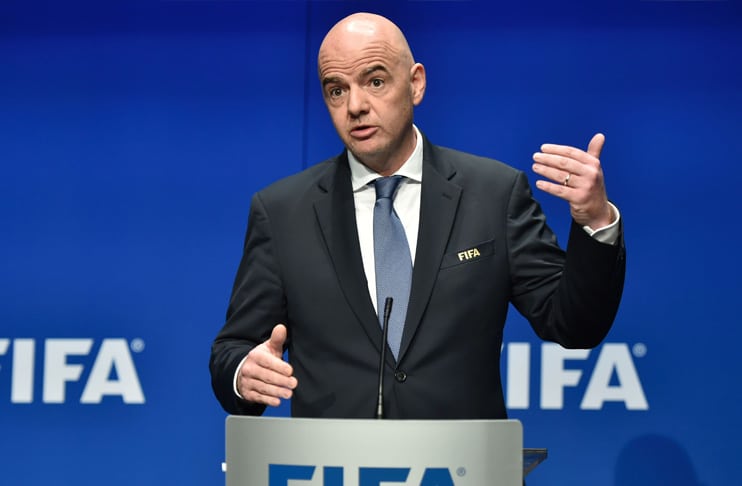
    Gianni Infantino defends World Cup 2026 amid criticism

    FIFA President Gianni Infantino has issued a strong defence of the 2026 FIFA World Cup, accusing critics of focusing on controversy while overlooking what he described as a tournament that united millions of people around the world. In an open letter published on Monday and shared on his personal social media accounts as well as FIFA’s official platforms, Infantino responded to criticism surrounding the tournament, which was jointly hosted by the United States, Canada and Mexico and won by Spain. The FIFA chief argued that many detractors ignored the positive impact of the competition and instead concentrated on negative narratives. He praised the atmosphere created by fans and highlighted football’s ability to bring people together across generations. Addressing critics directly, Infantino wrote, “To all of you who missed watching kids, babies, grandparents, and parents come together for the beautiful game, I say sorry that the matches are now over and sorry that you missed all that joy and togetherness.” He continued, “Sorry that you were so consumed by hate and criticism that you missed it all.” The 56-year-old also appeared to criticise journalists and commentators, claiming that while FIFA had worked tirelessly to organise a successful tournament, others had focused on spreading misinformation. “To those behind their pens and papers, behind their screens spreading hate and false rumours, I want to say that while you are sitting behind, we at FIFA are on the front lines organising, working hard, and delivering the best show in the world,” he wrote. Infantino pointed to what he described as the tournament’s outstanding security record. According to the FIFA president, nearly seven million spectators from more than 200 countries attended matches throughout the competition. “We experienced no violence, no incidents, 100% safety and security, only joy and happiness,” he said. Despite the successful attendance figures, the tournament faced criticism over travel and visa restrictions affecting supporters and officials from several participating nations, including Iran, Haiti, Senegal and Ivory Coast. Somali referee Omar Artan was also reportedly denied entry to the United States after not receiving a visa. Responding to those concerns, Infantino said, “You mentioned the few people denied visas and overlooked the millions who were approved, from all parts of the world. Because football unites the world, and it was demonstrated impressively this summer.” The FIFA president also addressed debates over refereeing decisions, player suspensions and disciplinary rulings during the tournament. He argued that controversial officiating is common across football and questioned why FIFA had received such intense scrutiny. “Potentially mistaken red or yellow cards or subsequent decisions not to ban players in certain situations are routine and widely accepted in some of the biggest leagues worldwide,” he said, adding, “It’s curious that the same countries employing these practices are the ones criticising.” Concluding his message, Infantino urged critics to focus on football’s ability to unite people rather than dwell on controversy. “To those spending their time and energy hating us, please take a moment to reflect, meditate, pray, or watch a football match and truly observe the faces, the eyes, the emotions,” he wrote, ending with the message, “May football rise above all hate.”

  • |

    Paris Jackson recalls first meeting mother Debbie Rowe

    Paris Jackson has shared rare details about meeting her biological mother, Debbie Rowe, for the first time when she was 15, offering a glimpse into how their relationship gradually developed over the years. The 28-year-old model and actress discussed her family life during a recent appearance on the Call Her Daddy podcast. She explained that she first became curious about her biological mother when she was around 10 or 11 years old. At the time, Paris said she simply asked for her mother’s name and was satisfied with the answer she received. She eventually reconnected with Rowe at around 15 and said the two began growing closer toward the end of her teenage years. Recalling their first meeting, Paris said the encounter was surprisingly relaxed. She remembered coming downstairs to find Rowe in the living room with her grandmother. Rather than feeling overwhelmed or uncomfortable, Paris simply greeted her mother and sat down to talk. The pair later went out together and spent the day getting to know each other. Paris also reflected on her approach to relationships, saying that having too many expectations can sometimes make personal connections more difficult. She explained that entering a relationship with an open mind gives people the opportunity to develop a bond naturally instead of forcing it to meet a particular idea of how things should be. She described this approach as creating space for something genuine and organic to grow. Paris is the daughter of the late pop icon Michael Jackson and Debbie Rowe. The former couple also share their eldest son, Prince Jackson. Michael’s youngest child, Bigi Jackson, was born through a surrogate. Rowe met Michael while working as an assistant at the dermatologist’s office he visited. The pair married in 1996, but their relationship was short-lived, and they divorced in 2000. Michael Jackson subsequently received full custody of their children. Following the divorce, Rowe largely stepped away from the public spotlight and moved to Palmdale, California, where she reportedly pursued her interest in horse breeding and maintained a private lifestyle. Paris and Rowe began rebuilding their relationship in 2013. Their connection became particularly close several years later when Paris supported her mother during her battle with breast cancer in 2016. Looking back on their relationship, Paris’ comments suggest that their bond developed gradually rather than being shaped by expectations. Her willingness to approach the relationship openly appears to have helped her and Rowe establish a closer connection after years apart. Her latest revelations offer a rare look into the personal relationship between the mother and daughter, while also highlighting Paris’ perspective on family, expectations and allowing relationships to develop naturally.

Leave a Reply

Your email address will not be published. Required fields are marked *