south korea backs
|

South Korea backs Trump’s push to revive North Korea talks

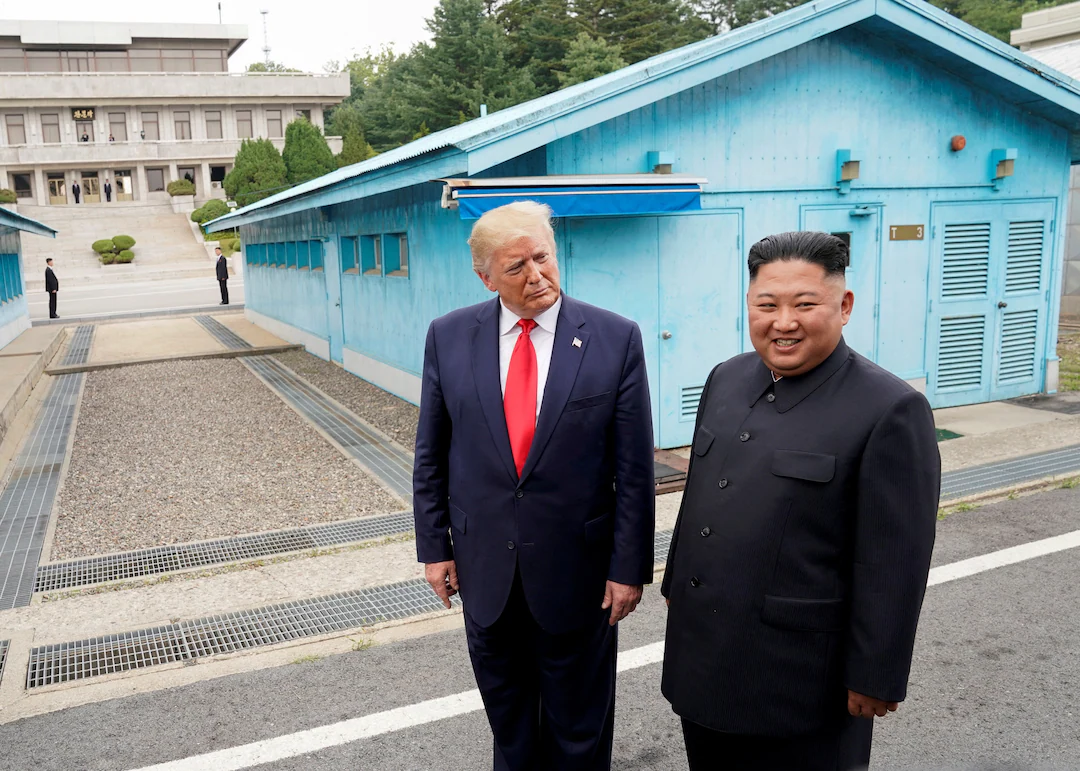
SEOUL: South Korea has welcomed US President Donald Trump’s efforts to restart dialogue with North Korea but wants any renewed negotiations to produce meaningful progress on Pyongyang’s nuclear programme.

South Korean National Security Adviser Wi Sung-lac said on Friday that Seoul supports Washington’s diplomatic outreach to North Korea, provided that it does not weaken the country’s security preparedness or leave South Korea out of the process.

Wi said any renewed US-North Korea dialogue should focus on achieving tangible progress towards addressing North Korea’s nuclear weapons capabilities while also supporting efforts to establish lasting peace on the Korean Peninsula.

He stressed that close coordination between Seoul and Washington would be essential if negotiations with Pyongyang resume.

“We need to coordinate with the United States to ensure that any resumption of US-North Korea dialogue leads to substantive progress on the North Korean nuclear issue,” Wi said.

The national security adviser also referred to Trump’s recent decision to significantly reduce major joint military exercises between the United States and South Korea. He said the move appeared to indicate Washington’s willingness to create conditions for renewed engagement with North Korea.

However, Seoul remains concerned about maintaining a credible defence posture. Wi said South Korea must ensure that diplomatic efforts do not undermine military readiness.

He also warned that Seoul should not be sidelined if Washington succeeds in reopening talks with Pyongyang.

Trump has been seeking another meeting with North Korean leader Kim Jong Un. The two leaders held three summits during 2018 and 2019, but their negotiations failed to produce a lasting agreement on denuclearisation.

Trump has previously criticised the scale of joint US-South Korean military exercises, arguing that some drills could send the wrong message to North Korea. His administration has continued to explore ways to bring Pyongyang back to negotiations.

Meanwhile, South Korea, the United States and Japan are scheduled to hold joint military exercises from September 9 to 11. The drills are intended to test the three countries’ readiness to respond to potential missile and nuclear threats from North Korea.

Wi also said Seoul was seeking closer cooperation with Washington on several issues that have occasionally created friction between the two allies.

These areas include South Korean investment in the United States under a bilateral trade agreement, security cooperation, intelligence sharing and the planned transfer of wartime operational control.

The treatment of US-listed South Korean e-commerce company Coupang was also mentioned among the issues requiring greater coordination.
Similar Posts

  • | | | |

    Trump touts Iran talks as Netanyahu arrives

    US President Donald Trump has said that Washington is engaged in “very friendly talks” with Tehran as efforts continue to prevent a fresh escalation in the Iran war. Trump’s remarks came as Israeli Prime Minister Benjamin Netanyahu arrived in Washington for talks with the US president. The meeting is expected to focus heavily on the conflict with Iran and the possibility of reaching a longer-term agreement. The latest developments come after several days of reduced military activity between the United States and Iran. However, tensions remain high. Both sides continue to issue warnings and maintain their military positions. Iran has indicated that it remains open to diplomacy. At the same time, Tehran has warned that it is prepared to respond strongly if the United States launches another attack. Iranian officials have also stressed that Washington will not decide when the country should choose between negotiations and confrontation. Tehran has said that communication with the US is continuing through intermediaries. Qatar and Pakistan are among the regional countries involved in facilitating communication between the two sides. Iranian officials have described the diplomatic channel as active but uncertain. Several major issues remain unresolved. The nuclear programme is expected to be one of the central subjects in any future agreement. Sanctions, compensation for war-related damage and security arrangements are also likely to complicate negotiations. The Strait of Hormuz remains another major obstacle. The strategic waterway is vital for international energy supplies. Iran has insisted on maintaining a significant role in controlling and regulating movement through the strait. Washington, meanwhile, wants the waterway to return to normal operations. The issue has become an important source of leverage for Tehran and a major concern for the global energy market. Trump has indicated that he wants an agreement but has also warned that military action could resume if diplomacy fails. His comments have added pressure to the ongoing negotiations. The situation has also created wider economic concerns. Australia, which relies heavily on imported fuel, is considering plans for a new domestic oil refinery. The proposal comes as disruptions to global energy supplies raise concerns about fuel security. The conflict has also affected several Gulf states. Saudi Arabia has condemned a reported drone attack by Iran-aligned groups in Iraq targeting Riyadh and energy infrastructure in the kingdom’s Eastern Province. Satellite imagery has also shown smoke rising from areas in Saudi Arabia after Yemen’s Iran-aligned Houthis claimed attacks against oil-related facilities. Meanwhile, Netanyahu’s visit to Washington has added another layer to the diplomatic situation. Israel took part in the military campaign against Iran alongside the United States but has not been directly involved in the latest US-Iran diplomatic contacts. The Israeli prime minister is expected to discuss the conflict with Trump. Differences could emerge over the direction of US policy and the possibility of a diplomatic settlement. The meeting also comes amid continuing Israeli military operations in the occupied West Bank. Israeli forces have carried out further raids in the territory, while former senior Israeli military officials have reportedly urged Trump to pressure Netanyahu to reduce the violence. UN High Commissioner for Human Rights Volker Turk has also raised concerns over alleged violations of international law in the region. His office has documented incidents in Lebanon and said some could potentially amount to war crimes. Despite the latest diplomatic activity, the path toward a lasting agreement remains uncertain. Washington and Tehran appear interested in avoiding another major escalation, but serious disagreements continue to stand in the way of a final settlement. The Strait of Hormuz, Iran’s nuclear programme, sanctions and the consequences of the conflict are likely to remain central to the next phase of negotiations.

  • | | |

    Pakistan stock exchange slides over 1,100 points 

      KARACHI: The Pakistan Stock Exchange (PSX) experienced a volatile trading session on Tuesday as strong gains recorded in early trading quickly disappeared, with the benchmark KSE-100 Index ending the day more than 1,100 points lower. Widespread profit-taking in major sectors, combined with cautious investor sentiment influenced by global market uncertainty, weighed heavily on the market. The benchmark KSE-100 Index initially climbed to an intraday high of 178,768.83 points, reflecting optimism among investors during the opening hours. However, the momentum proved short-lived as selling pressure gradually intensified across the market. By the close of trading, the index had fallen to 177,083.22 points, registering a decline of 1,116.80 points, or 0.63%, after touching an intraday low of 177,043.10 points. Market participants attributed the sharp reversal to extensive profit-booking in several heavyweight sectors. Commercial banks, oil and gas exploration companies, cement manufacturers, investment firms, and fertiliser stocks all came under significant selling pressure, dragging the benchmark index into negative territory despite its promising start. Investor confidence also remained subdued due to mixed developments in international financial markets. Asian stock markets traded without a clear direction as investors balanced encouraging corporate earnings from the United States against continuing geopolitical tensions. At the same time, international oil prices climbed by more than two percent as uncertainty surrounding diplomatic efforts to ease tensions between the United States and Iran persisted. Concerns over potential disruptions to global oil supplies through major shipping routes also contributed to market caution. Commenting on the day’s performance, Ahmed Sheraz, an equity trader at KTrade Securities, said the KSE-100 Index remained under pressure throughout the session because the market lacked fresh positive catalysts capable of sustaining its recent upward momentum. According to him, the absence of encouraging economic or corporate developments prompted investors to lock in profits after recent gains. Sheraz noted that selling activity was widespread across key sectors, particularly banking, oil and gas, cement, investment companies, and fertilisers. He added that despite Brent crude oil trading between $84 and $86 per barrel, investors largely preferred to stay on the sidelines while waiting for stronger economic indicators and corporate earnings announcements before making new investment decisions. Looking ahead, Sheraz believes the stock market is likely to remain highly sensitive to news flow. Upcoming corporate earnings reports, macroeconomic indicators, and foreign investment activity are expected to play a decisive role in shaping market sentiment over the coming weeks. He also identified the 176,500 to 177,000-point range as an important technical support level for the benchmark index, suggesting that maintaining this level could help stabilise the market. Trading activity slowed compared with the previous session. Total market volume declined to 711.2 million shares, down from 785.3 million shares recorded on Monday. Meanwhile, the total value of traded shares stood at Rs25.8 billion. A total of 495 companiesparticipated in trading during the session. Among them, 161 stocks closed higher, 295 stocks ended in negative territory, while 39 stocks remained unchanged. Pakistan International Bulk Terminal emerged as the session’s most actively traded stock, with approximately 89.8 million shares changing hands. The company’s share price declined by Rs0.34, closing the session at Rs16.74.

  • |

    Govt approves 16 pension fund managers for new pension scheme

    The federal government has taken a significant step towards implementing its newly introduced contributory pension system by approving 16 eligible Pension Fund Managers (PFMs) under the Defined Contribution Pension Fund Scheme-2024 for newly recruited federal employees. According to an official notification issued by the Ministry of Finance, the approved Pension Fund Managers have successfully completed all required legal and administrative agreements with the federal government. Following the completion of these formalities, they are now authorized to receive, manage, and invest pension contributions under the new pension framework. The move marks an important milestone in the government’s broader pension reform agenda, aimed at ensuring the long-term financial sustainability of the country’s pension system while reducing the growing fiscal burden associated with traditional pension payments. The Defined Contribution Pension Fund Scheme-2024 was introduced under the Federal Government Defined Contribution Pension Fund Scheme Rules, 2024, replacing the long-standing defined benefit pension model for newly appointed federal government employees. Under the previous system, retired employees received pensions funded entirely by the government. The new framework, however, shifts to a contributory model in which both employees and the government make regular monthly contributions toward retirement savings. As per the scheme, every newly recruited federal employee will contribute 10 percent of their pensionable salary each month to an individual pension account. In addition, the federal government will contribute 12 percent of the employee’s pensionable salary, creating a combined retirement fund that will be professionally managed by the approved Pension Fund Managers. The accumulated contributions will be invested in a diversified portfolio of financial instruments and investment opportunities with the objective of generating long-term returns. Upon retirement, employees will receive pension benefits based on the total value of their accumulated savings and the investment returns earned over the course of their service, rather than relying on a fixed government-funded pension. Officials believe the reform will help establish a financially sustainable pension system by encouraging long-term savings and reducing future pension liabilities on the national exchequer. The appointment of the 16 Pension Fund Managers is expected to facilitate the smooth rollout of the scheme and provide newly inducted federal employees with multiple professionally managed investment options for their retirement savings.

  • | | |

    AJK polling enters third phase amid tight security

    MUZAFFARABAD: Voting in the third phase of the Azad Jammu and Kashmir general elections began on Monday in four constituencies of Bagh and Haveli districts. Polling started at 8am and will continue until 5pm. Security has been tightened across the constituencies due to concerns over possible clashes and disturbances. Authorities have declared most of the 803 polling stations sensitive or highly sensitive. A large security contingent has been deployed to maintain law and order. Around 10,300 additional security personnel have been sent to Bagh and Haveli. Officials said the deployment was aimed at providing a safe environment for voters and election staff. The third phase was originally planned for all 11 constituencies of Poonch Division. However, voting was restricted to Bagh and Haveli after authorities reviewed the security situation. The remaining seven constituencies are expected to be polled later this month. Election officials have indicated that voting could take place on August 20 or 21, depending on the security situation. The current phase has attracted considerable political attention. Several prominent leaders are contesting the four seats. AJK Prime Minister Faisal Mumtaz Rathore is seeking to retain his constituency. Two former prime ministers, Sardar Tanveer Ilyas and Sardar Attique Ahmed Khan, are also in the electoral race. A total of 460,371 voters are eligible to cast their ballots. They include 238,664 men and 221,707 women. The election is being held at 803 polling stations. These stations have 1,254 polling booths. As many as 82 candidates are competing in the four constituencies. LA-14 Dhirkot has the highest number of candidates. Thirty candidates are contesting the seat. LA-17 Haveli has nine candidates, the lowest number among the four constituencies. In LA-17 Haveli, Prime Minister Rathore is facing PML-N candidate Engineer Mohsin Aziz and independent contender Khawaja Tariq Saeed. Rathore and Saeed were previously political allies. They had reportedly agreed to contest the seat alternately. Their political relationship changed after Rathore became prime minister. Rathore sought Saeed’s withdrawal from the contest. Saeed refused to step aside. The two former allies are now competing against each other. Mohsin Aziz is also running an active campaign. His father, Chaudhry Mohammad Aziz, had won the constituency several times in the past. The PML-N candidate is expected to receive support from sections of the Gujjar community. Saeed is believed to have support among parts of the Kashmiri community and several smaller clans. Rathore has expressed confidence about retaining the seat. He has highlighted the performance of his government during his tenure. The constituency has also witnessed allegations of electoral irregularities. Claims circulated on social media about alleged manipulation by two presiding officers. Election officials rejected the allegations as presented on social media. However, they confirmed receiving complaints against the two officials. Both were subsequently removed from election duties. In LA-15 Wasti Bagh, former prime minister Sardar Tanveer Ilyas is facing several strong contenders. The candidates include PML-N nominee and former minister Mushtaq Ahmed Minhas. PPP candidate and sitting minister Sardar Ziaul Qamar is also contesting. Jamaat-i-Islami candidate retired Brigadier Dr Mohammad Khan is another key contender. Ilyas had initially announced a boycott of the third phase. He later reversed the decision and returned to the election campaign. He has described the contest as important for his political future. He has also linked his campaign to the possibility of securing a senior constitutional position after the election. Ilyas and Ziaul Qamar belong to the same Madiyal tribe. Brigadier Khan belongs to the Narma clan. He is backed by several influential Jamaat-i-Islami figures and local supporters. Mushtaq Minhas is benefiting from the PML-N’s position as the leading party in the elections held so far. The party has secured the largest number of seats in the previous phases and is expected to play a major role in forming the next government. In LA-16 Sharqi Bagh, former ministers Sardar Mir Akbar and Sardar Qamar Zaman are among the main contenders. Mir Akbar is contesting on the PML-N ticket. Qamar is representing the PPP. The LA-14 Dhirkot contest has also emerged as one of the closely watched races. Sardar Attique Ahmed Khan, head of the Muslim Conference, is seeking another victory from the constituency. He has represented the seat for several years and previously served as AJK prime minister. He is facing a strong challenge from Sajid Iqbal Abbasi of the Awam Dast-o-Bazu Party. Abbasi is a contractor and philanthropist. He has reportedly spent substantial personal resources on welfare and development projects in the constituency. His supporters believe his community work has helped him build a strong voter base. The contest has become more interesting because Attique and Abbasi belong to the same tribe. PML-N candidate Raja Faisal Azad and PPP nominee Raja Mubashar Ejaz are also contesting Dhirkot. However, the main competition is expected to remain between Attique and Abbasi. The results of the third phase could influence the political balance in AJK. The PML-N has already emerged as the strongest party in the earlier phases. The PPP and other political groups will now seek to strengthen their position in the remaining contests.

  • | |

    Goods transporters defer nationwide strike for 40 …

    Goods transporters have announced a 40-day postponement of their nationwide strike following talks with government representatives in Karachi. The negotiations were held at the Governor House in Karachi. Sindh Governor Nihal Hashmi, Karachi Mayor Murtaza Wahab, Federal Minister for Communications Abdul Aleem Khan and All Pakistan Goods Transporters Association President Malik Shahzad attended the meeting. Speaking at a press conference after the talks, Malik Shahzad said transporters had decided to postpone the strike after receiving assurances from the government. He said the transporters had been on a nationwide strike for the past nine days. According to him, the Sindh government assured them that the parking issue would be addressed. Shahzad said the government had also sought 15 days to review the mechanism for determining petroleum prices. The issue of whether fuel prices should be revised every 15 days or once a month would be examined, he added. He said Federal Minister Abdul Aleem Khan had assured the transporters that a committee would be formed to review toll taxes and consider reducing the charges. The transporters were also assured that 10-wheeler vehicles would be allowed to carry an appropriate weight, Shahzad said. He added that the federal and provincial governments had already resolved some of their concerns. Other issues require decisions at the cabinet level, he said. Shahzad said meetings of the relevant committees would continue. He expressed hope that the government would fulfil its commitments. He clarified that the transporters were not ending their strike permanently. Instead, they were postponing it for 40 days. He warned that the transporters could resume protests if the government failed to implement the assurances given during the negotiations. Federal Minister for Communications Abdul Aleem Khan said the government had addressed the transporters’ issues that could be resolved immediately. He said some demands required formal procedures, which the government would complete. Several committees had been formed to work on the remaining issues, he added. Aleem Khan also criticised the condition of the Karachi-Hyderabad road. He said the existing road could not properly be described as a motorway. He announced that work on a new motorway from Sukkur to Hyderabad and onward to Karachi would begin this year. The minister said the government wanted to avoid decisions that could create unnecessary disputes. Sindh Governor Nihal Hashmi said the regional situation was currently unusual and had significant economic implications. He said the economic effects of conflicts were being felt not only in Pakistan but across the world. He added that the prime minister and the field marshal were making efforts to ensure that the impact on the public remained manageable. Hashmi said the government and transporters had listened to each other during the negotiations. Both sides, he added, agreed that they were prepared to make sacrifices for the country. Karachi Mayor Murtaza Wahab said the authorities had spent the entire day trying to resolve the issues raised by transporters. He said the Sindh government would take action on matters falling under its jurisdiction. Wahab stressed that the authorities wanted to resolve disputes through dialogue rather than confrontation.

Leave a Reply

Your email address will not be published. Required fields are marked *