Artists | Editors' Pick | Newsmakers | People
[Rear View] The night they asked Pete Lacaba to sing, and the song that made him cry
The night ended with a rare request. Pete was asked to sing.


The night ended with a rare request. Pete was asked to sing.

With his typewriter, Jecho Adrian Ponce gives strangers a few minutes to tell their stories, turning them into customized poems they can take home

Panagu often finds himself contending with a blank page to write his next poem or next song, and it’s his sheer curiosity that allows him to keep things moving

Selected paintings by Maningning Miclat will be on exhibit, most of which will be up for silent auction
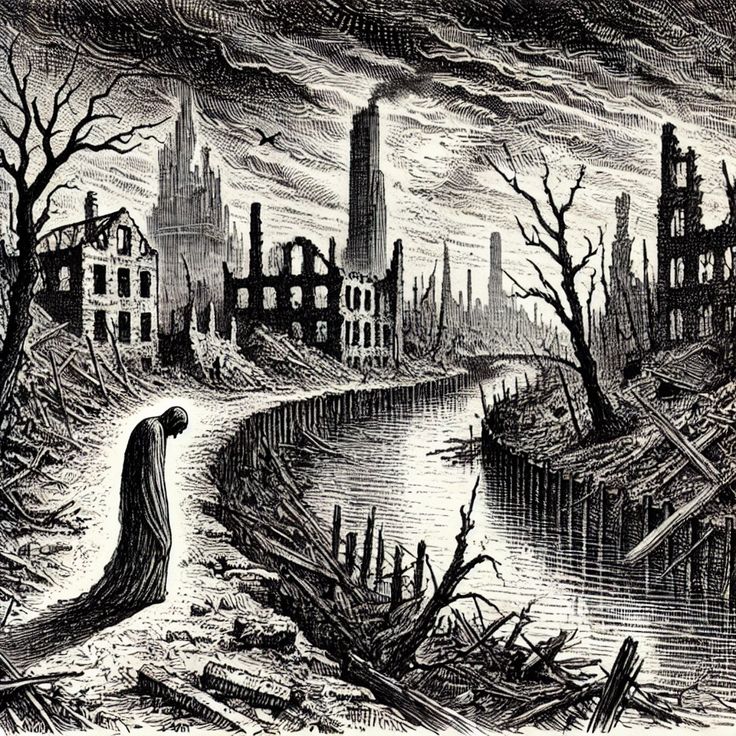
Eliot’s masterpiece The Waste Land is published in 1922 just three years after “Tradition and the Individual Talent“. The poem serves as the ultimate practical demonstration of his theoretical ideas. Rather than describing tradition abstractly, Eliot uses allusion, polyphony, structural juxtaposing, and mythic framing to explain how a modern poem can absorb European history to process post-WWI disillusionment. Eliot argued that a poet must possess a historical sense. It is an awareness of the past’s presence alongside the contemporary moment. In The Waste Land, centuries of literary tradition exist on a single plane. In Section I (The Burial of the Dead), the speaker encounters acquaintance in modern London named Stetson and asks: That corpse you planted last year in your garden, Has it begun to sprout? In the very next line, Eliot links this modern London scene directly to the Punic Wars between Rome and Carthage. You who were with me in the ships at Mylae! Modern industrial London and ancient Rome are collapsed into the same spiritual wasteland. The historical sense allows Eliot to treat human trauma across millennia as simultaneous rather than sequential. In his Impersonal Theory, Eliot argued that the poet’s mind acts as a catalytic medium. It’s fusing disparate feelings and literary artifacts into a new substance without injecting personal bias. Throughout the 433 lines of The Waste Land, Eliot incorporates over 35 distinct literary references, 6 foreign languages, and references to sacred texts across Eastern and Western traditions. Eliot quotes Edmund Spenser’s Renaissance poem Prothalamion: Sweet Thames, run softly, till I end my song. He juxtaposes Spenser’s idyllic, nymph-filled river with the industrial Thames of 1920s London, scattered with silk handkerchiefs, cardboard boxes, cigarette ends. As commuters cross London Bridge, Eliot echoes Dante’s Inferno (Canto III): I had not thought death had undone so many. The modern office workers are literally mapped onto the souls trapped in Hell’s vestibule. He isn’t relying on a traditional narrative arc or a subjective personal narrative. Eliot uses what he famously called the Mythic Method (a technique he also praised in James Joyce’s Ulysses)..Eliot grounds the entire poem in two scholarly texts on mythology and ritual. From Ritual to Romance (the Grail Legend and the sterile Fisher King). The Golden Bough (ancient fertility cults, dying-and-rising gods). The underlying archetype, a sterile land awaiting a spiritual rain to restore fertility, unifies the fragmented scenes of modern decay (mechanized sex, empty conversations, spiritual apathy). Therefore, the individual talent grounds chaos in timeless mythic order. In order to achieve the extinction of personality, Eliot abandons a central I persona. Instead, he speaks through a chorus of shifting voices. A Marie in Munich, a hyacinth girl, a cockney woman in a pub, and Saint Augustine. In his famous explanatory notes to line 218, Eliot exposes he unifying center of the poem: Tiresias, although a mere spectator and not indeed a ‘character’, is yet the most important personage in the poem, uniting all the rest… What Tiresias sees, in fact, is the substance of the poem. Tiresias: the blind, bisexual prophet of Greek myth (from Sophocles and Ovid). It has lived as both man and woman and seen the depths of classical tragedy. Eliot submerges his own biographical ego into an ancient, collective consciousness by adopting Tiresias as the central perspective Eliot’s concept of tradition is not narrowly provincial. His concept relates to the broader heritage of human thought. In the final section “What the Thunder Said”, the modern mind seeks a cure for its spiritual dryness not in the West, but in the Upanishads. The thunder speaks the Sanskrit syllables: Datta (give), Dayadhvam (sympathize) and Damyata (control). The poem concludes with the solemn formal chant: Shantih shantih shantih The Peace which passeth understanding. The final line: “These fragments I have shored against my ruins” summarizes Eliot’s entire philosophy of tradition. Modern civilization may be in ruins, but the individual poet reconstructs meaning by gathering and rearranging the enduring fragments of global tradition.
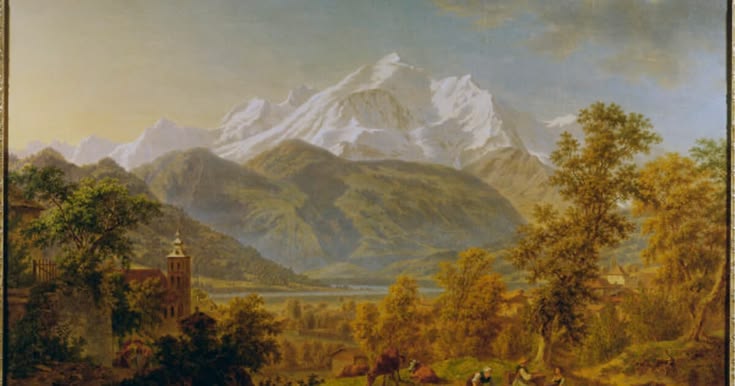
In Romantic-era poetry, Percy Bysshe Shelley’s “Mont Blanc: Lines Written in the Vale of Chamouni” (1816) stands as the ultimate meditation on the romantic sublime. He wrote it during the second generation of English Romanticism alongside Lord Byron and John Keat. Shelley used the terrifying scale of the Alpine peak to launch questions about perception, human consciousness and the unseen forces governing the cosmos. While early Romantics like William Wordsworth often found moral harmony and divine comfort in nature, Shelley’s philosophical temperament brought a different energy. For Shelley, nature was not a benevolent mother figure, but an indifferent, boundless, and overwhelming energy. Shelley engages directly with the concept of the Sublime. The sublime is an aesthetic experience where vastness or power induces a feeling of terrifying awe. It makes the human observer feel physically insignificant while mentally elevated. Rather than finding traditional religious comfort in the mountain’s height, Shelley explores his philosophical atheism. He views Mont Blanc as a symbol of Necessity or an impersonal power that governs existence. Throughout the five-part poem, Shelley constructs a series of striking visual and philosophical wonders. Shelley opens the poem by comparing human thought to a river flowing through a ravine. The “everlasting universe of things” rolls through human perception. Human consciousness is both passive (receiving impressions from the grand landscape) and active (shaping those impressions into meaning). The everlasting universe of things Flows through the mind, and rolls its rapid waves… Looking up at Mont Blanc, Shelley does not describe a peaceful picture-postcard landscape. Rather, he depicts a wild, chaotic realm of ice, rock, and storm. He envisions the mountain as a primordial arena where “the old Earthquake-daemon taught her young / Ruin”. The glaciers are slow-moving “frozen floods” that flatten forests and rocks with silent force. Shelley reflects on what lessons this silent mountain holds for humanity. The mountain possesses a mysterious tongue that teaches a lesson. To Shelley, Mont Blanc speaks an unspoken truth that can repeal large codes of fraud and woe (i.e., tyrannical dogmas, religious orthodoxies, and political oppression). Nature’s unyielding reality strips away human pretense. The poem reaches its dramatic climax by returning to the relationship between the peak and human thought. Shelley notes that the mountain remains still, snowy, and serene high above human affairs. He closes with a famous philosophical question: And what were thou, and earth, and stars, and sea, If to the human mind’s imaginings Silence and solitude were vacancy? The mountain’s grandeur is real, but its meaning exists because the human imagination is there to perceive it. Without the human mind to process wonder, the immense universe would merely be an empty void.
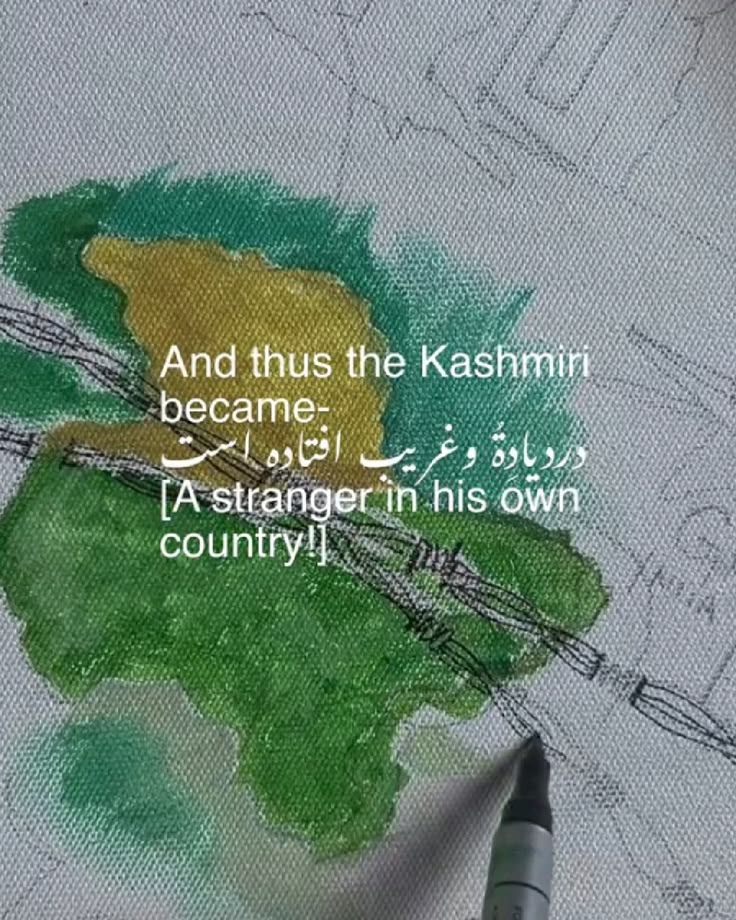
For centuries, Kashmir has occupied a singular space in the poetic imagination. It is a region defined by a paradox. On one hand, earthly paradise of pristine lakes, towering snow-capped peaks and crimson autumn chinars. On the opposite, centuries of political upheaval, exile and grief. In literature, Kashmir is beyond a geographic location. It is a metaphor for divine beauty, and a testament to human endurance. The poetic tradition of Kashmir took root in spiritual mysticism and poignant lyricism during the medieval period. In the 14th century, the mystic poet Lal Ded pioneered the Vakh: four-line spiritual verse couplets in the Kashmiri vernacular. Her poetry bridged Hinduism and Sufism. It’s essence was inner purity, liberation, and the transcendence of physical suffering. I searched for my Self until I grew weary, No one, I thought, could reach this hidden knowledge. I plunged into it, and there found the jar of nectar. Habba Khatoon was known as the Nightingale of Kashmir. The 16th-century peasant-turned-queen introduced the Lol: a short, melodic form of love lyric. Her husband, King Yousuf Shah Chak, was exiled by the Mughal Emperor Akbar. Then, her poetry transformed into immortal songs of separation and longing. The spring has come, but you have not returned; My heart bleeds like the red bloom of the pomegranate. During the Mughal and Persian era, Kashmir became synonymous with heavenly superiority. The iconic Persian couplet often attributed to Amir Khusrow or Mughal Emperor Jahangir summarized this adoration: Agar firdaus bar roo-e zameen ast, Hamin ast-o hamin ast-o hamin ast. (If there is a paradise on the face of the earth, it is this, it is this, it is this.) In the 20th century, Allama Iqbal, whose ancestors hailed from Kashmir, brought a nuanced perspective to this paradise. In works like Javid Nama, he celebrated Kashmir’s breath-taking landscape while lamenting the subjugation and suffering of its people. He reflected on the region’s immense dormant potential in Payam-e-Mashriq: Pani tere chashmon ka hai aab-e-hayat, Aur tere kohsar hain qasran-e-kibriya. The water of your natural springs is the elixir of life, And your mountain ranges are towering palaces of divine grandeur. Iqbal’s verse moved beyond aesthetic wonder, using poetry as a call to dignity, resilience, and self-realization for the Kashmiris. In modern poetry, Kashmir’s narrative shifted dramatically toward exile, memory, and war. No poet captured this transition more powerfully than Agha Shahid Ali (1949–2001). He wrote primarily in English while employing traditional Urdu ghazal forms. Ali gave voice to the tragedy of late 20th-century Kashmir. In his seminal collection, The Country Without a Post Office (1997), Kashmir becomes a landscape of ghost letters, curfews, and faded memories. I write on fallen leaves and floating petals, I write to you from a country without a post office. Ali’s verse knits together global literary influences from Mahmoud Darwish to James Merrill. His poetry creates a poignant eulogy for a lost homeland. Their memory is anything but green, an white-hot fire. They burn down Kashmir in my veins. From the ascetic reflections of Lal Ded to the haunting elegies of Agha Shahid Ali, poetry has served as Kashmir’s truest archive. A disputed land of changing maps, borders, and historical conflicts. It’s the poetry that preserves the living soul of the land. The verses anchor its beauty, its heartbreaks, and its unyielding hope. Kashmir remains forever intact. It is an eternal paradise written in ink, surviving through the memory and voices of its poets.
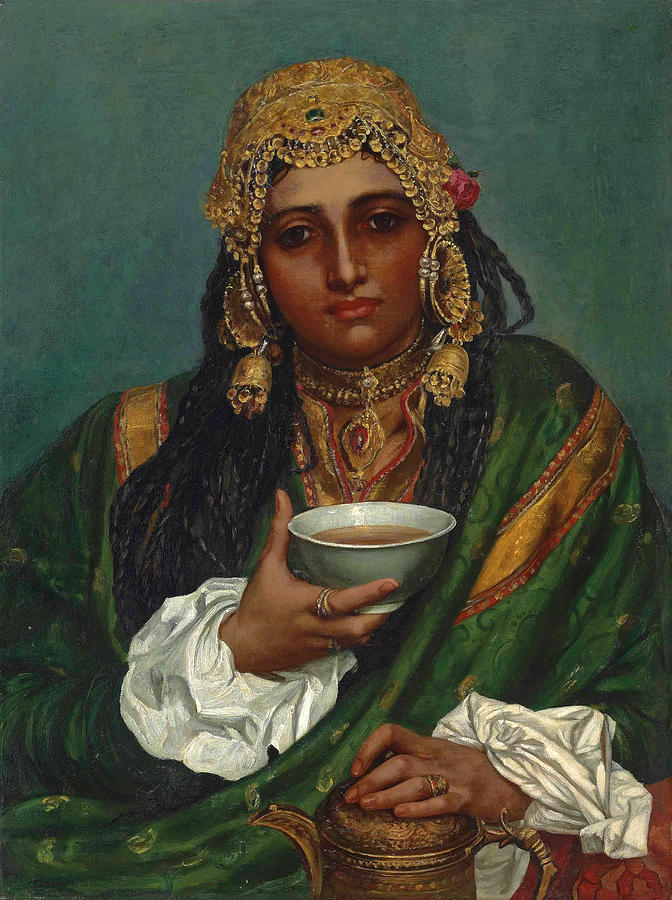
Habba Khatoon stands as Kashmir’s Nightingale and Zoon: the Moon of Kashmir. Living in the 16th century, she transformed personal grief, marital heartbreak, and political exile into the foundational canon of Kashmiri romantic poetry. She was born to a peasant family in Chandhara village (Pampore), famous for its saffron fields. Unlike most rural girls of her era, her father sent her to a local maktab where she learned Persian and Arabic, nurturing her early literary talent. She got married to a peasant named Aziz Rathar. Unappreciative of her poetic disposition and intelligence, her husband and mother-in-law ill-treated her. She began singing her inner pain while working in the saffron fields and fetching water. Legend holds that while hunting near Pampore, Prince (later Sultan) Yousuf Shah Chak heard her singing under a plane tree. He arranged her divorce and married her as he was mesmerized by her voice and beauty. This marriage elevated her to Queen of Kashmir as Habba Khatoon. Emperor Akbar summoned Sultan Yousuf Shah to Delhi under the pretense of talks, arrested him, and exiled him to Bihar. Kashmir fell to Mughal rule, breaking Habba Khatoon’s world. She shed her courtly garments, donned the robes of an ascetic, and wandered the valley singing lamentations for her lost king. In short, she refused royal comfort. She spent her final years near Gurez and Athwajan, where her tomb rests today. Before Habba Khatoon, Kashmiri verse was dominated by devotional mysticism: Vaakhs and Shrukhs. She revolutionized Koshur literature by introducing the Lol. Lol is a short, melic lyric of intense personal feeling, love, longing, and domestic intimacy. It’s particularly designed to be sung rather than recited. One of her most iconic pieces, sung to this day across the valley: Mey haa karchey kitt kitaye, Mey kar tayiaar lole-vun… Chey kyaah gazi chaani roopeye, Volo haa maalyene dhoopeye! I have prepared myself in every way, I have composed my heart into a song of longing… What does it cost your beauty to look upon me? Come, my love, let us gather wild mountain herbs together! In the following verses, she uses Kashmir’s fleeting spring as an allegory for human beauty and time: Gulaan goy rang, pholan goy bahar, Mey valai poshan hyund hahaar… Yuthus chhumyene chaani dhaar, Volo maayi chaane pyarey! The flowers have faded, spring has taken its leave, My youth is wilting like a blossom in the heat… My eyes remain fixed on the path where you disappeared Come back, my beloved, for the sake of love! After emperor Akbar exiled her husband to Bihar, she wrote this verse that captures geopolitical heartbreak reduced to raw human loss: Cchey saazey vaaye, bo saazey vaaye, Kati chhak chey, bo kati chhas… Diluk zaar vanay kith-kith bo, Jeel-e-Jhelum geyi aaba-haar! You play your tune far away, while I play mine in solitude, Where are you trapped, and where am I left to wander? How shall I tell you the agony of my heart? Even the waters of the Jhelum weep and overflow their banks for us. Her poetry is more than a story of personal transformation. It is the emotional arc of Kashmir itself. By introducing the Lol, she pulled Kashmiri verse down from abstract, detached mysticism into the intimate, beating heart of human experience. She gave language to the quiet endurance of ordinary women, the agony of sudden separation, and the unyielding beauty of a homeland caught in the tides of history.
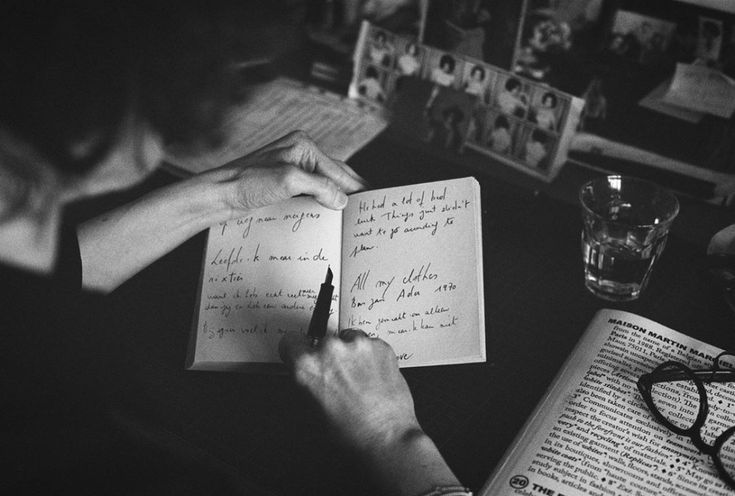
Recent archival developments in the literary world have reignited a timeless debate about the nature of creation. When the personal archives, diaries, and private notebooks of legendary literary figures are cataloged and opened to the public, readers gain an intimate glimpse into a process entirely free from external expectation. Raw Honesty In an era dominated by social media algorithms, content metrics, and immediate digital validation, the contemporary act of writing has become increasingly public. Writers are frequently urged to build personal brands, cultivate audiences before completing a single chapter, and measure the value of their thoughts by engagement metrics. Yet, a look across literary history suggests that forcing self-expression through the filter of public consumption often strips writing of its essential power: raw honesty. The Freedom of the Unseen Page When Franz Kafka famously instructed his close friend Max Brod to burn all his unpublished manuscripts and private journals upon his death, he was asserting a radical boundary. Though Brod ultimately defied those wishes giving the world masterpieces like The Trial and The Castle, Kafka’s mandate highlighted a fundamental truth about his relationship with the written word. For Kafka, writing was not a trade, a performance, or a search for acclaim. Rather, it was a urgent, internal necessity. He wrote to process his existential anxiety and negotiate his place in a confusing world. Revolutionary Contribution to Modern Poetry Similarly, Emily Dickinson spent her life in relative reclusion in Amherst, Massachusetts, quietly composing over 1,700 poems. She bound them carefully with thread and tucked them away in a wooden chest, largely indifferent to the literary establishment of her era. Freed from the pressure of publisher deadlines, critical reviews, or popular trends, Dickinson invented an entirely original poetic structure. Unconventional in its punctuation, bold in its metaphors, and uncompromising in its vision. she didn’t customise her voice to suit 19th-century publishing standards. That’s her revolutionary contribution to modern poetry is still there. Why Private Writing Rescues Creativity Writing for an audience activates self-censorship. When you write exclusively for yourself, the fear of judgment vanishes. This phenomenon allows uncomfortable truths and unrefined ideas to flow onto the page. Modern culture fixates on output. For instance, the finished book, the polished essay, the published post. Writing privately restores focus to the immediate sensation of thinking on paper. It is transforming the craft from a task into a sanctuary. A writer’s authentic voice is rarely found by attempting to match market trends. It emerges in the quiet margins of private journals, where syntax and thought patterns develop naturally without external influence. Reclaiming the Personal Journal in a Public World Reclaiming the joy of private writing does not require abandoning public work altogether. Instead, it requires establishing a sacred space where performance is forbidden. Writing for an audience of one remains one of the most effective ways to sharpen thought and restore mental clarity. The enduring fascination with published literary archives proves an intriguing paradox. The writing that captivates us most deeply is often the very writing that was never meant for our eyes. We unlock the true alchemy of the written word by letting go of the need for an audience. A private conversation between the self and the page.