thailand begin construction

Thailand to Begin Construction of Border Fences with Cambodia Next Month

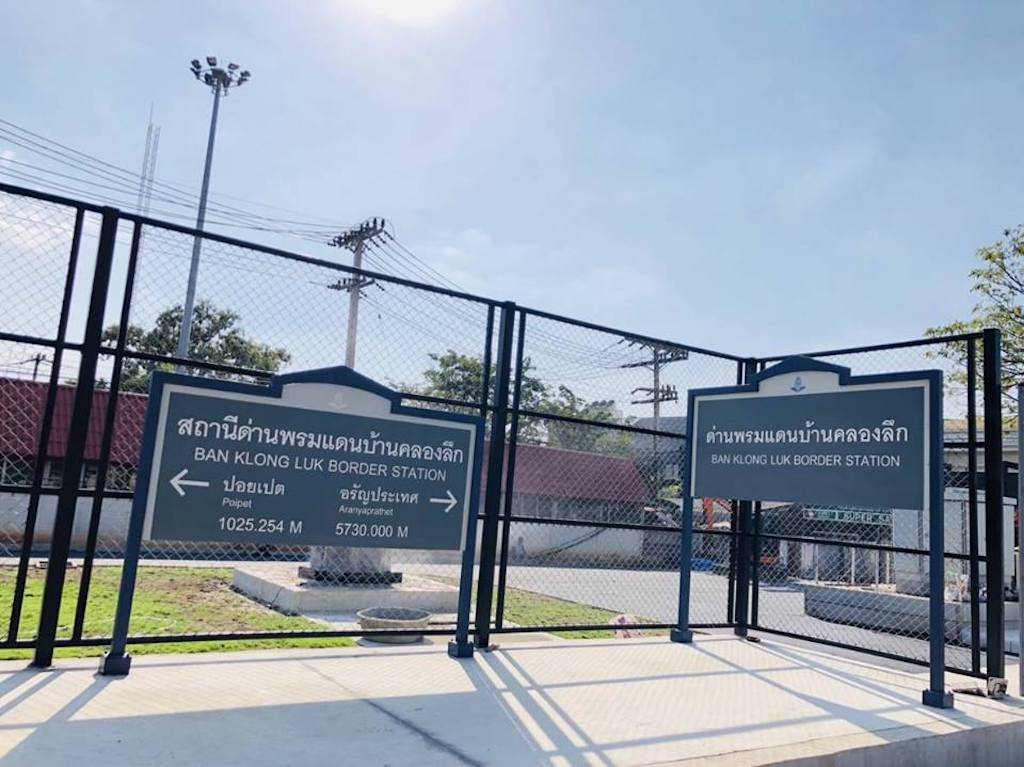
BANGKOK — Thailand will commence construction of border fences along a part of its frontier with Cambodia next month as part of enhanced security measures following deadly clashes between the two nations last year amid persistent tensions, military officials announced.

Thai Military Unveils Design for New Border Fence with Cambodia

The first barrier will cover a 1.3-kilometre stretch in Chanthaburi province, according to the spokesman for the Royal Thai Armed Forces Headquarters. This initial section represents a small fraction of the nearly 800-kilometre border shared between the two Southeast Asian neighbours.

Major General Vithai, the armed forces spokesman, emphasised that the fencing project is not related to any territorial dispute and has received Cambodia’s full approval. “The construction of this border fence is not just about building a physical wall, but also about providing peace of mind to the people living along the border,” Maj Gen Vithai stated.

The construction is expected to take approximately 45 days to complete, with the designated area already cleared of landmines and a paved road constructed on the Thai side of the border to facilitate the building process. The project represents a concrete step toward addressing security concerns that have simmered along the boundary line.

Looking ahead, military officials plan to enhance the initial barrier with permanent walls and electronic fencing equipped with advanced sensors and closed-circuit television cameras to enable 24-hour surveillance of the sensitive border area. These technological upgrades aim to provide comprehensive monitoring capabilities and rapid response to any potential incidents.

Royal Patronage and Public Support

Details of the fence project were first released late last year following the first of two border clashes that underscored the need for improved security measures. In October, the Thai military presented its blueprint to Her Royal Highness Princess Chulabhorn, who offered to support the initiative through her foundation.

The princess’s Hataitip Fund reported in late October that it had received more than 200 million baht in public donations for the border fence effort, demonstrating significant grassroots support for enhanced security measures. In December, the princess provided the Thai military with 121 million baht to fund the project’s initial phase, accelerating the timeline for construction.

Historical Context

The border between Thailand and Cambodia has been marked by periodic tensions and occasional armed clashes, most notably surrounding the area near the Preah Vihear temple, a UNESCO World Heritage site that has been a flashpoint for conflict. The 11th-century Hindu temple has been a source of dispute for decades, with the International Court of Justice ruling in 1962 that it belonged to Cambodia, though access from Thailand remained contentious.

More recent clashes in 2024 reignited concerns about border security and the safety of residents living in proximity to the frontier. The upcoming fence construction represents a tangible response to those concerns, providing physical infrastructure intended to prevent future incursions and reduce the potential for armed conflict.

Implementation Timeline

With construction set to begin next month, military engineers and construction teams are preparing to mobilise to the Chanthaburi site. The initial 1.3-kilometre section will serve as a pilot project, with successful implementation potentially leading to expansion along other vulnerable portions of the border.

Authorities have emphasised that the project proceeds with full transparency and coordination with Cambodian officials to ensure mutual understanding and cooperation. The fence is intended as a security measure rather than a statement of territorial claims, with both nations expected to benefit from reduced tensions and improved border management.

Thai Supreme Commander Backs Border Fence Construction Amid Tensions with Cambodia

The project represents a significant investment in long-term stability for a region that has experienced periodic violence, offering hope to border communities that have lived for generations with the uncertainty of potential conflict. As construction begins next month, officials will monitor progress closely while continuing diplomatic engagement with Cambodian counterparts to ensure the project achieves its intended purpose of enhancing security for all.

-Thailand News (TN)

Similar Posts

  • | |

    Report details Trump’s covert aircraft switc…

    President Donald Trump quietly switched planes while departing a NATO summit in Turkey last month as part of an elaborate security maneuver designed to counter a possible Iranian threat, according to a US media report. The report said Trump boarded Air Force One in full public view before being discreetly transferred to a separate military aircraft with the help of a catering truck used to shield the movement from onlookers. Journalists and some White House staff traveling with the delegation reportedly had no idea at the time that Trump had already been moved off the plane. Officials said security teams had identified a credible Iranian threat involving a possible missile strike against the aircraft. During the Ankara summit, Trump had described Iran as the country’s top target. According to the report, Trump had traveled to Turkey aboard a newer Boeing 747-8 previously donated by Qatar, but chose to depart on the older Air Force One instead, saying at the time it was “for old time’s sake.” Footage released on July 9 showed Trump boarding the presidential aircraft at Ankara airport before being secretly transferred to a smaller C-32A military jet, a modified Boeing 757 typically used to transport the vice president. Defense Secretary Pete Hegseth reportedly boarded the C-32A through a separate exterior entrance as part of the effort to keep the flight’s appearance routine. Journalists and staff who boarded Air Force One were told to lower their window shades during the departure. While in the air, Trump spoke with reporters on board and acknowledged concerns about threats from Iran, though he made no mention of the earlier switch between aircraft. Explaining why passengers had been asked to keep their windows lowered during the flight from Turkey, Trump said the flight carried added risk “because of the sleazebags we have to deal with.” A previous report had already raised questions about security risks tied to the Qatari donated jet, noting that the Secret Service had urged Trump to change planes during his return from the NATO summit. The United States has spent months upgrading the $400 million Boeing 747-8 to bring it up to presidential standards, while older Air Force One aircraft carry laser based countermeasures designed to disrupt the guidance systems of incoming missiles.

  • | | |

    Iran says US military weaker as Hormuz crisis deep…

    TEHRAN: Iran has intensified its rhetoric against the United States as attacks on commercial shipping and stalled peace efforts deepen uncertainty over the future of the war, with Tehran warning that the strategically vital Strait of Hormuz will remain closed unless Washington accepts its conditions. Mohammad Reza Naqdi, an adviser to the commander of Iran’s Islamic Revolutionary Guard Corps, said in an interview with PBS that the US military had proved “weaker than what we perceived” during the five-month conflict. Naqdi said Iran had gained valuable battlefield experience during the war and claimed Tehran would continue to emerge victorious. “The longer this war lasts, the more experience we gain,” he said, arguing that Iranian forces had learned how to confront the US military through direct experience. His comments came as maritime traffic through the Strait of Hormuz dropped sharply. Shipping data showed only eight vessels were tracked through the waterway on Tuesday, below a 10-day average of about 12 and the lowest daily figure since August 5. Before the conflict, the strait typically handled around 130 to 140 vessels a day. The slowdown has heightened fears over global energy supplies because Hormuz is a crucial route for oil and liquefied natural gas shipments. The International Maritime Organization has previously warned of serious risks to vessels and seafarers operating in the area. Shipping attacks raise fresh alarm Tensions also spread to other maritime chokepoints. Four crew members were reportedly killed in a suspected Houthi attack on a cargo vessel in the Bab el-Mandeb Strait, while two Yemeni rescuers were also killed, according to reports cited in the source material. The US military separately said an MH-60 helicopter fired two Hellfire missiles at a Panama-flagged cargo ship after the vessel allegedly ignored warnings linked to a blockade of Iranian ports. Maritime sources said the incident occurred off Pakistan in the Gulf of Oman. The attacks have added to concerns that the conflict could disrupt shipping routes connecting the Gulf with the Red Sea and beyond. Iran sets conditions for reopening Hormuz Iranian security official Mohsen Rezaei said the Strait of Hormuz would not reopen unless Washington agreed to Tehran’s demands, including the release of frozen Iranian assets and an end to conflicts across the region. Iran’s parliament is also preparing legislation that would restrict military and commercial vessels from countries Tehran considers hostile from entering the Gulf without Iranian authorisation. The proposed law is intended to strengthen Iran’s control over the strategically important waterway. US President Donald Trump, meanwhile, has continued to combine threats with suggestions that negotiations could eventually produce a settlement. He has claimed the United States has control over the Strait and warned Iran against further escalation. Oil markets have already reacted to the uncertainty. Brent crude rose 1.4 per cent to $88.91 a barrel, while US crude gained 1.3pc to $83.20. Pakistan seeks diplomatic space Amid the worsening security situation, Pakistan has continued diplomatic engagement with Tehran. Interior Minister Mohsin Naqvi visited Iran and met President Masoud Pezeshkian, with both sides stressing the importance of strengthening bilateral political, economic, trade, cultural and security ties. Pezeshkian praised Pakistan’s commitment to closer relations and said Tehran was ready to expand cooperation with Islamabad. Naqvi said his visit was aimed at following up on understandings reached between the two countries and accelerating implementation of existing agreements. With military rhetoric rising, shipping routes under pressure and negotiations at an apparent impasse, the Strait of Hormuz remains at the centre of a crisis whose consequences could extend far beyond the Middle East.

  • | |

    PML-N vows to deliver on Kashmir promises

    Pakistan Muslim League-Nawaz (PML-N) leader and Prime Minister’s Adviser on Political Affairs Rana Sanaullah said the time has come to fulfill the commitments made to the people of Azad Jammu and Kashmir (AJK), following the party’s strong performance in the region’s elections. Addressing an election rally in Haveli, Rana Sanaullah said the people of AJK had already expressed their confidence in PML-N through their vote. He stated that the party had secured 24 seats in the elections, surpassing the 23-seat threshold required to form the government in the Legislative Assembly. He described the electoral process as one of the fairest and most transparent in AJK’s history, saying voters had placed their trust in former prime minister Nawaz Sharif and the party’s development agenda. According to him, PML-N now carries the responsibility of honoring every promise made during the election campaign. Rana Sanaullah said AJK witnessed significant progress whenever PML-N governed both Pakistan and the region. He pledged that the party would launch a new phase of development if it formed the next government, adding that projects similar to those introduced in Punjab would also be implemented across AJK to improve infrastructure, public services, and economic opportunities. He said the party remains committed to accelerating development, strengthening institutions, and improving the quality of life for the people of Kashmir. Meanwhile, Federal Minister for Kashmir Affairs and Gilgit-Baltistan Amir Muqam also addressed the gathering and praised the resilience of residents living along the Line of Control (LoC). He said the people of the border areas have made extraordinary sacrifices in defending the country and deserve continued recognition and support. Amir Muqam said the PML-N leadership has consistently stood with the people of Kashmir and remains committed to safeguarding their interests while pursuing policies aimed at development, stability, and prosperity in the region.

  • EV Station PluZ Introduces Idle Fees To Combat Charger Congestion Across Thailand

    BANGKOK, Thailand — EV Station PluZ, the leading electric vehicle charging network in Thailand operated by PTT Oil and Retail Business Public Company Limited (OR), has announced the implementation of a new idle fee policy designed to penalize drivers who leave their vehicles plugged in after their charging sessions have concluded. The strategic measure aims […]

  • |

    Woman allegedly killed in Lodhran

    Police in Lodhran have registered a case against three people, including the woman’s husband, over the alleged murder of a woman. According to the victim’s father, his son-in-law allegedly killed his daughter after he refused to provide money for a motorcycle rickshaw. He accused the husband of attacking his daughter following a dispute over the money. The family reported the incident to police, who registered a case against the husband and two other suspects. Police have launched an investigation and are working to determine the circumstances surrounding the woman’s death. Police officials said they are making efforts to arrest all three suspects. Further action will follow once investigators establish the facts and gather evidence related to the alleged murder.

  • | | |

    PARCO, Cnergyico lead $1bn refinery exports

    Pakistan’s oil refining sector has achieved a major milestone. The country’s five major refineries exported petroleum products worth around $1.046 billion during the fiscal year 2025-26. This is the first time that the refinery sector has crossed the $1 billion export mark. The development has also strengthened the sector’s role as a source of foreign exchange for Pakistan. The achievement comes as the country continues to face pressure from a large trade deficit. Pakistan’s trade deficit is estimated at around $40 billion, increasing the importance of exports and import savings. The five major refineries made a significant contribution to the overall export earnings. Pakistan Arab Refinery Company (PARCO) recorded exports of around $277 million. Cnergyico Pakistan Limited exported petroleum products worth approximately $258 million. National Refinery Limited (NRL) recorded exports of around $238 million. Pakistan Refinery Limited (PRL) exported products worth approximately $200 million. Meanwhile, Attock Refinery Limited (ARL) exported petroleum products worth nearly $73 million. PARCO and Cnergyico remained the biggest contributors. Their combined exports reached approximately $535 million. This accounts for more than half of the total exports recorded by the five refineries. The development is particularly significant because the refining sector has traditionally been viewed mainly as a means of reducing Pakistan’s dependence on imported petroleum products. The latest figures show that the industry is increasingly contributing to both sides of the equation. It is helping reduce the import burden while also generating foreign exchange through exports. Cnergyico has also entered the global marine fuel market. The move could provide the company with new export opportunities and help expand Pakistan’s presence in the international fuel market. Industry modernization is expected to further improve the sector’s performance. Upgraded refinery facilities can increase production efficiency and enable companies to produce products that meet international market requirements. Further investment in refinery upgrades could therefore lead to higher exports in the coming years. It could also increase savings on petroleum imports. The latest performance highlights the growing importance of Pakistan’s refining industry. With continued modernization, better efficiency and access to international markets, the sector could become an increasingly important source of foreign exchange for the country. The development also comes at a critical time for Pakistan’s economy. Higher exports and lower import dependence are essential for reducing pressure on the country’s external account.

Leave a Reply

Your email address will not be published. Required fields are marked *