ukrainian drone strike
|

Ukrainian drone strike hits major Russian grain terminals in Black Sea port

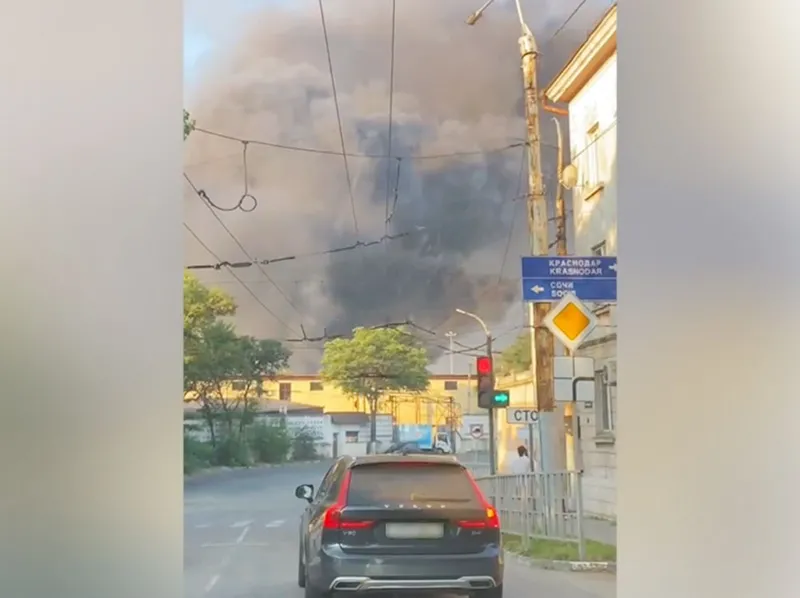
A massive Ukrainian drone and missile strike targeted the strategic Russian port of Novorossiysk overnight, damaging two major grain export terminals and striking key naval assets in the Black Sea.

Local officials reported that three people, including an eight-year-old child, were killed and 24 others were injured in the attack, which prompted an emergency declaration in the city. Ukrainian President Volodymyr Zelensky described the assault as a unique operation utilizing rockets, jet drones, and naval drones. Military officials in Kyiv later confirmed that four Russian warships, including two frigates, were damaged during the strike.

Novorossiysk became the primary hub for Russia’s Black Sea fleet after Ukrainian attacks previously forced Russian naval forces to relocate from Sevastopol in occupied Crimea. The damage to the export hubs led the Russian agriculture ministry to begin rerouting cargo flows toward alternative maritime routes in the Baltic and Caspian Seas.

The barrage comes amid intensified military exchanges in the region, following overnight Russian missile and glide bomb attacks that killed at least 11 civilians in the Ukrainian city of Zaporizhzhia.

Similar Posts

  • | |

    Chinese suspects seek bail in organ trade case

    Three Chinese nationals arrested in a case involving the alleged illegal sale of human organs have approached the Islamabad High Court (IHC) seeking post-arrest bail. The bail petitions were heard by IHC Justice Arbab Muhammad Tahir. The petitioners include Li Gang Chai, Ping Fei Guo and Wang Bao. The three suspects are facing a case registered by the Federal Investigation Agency’s (FIA) Corporate Crime Circle. A trial court had earlier rejected their bail applications. Appearing on behalf of the petitioners, Barrister Yawar Qureshi requested the court to transfer the cases to another bench. He told the court that petitions involving similar circumstances were already pending before a different bench. The lawyer requested that the three cases also be transferred to the bench of Justice Muhammad Azam Khan. Justice Arbab Muhammad Tahir observed that Justice Muhammad Azam Khan was currently on summer vacation and transferring the cases could delay the proceedings by around a month. However, following the lawyer’s insistence, the court accepted the request for consideration of the bench change. The court directed that the case file be sent to the Chief Justice’s Office for a decision regarding the transfer of the petitions.

  • | |

    Poor internet access threatens girls’ education …

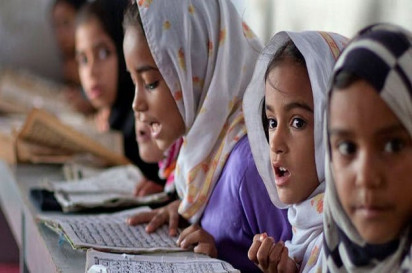
    PESHAWAR: Poor internet connectivity is creating serious problems for girls pursuing education in the merged districts of Khyber-Pakhtunkhwa. Students in remote areas often struggle to attend online classes. They also face difficulties downloading study material and submitting assignments. For 16-year-old Khadija Bibi from Kurram district, finding an internet signal has become part of her daily life. During the summer holidays, she often leaves her home and climbs a nearby hill. She carries her mobile phone with her. She stands on the rocky slope and searches for a stronger signal. She uses the limited connection to download lecture notes and complete academic tasks. She also tries to attend online classes from the hill. However, the weak network frequently disconnects. This causes her to miss lessons and submit assignments late. Khadija is a BS Computer Science student at Benazir Women University Peshawar. She said unreliable internet had become one of the biggest challenges in her education. She said students in remote areas were being left behind as education increasingly depended on digital technology. The problem is not limited to Kurram. Thousands of girls across the merged districts face similar difficulties. The region already has several major education challenges. Poverty remains a serious obstacle. Insecurity has also affected access to education. Many areas also lack proper schools and other educational facilities. The digital divide has added another challenge. Several schools in the merged districts either do not have computer laboratories or have laboratories without working computers. Some also lack internet connections. This prevents students from gaining basic computer skills. It also makes online education difficult. Official data highlights the wider education crisis in the region. Benazir Income Support Programme data shows that 66 per cent of children in North Waziristan are out of school. The rate stands at 63 per cent in Bajaur. It is 61 per cent in South Waziristan. Mohmand and Khyber each record an out-of-school rate of 51 per cent. Kurram and Orakzai each have a rate of 47 per cent. Girls face additional difficulties because of limited access to technology. The Khyber-Pakhtunkhwa Women Empowerment Policy 2026-2030 highlights the scale of the digital divide. According to the policy, only 11 per cent of women in the merged districts have access to the internet. The female literacy rate is also extremely low. It stands at only 17 per cent. Education and digital inclusion advocates say poor infrastructure is a major reason for the situation. Weak mobile networks make internet access unreliable. Many families also cannot afford smartphones or regular internet packages. Some girls have to borrow phones from family members. This makes it difficult for them to attend online classes regularly. Access to technology is also affected by social restrictions. In some communities, families remain concerned about girls using mobile phones and the internet. Concerns about online safety and social pressure often result in restrictions. Cultural norms can also limit girls’ access to digital technology. Experts say improving internet coverage alone will not solve the problem. Girls also need greater freedom to travel to schools, universities and training centres. Better transport facilities could help students reach educational institutions more easily. It could also improve access to vocational training and employment opportunities. Experts have urged the provincial government and telecommunications authorities to give greater attention to the merged districts. They say residents should receive reliable internet services similar to those available in settled areas. Improved digital infrastructure could transform educational opportunities for girls in remote communities. Reliable internet would allow students to attend online classes without travelling long distances. They could access digital libraries and educational resources. They could also develop computer skills and participate in online training programmes. For students like Khadija, internet access is more than a technological facility. It is directly linked to education and future opportunities. Without reliable connectivity, many talented girls may continue to struggle despite their willingness to study. Addressing the digital divide therefore requires investment in telecommunications infrastructure, schools, digital devices and affordable internet services. It also requires efforts to remove social barriers that prevent girls from using technology.

  • | | |

    PM Shehbaz calls Makkah pact a ‘historic milesto…

    Prime Minister Shehbaz Sharif has described the signing of the Makkah Agreement for Joint Defence between Pakistan, Saudi Arabia and Türkiye as a historic step towards strengthening peace, security and regional stability. In a post on X, the prime minister said he had the honour of signing the agreement alongside Saudi Crown Prince and Prime Minister Mohammed bin Salman and Turkish President Recep Tayyip Erdogan. Shehbaz said the agreement reflected the unity of the three brotherly countries, which share deep-rooted ties, common values and a commitment to protecting the interests of their peoples. He said the pact represented a shared vision to strengthen the foundations of peace, security and stability and expressed hope that it would become a lasting pillar of cooperation among the three nations. The prime minister prayed that the agreement, signed in the sacred precincts of Makkah, would serve as a strong shield for peace and promote greater cooperation and integration among the three countries for generations to come. He also expressed hope that the pact would contribute to economic prosperity and benefit not only the peoples of Pakistan, Saudi Arabia and Türkiye but the wider Muslim world. Shehbaz Sharif particularly praised Field Marshal Syed Asim Munir for his role in making the agreement possible. He described Asim Munir’s efforts, commitment and dedication as instrumental in turning the shared vision of the three countries into a concrete agreement. The prime minister said the agreement would further strengthen regional security and stability while advancing the common interests of the three partner nations.

  • | |

    Waqar Zaka clinches global trading crown, wins top…

    LAHORE: Pakistani technology entrepreneur and cryptocurrency advocate Waqar Zaka has won the international WEEX TradFi Masters trading championship, outperforming more than 3,000 participants from across the globe in a solo multi-asset trading competition. The tournament challenged traders to compete independently using their own capital, without team support or referral incentives. Participants traded across stocks, commodities, precious metals and cryptocurrencies on a single platform, with performance measured on profitability and risk management. Zaka emerged as the overall winner after posting a 74 per cent return in just 20 days. Starting with an account of $100,000, he generated a profit of $74,000, increasing his portfolio value to $174,000. His performance placed him ahead of competitors from South Korea and China, who finished second and third with returns of 57 per cent and 35 per cent, respectively. As the champion, Zaka was awarded a brand-new 2026 Mercedes-Benz G-Wagon during a ceremony in Dubai. The organisers also acknowledged his achievement on their official social media platforms. The victory marks a significant milestone, making Zaka the first Pakistani trader to secure the top position in an international competition of this scale focused on both traditional financial markets and digital assets. His latest success also represents a remarkable improvement from the previous edition, where he finished among the top ten competitors. Organisers described the championship as a rigorous test of strategy, adaptability and disciplined decision-making in rapidly changing financial markets. The event reflects the growing popularity of competitive trading, where participants are increasingly recognised for their analytical skills and market expertise. Zaka has been a prominent advocate of cryptocurrency and blockchain technology in Pakistan for several years. He has consistently promoted wider adoption of digital assets and has previously urged policymakers to consider establishing a national Bitcoin reserve as part of the country’s long-term financial strategy. His latest international triumph has once again drawn attention to Pakistan’s growing presence in global financial and digital trading markets, highlighting the increasing integration of traditional finance with the cryptocurrency sector.

  • | |

    Imran Khan, Arijit Singh back New Delhi student protests

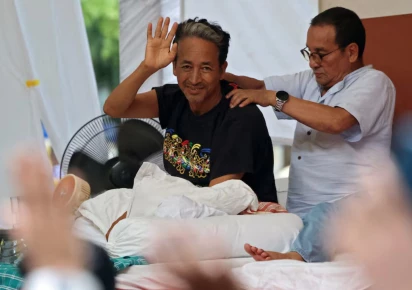
    High-profile Indian public figures, including actor Imran Khan, popular singer Arijit Singh, and veteran actress Zeenat Aman, have joined a growing list of celebrities voicing firm support for student-led protests in New Delhi, urging authorities to exercise restraint and engage in constructive dialogue with demonstrators. ​The nationwide movement—triggered by mounting student grievances regarding examination irregularities and proposed education reforms—escalated dramatically following reports of harsh police action against peaceful demonstrators gathering at New Delhi’s iconic Jantar Mantar protest site. ​Taking to social media platform X to condemn the reported use of force against young marchers, playback sensation Arijit Singh expressed intense outrage over the crackdowns: ​”Now you are beating the students. Aren’t you ashamed? Everything will be remembered.” ​Actor Imran Khan similarly broke his long-standing public silence to issue an impassioned, lengthier statement on Instagram. Recounting his distress over news footage showing authorities using teargas and physical force against student marchers, the actor questioned the government’s stance on youth empowerment and accountability: ​”Something broke in me today. Watching as police gassed and battered student protestors… How could I make sense of this? These students worked hard, only to be failed by the system. These people who asked to be heard, only to be met with silence. These citizens who stood up for what matters to them… beaten down and disowned by the establishment. Are these not the children of Mother India? If not them, for whom do we build, and whose future do we claim to protect? Those who demand ‘organization’ from students protesting education reform, but don’t apply such lofty standards of accountability to established authority; bootlickers, one and all. If we don’t listen to those who have the most at stake today, we forfeit all our tomorrows. There is no choice here but one: solidarity with the students.” ​Concurrently, veteran screen icon Zeenat Aman drew public attention to the deteriorating condition of environmental activist Sonam Wangchuk, whose ongoing hunger strike in the capital entered its third week alongside student gatherings. Aman warned against societal indifference, stressing that neglecting visionary reformers and student leaders threatens the moral fabric of the nation. ​Their statements build upon an expanding solidarity movement within the entertainment industry. Artists including Diljit Dosanjh, Sonakshi Sinha, Aditi Rao Hydari, Shabana Azmi, Pooja Bhatt, Huma Qureshi, and Ali Fazal have all publicly called for an immediate cessation of violence and transparent administrative reforms. As student assemblies persist across multiple locations in the capital, public calls continue to intensify for top political leadership to sit down with student representatives to peacefully address their concerns.

  • |

    Spirit controversy deepens over Deepika Padukone’s exit

    The controversy surrounding Spirit has gained fresh attention following new claims made by Pranay Reddy Vanga, brother of filmmaker Sandeep Reddy Vanga, regarding the discussions that took place before Deepika Padukone’s departure from the Prabhas-led film. Pranay recently addressed the matter in an interview, offering his version of the events surrounding Deepika’s exit. According to him, the disagreement was not limited to one issue but involved several factors, including remuneration, scheduling and other matters that emerged during discussions between the actress and the production team. He claimed that Sandeep Reddy Vanga had been in talks with Deepika for nearly 18 months and had strongly wanted her to be part of the project. However, after discussions between both sides, the filmmakers eventually decided to move forward with another actress. Pranay also alleged that remuneration became an important part of the negotiations. He claimed that Deepika had sought a percentage of the film’s profits as part of her deal, saying that she had demanded a 10 percent share in the movie’s profits. According to him, the financial implications of the request were considered before the team decided to explore other casting options. The filmmaker’s brother also spoke about the issue of confidentiality surrounding the project. He claimed that the story and character had been discussed with Deepika during the development stage but alleged that details from those private conversations later became public. His remarks added another dimension to the controversy, particularly because the film’s casting discussions had already attracted considerable attention. Another major point linked to Deepika’s departure was reportedly her working schedule. Earlier reports suggested that the actress had requested an eight-hour working shift for the project. The issue became part of the wider discussion surrounding working conditions and schedules in the Indian film industry. Deepika had previously defended her position on professional working hours, making it clear that she did not believe her expectations were unreasonable. Her comments further fueled conversations about the demands placed on actors and the importance of maintaining healthy working conditions during film productions. The controversy intensified further after Sandeep Reddy Vanga appeared to respond to the situation through a social media post. Although he did not directly name Deepika, the filmmaker expressed disappointment over confidential conversations between filmmakers and actors being made public. Sandeep emphasized the trust involved when he narrates a story to an actor and referred to an “unsaid NDA” between them. His comments were widely interpreted as a reference to the discussions surrounding Spirit and the information that had emerged following Deepika’s exit. Following her departure, Triptii Dimri was brought on board as the female lead opposite Prabhas. Her inclusion officially marked a major change in the film’s casting and shifted attention toward the new pairing. Directed by Sandeep Reddy Vanga, Spirit remains one of the most anticipated upcoming Indian films, with Prabhas in the lead role and Triptii Dimri as the female protagonist. The film is currently scheduled for release in March 2027. The developments surrounding Deepika’s exit have continued to generate discussion among cinema audiences, with the reported disagreements over remuneration, scheduling and confidentiality adding further interest to the project even before its release.

Leave a Reply

Your email address will not be published. Required fields are marked *