ukraine sign defense
| |

UK, Ukraine sign AI defense partnership linked to battlefield technology

LONDON, United Kingdom – Britain said on Monday, August 24, it had signed a partnership with Ukraine to jointly develop artificial intelligence tools for defense and security, giving British researchers access to a Ukrainian battlefield data platform used to train military AI systems.

Prime Minister Andy Burnham and President Volodymyr Zelenskyy signed the agreement in Kyiv, making Britain the first international partner to access Ukraine’s Avengers AI Labs, a government statement said.

Avengers Labs was built around an annotated dataset of 5 million battlefield images, Ukraine’s Defense Ministry said earlier in August, largely drawn from the military’s DELTA combat system — a domestically developed battlefield management and situational-awareness system.

The platform uses data collected from cameras and sensors across Ukraine’s battlefield, including information on tanks, artillery systems, drones and other military targets.

The Ukrainian ministry said AI models trained on the data were already being used in an automated target-detection system that analyses more than 100,000 drone video feeds each month and can identify about 70% of enemy targets in real time.

Under the deal, Britain and Ukraine will collaborate on pilot projects including technology that uses fiberoptic cables as AI-enabled sensors to help protect military facilities, and research into low-power AI chips for drones and autonomous systems.

The British government said the partnership would initially focus on defense and national security projects bringing together researchers, engineers, technology companies and military experts from both countries.

Burnham on Monday visited Ukraine for his first trip abroad since becoming prime minister, where he had talks with Zelenskyy and co-chaired a meeting of the “Coalition of the Willing.”

His office had earlier announced Britain would allow missile maker MBDA to release classified information on British-made components used in the SCALP long-range cruise missile to help establish assembly lines in Ukraine. – Rappler.com

Similar Posts

  • |

    Colombia requests US joint military operations against cartels under new president

    US Defense Secretary Pete Hegseth announced that the newly inaugurated government of Colombian President Abelardo de la Espriella has formally requested US collaboration in joint military operations within Colombia to combat drug trafficking organizations. Speaking in Panama City during a meeting of the Americas Counter-Cartel Coalition, Hegseth confirmed that Colombia will join the US-led “Shield of the Americas” regional counter-narcotics initiative as its 19th member nation. De la Espriella, a conservative leader sworn into office last week, has taken a hardline stance against armed groups, reversing the policy direction of his predecessor, Gustavo Petro. Hegseth also urged participating Latin American nations to reject the jurisdiction of the International Criminal Court (ICC). Addressing legal scrutiny surrounding recent US military strikes against suspected regional drug networks, Hegseth maintained that US counter-cartel actions fully comply with international humanitarian law.

  • | |

    Overnight missile barrage on Kyiv region kills 17,…

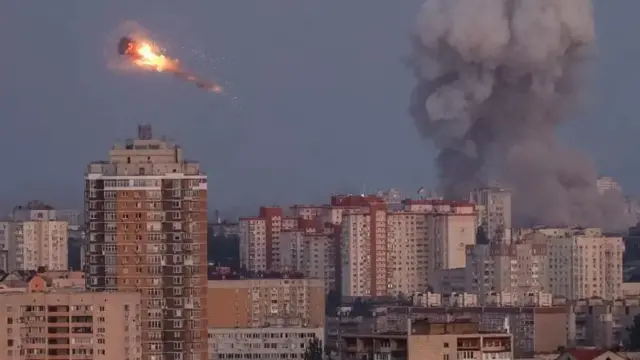
    Russia launched a large scale missile assault on Kyiv and the surrounding region on Wednesday, killing at least 17 people and leveling warehouses belonging to major retail chains, according to Ukrainian officials, as Kyiv’s dwindling stock of air defence interceptors leaves the capital increasingly exposed. Explosions tore through the region overnight, lighting up the sky above the Ukrainian capital, which has faced missile attacks roughly every three to four days in recent weeks as Moscow has ramped up its aerial campaign. President Volodymyr Zelenskiy said on Telegram that ballistic missile interceptors could have prevented the deaths recorded on Wednesday, calling on Ukraine’s international partners to replenish the country’s interceptor stocks. He said shipments of air defence missiles have arrived at only a third of the pace seen in 2025. Ukraine’s air force said its defences shot down close to 90 percent of the 115 drones Russia launched but failed to stop any of the 24 ballistic missiles or four Zircon cruise missiles fired during the same assault. Russia’s Defence Ministry said its forces struck seven logistics centres in Kyiv and the wider region, claiming the sites were used to store or move dual use goods and drone components. Ukraine has struggled for months with a shortage of interceptor missiles for its US supplied Patriot systems, currently the only weapon in its arsenal able to shoot down Russian ballistic missiles traveling at many times the speed of sound. Since the outbreak of the Iran war in February, Patriot interceptors originally intended for Ukraine have instead gone to the US military and its Gulf allies. Russia has used the opening to intensify ballistic strikes on Kyiv and other Ukrainian cities even as its ground advances have slowed markedly this year. Officials said the attack injured more than 40 people in addition to those killed. At a commuter rail station in the Kyiv suburb of Brovary, rescue workers found seven bodies scattered across the platform, with an eighth victim discovered nearby in nearby bushes. Volodymyr Bigun, head of the local administration in Brovary, said residents had missed their last train home when the strike hit, and confirmed eight deaths in the district so far. He said five logistics warehouses sustained damage there, including one belonging to food retailer Fozzy, and accused Russian forces of continuing to target civilian infrastructure. Both Russia and Ukraine have consistently denied targeting civilians throughout the war, which began with Russia’s full scale invasion in February 2022. Ukraine has continued striking back at Russian territory as part of its own campaign, hitting a logistics hub belonging to Russian online retailer Wildberries in the Tula region overnight, adding to more than a dozen similar facilities Kyiv has damaged in recent operations. Epicentr, Ukraine’s largest home improvement retail chain, said two major logistics facilities and a manufacturing plant were destroyed within minutes during Wednesday’s strikes, and that it was still working to determine the full extent of the damage. The company described the attack as a deliberate effort to undermine Ukrainian manufacturing, logistics, employment and the broader capacity to recover from the war. Food retailer Silpo said on social media that at least six of its employees died in the strikes and that two of its distribution centres caught fire. Iryna Chechotkina, co founder of the online retailer Rozetka, said she watched overnight as three ballistic missiles destroyed years of work, describing the experience as devastating while stressing that her company remains operational. Ukraine’s economy has shown considerable resilience over more than four years of war, sustained in part by billions of dollars in financial support from Western governments, but business losses have mounted this year as strikes on commercial infrastructure have grown more frequent. The Kyiv regional military administration said Wednesday’s attack damaged 13 warehouses, a manufacturing facility, four private homes and dozens of vehicles. Prime Minister Sergii Koretskyi, who took office last month following a government reshuffle, said officials would hold an emergency meeting with business leaders to determine how to keep logistics and trade operations running smoothly. Kyiv has renewed its request for additional PAC-3 interceptors, the newest generation of Patriot missile. Separately, the United States is continuing talks that would allow Ukraine to manufacture Patriot missiles domestically, according to four people familiar with the discussions, even after President Donald Trump expressed skepticism about such an arrangement.

  • |

    Taliban mark five years in power

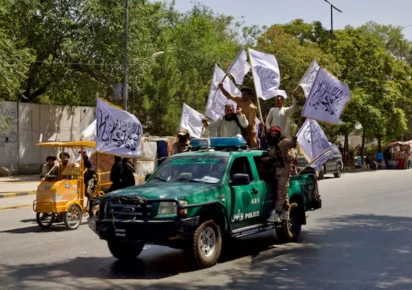
    KABUL: The Taliban on Saturday marked five years since returning to power in Afghanistan, staging a military parade in Kabul and presenting their rule as a period of stability despite mounting humanitarian and human rights concerns. Armoured Taliban vehicles moved past the former US embassy in Kabul as officials raised flags and banners for what the government called “victory day” over Western domination. Interior Minister Sirajuddin Haqqani said in a video message that the Taliban’s return resulted from “morale, courage” and “divine assistance.” He also acknowledged that the country still faces unresolved issues and problems. The United Nations and international aid organisations have warned that Afghanistan continues to struggle with severe humanitarian and natural crises. They have also criticised the Taliban’s restrictions on women and girls. According to UNESCO, the Taliban have kept around 2.5 million girls and women out of secondary schools and universities since 2021 and imposed restrictions on their movement. UN Women reported this week that half of Afghan women now leave their homes only once or twice a month. The Taliban maintain that they uphold women’s rights under Islamic Sharia law. The group has also faced security challenges, including a series of attacks on officials in northeastern Afghanistan. Islamic State claimed responsibility for the killing of the Taliban’s information director in Badakhshan in late July. The mayor of the provincial capital was also killed in an attack on Thursday, according to local media. The Taliban seized power in August 2021 as US and allied forces withdrew from Afghanistan. The group initially promised a more moderate form of government than during its previous rule in the late 1990s and early 2000s. However, rights groups say its policies have instead imposed sweeping restrictions on women and girls. Five years after returning to power, the Taliban government still lacks broad international recognition. Russia remains the only country to have formally recognised it. Meanwhile, relations with Pakistan have deteriorated. Islamabad accuses Kabul of allowing Pakistani militants to operate from Afghan territory, adding further pressure to an already strained relationship.

  • | |

    Cargo Ship sinks off India, rescue mission underwa…

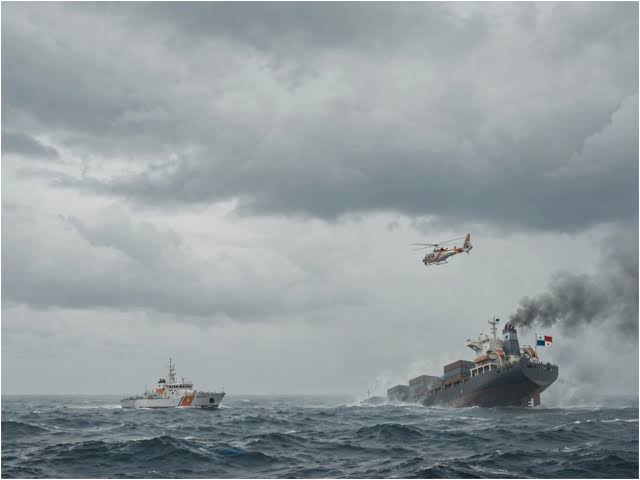
    NEW DELHI: Indian authorities have launched a major search-and-rescue operation after a Panama-flagged cargo vessel sank off the eastern coast, leaving 24 crew members missing, according to the Indian Coast Guard. The maritime agency lost contact with the vessel, Ocean Winner, on Saturday while it was sailing toward Singapore carrying iron ore. The ship had departed from Paradip port in eastern India on Thursday and reportedly sank around 240 nautical miles from the port. The crew comprised 20 Chinese nationals, three Myanmar nationals and one Bangladeshi, Indian Coast Guard spokesperson Commandant Amit Uniyal said. Two Coast Guard vessels were dispatched from Sri Vijaya Puram, formerly known as Port Blair, to assist in the search operation. Rescue teams have so far saved two crew members found aboard life rafts, while efforts continue to locate the remaining seafarers. Authorities have yet to determine what caused the vessel to sink. Captain Alekha Charan Sahoo, deputy conservator of the Paradip Port Authority, expressed hope that more crew members would be found safely as the rescue operation continues. The incident has prompted an urgent maritime response, with Indian authorities coordinating efforts to locate the missing sailors in the waters off the country’s eastern coast.

  • |

    Gen Z-led protest movement poses major challenge to Modi government in India

      India is witnessing a significant wave of youth-led protests that has intensified political pressure on Prime Minister Narendra Modi’s government during its third consecutive term. The growing movement, driven largely by Generation Z, has emerged as one of the most prominent public challenges to the current administration, reflecting widespread dissatisfaction over unemployment, alleged examination scandals, and concerns about the country’s education system. The protest movement has gained momentum through a platform known as the “Cockroach Janata Party,” which has become a symbolic outlet for the frustration of young Indians. Although the name began as a satirical expression on social media, it has rapidly evolved into a broader movement that has attracted thousands of participants across different regions. The campaign highlights the growing anger among students and young professionals who believe that the government has failed to address issues affecting their future. The movement received further attention following the hunger strike and reported forced removal of activist Sonam Wangchuk, developments that protesters say strengthened public support for the demonstrations. Many participants argue that such actions have reinforced concerns about the government’s response to peaceful dissent and have encouraged more young people to join the protests. According to a reports , the demonstrations are being viewed as the biggest wave of public pressure faced by Prime Minister Modi since the beginning of his third term in office. The protests are rooted in several long-standing grievances, including examination irregularities, rising unemployment among educated youth, and declining confidence in India’s education system. Protesters believe that these issues have seriously affected career opportunities and undermined trust in public institutions Tensions escalated during a protest march toward the Indian Parliament, where clashes broke out between demonstrators and security personnel. Authorities attempted to stop protesters from reaching the Parliament complex, leading to confrontations that further heightened the political atmosphere Official figures released after the clashes stated that at least 180 people were injured, including 118 police officers and 60 protesters. The remaining injured individuals were not immediately identified. In response to the unrest, authorities temporarily suspended mobile internet services in several sensitive areas of the city, citing security concerns. Such restrictions have drawn criticism from rights groups and civil society organizations, which argue that internet shutdowns limit communication and restrict access to information during times of public unrest. One of the protesters’ primary demands is the resignation of the country’s Education Minister. Demonstrators argue that accountability is necessary in light of the alleged examination controversies and the broader crisis facing the education sector. The movement continues to be led primarily by young people, and many observers describe it as the collective voice of Generation Z demanding greater transparency, fairness, and employment opportunities. According to Deutsche Welle (DW), the campaign initially began as a satirical online movement but quickly transformed into an organized nationwide protest. What started as digital criticism on social media has evolved into large-scale street demonstrations that reflect deep frustration among young Indians over limited job prospects, educational challenges, and uncertainty about their future. As the movement continues to expand, political analysts believe it represents a critical test for the Modi government. Whether the administration chooses dialogue, policy reforms, or stronger security measures in response to the protests could significantly influence public opinion and shape India’s political landscape in the months ahead.

  • | |

    Israeli strikes persist in Lebanon, white phosphor…

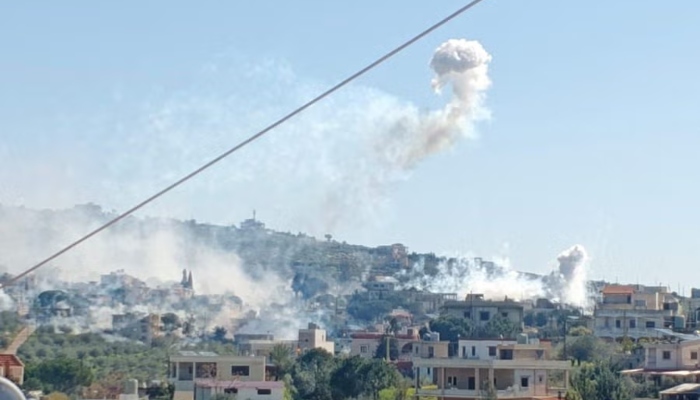
    Israeli forces have continued carrying out strikes in southern Lebanon despite an existing ceasefire, with Arab media reports alleging that white phosphorus was used in the mountainous area of Ali al-Tahir. The latest reported attacks come a day after an Israeli strike killed 11 people, including seven members of the same family, according to local and foreign media reports. The continued bombardment has intensified concerns over the fragile ceasefire and the humanitarian situation in southern Lebanon. Iran has strongly condemned the Israeli military action, describing the ongoing attacks as aggression against Lebanon. Tensions escalated earlier this year after Hezbollah launched an attack on Israel, two days after the United States and Israel began military action against Iran. Israel subsequently expanded its operations in Lebanon and took control of parts of the country’s southern region. Israeli authorities have said their forces will remain in the area to prevent further attacks against communities in northern Israel. Foreign news reports say that at least 4,300 people have been killed in Lebanon since March 2 amid the continuing escalation.

Leave a Reply

Your email address will not be published. Required fields are marked *