passport officials overstay

46 Passport officials overstay foreign postings, audit flags irregular payments

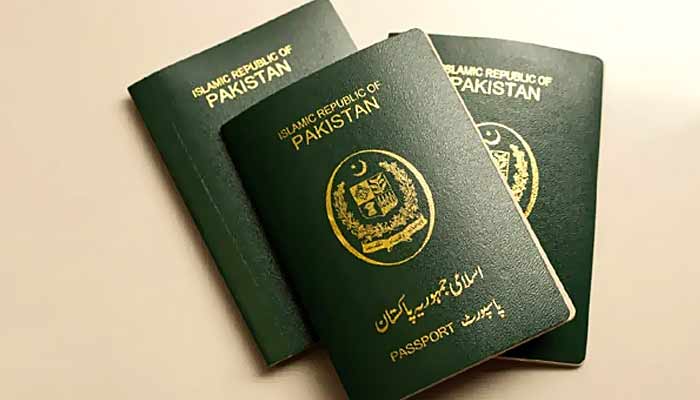
Islamabad: Forty six officers and employees of the Directorate General Immigration and Passports remained posted at Pakistani missions abroad after completing their allowed three year tenure, while audit declared salaries, allowances and other benefits paid after the expiry of their foreign assignments irregular and unauthorized.

The issue triggered strong criticism in the Public Accounts Committee, where members demanded to know why the officials were not called back and who was responsible for failing to implement the approved policy.

The existing foreign posting policy clearly states that Immigration and Passport staff sent to Pakistani missions abroad are to serve for 36 months. The policy states this period is not extendable. It further states that the posting automatically ends after 36 months and pay should stop at that point.

The replacement process is also required to begin at least one year before an official completes the foreign posting so that passport operations at missions are not disturbed. Audit found that the department did not follow these requirements. The department provided a list of 46 officials and employees who had served at different Pakistani missions abroad.

The locations included Dubai, Jeddah, Riyadh, Abu Dhabi, Muscat, Doha, Kuwait, Milan, London, Barcelona, Paris, Rome, Frankfurt, Manchester, Toronto, New York, Madrid, Hong Kong, Washington, Sydney, Chicago, Berlin, Bangkok, Copenhagen, Los Angeles, Stockholm, Tokyo, Tehran and Vancouver.

Audit said the officials had not returned to Pakistan after completion of their foreign assignments. It also said management had failed to arrange their replacements in time. According to the audit, payments of salaries, allowances and other benefits after the completion of the approved foreign posting period were irregular and unauthorized.

Audit said failure to follow the foreign posting policy violated instructions issued by the Establishment Division and the Ministry of Interior. It recommended an investigation to determine responsibility and called for regularizing the period during which the officials remained abroad beyond their approved tenure.

The matter became more controversial during discussion before the Public Accounts Committee. Members repeatedly asked Immigration and Passport officials why the employees were not recalled after completing three years. Officials said the staff had originally been posted under the existing policy.

They explained that proposals for a new policy had later been sent to the Ministry of Interior but had not been finalized. Committee members were not satisfied with that explanation. They argued that until a new policy was formally approved, the existing policy remained binding.

Members said government departments could not stop following an approved policy simply because another policy was being prepared. One member said the rules had to be followed as written and officials could not decide for themselves whether an approved policy was right or wrong.

The member said a clear violation had taken place because the officials remained abroad after their tenure without proper regularization or recall. Questions were also raised over who had the authority to approve any extension when the existing policy itself described the foreign posting period as non extendable.

Members said the matter may have required approval from a higher forum if the government wanted to keep the officials abroad after their original tenure expired. The committee also questioned why the department had not started the replacement process before the officials completed their assignments.

Officials acknowledged during the discussion that requests concerning replacements and policy changes were sent after some tenures had already ended. Members pointed out that the department already knew from the start that every foreign posting would end after three years.

They therefore questioned why replacement planning was not started earlier. Criticism sharpened when members discussed the scale of the issue. The committee was told that the matter involved 46 officials, not one or two exceptional cases.

One member remarked that it appeared as if a large part of the department was enjoying extended stays outside the country. Another member said the handling of the policy showed a troubling level of carelessness and called for the case to be treated as an example so that other departments do not ignore government rules in the same way.

A further concern involved the money spent on officials after their approved tenure had ended. One committee member argued that if the officials were staying abroad in violation of the policy, questions would also arise about the legality of expenditure on their salaries, allowances and other benefits during that extra period.

The member said the matter could not be solved simply by deciding whether to call the officials back or allow them to remain abroad. The period already spent beyond the approved tenure would also have to be regularized through the proper authority. The Interior Secretary acknowledged that the policy had not been implemented and suggested taking the matter to the appropriate forum for regularization.

He also said approval from the Finance Division could be needed for expenditure incurred during the additional period. Officials suggested that the Cabinet or another competent authority might have to decide how to treat the overstayed period.

Management had earlier told the Departmental Accounts Committee that the foreign posting policy was under review. It also said the Interior Minister had approved the continuation of currently posted officials until their replacements joined.

According to management, official passports could also be renewed under the relevant rules to avoid legal complications in host countries. Audit did not accept this explanation as a settlement of the objection.

It maintained that the existing approved policy had been violated because the revised policy had not yet been finalized and the continued foreign postings were unauthorized under the policy that remained in force. Committee members also stressed that responsibility could not simply disappear once the overstay was regularized.

They said officials who failed to implement the approved foreign posting policy should also be identified. The committee called for accountability from those who allowed the situation to continue. Members also demanded a transparent selection process for replacement officials.

They said employees whose tenure had already expired should be brought back according to the existing rules while new staff should be selected and posted through the proper procedure. The ministry was given two weeks to provide written answers.

The committee sought details on who was responsible for the violation, how replacement officials would be selected, how the extra posting periods could be regularized and which authority would approve the expenditure already incurred. The audit objection therefore remains unresolved.

Similar Posts

  • | |

    SBP asked to fix banking gaps after complaints of …

    Islamabad: The State Bank of Pakistan (SBP) came under pressure in the Senate after lawmakers raised concerns over complaints from customers, including Politically Exposed Persons (PEPs), who faced difficulties with commercial banks and alleged delays in resolving their issues. The Senate Standing Committee on Finance and Revenue questioned why banks and the SBP failed to establish clear and uniform procedures despite earlier directions to create dedicated officers and better complaint handling systems. During the meeting, Member National Assembly Muhammad Moin Amir Pirzada informed the committee that his bank account was closed in April 2026 and despite repeated communication with the concerned bank and the State Bank of Pakistan, he did not receive a satisfactory response. He told the committee that such situations show the need for a proper yearly data update system and clear banking procedures so customers do not face unnecessary difficulties. The committee learned that no common Standard Operating Procedures had been developed across the banking sector despite previous recommendations. Governor State Bank acknowledged the concerns and informed the committee that rules for dealing with Politically Exposed Persons already exist. He said the problem occurred at the branch level and assured lawmakers that steps would be taken to improve implementation. The Governor informed the committee that a backup officer had already been assigned and a dedicated focal person would also be appointed to handle such matters. The committee stressed that all banks must follow the same procedures so customers receive equal treatment and complaints are resolved quickly. Federal Minister for Finance also supported the need for standard procedures and said proper systems are necessary for better customer service and effective complaint resolution. The committee meeting, chaired by Senator Saleem Mandviwalla, also discussed wider banking issues including customer charges, investment policies and employee matters. Members raised concerns about banking service charges, especially SMS alerts and card transactions. The State Bank Governor informed the committee that SMS alerts are optional, allowing customers to choose whether to use the service. He said banks are also introducing alternative options such as mobile application and email alerts for customers. The Governor clarified that Visa card transactions conducted within Pakistan would not be charged in US dollars. He also informed the committee that banks are currently covering around Rs80 billion annually under the Pakistan Remittance Initiative. Committee members appreciated the reforms under the initiative, stating these steps have helped save significant costs. The committee also discussed complaints regarding dress code instructions in some banks. Senator Dr. Zarqa Suharwardy Taimur raised concerns that some female employees were allegedly pressured to wear abayas. Senator Sherry Rehman stated that no employee should be forced to adopt a specific type of clothing. The State Bank Governor informed the committee that previous recommendations had already been communicated to banks. He clarified that the committee had only recommended a modest dress code and had not ordered banks to impose any particular clothing. The committee directed all banks to submit their human resource dress code policies and instructed SBP to issue updated guidelines to ensure employees are not placed under unnecessary pressure. The committee also reviewed concerns related to investment protection policies. Senator Manzoor Ahmed suggested that incentives provided to the Reko Diq project should also be considered for other investment projects in Pakistan. Finance Ministry officials informed the committee that only one project currently meets the existing criteria and the government’s financial position does not allow similar benefits for all projects. The Finance Minister assured the committee that future proposals would be reviewed according to available resources.

  • | |

    BLA kidnaps courier company’s mini-truck with tw…

    Security sources said that armed members of the proscribed Balochistan Liberation Army (BLA) abducted a courier company’s mini-truck along with two people from the Khad Koocha area on July 24. According to the sources, the kidnappers demanded Rs25 million in ransom from the courier company on July 26 and threatened to kill the hostages if the money was not paid. Security sources said the proscribed BLA is involved not only in terrorism but also in criminal activities, including bank robberies, vehicle theft, extortion and kidnapping for ransom. They said such incidents indicate the involvement of criminal networks in activities that can also serve as a source of financing for terrorism. The sources said ordinary Baloch citizens, local traders and peace in Balochistan suffer the most from such activities. They added that such actions are also aimed at creating fear and insecurity among residents and disrupting the peaceful environment in the region.

  • | | |

    Pakistan strikes landmark offshore gas find

    KARACHI: Pakistan has recorded a significant breakthrough in hydrocarbon exploration with the discovery of high-quality gas from a new petroleum play. Pakistan Petroleum Limited (PPL) announced that its exploration well, Dolphin, drilled in the company-operated Sarani Block in Sujawal district, Sindh, has yielded a major gas discovery. The find marks the first hydrocarbon discovery from the Jurassic-age Chiltan Formation in the Lower Indus Basin, according to PPL. The company said the discovery confirms the existence of an active petroleum system and could open fresh opportunities for exploration in the onshore swamp region and its potentially prospective shallow marine extensions.

  • | |

    Rain continues across Sindh

    Intermittent rain continues to affect several parts of Sindh, including Hyderabad, Mirpurkhas, Tharparkar, Badin, Thatta and Sujawal, bringing relief from the heat but also causing water accumulation in low-lying areas. In Mirpurkhas, persistent rainfall has flooded several low-lying localities, with rainwater entering homes and creating difficulties for residents. The situation has also disrupted routine activities in affected areas. Power supply has also been affected in parts of Mirpurkhas following a fault in a high-tension transmission line. Residents have faced electricity outages as efforts continue to address the technical issue and restore the supply. Weather conditions remain unsettled across southern and southeastern Sindh, where rain-bearing clouds continue to dominate the region. Further rainfall is possible in several areas as the weather system remains active. In Karachi, light rain and drizzle were reported in several parts of the city, including Quaidabad, Malir and Gulistan-e-Johar. The showers brought cooler conditions to some localities, while residents in other areas continued to experience cloudy and humid weather. Authorities and local administrations are monitoring the situation, particularly in low-lying areas where continued rainfall could lead to further water accumulation and temporary disruption to daily life.

  • | |

    NDMA issues flood alert until July 24

    Islamabad: Pakistan’s National Disaster Management Authority (NDMA) has issued a nationwide flood and landslide alert until July 24, warning residents of possible flash floods, rising river levels, and dangerous weather conditions caused by ongoing monsoon rains. According to the NDMA spokesperson, heavy rainfall is expected to increase water flow in rivers, seasonal streams, and mountain channels across several parts of the country. Authorities have advised the public to avoid unnecessary travel, stay away from flood-prone areas, and follow official safety instructions. The alert highlights a significant risk of flash flooding in Gilgit-Baltistan, particularly in the districts of Hunza, Shigar, and Ghanche. Rivers including Shimshal, Hunza, Chapursan, Shigar, Shyok, and Hushe are expected to experience a rapid rise in water levels. In Azad Jammu and Kashmir (AJK), water levels may increase in the Jhelum, Neelum, Poonch, and Mahl rivers, as well as Betar Nullah, Bhimber Nullah, Kanshi River, and several tributaries connected to the Jhelum and Poonch river systems. The NDMA has also warned of possible flash floods in Khyber Pakhtunkhwa, affecting the Chitral, Kabul, Swat, and Panjkora rivers. Local streams in Khyber, Kurram, Orakzai, Kohat, Bannu, Karak, Hangu, Lakki Marwat, North and South Waziristan, Bajaur, Mohmand, Mansehra, Buner, and Swabi are also at risk due to intense monsoon rainfall. In Punjab, flood threats remain high in the hill torrents of Dera Ghazi Khan, the Soan River, and the Potohar region. Similar conditions are expected in northeastern Balochistan. The NDMA further warned of high-level flooding in the Chenab River near Marala and the upper reaches of the Jhelum River near Mangla. Several seasonal streams, including Dora, Dota, Dwara, Bhimber, Halsey, Aik, Plakhoo, Bein, Basantar, Dek, and Sukhi Nullah, may also experience sudden increases in water flow. The authority also noted that any release of water from India’s Thein, Pong, and Bhakra dams could significantly increase water levels in the Ravi and Sutlej rivers, potentially worsening flood conditions downstream. The NDMA has urged citizens to stay informed through official weather updates, avoid crossing flooded roads or streams, and cooperate with local authorities to ensure public safety during the ongoing monsoon season. This version is optimized for search engines while remaining clear, informat

  • | |

    Attack on one is an attack on all’: Ishaq Dar ex…

    Pakistan’s Deputy Prime Minister and Foreign Minister Ishaq Dar has highlighted the key provisions of the landmark Makkah Joint Defence Agreement, stressing that any external armed attack on Pakistan, Saudi Arabia or Türkiye will be considered an attack on all three countries. Dar said the agreement, signed in Makkah Mukarramah on 7 August 2026, reflects the depth of the brotherly relations between the three nations and is the culmination of years of consultations and strategic coordination. Under the accord, an external armed attack against any one of the three countries will be considered an attack against all, consistent with the right of individual and collective self-defence under Article 51 of the UN Charter. The Foreign Minister stressed that the agreement is purely defensive in nature and is not directed against any country. He said the accord is intended to strengthen cooperation in confronting shared peace and security challenges while promoting regional stability and prosperity. Dar also clarified that the Makkah Accord does not replace or abrogate any existing bilateral or multilateral agreements between Pakistan, Saudi Arabia and Türkiye, or their agreements with other countries and international organisations. Another significant provision, he said, is that the agreement remains open to other countries in the region willing to uphold its fundamental principles and resolve differences through mutual respect, cooperation and peaceful means. Dar reaffirmed that the agreement is consistent with Pakistan’s foreign policy and said Islamabad would continue working with all brotherly countries towards lasting peace and stability. He reiterated Pakistan’s commitment to the peaceful resolution of conflicts and to building a more secure, stable and prosperous future for the peoples of the region.

Leave a Reply

Your email address will not be published. Required fields are marked *