chinas rising global

China’s Rising Global Image: Insights from the 2026  Pew Research Survey

By Absara Kashaf 

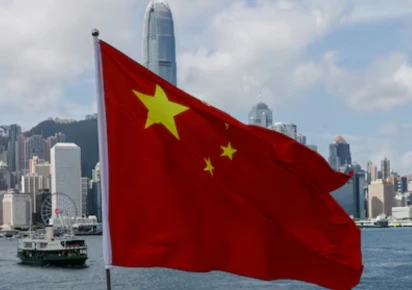
The international political landscape is undergoing a noticeable transformation. For many years, the United States was widely regarded as the world’s most influential political, economic and military power. However, recent global opinion surveys indicate that public perceptions are changing. Countries around the world are increasingly evaluating global powers not only by their military strength but also by their economic cooperation, development assistance, investment and diplomatic engagement. The Latest Pew Research Center Global Attitudes Survey (july 2026) provides important evidence of this shift. Based on interviews with 42,151 adults across 36 countries, the survey reveals that China now enjoys a more favorable public image than the United States in a majority of the countries included in the study. The findings highlights China’s growing international influence, particularly among developing and middle-income nations. One of the survey’s most significant findings is that China is viewed more favorably than the United States in 30 of the 36 countries surveyed. This represents a remarkable change in global public opinion. While the United States continues to enjoy strong support in few countries, particularly among some of its long-standing allies, China has gained considerable public approval across Asia, Latin America, and parts of Europe. This shift suggests that many people now associate China with economic opportunity, infrastructure development, and long-term cooperation rather than viewing it solely as an emerging global competitor.

China’s growing popularity is closely linked to its expanding economic partnerships around the world. Over the past two decades, China has invested billions in infrastructure projects, transportation networks, energy development, industrial zones, digital connectivity and trade agreements. Through initiatives such as Belt and Road Initiative (BRI), China has financed highways, railways, ports, power plants, and industrial zones in numerous developing countries. These projects have contributes to economic growth, employment opportunities and improved connectivity in many regions. As a result, public opinion in several countries increasingly reflects appreciation for China’s contribution to national development.

The survey further shows that 69 percent of respondents in 17 middle-income countries consider China to be somewhat or very reliable international partner. This finding is particularly important because middle-income countries often seek foreign investment, technology and infrastructure financing to support their development goals. Many respondents appear to believe that China provides practical economic cooperation without imposing extensive political conditions. Whether this perception fully reflects reality remains a subject of academic debate, but it undoubtedly contributes to China’s improving international image.

Another major finding concerns confidence in Chinese President Xi Jinping. According to the survey, global confidence in Xi Jinping has improved compared to previous years. Across many countries,  larger number of respondents believe that President Xi will make responsible decisions regarding international affairs. Although confidence levels differ from one country to another, the overall trend indicates that China’s leadership is gaining broader international acceptance. Leadership perceptions often influence how countries are viewed internationally, making this finding particularly significant for understanding China’s growing diplomatic influence.

Among all the countries surveyed, Pakistan recorded one of the strongest levels of support for China. According to the survey, 90 percent of Pakistanis expressed a favorable opinion of China, while 83 percent reported confidence in President Xi Jinping to do the right things regarding world affairs. These are among the highest approval ratings recorded anywhere in the survey. In contrast, only 15 percent of Pakistanis expressed a favorable opinion of the United States, while confidence in former U.S President Donald Trump stood at just 12 percent. These figures demonstrate the exceptionally positive image that China currently enjoys among the Pakistani public.

Several factors help explain Pakistan’s strong support for China. The two countries have maintained close diplomatic and strategic relations for decades, often referring to their friendship as an “all-weather strategic partnership”. In recent years, this relationship has expanded significantly through the China-Pakistan Economic Corridor (CPEC), one of the flagship projects under the Belt and Road Initiative. CPEC includes investments in roads, highways, ports, power generations, industrial zones, and communication infrastructure. Many Pakistanis associate these projects with improved economic opportunities, enhanced connectivity, and future development. Consequently, China’s image among Pakistani Public has become increasingly positive

Beyond Pakistan, the survey also suggests that China is increasingly perceived as a contributor to global peace and stability. One notable example is South Africa, where the proportion of respondents who believe China contributes positively to global peace increased from 47 percent in 2023 to 64 percent in 2026. Similar improvements were observed in several other developing countries. China’s active participation in diplomatic negotiations, peacemaking missions, humanitarian assistance, and international development initiatives appears to have strengthened its reputation among many respondents.

The survey also explores whether people believe China considers the interest of developing countries when making international policy decisions. Among respondents in the 17 middle-income countries, 57 percent stated that China takes the interests of countries like their own into account. This finding reflects an important aspect of China’s international strategy. Many developing countries view China as a partner that understands their development challenges and provides economic cooperation through investment, trade, infrastructure financing, and technology transfer. Whether this perception continues in the future will depend on China’s policies and long-tern outcomes of its international projects

Despite China’s growing popularity, the survey also demonstrates the global opinion remains diverse. Several countries continue to express stronger support for the United States than for the China. These include Japan, India, Philippines, Israel, Poland, and South Korea. Historical alliances, security partnerships, regional geopolitical concerns, and territorial disputes continue to influence public opinions across countries.

The findings also illustrated the growing importance if soft power illustrates the growing importance of soft power in international relations. Soft power refers to a country’s ability to influence others through attraction, cooperation, culture, diplomacy and economic engagement rather than military force. China’s engagement in infrastructure, trade, education techonolgy in many developing countries have strengthened its soft power in many developing countries. Public opinion surveys such as Pew’s demonstrate that these efforts are increasingly shaping how ordinary citizens perceive China’s global role.

The finding offer important insights for policy makers and researchers into the changing nature of global influence. Public opinion shapes diplomacy, trade, and international partnerships, making China’s improving image significant for future global governance and international cooperation.


Similar Posts

  • Riyadh, Ankara, Islamabad — and the Empty Chair in New Delhi

    By Rai Saad Ali Three folders, two green and one crimson, changed hands beneath a portrait of Saudi King Salman at Al-Safa Palace in Mecca, the ink still fresh on the pages inside. Erdoğan, Crown Prince Muhammad bin Salman and Shehbaz Sharif held them up for the cameras at the Makkah Al-Mukarramah Summit for Joint Defence on August 7th, 2026. It was a carefully staged image, and the message was unmistakable: three of the Muslim world’s most consequential states, standing together in Islam’s holiest city, making clear that the region’s old security order is no longer one whose terms they are content merely to accept. The Mecca Joint Defence Agreement, signed that day by Türkiye, Saudi Arabia and Pakistan, commits each signatory to treat an armed attack against any one of them as an attack against all three. It builds on the bilateral Strategic Mutual Defence Agreement signed by Islamabad and Riyadh in 2025, but Türkiye’s accession changes the strategic arithmetic considerably. What was previously a two-country understanding, rooted in a decades-old relationship, is now a trilateral framework spanning the eastern Mediterranean, the Gulf and South Asia — and it was signed without so much as a courtesy call to New Delhi. That mutual-defence clause is exactly what has prompted comparisons to NATO’s Article 5, which treats an attack on one member as an attack on all. But the parallel does not hold up well under scrutiny. It would be misleading to oversell this agreement as a “Muslim NATO.” It is not one. The pact names no adversary, creates no joint military command, and does not specify what response would be required if a signatory were attacked. It establishes a framework for defence cooperation and coordination rather than a NATO-style alliance with clearly defined operational commitments, and Saudi officials have stressed that the agreement is defensive in character and not directed against any particular country. That distinction matters. NATO is more than seventy years old and has evolved into a mature institutional and military alliance over generations; the Mecca Agreement is still in its infancy. Over time, it could develop stronger institutions and deeper coordination that bring it closer in character to NATO. For now, that remains a possibility rather than an established trajectory. Yet dismissing the agreement as merely aspirational would be its own mistake. Frameworks matter, especially when they are signed in Mecca rather than in a foreign ministry conference room. The choice of venue was not incidental. It was a statement about whose summit this is, and who now gets to convene the Muslim world’s most powerful states at a moment when Washington’s security guarantees have begun to look less than absolute. That erosion of confidence in Washington is precisely what makes the partnership’s internal logic so coherent: each partner brings something the others lack, and that complementarity is the pact’s real substance. Turkey supplies NATO’s second-largest standing military and an increasingly self-sufficient defence-industrial base — the same industry that in 2023 sold Saudi Arabia drones in what Ankara called its largest defence export deal to date, and which has for years supplied Pakistan with warships and trainer aircraft. Pakistan brings the only nuclear deterrent in the Muslim world and a military establishment with decades of experience training and advising Gulf forces. Saudi Arabia brings the capital and the religious legitimacy that only the custodian of the two holy mosques can offer. What ties these three complementary roles together is a detail that deserves precision rather than a slogan. Pakistan’s air force flies the JF-17 Thunder, co-produced with China. Türkiye, a NATO member since 1952, has simultaneously built its own defence-industrial relationship with Beijing even as it remains formally inside the Western alliance system. That a NATO state, a nuclear-armed South Asian state with deep Chinese defence ties, and the Gulf’s foremost oil power can now sit inside the same mutual-defence framework shows how far the unipolar security order of the post-Cold War decades has already eroded. This is not a Pakistani ambition imposed on the region. It is a regional response to a security vacuum that Washington’s and Tel Aviv’s conduct in West Asia has itself created. The timing explains the substance. The pact was signed more than five months into the US-Israel war on Iran, a conflict that has sent missile and drone fire onto Gulf infrastructure and shipping, with Houthi strikes compounding the sense among Gulf capitals that American deterrence no longer covers them the way it once did. Riyadh, battered directly by this spillover, has drawn the obvious conclusion: a security guarantee is only as good as the willingness of the guarantor to honour it, and Washington’s recent conduct has not inspired confidence on that score. Ankara and Islamabad, for their part, were the two capitals best positioned to answer that call — one with hard power, the other with a record of reliability as a security partner to the Kingdom stretching back decades, long before this agreement made it formal. While Ankara and Islamabad were positioning themselves as reliable partners, New Delhi’s response has been telling in its caution. The Ministry of External Affairs said only that India is “closely following” developments and will “study the implications” — the language of a capital reacting to events it did not shape, rather than one setting the regional agenda. That contrast is the real story here, more than any single clause in the agreement’s text. That caution is not merely rhetorical. The substantive concern for India is not abstract: analysts have already flagged the live question of how a mutual-defence clause would be read if India were to conduct cross-border counter-terror operations against targets inside Pakistan, as it has in the past — even as others note such operations sit in a different legal category from state-on-state aggression. That ambiguity is itself a diplomatic cost to India: a Gulf partner it has spent two decades cultivating on energy, trade and counter-terrorism cooperation has now formally elevated Pakistan to treaty-partner status, indifferent to how

  • |

    Longing for other lives

    You might be driving along a quiet stretch of highway at dusk and notice a remote house set against the rolling hills. Its porch light glowing softly against the fading twilight. It happens in an instant. Your mind steps inside for a fleeting moment. You picture yourself standing in that kitchen, tending to a warm pot of soup, learning the rhythms of the local wildlife and forget the press of unread emails. Or perhaps it happens when you see a cozy cottage on a distant coast. Might be an apartment perched above a neighborhood bookstore. Or a tiny rural train station where only a few passengers wait. For a few seconds, you inhabit that alternate life. But as quickly as the thought arrives, reality hits back. For many people, these sudden bursts of romantic daydreaming trigger a wave of subtle unease. It is common to treat such longings like a mild psychological symptom. It is an indicator that something in our current existence is lacking. We wonder if we made wrong turns along the path, selected the wrong career or settled into the wrong neighborhood. We assume that fantasizing about a simpler life means we are secretly desperate to escape our reality. However, a change in perspective shows that this assumption may misinterpret how the human mind functions. Understanding Fernweh: The Opposite of Homesickness The key to re-evaluating this feeling lies in a concept from the German language: fernweh. The word is translated literally as far-pain. Fernweh describes a deep, aching yearning for distant places. It stands as the emotional mirror image of homesickness. While homesickness pulls us back toward the familiar, fernweh pushes toward the unfamiliar. Fernweh is neither a practical plan for relocation nor a symptom of dissatisfaction. It exists in a unique middle ground. It is more than a mere desire to escape reality, yet far less than a literal plan to manifest a new lifestyle. When we treat longing as a sign of discontent, we force ourselves into an unnecessary dilemma. We start assuming we must either change our lives or suppress our thoughts entirely. In reality, these brief mental excursions rarely end with us packing a suitcase. Instead, they leave us returning to our daily routine feeling subtly expanded, as if our capacity for wonder has been stretched open. The Multiple Selves and the Purpose of Imagination The alternative selves we envision during daydreams: the quiet caretaker of a lighthouse, the keeper of a village shop, or the isolated writer in a secluded cabin, are not criticism on our present choices. They do not demand that we abandon our jobs or start over from scratch. Rather, these imagined lives serve as quiet reminders that human beings are inherently complex. The person managing household budgets, answering routine emails and searching for misplaced keys is not the entirety of who we are or who we could be. Human imagination evolved specifically to explore endless possibilities without requiring us to physically execute every scenario. Seeing Distant Peace as Invitation Instead of seeing distant places as destinations we failed to reach, we can view them as invitations. They invite us to reconnect with our curiosity, our creativity and our capacity for reinvention. They reassure us that another way of seeing the world remains entirely possible, even within the routine of daily living.   Ultimately, longing for another life or a distant land does not mean you chose the wrong life. It simply demonstrates that your imagination remains curious and alive. As long as a distant porch light or a road over a hill can capture your wonder, you can take comfort in a profound truth. The truth is your internal life will always be far larger than the single outer life you happen to inhabit.

  • Scientists uncover clue behind Antarctica’s mysterious blood falls

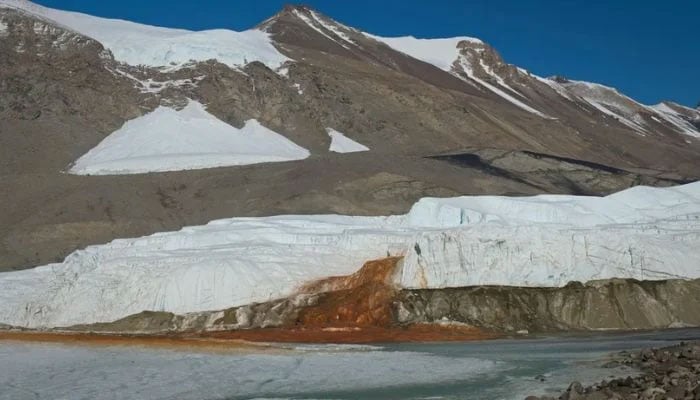
    Scientists have uncovered an important clue about the source of the mysterious red water flowing from Antarctica’s famous Blood Falls in Taylor Valley. The iron-rich and crimson-coloured saline water has fascinated researchers for decades. While its red color has long been attributed to the iron it contains, a new study offers fresh insight into where the water originated. According to research published in the journal Nature Geoscience, scientists have found molecular and genetic evidence indicating that the salty water flowing from Blood Falls has a marine origin. The findings strengthen the long-standing theory that the water was once part of an ancient sea. Researchers collected and analyzed 167 samples of water, sediment and air from Blood Falls and the surrounding area. The study found that samples from Blood Falls contained 9 percent eukaryotic genetic signatures associated with marine environments compared with only about 1 percent in samples collected from nearby locations. According to the researchers, the new evidence strongly supports the theory that the water at Blood Falls originates from a reservoir of ancient seawater that became trapped beneath the Taylor Glacier millions of years ago. The researchers said the presence of strong marine genetic signatures in the red saline water provides evidence that an ancient marine ecosystem once existed there before becoming isolated beneath Antarctica’s thick ice sheet. Scientists believe this discovery could improve our understanding of how microscopic organisms survive in some of the harshest environments on Earth. The findings may also help researchers investigate the possibility of life beneath the icy surfaces of other worlds, including Europa, one of Jupiter’s moons and Enceladus, a moon of Saturn.

  • How Indian mughal art inspired Rembrandt’s forgotten miniatures

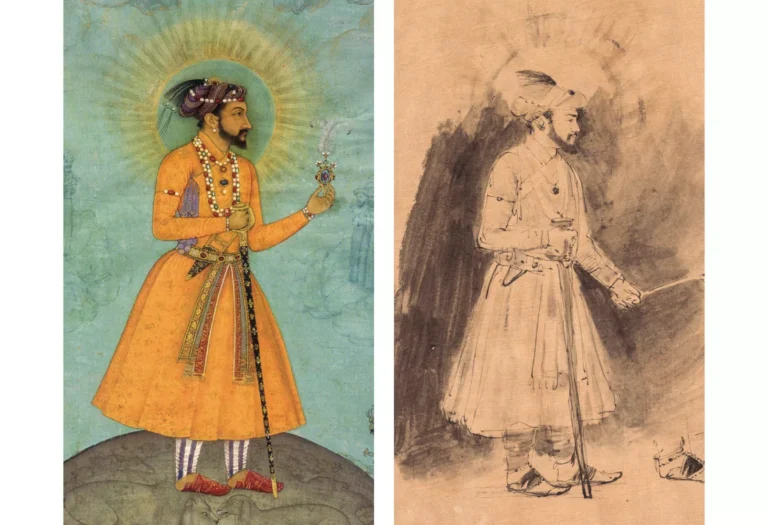
    Art lovers typically look upon dramatic chiaroscuro oil paintings, European portraiture, or biblical scenes while thinking about Rembrandt. Yet, buried within historical records and private collections lies a lesser-known chapter of the legendary master’s life. A profound fascination with South Asian art that inspired a unique series of fine Indian-style portraits. Rembrandt produced 25 delicate drawings depicting Mughal emperors and religious scholars Between 1656 and 1661. These works reveal an artist expanding his creativity through an encounter with Islamic and Indian aesthetic traditions half a world away. During the 17th century, Amsterdam was a booming node in global trade. The locality was largely powered by the Dutch East India Company (VOC). Ships arriving at Dutch ports carried exotic commodities such as raw silk, muslin, spices, and fine craftsmanship straight from Surat in western India. There were original miniature paintings and sketches produced by imperial Mughal ateliers among these goods. Rembrandt was an avid collector who frequently spent beyond his means on art and curiosities from abroad. He acquired dozens of foreign items. An official inventory compiled by municipal authorities during his 18th-century bankruptcy proceedings recorded a slim book labeled item No. 203. The scholars believe that the book contained Mughal miniatures that captured his imagination. Rembrandt’s Mughal series represented a striking departure from his thick, layered oil technique. Instead of broad canvas strokes, he utilized fine brown ink, delicate wash, and subtle chalk accents to carefully document the distinctive attire and posture of Mughal royalty. He repeatedly portrayed Emperor Shah Jahan, builder of the Taj Mahal. That too alongside his sons and predecessor Emperor Jahangir. Every sketch rendered precise details of traditional jamas (stitched coats), elaborate patkas (sashes), turbans, and sarpech ornamentations with remarkable fidelity. Rembrandt drew exclusively on imported Torinoko paper. This paper was seemingly a smooth Japanese paper sourced through East Asian maritime networks. “Copying was his way of learning about another style of making portraits… show[ing] him working in a much more refined manner than he is known for.”   Stephanie Schrader, Curator of Drawings at the J. Paul Getty Museum. Rembrandt didn’t copy images mechanically. He adapted Mughal compositions into his own artistic vision. For instance, in his study titled Four Mullahs Seated Under a Tree, he altered the background and surroundings from the original Indian painting. This exercise directly influenced his later print Abraham Entertaining the Angels (1656). In the latter, he repurposed the relaxed seating arrangements of Mughal scholars to illustrate an important biblical motif. The subtle colors and calm poses he absorbed during this phase continued to echo in his late-career oil paintings. Rembrandt never set foot outside Europe. However, his engagement with Mughal miniatures demonstrates a spirit of cross-cultural curiosity during the Dutch Golden Age. He studied them diligently as an intellectual equal. He discovered new ways to capture human expression and line.  

  • Why Popcorn became the ultimate movie snack

    Watching TV or a movie often feels incomplete without something to eat. For many people popcorn is the first snack that comes to mind. But have you ever wondered how popcorn became the most popular food at movie theaters? The tradition began in the 19th century when popcorn became a popular snack at fairs festivals and circuses. In those days it was usually sold from small street carts. A major turning point came in 1885 when the first popcorn machine was invented. This made it easier to prepare fresh popcorn quickly and sell it to large crowds. By 1907, the United States had nearly 5,000 movie theaters with tickets costing just 5 cents. Popcorn sellers started placing their carts outside theaters where moviegoers could easily buy popcorn before going inside. As movie theaters became more modern and luxurious many owners banned outside food. However the rule did not last long. By the 1930s theaters began selling popcorn inside and outside their buildings realizing it was a profitable business. Today popcorn is one of the biggest sources of income for many cinemas with some estimates suggesting it accounts for up to 85% of concession stand sales. Another reason popcorn became the perfect movie snack is that it is light easy to eat and does not make much noise allowing people to enjoy their film without disturbing others.

  • |

    Percy Bysshe Shelley’s “Mont Blanc”

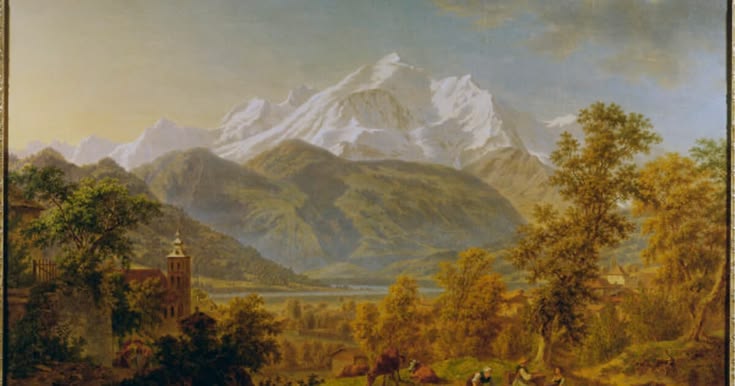
    In Romantic-era poetry, Percy Bysshe Shelley’s “Mont Blanc: Lines Written in the Vale of Chamouni” (1816) stands as the ultimate meditation on the romantic sublime. He wrote it during the second generation of English Romanticism alongside Lord Byron and John Keat.  Shelley used the terrifying scale of the Alpine peak to launch questions about perception, human consciousness and the unseen forces governing the cosmos. While early Romantics like William Wordsworth often found moral harmony and divine comfort in nature, Shelley’s philosophical temperament brought a different energy. For Shelley, nature was not a benevolent mother figure, but an indifferent, boundless, and overwhelming energy. Shelley engages directly with the concept of the Sublime. The sublime is an aesthetic experience where vastness or power induces a feeling of terrifying awe. It makes the human observer feel physically insignificant while mentally elevated. Rather than finding traditional religious comfort in the mountain’s height, Shelley explores his philosophical atheism. He views Mont Blanc as a symbol of Necessity or an impersonal power that governs existence. Throughout the five-part poem, Shelley constructs a series of striking visual and philosophical wonders. Shelley opens the poem by comparing human thought to a river flowing through a ravine. The “everlasting universe of things” rolls through human perception. Human consciousness is both passive (receiving impressions from the grand landscape) and active (shaping those impressions into meaning). The everlasting universe of things Flows through the mind, and rolls its rapid waves… Looking up at Mont Blanc, Shelley does not describe a peaceful picture-postcard landscape. Rather, he depicts a wild, chaotic realm of ice, rock, and storm. He envisions the mountain as a primordial arena where “the old Earthquake-daemon taught her young / Ruin”. The glaciers are slow-moving “frozen floods” that flatten forests and rocks with silent force. Shelley reflects on what lessons this silent mountain holds for humanity. The mountain possesses a mysterious tongue that teaches a lesson. To Shelley, Mont Blanc speaks an unspoken truth that can repeal large codes of fraud and woe (i.e., tyrannical dogmas, religious orthodoxies, and political oppression). Nature’s unyielding reality strips away human pretense. The poem reaches its dramatic climax by returning to the relationship between the peak and human thought. Shelley notes that the mountain remains still, snowy, and serene high above human affairs. He closes with a famous philosophical question: And what were thou, and earth, and stars, and sea, If to the human mind’s imaginings Silence and solitude were vacancy?  The mountain’s grandeur is real, but its meaning exists because the human imagination is there to perceive it. Without the human mind to process wonder, the immense universe would merely be an empty void.  

Leave a Reply

Your email address will not be published. Required fields are marked *