rubina ashraf urges
|

Rubina Ashraf urges greater awareness of postpartum depression

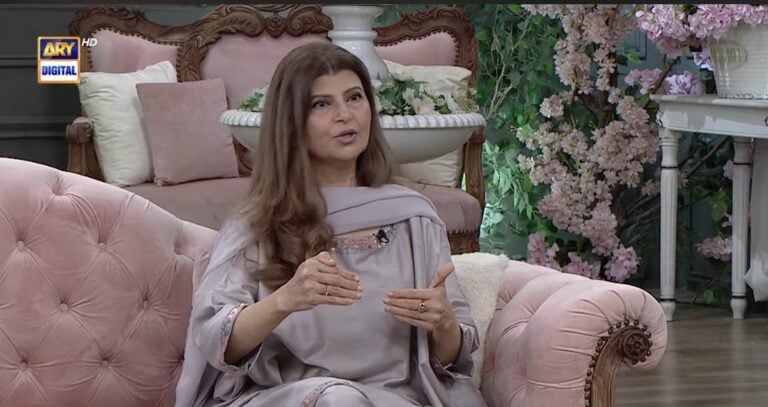
Rubina Ashraf, one of Pakistan’s most respected television veterans, recently spoke about the importance of recognizing postpartum depression and supporting women through pregnancy and motherhood. Appearing on a morning television show, the actress shared her thoughts on the emotional and psychological challenges many women experience before and after childbirth, emphasizing that these struggles deserve greater awareness and compassion.

Having spent decades in the entertainment industry as an actress, director, and producer, Rubina has earned widespread recognition for her memorable performances in dramas such as Pas-e-Aaina, Tapish, Kasak, Do Bol, Khuda Aur Muhabbat 3, and Iqtidar. She also received praise for directing the acclaimed drama serial Ruswai. Beyond her successful career, Rubina is a devoted mother of two, and her daughter, Nawal Tariq, has also established herself as an actress in Pakistan’s television industry.

During the conversation, Rubina highlighted how discussions around postpartum depression were almost nonexistent in previous generations. She explained that society traditionally viewed childbirth as a routine responsibility for women, often overlooking the immense physical and emotional changes they experienced.

According to Rubina, people now need to understand that pregnancy is far more than a physical process. She said that a woman undergoes significant transformations in her body, skin, hormones, and emotions, making the journey both physically demanding and mentally exhausting. While pregnancy is often associated with happiness and excitement, it can also bring anxiety, stress, and emotional vulnerability.

She stressed that pregnancy-related anxiety and postpartum depression are genuine medical and psychological conditions rather than signs of weakness. Rubina noted that many women silently struggle because their emotional health is ignored or misunderstood. Without proper care and emotional support, these feelings can develop into severe depression, affecting both the mother and her family.

The actress urged families to become more aware of these challenges and encouraged them to provide women with understanding instead of judgment. She explained that a pregnant woman should not be expected to manage every household responsibility while dealing with the physical and emotional demands of pregnancy. Instead, she needs kindness, patience, and reassurance from those around her.

Rubina particularly emphasized the crucial role of husbands during this period. She said that a husband’s support should begin during pregnancy and continue after childbirth, as these months can be among the most difficult in a woman’s life. Emotional encouragement, practical help, and compassion can make a significant difference in a mother’s mental well-being and recovery.

She added that expecting mothers often feel overwhelmed because they are trying to balance multiple responsibilities while their bodies and emotions are constantly changing. Without a supportive environment, these pressures can become unbearable.

Rubina’s heartfelt remarks have resonated with many viewers, drawing attention to the importance of maternal mental health. As awareness of postpartum depression continues to grow, her message serves as a reminder that emotional well-being is just as important as physical health during pregnancy and after childbirth. By encouraging empathy, open conversations, and stronger family support, she hopes more women will receive the care they need during one of the most life-changing phases of their lives.


Similar Posts

  • |

    Shahood Alvi sparks controversy with candid marriage remarks

    Pakistani television actor and director Shahood Alvi has once again found himself at the centre of social media discussions following his candid remarks about marriage, relationships and the role of women in maintaining a healthy relationship. Shahood began his showbiz career at Pakistan Television as a boom operator alongside his maternal uncle, Iqbal Ansari. He later moved into acting and gradually established himself as a recognised performer through his work in several popular television dramas. The actor is married to Saima Shahood, and the couple has three daughters, Areeba, Sajal and Arija, all of whom are now married. Shahood frequently appears on morning shows, particularly programmes that feature discussions about marriage, relationships and family life. During a recent television appearance alongside actresses Laila Zuberi and Fariha Awan, Shahood shared his views on why some husbands may lose interest in their wives. His comments, however, quickly attracted attention and divided opinions online. Discussing the possible reasons behind a decline in a husband’s interest, Shahood suggested that women who spend most of their time at home may sometimes carry the smell of ingredients such as ginger and garlic from cooking. He contrasted this with men working in offices, where they may encounter women wearing perfumes. He questioned why a husband would remain attracted if his wife smelled of cooking ingredients, while women in offices might be dressed up and wearing fragrance. The actor also made another controversial remark when the discussion turned towards seeking professional help for marital problems. When Fariha Awan suggested therapy as an option for couples facing difficulties, Shahood jokingly questioned what would happen if a therapist ran away with someone’s wife. He repeated the warning while referring to psychiatrists, describing it as a humorous concern. Shahood further said that spending excessive amounts of time on a mobile phone could be a negative sign in a marriage. He suggested that women should also make an effort to regain their husbands’ attention by preparing food they enjoy and getting ready before their husbands return home. Laila Zuberi agreed that making an effort to look presentable for one’s spouse has traditionally been viewed positively. Recalling her childhood, she said she remembered her mother applying lipstick before her father returned home. Fariha Awan also supported the idea that women could make additional efforts to present themselves well before their husbands came home. Shahood went on to discuss his own marriage, saying he had tried to teach his wife several practical tasks, including paying bills, shopping for groceries and driving. However, he said jokingly that she never learned these skills and referred to her humorously as a “stubborn one.” He also recalled advice from actress Bushra Ansari, who had discouraged his wife from learning how to drive. According to Shahood, Bushra believed that once housewives learned to drive, their responsibilities could increase because they might then be expected to take children to school and bring them back. Following the television appearance, Shahood’s comments have sparked mixed reactions on social media. While some users criticised his remarks as outdated or insensitive, others viewed them as part of the informal and humorous nature of morning-show conversations. Despite the debate, Shahood’s comments have once again placed discussions surrounding marriage, expectations from spouses and gender roles in the spotlight.

  • |

    Nearly 100 children wrongly detained as adults under UK-France migration deal

    At least 94 children were mistakenly identified as adults and held in immigration detention under Home Secretary Shabana Mahmood’s “one in, one out” agreement with France, according to details disclosed in a letter from the Independent Monitoring Boards (IMB). Between August 2025 and May 2026, Home Office officials recorded 304 age-disputed cases arising from the scheme, officially named Operation Hillmore, with 31% ultimately confirmed to be minors. Standard UK policy strictly prohibits the detention of unaccompanied minors beyond 24 hours. The critical findings, sent to Home Office Minister Anna Turley by interim IMB chair Jane Leech, highlighted severe safeguarding and procedural failures. Age assessments at immigration removal centers took up to 40 days to resolve in certain instances, while some individuals faced deportation delays of up to 27 weeks, far exceeding the scheme’s 28-day target. Additionally, detainees were slated for removal despite requiring urgent hospital care or suffering from active tuberculosis. The Refugee Council condemned the findings, urging the government to rely on social-worker-led assessments rather than administrative border checks. In response, a Home Office spokesperson stated that age assessment procedures are being modernized, including plans to roll out AI tools next year to support determinations.

  • | | |

    99 years of PLA: Pakistan reaffirms China defence …

    The 99th anniversary of the founding of China’s People’s Liberation Army (PLA) was commemorated at General Headquarters (GHQ) in Rawalpindi, with senior Pakistani and Chinese officials reaffirming their commitment to strengthening bilateral defence cooperation. Chinese Ambassador to Pakistan Jiang Zaidong attended the ceremony as the chief guest. China’s Defence Attaché Major General Wang Zhong, officials from the Chinese Embassy, and senior officers from Pakistan’s armed forces were also present at the event. Chief of Army Staff and Chief of Defence Forces Field Marshal Syed Asim Munir welcomed the Chinese delegation and congratulated the PLA on completing 99 years of service. He praised the Chinese military’s role in strengthening China’s defence capabilities, supporting national development and contributing to international peace and security. Highlighting the close relationship between Pakistan and China, Field Marshal Munir said the friendship between the two countries is based on mutual trust and has remained strong despite changing regional and global challenges. He described the Pakistan Armed Forces and the PLA as reliable partners, saying both sides share a commitment to regional stability, peace and the protection of common strategic interests. During the ceremony, Ambassador Jiang Zaidong thanked the Pakistani leadership for hosting the event and appreciated the role of the Pakistan Armed Forces. He also acknowledged Pakistan’s sacrifices and efforts in the fight against terrorism. The Chinese ambassador reaffirmed Beijing’s support for Islamabad and expressed commitment to further expanding the “All-Weather Strategic Cooperative Partnership” between the two countries. The ceremony reflected the longstanding defence ties between Pakistan and China, with both sides emphasizing continued cooperation, strategic coordination and joint efforts to promote regional security.

  • |

    NCCIA under fire over social media figures, PECA cases and newspaper column complaint

    Islamabad: A controversy has erupted over the National Cyber Crime Investigation Agency (NCCIA) after a Senate committee questioned differences in social media statistics, delays in transferring PECA cases and the registration of complaints linked to a newspaper column. The Senate Standing Committee on Information and Broadcasting has sought answers from NCCIA over claims that figures shared earlier with lawmakers were later described as incorrect by its own officials. The committee questioned how NCCIA could provide one set of figures before the Senate and later have its officials reportedly distance themselves from those numbers. The dispute mainly focused on claims about fake social media accounts and content removal requests. Earlier figures suggested that around 20 percent of social media accounts were fake, but questions were raised after officials allegedly suggested that the number was much lower. The committee also questioned claims that 83 percent of content removal requests received responses from social media companies. Officials explained that a response from platforms does not always mean the request was accepted or action was taken. They said some requests were accepted while others were rejected, but companies provided replies. During the meeting, NCCIA officials defended the figures and said the data was publicly available online. They said the 83.64 percent response figure related to Meta was available through official reports and could be verified by anyone through the internet. Officials said if journalists had checked the available reports before publishing news, the confusion could have been avoided. They also explained that Pakistan’s response rate was compared with India’s figures, noting that both countries’ data was available online. Another major issue discussed was the transfer of cases under the Prevention of Electronic Crimes Act (PECA). The committee questioned why provinces had not transferred all relevant cases to NCCIA after PECA powers were shifted. NCCIA officials informed the committee that hundreds of cases existed across Pakistan. According to the briefing, Islamabad had 19 cases, Punjab had 268, Khyber Pakhtunkhwa had 47, Balochistan had 7, Sindh had 21, Azad Jammu and Kashmir had 10, while Gilgit Baltistan had none. The total number mentioned was 372 cases across Pakistan. Officials said only nine cases from Sindh Police had so far been transferred to NCCIA, while many others were still pending. Committee members questioned why cases already before courts or under trial were not being transferred. They said earlier instructions had been issued to provincial authorities to move investigation stage cases to NCCIA, but the orders had not been fully followed. The committee decided to again contact provincial police chiefs and legal authorities to ask why transfers were delayed. The most sensitive discussion came a complaint related to journalist Toufeeq Butt’s column published in Daily Nai Baat. The column titled “Bero Corrupts” became controversial after the Pakistan Administrative Services Association filed a complaint. The complainant argued that the term used in the article was insulting and damaging to the reputation of civil servants. NCCIA officials clarified that no case had been registered against the writer. They said only a complaint was received and an inquiry process started to hear both sides. Toufeeq Butt was issued notices to provide his explanation, but officials said he did not appear after receiving two notices. The committee debated whether NCCIA should handle newspaper content or if such matters should go to press related institutions. Members warned that allowing every complaint against newspapers and journalists to reach the NCCIA could create a flood of cases. They pointed out that newspapers are regulated by the Press Council while television is handled by PEMRA. Some members argued that asking for an explanation differed from taking legal action. They said every person has the right to present their side before any decision is made. Others warned that using cybercrime laws for newspaper related matters could open a new door for pressure against journalists. Chairman directed NCCIA to refer both the complaint and the complainant to the Press Council of Pakistan, being the appropriate forum to examine the published column and decide the matter.

  • | |

    Forensic report reveals new findings in Mir Raza c…

    KARACHI: The forensic examination of a shirt belonging to Karachi youth Mir Raza has been completed. The report has been received by the police and is now being examined as part of the investigation. According to investigative sources, traces of hydrochloric acid were reportedly detected on the shirt during the chemical analysis. The sources also said that substances associated with a sedative were found in a blood sample taken from Mir Raza. The chemical examination was conducted to determine whether the shirt contained any material that could help investigators understand the circumstances surrounding the incident. The findings are expected to be considered along with other forensic evidence collected during the investigation. Investigators also reported the presence of gunshot residue (GSR) on the waist area of Mir Raza’s shirt. Sources said the concentration of GSR was higher around the waist section. They said this finding could provide investigators with important information about the direction and circumstances of the shooting. However, the forensic findings are expected to be assessed alongside other evidence before investigators reach any final conclusion. Police are also examining other aspects of the case to establish what happened. Meanwhile, further shortcomings in the investigation have reportedly emerged. Investigative officials said several important steps had not been completed despite days having passed since the incident. According to officials, geofencing of the crime scene has not yet been carried out. Geofencing could help investigators identify mobile devices that were present in or around the area at the relevant time. Officials also said that Mir Raza’s mobile phone data had not been obtained. The phone record could potentially help investigators establish his movements and identify contacts or activities around the time of the incident. Another issue raised by investigators concerns Mir Raza’s smartwatch. Officials said its forensic examination had also not been conducted. Such devices can sometimes contain information about movement, activity and other data that may assist an investigation. The latest findings have added new elements to the case. Investigators are now expected to examine the forensic report along with other available evidence. The police are also facing questions over why some investigative procedures were not carried out earlier. The family has previously called for a thorough investigation and answers about what happened to Mir Raza.

  • | | | |

    Iran rejects talks on ceasefire extension

    Pakistan is making diplomatic efforts to help extend the ceasefire between the United States and Iran, as the current truce is scheduled to expire on Sunday, August 16. Sources said Islamabad is trying to use the understanding reached under the Islamabad Memorandum of Understanding to encourage both sides to maintain the ceasefire and return to negotiations. According to the sources, mediators believe additional time is needed to bridge differences between Washington and Tehran. Diplomatic efforts are therefore continuing to prevent the situation from deteriorating after the current ceasefire period ends. However, an Iranian senior official gave a different assessment of the situation. The official said there have been no discussions between Iran and the United States regarding an extension of the ceasefire. Iran has maintained that Washington must return to the agreement and honour its previous commitments. Tehran has also demanded a clear and credible timeline for the implementation of those commitments before any further understanding can be reached. Meanwhile, US President Donald Trump has made strong statements about the strategic Strait of Hormuz. Trump claimed that the United States now has complete control over the vital waterway and said Iran has limited options to challenge the American naval blockade. The Strait of Hormuz remains a major international shipping route and plays a crucial role in global energy supplies. Any prolonged disruption in the waterway could have serious consequences for oil and gas markets and international trade. Iranian military officials have warned that a renewed US offensive could lead to a wider confrontation. An Iranian military spokesman said energy transmission networks, power plants and infrastructure connected to the global internet could become targets if American military action resumes. The warning has raised concerns that any collapse of the ceasefire could expand the conflict beyond conventional military targets and affect critical infrastructure. Meanwhile, Turkish President Recep Tayyip Erdogan has expressed hope that additional countries will join the Makkah Defence Agreement. He indicated that broader participation could strengthen regional security cooperation. In another development, US Central Command said a Panama-flagged cargo vessel attempting to breach the naval blockade was disabled after a US helicopter fired a missile at the ship. The incident has further highlighted the risks facing commercial shipping in the region amid continuing tensions between Washington and Tehran. Separately, Japanese Prime Minister Sanae Takaichi discussed the situation with Iranian President Masoud Pezeshkian in a telephone conversation. Takaichi called for the Strait of Hormuz to be reopened once negotiations between Iran and the United States reach a successful conclusion.

Leave a Reply

Your email address will not be published. Required fields are marked *