says will deepen
|

US says it will deepen security role in Asia

The United States has rejected suggestions that it is reducing its involvement in Asia.

A senior Pentagon official said Washington plans to strengthen its position in the Indo-Pacific and maintain what it considers a favourable balance of power in the region.

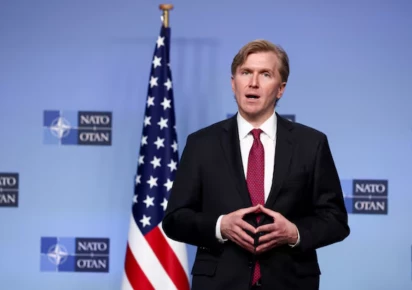
US Undersecretary of Defense for Policy Elbridge Colby made the remarks during a speech in Manila on Monday.

He said the United States was not leaving Asia. Instead, Washington was increasing its focus on the region.

Colby also called on US allies and partners to take greater responsibility for their own defence.

He said Washington wanted stronger partnerships rather than relationships based on dependence.

According to Colby, the United States expects its regional allies to increase defence spending and strengthen their own military capabilities.

He said greater responsibility from partner countries should not be interpreted as a sign that Washington is abandoning the region.

Colby argued that stronger allies would contribute to stronger deterrence and help maintain regional stability.

The Pentagon official said the US strategy includes maintaining a credible military presence along the First Island Chain.

The strategic area stretches from Japan through Taiwan and the Philippines toward Borneo. It is considered important to US efforts to deter potential military threats in the Indo-Pacific.

Colby said the United States was committed to maintaining a balance of power in the region. He also emphasised the need for allies to contribute more to regional security.

His comments come amid continuing questions about the long-term US security commitment to Asia.

Some regional governments and analysts have expressed concerns about whether Washington will remain as deeply involved in the Indo-Pacific as it has been in previous years.

Colby sought to address those concerns by stressing that the United States intends to remain engaged.

The Philippines is the first stop on Colby’s Southeast Asian tour. He is also scheduled to visit Indonesia, Thailand and Cambodia.

The Philippines is a longstanding US treaty ally and has strengthened defence cooperation with Washington in recent years.

The Pentagon official’s remarks are likely to be closely watched by US partners across the region.

Washington is seeking to strengthen cooperation with allies while encouraging them to invest more heavily in their own defence.

The approach reflects a broader US strategy of sharing the security burden with regional partners while maintaining a strong American military presence.

Colby said the goal was to build capable partners rather than create countries that depend entirely on US protection.

He maintained that stronger regional partners would make the overall US deterrence strategy more effective.

Similar Posts

  • | |

    Forensic report reveals new findings in Mir Raza c…

    KARACHI: The forensic examination of a shirt belonging to Karachi youth Mir Raza has been completed. The report has been received by the police and is now being examined as part of the investigation. According to investigative sources, traces of hydrochloric acid were reportedly detected on the shirt during the chemical analysis. The sources also said that substances associated with a sedative were found in a blood sample taken from Mir Raza. The chemical examination was conducted to determine whether the shirt contained any material that could help investigators understand the circumstances surrounding the incident. The findings are expected to be considered along with other forensic evidence collected during the investigation. Investigators also reported the presence of gunshot residue (GSR) on the waist area of Mir Raza’s shirt. Sources said the concentration of GSR was higher around the waist section. They said this finding could provide investigators with important information about the direction and circumstances of the shooting. However, the forensic findings are expected to be assessed alongside other evidence before investigators reach any final conclusion. Police are also examining other aspects of the case to establish what happened. Meanwhile, further shortcomings in the investigation have reportedly emerged. Investigative officials said several important steps had not been completed despite days having passed since the incident. According to officials, geofencing of the crime scene has not yet been carried out. Geofencing could help investigators identify mobile devices that were present in or around the area at the relevant time. Officials also said that Mir Raza’s mobile phone data had not been obtained. The phone record could potentially help investigators establish his movements and identify contacts or activities around the time of the incident. Another issue raised by investigators concerns Mir Raza’s smartwatch. Officials said its forensic examination had also not been conducted. Such devices can sometimes contain information about movement, activity and other data that may assist an investigation. The latest findings have added new elements to the case. Investigators are now expected to examine the forensic report along with other available evidence. The police are also facing questions over why some investigative procedures were not carried out earlier. The family has previously called for a thorough investigation and answers about what happened to Mir Raza.

  • | |

    Iran rejects US claims over Strait of Hormuz control 

      Iran’s military on Thursday rejected US claims that ships were continuing to pass normally through the Strait of Hormuz, insisting that no vessel could safely transit the strategic waterway without permission from Tehran. According to news agency, Ebrahim Zolfghari, spokesperson for the Khatam al-Anbiya Central Headquarters, said the strait remained under Iran’s “full management and control.” He warned that commercial vessels and oil tankers would not be able to secure safe passage without the permission and supervision of Iran’s armed forces. Zolfghari’s remarks came amid growing tensions between Tehran and Washington over the strategically important waterway, through which a significant portion of global oil and energy shipments traditionally passes. The conflicting statements from Iran and the United States have further intensified uncertainty surrounding maritime traffic in the region. Meanwhile, US Defence Secretary Pete Hegseth said Washington had the capability to maintain a naval blockade of Iranian ports for as long as necessary. Speaking to reporters, Hegseth said the US Navy could sustain such an operation indefinitely by rotating ships in and out of the region. His comments came as Washington continued to assert its ability to control maritime activity around Iran. Tehran, however, has strongly disputed those claims and maintained that it retains authority over the Strait of Hormuz. Iranian officials have also issued increasingly forceful warnings about a potential future conflict. Brigadier General Rasoul Sanaei-Rad said on Thursday that Iran would respond more aggressively if another war occurred. Sanaei-Rad, who currently serves as a political adviser in the office of Iran’s Supreme Leader, said Iran had stood firm during the recent conflict and would be prepared to respond with greater determination in any possible future war. Although he did not directly name the United States, he accused Iran’s “enemy” of attempting to create divisions inside the country through economic pressure. According to the general, those efforts had failed to achieve their intended objective. His comments reflected the increasingly confrontational rhetoric coming from Iranian officials as tensions with Washington remain high. Iranian Foreign Minister Abbas Araghchi also criticised US assessments of the conflict, saying Washington had repeatedly miscalculated because of intelligence failures. Referring to the recent war, Araghchi said the United States had made serious errors in assessing the situation and was now making an even bigger mistake regarding the Strait of Hormuz. “Worse than fake news is fake intelligence. Be careful,” Araghchi said, warning against what he described as flawed assessments of Iran’s capabilities and intentions. His comments came a day after US President Donald Trump claimed on his Truth Social platform that the United States had “total control” over the strategic waterway. Iran has rejected the assertion, with officials continuing to emphasise Tehran’s role in regulating passage through the strait. Iranian officials have also sought to project confidence in the country’s ability to withstand continued pressure. A former Iranian diplomat, Abbas Khameyar, said the United States had failed what he described as a test of economic and military warfare against Iran. Khameyar argued that Tehran would not accept American conditions or surrender to US ambitions. He also claimed that Washington had effectively fallen into a “trap” involving the Strait of Hormuz. The latest statements from both sides underline the deepening confrontation over the waterway. While Washington maintains that it has the military capability to sustain a blockade, Tehran insists that maritime passage remains subject to its authority. With both countries issuing conflicting claims over control and navigation, the Strait of Hormuz has once again emerged as a major flashpoint in the wider regional confrontation.

  • |

    Experts reveal how ancient Egyptians built pyramids?

    The centuries-old Egyptian pyramids have long remained a major focus of interest for people and scientists. For years, scientists have been trying to solve the mystery of how such massive pyramids were constructed in ancient Egypt thousands of years ago. Now, a possible answer has emerged. Earlier, it was believed that ropes and sledging systems were used to transport stones to the upper sections of the pyramids. However, evidence discovered near the Nile River suggests that experts of that era had already mastered advanced construction techniques centuries before the construction of the Great Pyramid of Giza in the desert. Archaeologists have excavated a 5,000-year-old cemetery-like site near the eastern bank of the Nile River. Two tombs discovered there have construction styles remarkably similar to those of the Egyptian pyramids built centuries later. The walls of these tombs were thicker at the bottom and gradually became narrower toward the top. This design provided greater stability to the structures. Similar techniques were later used in the construction of step pyramids and other large pyramids. Researchers also discovered evidence of ancient methods used to cut stones and wood which were employed in the construction of the tombs. The tombs were discovered in Egypt’s Jabal al-Tayr region where people have been buried for thousands of years. The style of these tombs resembles the tombs of kings in Abydos, one of Egypt’s oldest cities. This suggests that advanced construction techniques may have been widely known across Egypt even before the construction of the pyramids. Researchers said the tombs provide a glimpse into experimental construction methods that may have eventually led to the construction of the Egyptian pyramids. Experts said preliminary analysis indicates that the construction style of these tombs was quite similar to that of the pyramids associated with Egypt’s First Dynasty. Egypt’s First Dynasty ruled the country around 3100 BC. According to Egypt’s Tourism Minister, Sherif Fathy, the new discovery will help researchers understand how these construction techniques evolved throughout ancient Egyptian history. Earlier, in May 2024, researchers discovered a buried branch of the Nile River beneath the desert that once flowed around more than 30 pyramids thousands of years ago. This discovery helped solve the mystery of how ancient Egyptians transported extremely heavy stones to the pyramid construction sites. The 40-mile-long branch of the river once flowed around the Great Pyramid of Giza and other pyramids. Thousands of years ago, it gradually became buried beneath desert sand and agricultural land. According to the research, the presence of this ancient river explains how 31 pyramids were constructed between approximately 4,700 and 3,700 years ago in a valley that has now become a deserted strip of desert. The valley is located near Memphis, the ancient capital of Egypt and is home to the Great Pyramid of Giza, the only surviving wonder of the ancient Seven Wonders of the World. A study published in the journal Nature Communications reported the discovery of this ancient branch of the river. The research team used radar satellite technology to identify the hidden river channel. Surveys of the area and analysis of samples confirmed the presence of the ancient river. According to researchers, the river was once very powerful but may have gradually become buried under sand because of drought around 4,200 years ago. The Great Pyramid of Giza is located just one kilometer from the bank of this buried river. Around 2.3 million stone blocks were used to build the pyramid with each block weighing between 2.5 and 15 tons. Researchers said the ancient river also provides clues about why pyramids were built at different locations. They explained that the river’s course and flow changed over time which may have led Egyptian rulers to construct pyramids at different locations.

  • |

    Arizona police release ransom notes in ongoing search for abducted mother of US TV presenter Savannah Guthrie

    Police in Arizona have released the text of two ransom notes six months after the abduction of 84-year-old Nancy Guthrie, mother of prominent US television presenter Savannah Guthrie. The Pima County Sheriff’s Office made the decision to publish the communications in the hope that members of the public might recognise distinct linguistic patterns or writing habits attributable to the perpetrator. Nancy Guthrie was taken from her home near Tucson, Arizona, on 31 January. The first note, received by a local news station on 2 February, demanded $4 million in Bitcoin within five days, threatening that she would be killed if a total of $6 million was not paid by 9 February. The note included specific details regarding the crime scene, referencing a damaged backyard floodlight and a white smartwatch left on her bedroom floor. A second note arrived four days later, claiming that Nancy Guthrie had died from a heart-related condition shortly after her abduction and had been “buried in nature”. However, law enforcement officials stated they cannot confirm her death and continue to treat the investigation as an active missing persons and kidnapping case. Savannah Guthrie, who hosts NBC’s Today show, has released multiple public appeals urging the abductors to reveal the location of her mother’s remains so the family can bring her home.

  • | |

    PM Shehbaz Sharif says Pakistan used autonomous sy…

    Prime Minister Shehbaz Sharif has reaffirmed Pakistan’s commitment to strengthening national security through advanced technology, stating that the country’s armed forces relied on autonomous systems and cybersecurity capabilities to protect its borders during what he described as “Marka-e-Haq.” His remarks came while addressing the Indus Robotics and Autonomous Systems Expo in Islamabad. Speaking at the event, the Prime Minister said Pakistan is making significant progress in modern technology and innovation, adding that initiatives such as the robotics and autonomous systems exhibition will help position the country among leading technology-driven nations in the 21st century. Shehbaz Sharif emphasized that the use of advanced technologies in the security sector is a matter of national pride. He noted that Pakistan has achieved important milestones in the development of indigenous defense capabilities, particularly in drone technology. According to the Prime Minister, more than 60 percent of the country’s drone production is now being carried out locally, reflecting continued efforts to reduce reliance on foreign technology and strengthen domestic manufacturing. The Prime Minister also praised the leadership of Field Marshal Syed Asim Munir, saying the armed forces successfully adopted modern technological solutions during Marka-e-Haq. He acknowledged the contributions of the Chief of Air Staff and the Chief of Naval Staff, stating that their coordination and leadership played an important role in strengthening Pakistan’s defense preparedness. Highlighting the growing importance of digital security, Shehbaz Sharif said autonomous systems and cybersecurity have become essential components of modern warfare and national defense. He stressed that Pakistan will continue investing in emerging technologies to enhance its security capabilities and protect its sovereignty in an increasingly technology-driven world. The Prime Minister added that innovation in robotics, artificial intelligence, unmanned systems, and cyber defense is not only important for military preparedness but also for the country’s broader technological and economic development. He encouraged collaboration between government institutions, the private sector, and academic organizations to accelerate research and promote local innovation. The Indus Robotics and Autonomous Systems Expo showcased advancements in robotics, autonomous technologies, and indigenous defense solutions, highlighting Pakistan’s growing focus on technological self-reliance. Government officials believe such initiatives will help strengthen the country’s industrial base while supporting long-term national security objectives. Shehbaz Sharif concluded by reaffirming that Pakistan will continue to adopt modern technologies to safeguard its borders and enhance its defense capabilities, ensuring the country remains prepared to address evolving security challenges in the years ahead.

  • | |

    Colombia earthquake, Shehbaz Sharif expresses deep…

    ISLAMABAD: Pakistan has expressed deep sorrow and solidarity with Colombia after a powerful 7.4-magnitude earthquake devastated parts of the country, killing more than 111 people and leaving widespread destruction in its wake. The earthquake struck western Colombia on Monday, with the epicentre near San José del Palmar in the Chocó region. The powerful tremor damaged hundreds of buildings and triggered desperate rescue operations as emergency workers searched through collapsed structures for survivors. Prime Minister Shehbaz Sharif expressed profound grief over the loss of precious lives and the destruction caused by the disaster. He extended heartfelt condolences to Colombian President Abelardo de la Espriella, the people of Colombia and families who lost loved ones in the tragedy. “Pakistan stands with the people of Colombia in this difficult hour,” the prime minister said in his message, conveying solidarity with those facing the devastating consequences of the earthquake. Sharif also expressed sympathy for those injured and affected by the disaster, saying Pakistan’s thoughts and prayers were with the victims, survivors and rescue teams working in difficult conditions. The earthquake caused severe damage across several western cities, including Pereira, Cali, Quibdó and Manizales. Hospitals were placed under pressure as injured people were brought in, while rescue workers and volunteers continued clearing rubble in search of those feared trapped. Authorities also reported damage to infrastructure and airports, while aftershocks added to fears among residents. Colombia’s government declared an emergency to speed up rescue and relief operations. The disaster has prompted an international response, with countries offering assistance as Colombia confronts one of its most serious seismic emergencies in years. For Pakistan, the tragedy has once again highlighted the importance of international solidarity during natural disasters. Prime Minister Shehbaz Sharif said the Pakistani government and people shared the grief of Colombian families and prayed for strength, patience and an early recovery for everyone affected. As rescue efforts continue, the focus remains on saving lives, supporting survivors and helping devastated communities rebuild.

Leave a Reply

Your email address will not be published. Required fields are marked *