iran says pakistan
| | |

Iran says Pakistan ties gaining greater importance

TEHRAN: Iran has described its relationship with Pakistan as increasingly important, saying Islamabad has played a significant role as a mediator since the outbreak of the regional conflict.

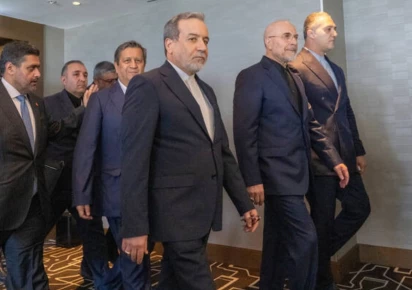
Iranian Foreign Ministry spokesperson Esmaeil Baghaei said the two neighbouring countries were maintaining close diplomatic contacts. He also confirmed that Iranian Foreign Minister Abbas Araghchi and Parliament Speaker Mohammad Bagher Ghalibaf had been invited to visit Islamabad.

Baghaei said the two officials would travel to Pakistan at a suitable time. He did not announce a specific date for the visit.

He described reciprocal visits between the two countries as a natural part of their growing bilateral relationship.

The Iranian official also played down concerns that the recently signed defence agreement between Pakistan, Saudi Arabia and Turkiye was aimed at Tehran.

Pakistan, Saudi Arabia and Turkiye signed the Makkah Joint Defence Agreement on August 7. The agreement seeks to strengthen collective defence cooperation and provides for a joint response if any member comes under attack.

Baghaei said Tehran did not consider the agreement a direct threat to Iran. He said regional countries were increasingly seeking security arrangements based on their own regional realities rather than relying entirely on external powers.

He maintained that regional cooperation could contribute to stability if such arrangements remained inclusive and focused on preventing conflict.

Baghaei also said Iran was not prepared to resume direct negotiations with the United States while Tehran believed Washington was violating an interim agreement.

The Iranian government has also linked the reopening of the Strait of Hormuz to a number of demands. These include compensation for damage caused during the conflict and an end to the US naval blockade of Iranian ports.

Meanwhile, Iran and Oman are continuing discussions on arrangements for commercial shipping through the Strait of Hormuz.

Baghaei said the talks were progressing in a constructive manner. He said the two sides had reached an understanding on a proposed map for shipping traffic and were working on several technical details.

According to the Iranian official, the proposed arrangement would establish mechanisms for safer maritime movement. It would also address environmental protection and maritime crimes.

He stressed that the discussions with Oman were focused on ensuring safe international shipping and were separate from broader political disputes.

Baghaei nevertheless reiterated that Tehran would not allow the full reopening of the strategic waterway unless its conditions concerning Washington were addressed.

In a separate development, Iran has appointed former Islamic Revolutionary Guard Corps commander Mohsen Rezaei to a senior position in the Supreme National Security Council.

Rezaei has replaced Mohammad Baqer Zolqadr as secretary of the body responsible for coordinating Iran’s security and foreign policy.

No official reason was immediately given for the change. It also remains unclear whether the appointment will lead to any major shift in Iran’s security policy.

Rezaei, 71, commanded the Revolutionary Guards from 1981 to 1997. He later served for more than two decades as secretary of Iran’s Expediency Discernment Council and also held the position of vice president for economic affairs.

Iran’s Supreme National Security Council brings together senior military, intelligence and government officials. It is formally chaired by the president, while the supreme leader retains ultimate authority over major state matters.

A separate decree appointed Rezaei as the supreme leader’s representative on the council. Zolqadr was instead named as a political adviser.

The developments come as Iran faces heightened regional tensions and continues efforts to manage its relations with neighbouring countries and major international powers.

Similar Posts

  • | |

    Maura Higgins explains why she declined to partner…

    Maura Higgins has revealed why she chose not to partner with professional dancer Gleb Savchenko ahead of her upcoming appearance on Dancing with the Stars, saying her decision was based on friendship rather than drama. The Irish television personality and model recently spoke with E! News about joining the hit dance competition, which returns in September 2026. During the interview, Higgins addressed speculation surrounding her professional dance partner and explained why she decided against being paired with Savchenko. According to Higgins, the two have become good friends over the years, and she felt working together on the competition could make things uncomfortable rather than enjoyable. (E! News⁠) Higgins said she values her friendship with Savchenko and believes maintaining that bond is more important than forcing a professional partnership. She explained that while they get along well off the dance floor, competing together would change the dynamic of their relationship, especially given the intense training schedule and pressure that comes with the show. Savchenko also reacted to Higgins’ comments, admitting he was disappointed that she did not choose him as her partner. However, his response was delivered with humor, as he joked that her decision had left him frustrated. Despite the playful remarks, there appears to be no serious conflict between the pair, with both continuing to speak positively about one another. Higgins rose to international fame after appearing on Love Island UK and has since established herself as a successful television personality and influencer. Over the past few years, she has taken on a variety of entertainment projects, and joining Dancing with the Stars marks another major step in her television career. The upcoming season has already generated excitement among fans, with viewers eager to see how Higgins performs on the ballroom floor. Although she admitted dancing is outside her comfort zone, she said she is ready to embrace the challenge and give the competition everything she has. Savchenko, meanwhile, remains one of the show’s most recognizable professional dancers. Known for his impressive choreography and competitive spirit, he has partnered with numerous celebrities throughout his time on the series and continues to be a fan favorite. Fans have reacted with curiosity to Higgins’ decision, with many praising her for prioritizing a genuine friendship over potential headlines. Others are excited to find out which professional dancer she will ultimately be paired with when the new season begins. As anticipation builds for the September premiere, Higgins is focused on preparing for the demanding competition. Her decision to decline a partnership with Savchenko highlights the importance she places on personal relationships, proving that sometimes protecting a friendship matters more than creating a headline. With rehearsals set to begin soon, all eyes will be on Higgins as she steps onto the Dancing with the Stars stage for the first time.

  • | |

    Flood alert as rivers rise, Sukkur, Marala and Bal…

    ISLAMABAD: Pakistan is bracing for another spell of flood-related risks as heavy monsoon rains, rising river levels and high water storage at major dams put several parts of the country on alert. The National Disaster Management Authority (NDMA), through its National Emergencies Operation Centre, has warned of possible low to moderate flooding in vulnerable areas of Khyber Pakhtunkhwa, Punjab, Balochistan and Azad Jammu and Kashmir. According to the latest assessment, the Indus River has already reached low flood levels at Kalabagh, Chashma, Taunsa and Guddu. While the Ravi, Chenab, Jhelum, Kabul and Sutlej are currently within normal ranges, officials expect water flows in several major rivers to increase on August 8 and 9. The NDMA has identified Sukkur on the Indus, Marala on the Chenab and Balloki on the Ravi as areas where low-level flooding could occur. The Jhelum downstream of Mangla Dam and the Kabul River near Adezai are also being closely monitored. Several districts in Khyber Pakhtunkhwa, including Chitral, Upper Dir, Abbottabad, Shangla, Khyber, Orakzai, Kohat, Tank and North and South Waziristan, face the possibility of low to moderate flooding. In AJK, Bagh and Kotli are also considered vulnerable, while Zhob, Musakhel, Kohlu, Barkhan and Dera Bugti in Balochistan remain under watch. Punjab is facing risks from hill torrents, particularly in Dera Ghazi Khan and Rajanpur. The NDMA has also warned of possible urban flooding in Rawalpindi, Gujranwala, Sialkot, Narowal, Faisalabad, Okara and Lahore. Water storage at the country’s major reservoirs remains high. Tarbela Dam’s water level has reached 1,548 feet, with storage at 97.94 per cent, compared with 95.98 per cent during the same period last year. Mangla Dam is at 1,205.2 feet, with storage recorded at 62.99 per cent, slightly above last year’s 62.80 per cent. Authorities have urged residents, tourists and travellers in mountainous and flood-prone areas to remain vigilant, as intense monsoon rainfall can trigger flash floods, landslides and debris flows with little warning. People have been advised to avoid riverbanks, streams and other vulnerable locations and to check weather forecasts and road conditions before travelling as the monsoon system continues to affect the country.

  • | |

    Iran cannot be subdued, people are forcing enemies…

    TEHRAN: Iranian Parliament Speaker Mohammad Baqer Qalibaf has said that Iran cannot be subdued, claiming that the country’s people are standing united against external pressure and forcing their opponents to retreat. Qalibaf made the remarks while congratulating General Mohsen Rezaei on his appointment to the Supreme National Security Council. He described Rezaei’s inclusion in the council as evidence of the confidence placed in him by Iran’s Supreme Leader. According to Qalibaf, Iran is currently passing through one of the most sensitive periods in its history. He said recent developments had demonstrated to the international community that attempts to bring Iran under pressure would not succeed. The Iranian parliament speaker said national unity remained strong across the country, with the public, military and diplomatic institutions standing together under the leadership of Supreme Leader Mojtaba Khamenei. Qalibaf further claimed that the Iranian people were demonstrating resilience in the face of their adversaries and were now putting pressure on the opposing side to back down. His comments come amid heightened tensions surrounding Iran and the United States, with disagreements over regional security, military threats and the strategic Strait of Hormuz continuing to dominate international attention.

  • | | |

    Salman Khan house security guard dies suddenly dur…

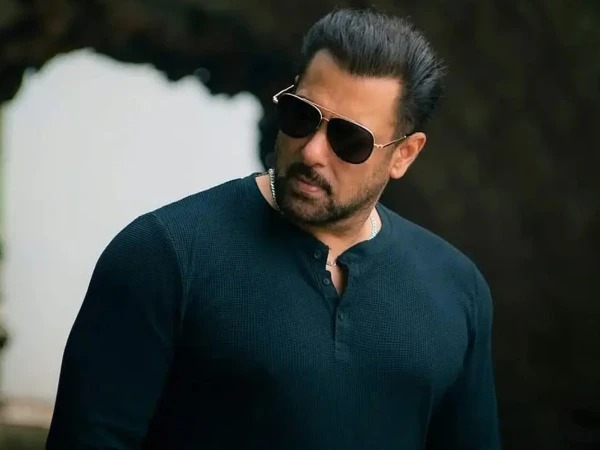
    A Mumbai police constable posted outside Bollywood superstar Salman Khan’s residence has died after reportedly falling ill while on security duty. The officer, identified as Constable Ganesh Raite, was part of the Mumbai Police team deployed outside Salman Khan’s Galaxy Apartments in Mumbai. According to Indian media reports, the constable complained of feeling unwell at around 6pm on Friday while carrying out his duty. His colleagues reportedly arranged for him to be taken to a hospital shortly afterward. However, doctors declared him dead after he was brought to the medical facility. Police officials have indicated that the constable may have suffered a heart attack while on duty. However, the exact cause of death has not yet been officially established. His body has been sent for a post-mortem examination, and the medical report is expected to provide further details. The incident occurred as Salman Khan continues to remain under heightened security because of threats against him. The actor’s security was upgraded to the Y-Plus category in 2024 following the killing of his close friend and former Maharashtra minister Baba Siddique. Salman has faced repeated threats reportedly linked to the Lawrence Bishnoi gang, with tensions surrounding a long-running blackbuck poaching case involving the actor. Security around Salman Khan’s residence has also been tightened following previous incidents. In April 2024, two motorcycle-borne individuals reportedly fired several rounds outside Galaxy Apartments. Investigators later linked the shooting incident to people associated with the Lawrence Bishnoi network. The latest death occurred while police personnel were continuing their security duties outside the actor’s Mumbai residence. The sudden death of Constable Ganesh Raite has raised attention because of the demanding security arrangements surrounding Salman Khan, who remains one of Bollywood’s most prominent and closely protected celebrities. Authorities are expected to establish the precise medical cause of death after the post-mortem examination. Until the medical findings are released, reports of a heart attack remain an initial assessment rather than a confirmed cause. The incident is also a reminder of the risks faced by police personnel assigned to high-profile security duties, where officers are required to maintain prolonged vigilance around protected individuals and their residences. Further details about the constable’s medical history and the circumstances surrounding his final moments are expected to emerge as the investigation and medical examination continue.

  • | |

    Field Marshal visits NEOC, reviews monsoon disaste…

    Field Marshal Syed Asim Munir visited the National Emergencies Operation Center (NEOC), where he was briefed on preparedness measures and coordinated response arrangements for dealing with monsoon-related disasters. According to the Inter-Services Public Relations (ISPR), the Chairman of the National Disaster Management Authority (NDMA) briefed the Field Marshal on the authority’s operational capabilities and its technology-driven disaster response mechanism. During the visit, Field Marshal Asim Munir stressed that the protection of human lives and critical national infrastructure must be ensured under all circumstances. He said the Pakistan Armed Forces remain fully prepared at all times to support the civil administration and the NDMA in relief, rescue, and rehabilitation operations whenever required. The Field Marshal also appreciated the NDMA’s efforts to strengthen the country’s disaster management capacity and enhance preparedness for natural emergencies. According to the ISPR, he underscored the importance of maintaining constant readiness, ensuring effective coordination among all relevant institutions, and delivering a timely response to emergency situations during the ongoing monsoon season.

Leave a Reply

Your email address will not be published. Required fields are marked *