maura higgins explains
| |

Maura Higgins explains why she declined to partner…

Maura Higgins has revealed why she chose not to partner with professional dancer Gleb Savchenko ahead of her upcoming appearance on Dancing with the Stars, saying her decision was based on friendship rather than drama.

The Irish television personality and model recently spoke with E! News about joining the hit dance competition, which returns in September 2026. During the interview, Higgins addressed speculation surrounding her professional dance partner and explained why she decided against being paired with Savchenko. According to Higgins, the two have become good friends over the years, and she felt working together on the competition could make things uncomfortable rather than enjoyable. (E! News⁠)

Higgins said she values her friendship with Savchenko and believes maintaining that bond is more important than forcing a professional partnership. She explained that while they get along well off the dance floor, competing together would change the dynamic of their relationship, especially given the intense training schedule and pressure that comes with the show.

Savchenko also reacted to Higgins’ comments, admitting he was disappointed that she did not choose him as her partner. However, his response was delivered with humor, as he joked that her decision had left him frustrated. Despite the playful remarks, there appears to be no serious conflict between the pair, with both continuing to speak positively about one another.

Higgins rose to international fame after appearing on Love Island UK and has since established herself as a successful television personality and influencer. Over the past few years, she has taken on a variety of entertainment projects, and joining Dancing with the Stars marks another major step in her television career.

The upcoming season has already generated excitement among fans, with viewers eager to see how Higgins performs on the ballroom floor. Although she admitted dancing is outside her comfort zone, she said she is ready to embrace the challenge and give the competition everything she has.

Savchenko, meanwhile, remains one of the show’s most recognizable professional dancers. Known for his impressive choreography and competitive spirit, he has partnered with numerous celebrities throughout his time on the series and continues to be a fan favorite.

Fans have reacted with curiosity to Higgins’ decision, with many praising her for prioritizing a genuine friendship over potential headlines. Others are excited to find out which professional dancer she will ultimately be paired with when the new season begins.

As anticipation builds for the September premiere, Higgins is focused on preparing for the demanding competition. Her decision to decline a partnership with Savchenko highlights the importance she places on personal relationships, proving that sometimes protecting a friendship matters more than creating a headline. With rehearsals set to begin soon, all eyes will be on Higgins as she steps onto the Dancing with the Stars stage for the first time.
Similar Posts

  • | |

    Modi unveils free coaching and AI training plan to…

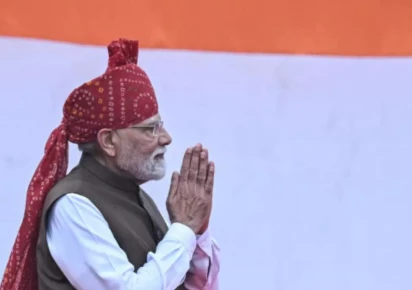
    NEW DELHI: Indian Prime Minister Narendra Modi has announced a major education and skills initiative aimed at addressing growing concerns among young people over employment, competitive exams and the rising cost of education. Speaking at India’s Independence Day ceremony at the Red Fort, Modi said the government would offer free online coaching for a range of competitive examinations. He said the programme would help reduce the financial pressure on families whose children spend years preparing for highly competitive entrance and recruitment tests. The announcement follows nationwide youth protests sparked by allegations of examination paper leaks and recruitment irregularities. The demonstrations intensified pressure on the government and contributed to the resignation of Education Minister Dharmendra Pradhan last month. Modi also announced an ambitious artificial intelligence skills programme, saying 10 million young Indians would receive AI-related training over the next year. The government hopes the initiative will equip young people with skills needed in a rapidly changing job market. India’s competitive education system has created a large private coaching industry, with many families spending heavily on preparation courses. Modi said free digital coaching would allow students to remain with their families while reducing the financial burden associated with preparation. During his speech, Modi also outlined a broader seven-point development and reform agenda covering manufacturing, agriculture, technology, defence and sectors linked to India’s cultural influence. He reiterated his goal of transforming India into a developed economy within the next two decades. The prime minister also announced plans for additional semiconductor facilities and nuclear reactors, with the government seeking to expand domestic manufacturing and energy capacity. Modi said India’s young population would be central to achieving the country’s development ambitions, describing youth as the biggest potential beneficiaries of a more prosperous and developed India.

  • | | | |

    Pakistan, Qatar push US-Iran 10-day ceasefire plan

    WASHINGTON/DOHA: Pakistan, Qatar and Egypt have stepped up diplomatic efforts to prevent a wider conflict in the Middle East by proposing a 10-day ceasefire between the United States and Iran, according to a report by US news outlet Axios. However, neither side has yet agreed to the proposal as military tensions continue to escalate. The report said regional mediators are working behind the scenes to create space for diplomacy after days of intense hostilities between Washington and Tehran. The proposed ceasefire aims to temporarily halt military operations, restore maritime security in the Strait of Hormuz and open the door for renewed negotiations. According to sources familiar with the mediation efforts, the proposal has been shared with both governments, but officials in Washington and Tehran have so far withheld their approval. Diplomats say both countries appear determined to strengthen their military positions before considering any pause in fighting. The report added that US President Donald Trump is weighing two key options. The first is to endorse a limited 10-day ceasefire that could reduce regional tensions and revive diplomatic talks. The second involves expanding military operations alongside Israel in an effort to increase pressure on Iran and force concessions over security and nuclear issues. US officials quoted in the report said no final decision has been made, adding that developments over the coming days are expected to determine Washington’s next move. Despite several days of military operations, the report noted that the United States and Israel have not succeeded in eliminating Iran’s influence over the strategically vital Strait of Hormuz, through which a significant portion of the world’s oil supplies passes. Analysts warn that any prolonged disruption in the waterway could have serious consequences for global energy markets. The report also highlighted growing domestic pressure on the Trump administration as rising fuel prices in the United States fuel public concern over the economic cost of continued military action. Diplomatic momentum reportedly suffered a setback after two American soldiers were killed in an Iranian missile attack in Jordan over the weekend. Following the incident, Washington is said to have adopted a tougher stance while continuing diplomatic contacts. A senior US official confirmed that backchannel discussions remain active but stressed that the United States intends to respond to the deaths of its troops. The official added that military operations could continue for as long as President Trump considers necessary. Regional sources nevertheless expressed cautious optimism, saying negotiations remain the best path forward, as neither Washington nor Tehran is believed to be in a position to impose a lasting solution through military means alone.

  • |

    Mohammad Amir questions Babar Azam’s Test captaincy return

    LAHORE: Former Pakistan fast bowler Mohammad Amir has questioned the Pakistan Cricket Board’s decision to reappoint Babar Azam as the national Test captain, saying the star batter should have been allowed to focus entirely on his batting rather than taking on the added responsibility of leadership. Babar recently returned as Pakistan’s Test skipper after replacing Shan Masood, whose tenure ended after 16 matches, during which Pakistan recorded four wins and suffered 12 defeats. The appointment marks Babar’s second stint as Test captain, having previously led the national side from 2020 to 2023. The PCB’s decision has generated considerable discussion among former players and cricket analysts, with opinions divided over whether the move will strengthen the team’s performance. Speaking during an interview with Wisden, Amir said he was not convinced that handing the captaincy back to Babar was the right decision, especially at a time when the batter had only recently regained his form after a prolonged lean patch. According to Amir, Babar’s improved performances with the bat should have been the team’s primary priority, rather than placing additional expectations on him through captaincy. “He has only just started performing well again after a long period. He’s finally looking in good rhythm,” Amir said, suggesting that leadership duties could once again distract him from maintaining consistency with the bat. The former left-arm pacer also highlighted the intense scrutiny faced by Pakistan’s captains, noting that media attention and public expectations make the role particularly demanding. He argued that every decision taken by the captain is closely examined, creating constant pressure both on and off the field. In his view, such an environment could affect a player’s confidence and performance if they are already carrying the responsibility of being the team’s leading batter. Amir, who represented Pakistan in 36 Tests, 61 One-Day Internationals and 62 T20 Internationals, described Babar as the country’s finest batter and said his greatest contribution comes through scoring runs. “I believe Babar should have played as a player with a free mind and less pressure because he is the best player Pakistan has right now,” he said. While stressing that his remarks reflected his personal opinion, Amir concluded that reappointing Babar as Test captain was not the ideal solution for Pakistan cricket. He added that protecting the team’s premier batter from additional pressure would have been a better long-term strategy as Pakistan looks to rebuild its Test fortunes.

  • | |

    How did the PIMS NICU tragedy unfold?

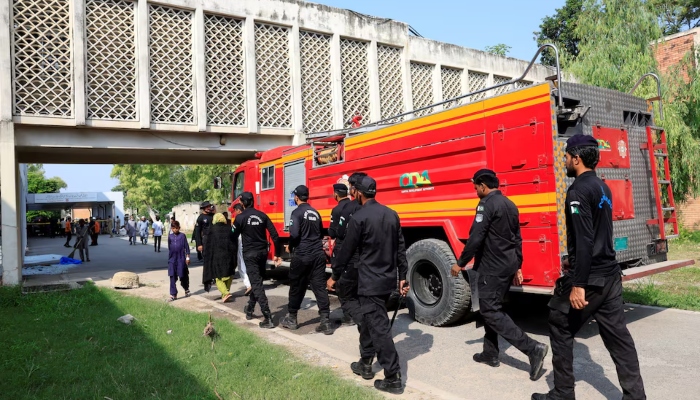
      An initial investigation by the Pakistan Institute of Medical Sciences (PIMS) has shed new light on the fire that killed 15 newborn babies at the hospital’s neonatal intensive care unit (NICU). According to the preliminary report prepared by the PIMS administration, a nebulizer attached to an incubator, used to deliver or monitor oxygen for a newborn, reportedly burst inside the NICU. The incident caused the oxygen to catch fire, triggering a blaze in the unit. The report says the fire initially remained limited but spread rapidly. Thick smoke entered the babies’ breathing system through the oxygen pipeline, while the fire and heat also affected the infants. The preliminary findings indicate that the newborns died from a combination of oxygen supply failure, smoke inhalation and burn injuries. Earlier, rescue officials and hospital authorities had attributed the fire to an air-conditioner compressor explosion in the gynecology ward. They also said the presence of oxygen cylinders contributed to the rapid spread of the flames. One newborn reportedly survived the incident. The tragedy has raised serious questions about safety arrangements and emergency response at the hospital. The bodies of the deceased newborns have been handed over to their families. Parents and eyewitnesses alleged that hospital staff were not present in the nursery when the fire broke out and claimed that the doors remained closed, making it difficult to evacuate the babies. They also questioned the response time of rescue teams. PIMS Executive Director, however, rejected claims that staff had abandoned the NICU. He said two doctors, four nurses and other staff members were present in the intensive care unit at the time of the incident. He also maintained that the hospital had an adequate fire safety system. The Capital Development Authority (CDA) said its rescue teams reached the hospital soon after receiving the emergency call. According to the authority, firefighters brought the blaze under control and immediately shifted the affected newborns to the intensive care unit for treatment. The district administration has formed an eight-member inquiry committee to determine the exact cause of the fire and assess whether safety protocols were properly followed. The committee has been directed to submit its findings within 24 hours. The conflicting accounts about the source of the fire have increased pressure for a detailed and impartial investigation. The final inquiry is expected to establish how the fire started, why it spread so quickly, whether the oxygen system played a role and whether the hospital staff and emergency services responded according to established safety procedures.

  • | | |

    PSX gains nearly 1,380 points in early Friday trad…

    The Pakistan Stock Exchange (PSX) staged a strong recovery during the first half of trading on Friday, with the benchmark KSE-100 Index climbing nearly 1,380 points before trading was temporarily suspended for the weekly Friday prayer break. The market opened on a positive note, extending gains throughout the morning session as investors returned to selective buying following recent losses driven by regional geopolitical tensions. By midday, the KSE-100 Index had risen 1,378 points, or 0.79%, to reach 176,926. During intraday trading, the benchmark touched a high of 177,108.66 before easing slightly. The index also found support around 176,405.33, indicating sustained buying interest across key sectors. Trading activity remained steady, with more than 101.8 million shares changing hands during the morning session. The total value of traded shares reached approximately Rs6.96 billion, reflecting healthy market participation despite the shortened trading period. Trading was suspended at midday in line with the Pakistan Stock Exchange’s routine Friday prayer break and was scheduled to resume later in the afternoon. The market’s rebound followed a volatile trading week shaped by uncertainty in the Middle East and fluctuations in global oil prices. Investors appeared to set aside concerns over rising regional tensions and instead focused on attractive valuations in selected stocks. On Thursday, the benchmark index had closed at 175,547.98 after selling pressure weighed on investor sentiment. Friday’s recovery helped the market regain a significant portion of those losses. Broader market performance also remained positive, with the All-Share Index and several sectoral indices posting gains during the morning session. Market participants are expected to closely monitor both domestic economic developments and geopolitical events in the Middle East as trading resumes, with investors assessing their potential impact on market sentiment in the coming sessions.

  • |

    UN extends Volker Turk’s term as Rights Chief

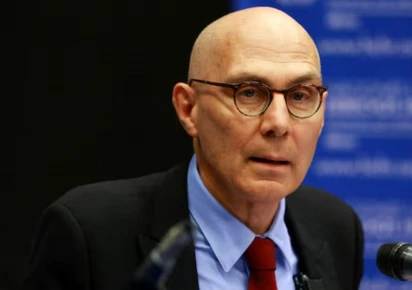
    The United Nations General Assembly has approved a second four-year term for UN High Commissioner for Human Rights Volker Turk. The decision was made despite strong opposition from the United States, Russia and Israel. The 193-member General Assembly voted overwhelmingly in favour of the extension. A total of 144 countries voted for the proposal. Ten opposed it, while 13 abstained. UN Secretary-General Antonio Guterres had proposed Turk for another full term. His current term is due to end in October. The vote came amid growing tensions between Washington and the United Nations. The US administration has reduced funding for several UN agencies. It has also withdrawn from a number of UN bodies. Washington had asked the General Assembly to delay the vote. US officials said more time was needed for consultations and review. The United States also warned that it could reconsider its relationship with the UN if the proposal was approved. US Representative for UN Management and Reform Jeff Bartos criticised the process before the vote. He said the decision did not allow enough time for discussion and oversight by member states. Bartos warned that the US could reassess its engagement, participation and funding of the United Nations. Despite the warning, most member states supported Turk. The European Union backed the extension. Several African and Latin American countries also voted in favour. China supported the proposal as well. Russia strongly opposed Turk’s reappointment. Russian Deputy Ambassador to the UN Dmitry Chumakov accused the rights chief of bias against Moscow. He also criticised Turk for making what Russia described as unfounded allegations against the country. Russia had proposed a shorter extension for Turk. Its plan would have kept him in the position only until the end of 2026. The General Assembly rejected that proposal by a large majority. Israel also opposed the decision. The Israeli Foreign Ministry criticised Guterres’ proposal and said the decision should have been left to the next UN secretary-general. Turk has faced criticism from several powerful countries because of his strong position on human rights issues. He has criticised Russia’s war in Ukraine. He has also raised concerns about Israel’s actions in Gaza. Turk has further called for investigations into deaths involving people held in US immigration custody. Human rights organisations have defended his position. They say the UN human rights chief must be able to challenge powerful countries when fundamental freedoms are threatened. The position has become increasingly important as conflicts and restrictions on civil liberties continue in different parts of the world. Turk is an Austrian lawyer. He has worked with the United Nations for decades. His UN career has included senior positions in Geneva. He has also served in field locations, including Kosovo. With the General Assembly’s latest decision, Turk will become the first UN human rights chief to serve two complete four-year terms. His reappointment is likely to keep human rights at the centre of international debate. It may also further test relations between the United Nations and countries that have opposed his approach.

Leave a Reply

Your email address will not be published. Required fields are marked *