only government school

Only 7% government school students enter top colleges

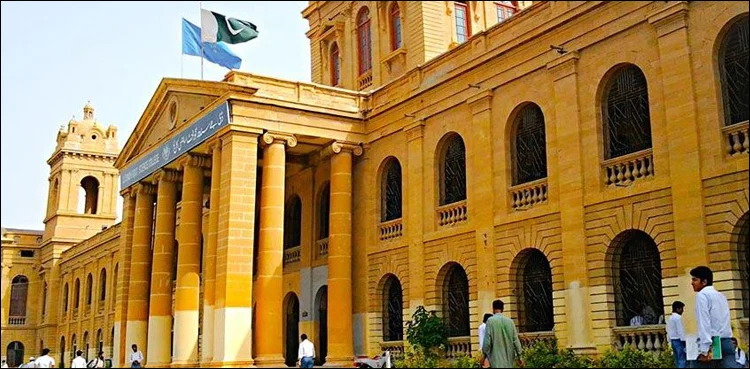
Karachi – The standard of education in Karachi’s government schools has declined to a worrying level with only 7 percent of students admitted to top government colleges this year coming from government schools.

Questions are being raised over the quality of education in Karachi’s government schools. Sources in the Education Department have revealed that the admission rate of government school students in top government colleges is extremely low. As many as 93 percent of admissions in Karachi’s government colleges were secured by students from private schools.

According to Education Department sources, a total of 13,211 students were admitted to Karachi’s top 10 government colleges. However, only 947 students among them came from government schools.

According to the sources, at Adamjee Government Science College, only 28 government school students were admitted out of a total of 613 admissions. At DJ Sindh Government Science College, only 44 government school students secured admission out of 1,258 admissions.

Similarly, Delhi Government Science College admitted 801 students of whom only 28 were from government schools. At Government Boys College Nazimabad, only 60 government school students were admitted out of a total of 1,317 admissions.

Similar Posts

  • | | |

    Rising energy costs expand trade deficit

      Pakistan’s trade deficit widened considerably in July 2026 as increasing energy prices pushed the country’s import bill higher, despite continued growth in exports. According to data released by the Pakistan Bureau of Statistics (PBS), the trade gap reached $3.95 billion, representing an increase of more than 25 percent compared with $3.15 billion recorded in July 2025. The official figures revealed that imports increased by nearly 18 percent on a year-on-year basis, while exports also recorded an encouraging rise of almost 10 percent during the same period. Although export earnings improved, they were insufficient to offset the rapid increase in import payments. Saad Hanif, Head of Research at Ismail Iqbal Securities, said the latest figures indicate that Pakistan’s demand for imported goods remains strong. According to him, economic activity has continued to recover, resulting in higher import volumes across several sectors. He noted that the country’s reliance on imported products has remained significant despite efforts to improve the trade balance. Import payments climbed to $6.89 billion in July, compared with $5.84 billion during the same month last year. Hanif explained that the main reason behind the sharp increase was the rise in global energy prices, particularly due to ongoing tensions in the Middle East. He said petroleum products and Re-gasified Liquefied Natural Gas (RLNG) became around 40 to 50 percent more expensive than they were a year earlier. Since Pakistan depends heavily on imported fuel, energy purchases typically account for between one-fifth and one-quarter of the country’s total import expenditure. In addition, higher imports of automobiles, industrial equipment and agricultural machinery also contributed to the increase in the import bill. Exports, however, showed positive momentum. Pakistan earned $2.94 billion from exports in July, compared with $2.68 billion in the corresponding month of 2025. Hanif attributed this improvement mainly to stronger food exports, especially rice, which regained momentum in international markets. He also highlighted that the textile industry continues to be Pakistan’s largest export sector, contributing more than half of the country’s total export earnings. Textile exports remained stable throughout the previous fiscal year, helping maintain overall export performance. When compared with the previous month, Pakistan’s trade position showed some improvement. The trade deficit had reached $4.66 billion in June 2026 but narrowed by more than 15 percent in July. This improvement was largely driven by a remarkable 31 percent monthly increase in exports, one of the strongest monthly gains recorded in recent years, while import payments remained almost unchanged. The Ministry of Finance described the development as a positive beginning to the new fiscal year and linked it to government measures aimed at supporting exports, improving industrial productivity and reducing the cost of doing business. Meanwhile, Prime Minister Shehbaz Sharif has directed authorities to accelerate the privatisation of state-owned electricity distribution companies by attracting reputable international investors. During a review meeting in Islamabad, he instructed the Privatisation Commission to complete its restructuring within one month and ensure that the entire process follows international standards, transparent procedures and fixed timelines. He also stressed that consumer interests should remain fully protected throughout the privatisation process. The prime minister welcomed the positive response received during recent investor roadshows held in Pakistan, Turkey, Saudi Arabia and China for the first-phase privatisation of Gepco, Fesco and Iesco. He further instructed the Privatisation Commission to recruit qualified professionals in finance, law and information technology to strengthen its institutional capacity. In addition, he ordered the establishment of an effective grievance mechanism to address consumer complaints after the companies are transferred to private ownership. The government expects bidding for the three electricity distribution companies to take place between October and December 2026, with the aim of attracting investment from Gulf and other Asian markets.

  • | |

    CJP Yahya Afridi begins two-day hearing at Karachi…

    Chief Justice of Pakistan Justice Yahya Afridi arrived in Karachi on Monday to preside over a two-day sitting of the Supreme Court’s Karachi Registry. Following his arrival, the Supreme Court issued the official cause list outlining the benches that will hear a wide range of civil and criminal cases during the proceedings. According to the cause list, Bench No. 1 will be headed by Chief Justice Yahya Afridi and include Justice Musarrat Hilali. The bench will hear several important civil and criminal matters listed before the Karachi Registry over the next two days. Bench No. 2 will comprise Justice Muneeb Akhtar and Justice Jamal Khan Mandokhail. The judges will hear cases assigned to them under the published schedule and dispose of pending matters brought before the court. Bench No. 3 will consist of Justice Muhammad Ali Mazhar, Justice Irfan Saadat Khan and Justice Aqeel Ahmed Abbasi. The three-member bench is also expected to hear a number of civil and constitutional cases during the two-day session. The Karachi Registry is scheduled to hear a variety of petitions and appeals filed by individuals, government departments and private parties. The hearings are part of the Supreme Court’s regular judicial work aimed at ensuring timely disposal of pending cases across the country. Lawyers and litigants are expected to appear before the respective benches according to the published cause list. The two-day sitting will provide an opportunity for the court to hear several pending matters and issue rulings in accordance with the law. The Supreme Court periodically holds sittings at its regional registries to improve access to justice and reduce the backlog of cases. The Karachi Registry remains one of the court’s busiest benches, handling a significant number of legal disputes from Sindh and surrounding areas. During the current session, the three benches will conduct hearings simultaneously to ensure efficient disposal of cases listed before the court.

  • | |

    Dallas conference backs UN-led Kashmir settlement

    DALLAS: A conference in Dallas, Texas, has called for a peaceful and lasting settlement of the Kashmir dispute in accordance with relevant United Nations resolutions. The conference was organised by Friends of Kashmir to mark the anniversary of India’s 2019 decision to revoke the special constitutional status of Jammu and Kashmir. Members of the Pakistani and Kashmiri diaspora, community leaders and representatives of Sikhs for Justice attended the event. Pakistan’s Consul General in Houston, Aftab Chaudhry, was the chief guest. Friends of Kashmir International Chairperson Ghazala Habib presided over the gathering. Speakers expressed solidarity with the people of Indian Illegally Occupied Jammu and Kashmir (IIOJK). They also voiced concerns about the situation in the region following the revocation of Article 370 and Article 35A. Addressing the participants, Chaudhry said Pakistan would continue providing diplomatic, political and moral support to the Kashmiri people. He said India’s decision to revoke the region’s special status had added further complexity to the long-running Kashmir dispute. Ghazala Habib urged the international community to pay greater attention to the concerns and rights of Kashmiris. She also highlighted cooperation between Kashmiri and Sikh communities in raising issues related to justice and human rights. Other speakers, including Aftab Siddiqui, Syed Fayaz Hasan, Ghulam Jahangra and Dr Fareeha Qazi, called for stronger international efforts to address the Kashmir dispute through peaceful means. Gurvinder Singh, who represented the Sikh community, stressed the importance of involving younger generations in campaigns focused on justice and human rights. At the conclusion of the conference, participants adopted a resolution calling for an internationally supported and peaceful settlement of the Kashmir issue in line with relevant UN resolutions. The resolution also urged the international community to help protect the fundamental rights of the Kashmiri people and maintain attention on the disputed region.

  • | | |

    Violence against Balochistan’s people is  futil…

    QUETTA: Balochistan Chief Minister Mir Sarfaraz Ahmed Bugti has criticised extremist elements for attempting to draw the Baloch population into a cycle of violence, saying attacks on infrastructure ultimately hurt ordinary citizens and undermine the province’s development. Speaking at the inauguration of the “Rasool-e-Rahmat (PBUH)” calligraphy exhibition, Bugti said the destruction of bridges, roads and commercial transport directly affects livelihoods and restricts economic opportunities for local communities. The chief minister said the provincial government would organise an international calligraphy exhibition, “Bayan-ul-Marsoos”, in Quetta next year, bringing together prominent artists and calligraphers from Turkey and other parts of the Islamic world. He said such international cultural events would help project Balochistan as a peaceful region with strong cultural and artistic traditions. He added that hosting major programmes around Pakistan’s Independence Day would also demonstrate the province’s potential to the international community. Discussing regional and international developments, Bugti said Pakistan’s growing cooperation with Saudi Arabia and Turkey reflected an evolving geopolitical landscape. He maintained that the defence cooperation was aimed at promoting security and peace rather than aggression. Bugti also expressed confidence in Pakistan’s future, praising the leadership of Prime Minister Shehbaz Sharif, President Asif Ali Zardari and Chief of Army Staff General Asim Munir. He said no force could stop Pakistan from moving towards what he described as a decisive victory.

  • | |

    New CCTV footage emerges in Mir Raza Ali murder in…

    A significant development has emerged in the investigation into the murder of Mir Raza Ali, a young resident of Karachi’s PECHS area, as police continue to gather evidence and analyze new surveillance footage to determine the circumstances surrounding the case. According to investigators, a newly obtained CCTV recording shows Mir Raza Ali walking along a street shortly before the incident. During the footage, he appears to remove a glowing object from his pocket and throw it away while continuing on foot. Police believe the object seen in the video is likely to be a mobile phone, although forensic analysis is still underway to confirm its identity. Officials said a local resident had earlier informed police about the location where a mobile phone was found. The spot reportedly matches the location visible in the CCTV footage where the illuminated object was discarded, strengthening investigators’ efforts to establish a timeline of events. Police have since collected additional evidence from the area where the phone was recovered. Investigators are examining the location for forensic clues that may help determine what happened before the victim’s death and whether anyone else was present at the scene. Authorities also confirmed that more CCTV footage tracing Mir Raza Ali’s movements has been obtained from nearby locations. The investigation team is carrying out a detailed technical and forensic examination of these recordings to reconstruct the victim’s final movements and identify any individuals who may have come into contact with him. Law enforcement officials said the investigation remains active and that all available evidence is being carefully reviewed. Detectives are comparing CCTV footage, forensic findings, witness statements, and digital evidence to establish a clearer picture of the events leading up to the murder. Police have not yet announced any arrests or identified suspects in connection with the case. They emphasized that multiple aspects of the investigation are being examined and that conclusions will only be drawn after all evidence has been thoroughly analyzed. The emergence of the latest CCTV footage is considered an important development because it may help investigators verify key details of the victim’s movements before the incident. However, officials cautioned that the investigation is still in progress, and no final determination has been made regarding the significance of the recovered mobile phone or its possible connection to the crime. Authorities have reiterated their commitment to pursuing every lead and using forensic and technical analysis to ensure that those responsible for Mir Raza Ali’s death are identified and brought to justice.

  • |

    Rain forecast for several parts of Pakistan as flood risk rises

    LAHORE: Rain is expected in several parts of Punjab, Balochistan, upper Khyber Pakhtunkhwa, Gilgit-Baltistan and Kashmir on Sunday, with authorities warning of possible flooding in urban centres and watercourses following increased rainfall. According to the latest weather forecast, scattered showers are likely to affect different areas of the country, while parts of Punjab may experience intermittent rain during the day. The weather in Lahore turned pleasant on Sunday morning after rainfall was reported in various parts of the provincial capital. The early-morning showers brought temporary relief from the prevailing heat and humidity, with residents experiencing relatively cooler conditions. Rain was reported in several localities, adding to the likelihood of water accumulation on roads and low-lying areas if the spell continues. Meanwhile, the National Emergency Operation Center has warned that rainfall could lead to a rise in water levels and flows in major rivers across the country. The situation has prompted authorities to remain vigilant and closely monitor river channels, drains and vulnerable urban areas. Officials have also highlighted the possibility of low to moderate-level urban flooding in several Punjab cities, including Rawalpindi, Gujranwala, Sialkot, Narowal, Faisalabad, Okara and Lahore. Heavy or persistent rainfall in these areas could result in water accumulating on roads, underpasses and other low-lying locations, potentially disrupting traffic and routine activities. Relevant departments have been advised to remain prepared to respond to any emergency arising from the weather system. The risk is not limited to Punjab. In Khyber Pakhtunkhwa, low to moderate flooding has also been forecast in rivers, streams and rain-fed waterways in Chitral, Upper Dir, Abbottabad, Shangla, Khyber, Orakzai, Kohat, Tank and North and South Waziristan. Authorities have urged local administrations and disaster-management agencies in vulnerable districts to maintain close coordination and monitor developments, particularly in areas located near rivers, streams and seasonal rain drains. Residents in low-lying and flood-prone areas have been advised to exercise caution, avoid unnecessary travel during heavy rainfall and stay informed about weather and flood alerts issued by the relevant authorities. The latest warnings come as the country continues to monitor the impact of the ongoing monsoon activity, which can cause sudden increases in river flows and urban flooding in areas receiving intense or prolonged rainfall.

Leave a Reply

Your email address will not be published. Required fields are marked *