termites damage wood

How termites damage wood

Termites can quietly damage wooden furniture, doors frames cupboards and other wooden items.  They often live in groups and feed on wood so ignoring them can lead to serious damage.

Signs of termites

You may notice a few common signs of termite activity. Wood may become swollen small mud like layers may appear around wooden items or solid wood may produce a hollow sound when tapped.  Termites can damage wood at any time of the year.

If you notice a serious infestation it is better to contact a pest control professional. However for small or early infestations some simple home methods may help.

Salt water

Mix salt with lukewarm water until it dissolves completely. Put the mixture into a syringe and apply it to affected wooden areas such as door frames.

This can be repeated for several days. However it may not completely remove a large infestation.

Sunlight

Direct sunlight may help reduce termite activity. Place affected furniture in strong sunlight for around 3 to 5 days if possible. Make sure the furniture can safely handle outdoor exposure.

Neem Oil

Neem oil is another commonly used home remedy. Apply a small amount directly to areas where termites are present.  It may help reduce termite activity although its effect can take time.

Vinegar and lemon spray

For a small affected area, mix half a cup of white vinegar with the juice of two lemons. Put the mixture in a spray bottle and apply it to the affected area. This can be tried twice a day for a few days.

When to get Professional help

Home remedies may be useful for small or early termite problems but they are not a guaranteed solution.  If termites have spread widely or are causing major damage professional pest treatment is the safer and more effective option.

Similar Posts

  • |

    Walking through time: A personal journey inside Na…

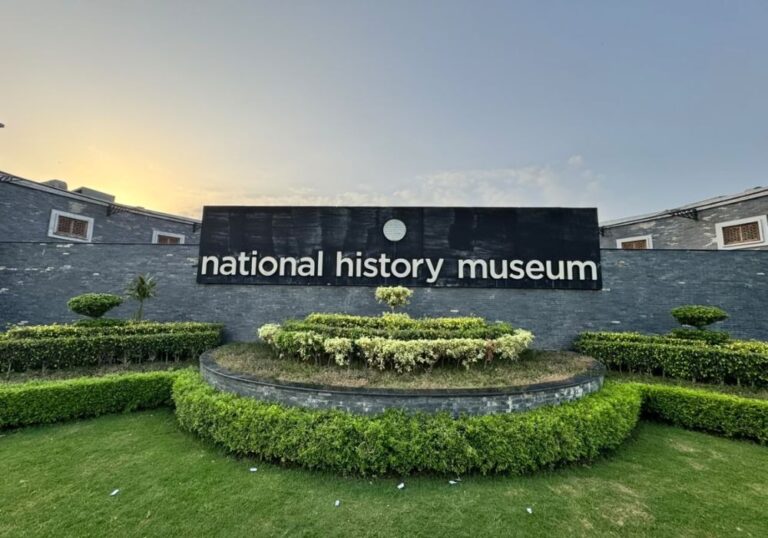
    The rain had just stopped when I reached Lahore’s National History Museum. The roads were quieter than usual, the air felt fresh and, for the first time in weeks, I wasn’t in a hurry. I had postponed this visit for years, ever since a brief stop during my internship at the Lahore Museum left me wishing for more time. This Sunday, I finally had it. I have also realised something over the past few weeks. Waiting for friends before exploring new places often means never going at all. So I decided to spend the afternoon on my own, following nothing except curiosity. As I entered the museum, Floor Supervisor Tabish welcomed me and arranged a guided tour with Muhammad Shamsher, a PhD scholar in History who also serves as one of NHM’s guides. His explanations never sounded like a lecture. Instead, he connected historical events with the people behind them, making every gallery feel like part of one continuing story. Growing up, I believed museums were places where objects sat behind glass while visitors quietly read information panels. That idea came from childhood visits to museums in Islamabad, Taxila and Harappa, and later from my internship at Lahore Museum. The National History Museum challenged that idea completely. Through digital displays, sound, projection and interactive exhibits, history became something to experience rather than simply observe. Every gallery encouraged visitors to slow down and become part of the story unfolding around them. One exhibit that caught my attention focused on the making of Minar-e-Pakistan. Like many Pakistanis, I had always admired the monument without knowing much about the person who designed it. The museum introduced architect Nasreddin Murat-Khan and displayed photographs that offered a glimpse into the creative process behind one of Pakistan’s most recognisable landmarks. It reminded me how often we celebrate monuments while forgetting the people who imagined them. The journey then moved towards Partition, where history became deeply personal. The restored railway carriage, once part of the North Western Railway, stood quietly inside the gallery. Visitors could step inside and experience a virtual reality presentation recreating the migration of 1947. I had watched countless documentaries and films about Partition, but sitting inside that carriage created an entirely different feeling. The sounds, voices and uncertainty surrounding the experience made history feel much closer than any textbook ever could. The museum then shifted from the birth of Pakistan to the challenge of building a new country. One gallery recreated the early government offices established after independence. I found myself studying old files, furniture and official records, imagining the enormous responsibility carried by those tasked with running a newly created nation. Nearby, early Pakistani passports were displayed inside glass cases. Different in design from today’s passports, they represented the same hope of a country beginning to define its identity. Another section I found especially engaging was Camera from the Past. Visitors could stand before a vintage-style camera and have their photograph taken, creating a small connection between the present and the past. The gallery also highlighted photographer Aziz Ahmed Azmi, whose images documented Pakistan’s early years. Looking at his work, I realised that photographs often become history long after the moment they capture has passed. Perhaps the gallery where I spent the most time was Popular Culture. Having studied Mass Communication with a specialisation in Theatre, Film and Television and continuing to work in journalism, I naturally found myself drawn towards the colourful Lollywood posters and displays celebrating Pakistan’s cinematic heritage. Reading about Azra, the country’s first colour film, and Zinda Laash, Pakistan’s first horror film, reminded me how rich our film history is, even if many younger audiences know little about it today. Before leaving, I also explored Husn-e-Hunar, an exhibition celebrating Pakistan’s traditional craftsmanship. Alongside literature, music and cultural displays, it served as a reminder that a nation’s identity is shaped not only by political events but also by its artists, craftsmen and storytellers. When I stepped back outside, I realised I had spent far longer inside the museum than I had planned. I didn’t leave with pages of notes or dozens of photographs. Instead, I left with a greater appreciation for how history can be presented when museums invite visitors to participate rather than simply observe. The National History Museum doesn’t just preserve Pakistan’s past. It encourages visitors to pause, ask questions and discover the stories that continue to shape the country today.

  • |

    “The Ark” in an era of ecological reckoning

    In summer 2026, the power plant “Batcave” opened a group exhibition The Ark curated by renowned painter Eric Fischl alongside Powerhouse Arts President Eric Shiner. Bringing together roughly 90 animal sculptures by a multigenerational line-up of international artists. The exhibition uses the ancient narrative of the Great Flood as a mirror for modern ecological and cultural turmoil. The concept behind The Ark draws directly from the myth of the Deluge, an archetypal narrative found across diverse world traditions where catastrophic waters sweep away the old world to test human stewardship and resilience. Yet rather than adopting a purely apocalyptic or alarmist tone, the exhibition framing focuses on empathy, kinship, and survival. Co-curator Eric Fischl notes that animal sculpture offers a unique vehicle for exploring profound existential truths. Animal sculpture also captures raw instinct and sublime wonder through physical form. By placing non-human creatures at the center of the narrative, the exhibition encourages viewers to rethink their place within the broader web of life.  From Historic Whaling Port to Post-Industrial Sanctuary The journey of The Ark mirrors its thematic concern with changing environments. An earlier, smaller iteration of the show debuted at The Church in Sag Harbor, Long Island. A historic coastal town deeply tied to the 19th-century whaling industry. In that seaside context, the sculptures called to mind maritime history and marine life under threat. When relocated and expanded for Powerhouse Arts in Brooklyn, the narrative shifted dramatically toward urban ecology and environmental remediation. Displaying ninety animal figures inside a rehabilitated power plant adjacent to heavily polluted urban waters creates a poignant visual tension. The physical site itself acts as a metaphor: an industrial relic turned creative sanctuary, witnessing the slow process of ecological recovery alongside the artistic preservation of animal life. Masterpieces of Instinct and Form The roster of participating artists spans decades and stylistic movements, uniting legendary figures of contemporary art with bold emerging voices. Pioneering Figures: Works by artists such as Maurizio Cattelan, Kiki Smith, Bruce Nauman, Sarah Lucas, and Jim Dine showcase how animals have long served as psychological stand-ins for human vulnerability, angst, and desire. Expanded Roster for Brooklyn: Newly added works by artists including Wangechi Mutu, Cannupa Hanska Luger, François-Xavier Lalanne, Nohemí Pérez, and Nari Ward introduce critical perspectives on Indigenous land sovereignty, post-colonial environments, and urban material reuse. Craft and Material Labor: Because Powerhouse Arts functions primarily as a fabrication facility, the exhibition doubles as a tribute to artistic craftsmanship. Visitors encounter bronze beasts, woven totems, carved wood, and reassembled found materials, celebrating the tactile labor behind each creation.   By encouraging close physical encounters with these sculpted beasts, The Ark bridges the gap between artistic tradition and ecological activism. It asks visitors to consider what merits saving when tides rise. It is suggesting that compassion for vulnerable creatures may well be our most essential anchor in turbulent times.

  • Multani mitti for oily skin

    You do not always need expensive beauty products to keep your skin clean, fresh and healthy. Multani Mitti also known as Fuller’s Earth has been used in home beauty routines for many years. It is especially popular among people with oily skin because it can help absorb extra oil and remove dirt from the skin. Multani Mitti can be used occasionally as a simple face mask but it should not be considered a cure for every skin problem. A healthy skincare routine should also include regular cleansing proper moisturizing a balanced diet and protection from the sun. Helpful for oily skin Oily skin can make the face look shiny, and some people may also experience breakouts.  Multani Mitti can absorb some of the extra oil and leave the skin feeling cleaner. To make a simple mask mix Multani Mitti with water or rose water to form a smooth paste. Apply it gently to the face and wash it off before it becomes completely dry. For soft and fresh looking skin For a softer and fresher feel, you can mix a small amount of honey with Multani Mitti. Honey may help prevent excessive dryness while Multani Mitti can help remove excess oil and dirt from the skin. Apply the mask for a few minutes and then rinse it off with lukewarm water. For acne prone skin If you have pimples it is better to keep your skincare routine simple instead of trying many different home remedies.  Multani Mitti mixed with water can be used occasionally but it is not a treatment for severe acne. If you have painful pimples swelling serious irritation or ongoing breakouts it is better to consult a dermatologist. Use it gently as a scrub Some people mix Multani Mitti with gentle ingredients, such as finely ground almonds and use it as a face mask. However avoid rubbing the face harshly. Strong scrubbing can damage the skin’s protective barrier and may cause redness dryness or irritation. For dull or tanned skin Spending a lot of time in the sun can make the skin look dull or tanned. A simple Multani Mitti mask may help the skin feel clean and refreshed but it is not a permanent treatment for sun tan. Using sunscreen regularly is much more important for protecting the skin from harmful sunlight. Be careful if you have sensitive skin Natural ingredients are not suitable for everyone. Multani Mitti may cause dryness or irritation in some people especially those with sensitive skin.  Adding strong ingredients such as lemon or tomato may increase the risk of irritation. Before trying a new face mask apply a small amount to a limited area of skin first. If you notice burning itching redness or irritation wash it off immediately and stop using it. For healthy and fresh looking skin a simple skincare routine and regular sun protection are more important than using many beauty products.

  • AI creates new viruses not found in nature

    US researchers have claimed to have developed new viruses with the help of artificial intelligence (AI) that did not previously exist in nature. The development is being described as an important breakthrough in the scientific community. According to a study published in the scientific journal Science, researchers from Stanford University and the Broad Institute of MIT and Harvard used a naturally occurring phage as a basis and employed AI to generate thousands of genetic designs. A phage is a type of virus that infects bacteria. The researchers chemically synthesized around 300 of these genetic designs and tested them in a laboratory. Of these, 16 viruses proved to be viable. According to the study, a combination of the AI-designed viruses was more effective than naturally occurring viruses at eliminating E. coli bacteria. The researchers said the approach expands the scope of synthetic genomics and could pave the way for more effective phage therapies against rapidly evolving pathogens. However, experts have expressed concerns about potential biological security risks alongside the possible medical benefits of the development. Isaac Bogoch, an infectious disease specialist at the University of Toronto and Toronto General Hospital said AI-designed viruses could have certain benefits such as creating specialized bacteriophages that could help tackle antibiotic-resistant infections. He warned that the same ability to design complete and functional viruses could pose a serious biological security threat if used to create harmful pathogens. Therefore, strong safety regulations, screening and monitoring are necessary alongside the technology. Professor Fatima Wafai of the University of New South Wales in Sydney said the current research does not pose a direct threat to humans because phages infect only bacteria. However, she noted that the methods used in the research could potentially be misused for harmful purposes. Tom Ellis, an expert in synthetic genome engineering at Imperial College London described the research as impressive but said it also demonstrates that AI is still far from being able to design complex genomes, cells and large viruses. He explained that the phage genome used in the study is very small and relatively simple while the genome of the virus that causes COVID-19 is approximately six times larger. The complexity of designing larger genomes increases rapidly. According to Ellis, the research does have implications for biological security. However, modifying naturally occurring viruses remains a more serious and immediate threat than creating new pathogens with AI. Hsu Li Yang, director of the Asia Centre for Health Security in Singapore also said that it may be possible to use AI to make viruses more dangerous. However, he cautioned against exaggerating the implications of the research. He clarified that the study does not mean that anyone with basic scientific or laboratory knowledge can now create life-saving or dangerous viruses at home. Considerable technical expertise is still required to physically produce a virus in a laboratory after it has been designed. Experts say the research is both medically promising and concerning from a biological security perspective as it demonstrates a technology that could potentially be used for both beneficial and harmful purposes.

  • Why Airplanes turn off the AC before takeoff

    Have you ever noticed that the cabin feels warmer just before a plane takes off? Many passengers wonder why the air conditioning seems to stop working at that moment. The reason is not a technical problem it is part of the aircraft’s normal operating procedure. When passengers board the plane the cabin is usually cooled by an external air conditioning system at the airport. This keeps everyone comfortable while the aircraft is parked at the gate. Just before departure the external power and cooling supply are disconnected.  At that point the aircraft switches to its Auxiliary Power Unit (APU) a small onboard engine that provides electricity and cool air until the main engines are fully running. During takeoff pilots need as much engine power as possible to safely lift the aircraft into the air.  To help achieve this some systems that are not essential during takeoff including parts of the air conditioning and climate control system may be temporarily reduced or switched off. This allows more engine power to be used for takeoff instead of running cabin cooling systems. Former American pilot John Cox explains that this short changeover happens because the aircraft moves from ground power to its own power systems. Once the engines are operating normally and the plane reaches a stable stage of flight the air conditioning returns to normal and the cabin quickly becomes comfortable again. So, if the cabin feels a little warm before takeoff there is usually no reason to worry. It is a normal part of the flight process designed to support a safe and efficient departure.

  • |

    Press play on nostalgia

    There is an absurdly satisfying drama to slipping a shiny compact disc into a silver portable CD player. Next up, click the lid shut and voila! Listen to that faint mechanical whir-click as the laser reads the track. We live in an era where a glass smartphone screen gives you instant access to 100 million songs. And when one chooses to carry around a plastic disc player, it feels less like a modern inconvenience and more like a heroic act of rebellion. Well! In order to figure out why Gen Z is suddenly obsessing over vintage music players that take up actual pocket space, we have to look at the wild journey of how we got here. From Giant Plastic Discs to Invisible Spotify Soundtracks The evolution of portable music is essentially a history of humans constantly trading physical soul for pure convenience. The Boombox & Tape Era Back in 1979, the original Sony Walkman fundamentally changed society by letting people walk down the street with their own personal soundtrack playing on magnetic cassette tape. It was revolutionary, even if you occasionally had to fix a tangled tape using a No. 2 pencil. The Silver Disc Reign By the late 80s and 90s, the CD player (affectionately nicknamed the Discman, though brands like Goodmans ruled the market too) took over. Suddenly, music was crisp, digital and skip-resistant. The condition that provided your player had a reliable 45-second anti-shock buffer and you didn’t jump off while walking! Albums came with jewel cases, actual artwork and fold-out lyric booklets you could read on the bus. The MP3 Tidal Wave The early 2000s crushed physical media into tiny digital files. The iPod and cheap MP3 players meant you could hoard thousands of low-bitrate songs in your pocket. They effectively killed off the concept of buying an album just to listen to it as a cohesive story. The Infinite Streaming Void Today, platforms like Spotify and Apple Music serve us endless music on demand.  Every track on Earth is accessible with a single tap. That’s why music easily morphs into background noise rather than a meaningful event. The Retro Revival You’d think the generation born into high-speed Wi-Fi would turn their noses up at retro tech. However, physical music sales among young listeners are skyrocketing. It turns out that living entirely online gets exhausting. The antique way of listening to music hits differently for a few fun reasons. Spotify’s algorithm loves to push you into a hyper-specific mood bubble. On the other hand, physical disc into a portable player forces you to listen to an entire album from track 1 to track 20 the way the artist intended. On top, there are no skips, no ads, no doomscrolling while listening. There is a joy in pressing actual spring-loaded plastic buttons instead of tapping a flat screen. The mechanical clicks, volume dials and tangled headphone wires bring a sensory connection. In my opinion, a digital app just can’t match. In the subscription economy, you don’t own anything. If a streaming platform loses licensing rights, your favorite album vanishes overnight. A physical CD on your shelf, however, is yours forever. Now, let’s be honest! Pulled-out wired earbuds connected to a metallic silver CD player looking like straight out of Y2K sci-fi is an undeniable aesthetic flex.

Leave a Reply

Your email address will not be published. Required fields are marked *