motorway police must
| |

Motorway police must avoid unlawful challans

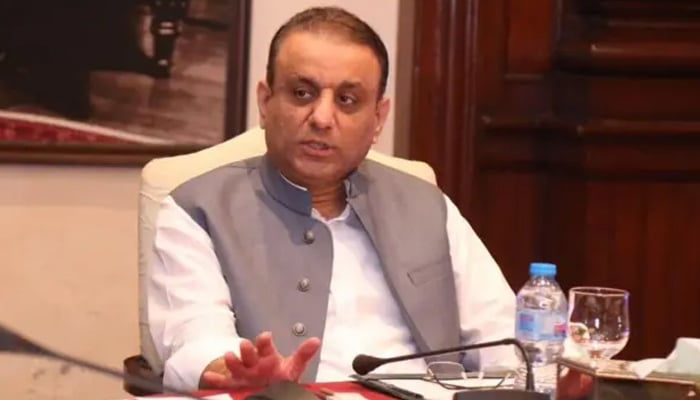
Federal Minister for Communications Abdul Aleem Khan has assured goods transporters that he will not allow the motorway police to issue a single unjustified or unlawful traffic challan, stressing that the government will honour all commitments made to the transport sector.

The minister made the remarks at a reception hosted in his honour by goods transporters following the successful conclusion of negotiations between transporters and the government.

Addressing the gathering, Abdul Aleem Khan urged transporters to comply with the axle-load policy, saying the regulation serves their own interests. He explained that carrying excessive weight puts additional pressure on vehicles and causes significant damage to roads and other transport infrastructure.

The federal minister acknowledged the vital role of the transport industry in keeping the country’s economy moving. He said the government needs the cooperation of transporters to support economic growth and improve the overall transportation system.

Abdul Aleem Khan also assured the transport community that he would personally monitor their concerns if necessary. “If required, I will stand on the roads myself to observe the problems faced by transporters,” he said, underlining his commitment to resolving issues through direct engagement.

The development follows high-level talks chaired by Sindh Governor Syed Muhammad Nehal Hashmi, during which representatives of the Pakistan Goods Transport Association held negotiations with federal and provincial government officials.

The talks ended successfully, prompting goods transporters to suspend their nationwide strike, which had continued for nine days. The transporters have agreed to postpone the strike for 40 days and resume the movement of goods across the country.

The agreement has temporarily eased tensions between the government and the transport sector, while both sides are expected to use the 40-day period to address outstanding concerns and work toward a longer-term resolution.
Similar Posts

  • | |

    14 August: Films that bring Quaid-e-Azam’s i…

    Every year on August 14, Pakistan celebrates its Independence Day, marking the day in 1947 when the country emerged as an independent nation. The occasion is a reminder of the struggle, sacrifices and leadership that shaped Pakistan’s journey towards independence. Among the many personalities connected with this historic movement, Quaid-e-Azam Muhammad Ali Jinnah remains one of the most important figures. From his early career as a lawyer to becoming the leader of the Pakistan Movement, Jinnah’s life has continued to inspire filmmakers, writers and storytellers. Over the years, several films, dramas and documentaries have explored different phases of his life, highlighting his political struggle, leadership and the challenges behind the creation of Pakistan. One of the most notable films based on his life is Jinnah (1998), directed by Jamil Dehlavi. The biographical drama stars Christopher Lee as Quaid-e-Azam Muhammad Ali Jinnah and follows his journey from a successful lawyer to the founder of Pakistan. The film focuses on important moments from Jinnah’s political career, including his efforts during the Pakistan Movement and the challenges he faced while working towards the creation of a separate homeland. Written by Akbar S. Ahmed, Farrukh Dhondy and Jamil Dehlavi, Jinnah presents a detailed portrayal of the events that shaped one of South Asia’s most influential leaders. Although the film received mixed responses at the time of its release, it remains one of the most recognised international productions based on the life of Pakistan’s founder. On television, Jinnah Se Quaid Tak became another important drama that introduced audiences to different stages of Jinnah’s life. The PTV production showed his transformation from a successful barrister into a political leader who played a central role in the independence movement. Directed by Mohsin Ali, the drama focused on key historical events and highlighted Jinnah’s dedication towards achieving his political goals. Through television, the series reached audiences who wanted to explore the personal and political journey behind Pakistan’s creation. Another production that explores Jinnah’s legacy is the documentary Quaid-e-Azam: Founder of Pakistan. Unlike fictional portrayals, documentaries use archival footage, historical records and expert discussions to present a closer look at his personal life and political career. These documentaries provide viewers with an opportunity to understand not only the major events surrounding independence but also the leadership qualities and decisions that shaped Pakistan’s early years. Apart from these productions, Pakistani cinema and television have continued to revisit stories connected with the country’s history and independence. Historical films and dramas allow audiences to connect with important moments from the past while introducing younger generations to personalities who played a significant role in shaping the nation. As Pakistan celebrates its Independence Day, these cinematic portrayals offer a chance to revisit the journey behind August 14, 1947. They highlight the determination, political struggle and leadership that contributed to the creation of Pakistan. Through films, dramas and documentaries, the story of Quaid-e-Azam Muhammad Ali Jinnah continues to remain part of Pakistan’s cultural memory, allowing new generations to learn about the man behind the independence movement.

  • | |

    Mir Raza exhumation halted over medical board row

    The exhumation of Mir Ali Raza’s body has been postponed for Friday, his father’s lawyer Jibran Nasir said. Nasir spoke to the media and raised serious concerns over the medical board formed for the case. He said a third notification regarding the medical board had been issued. According to Nasir, the first and second medical boards were merged to form a new third board. However, he said the family does not accept the latest notification. He said Mir Raza’s parents had already recorded their statements before the investigating officer. Nasir said the family would not allow the exhumation to take place under the supervision of what he called a disputed medical board. He described the exhumation as a sensitive legal process. He said the court had directed the police surgeon and police to take necessary action. A medical team was formed after the court’s directions. However, Nasir alleged that the medical board was changed overnight. He said the sudden change had raised serious questions for the family. He questioned why doctors from Karachi were not included in the new board. He also questioned the removal of doctors who had been part of the earlier medical board. Nasir asked why a new board was formed without first withdrawing the previous notification. He also questioned why the new notification was issued during the night. He questioned the role of the Director General Health in Hyderabad. He asked under which law the official became the supervising officer of the medical board. Nasir also questioned how the orders of the Karachi police surgeon were superseded. He asked which order of the health secretary was referred to in the letter issued from Hyderabad. He said the family would not accept any alternative arrangement. They would only recognize the previously constituted eight-member medical board. Nasir also raised questions about the investigation into Mir Raza’s death. He said the investigating officer could not recover a bullet casing for eight days. According to him, the casing was recovered only after the family approached the court. He questioned how important the casing could be without the recovery of the pistol allegedly used in the incident. Nasir also alleged that the investigating officer had not properly inspected Mir Raza’s room. He said the family had lost a young member and wanted the case to be investigated with complete seriousness. He stressed that an exhumation was not an ordinary procedure. Meanwhile, preparations for the exhumation had been completed at the PECHS cemetery in Karachi. A police team had also reached the cemetery.

  • | |

    Rain inundates homes, shops in Rawalpindi

    Heavy rain in Rawalpindi has caused flooding in several low-lying areas, creating difficulties for residents. Water entered homes in Sadiqabad and Dhoke Elahi Bakhsh. Residents faced problems as rainwater accumulated inside residential areas. Several major roads were also affected. Rainwater collected on Murree Road, Rawal Road and Dhoke Khaba, disrupting traffic and making movement difficult. The situation became more difficult as WASA drainage teams had yet to reach some affected areas. Residents were waiting for authorities to clear the accumulated water. Water also entered shops in some areas, causing inconvenience to traders and residents. Meanwhile, the rain in Rawalpindi and Islamabad later stopped. Following the end of the rainfall, the water level in Nullah Lai began to fall. At Kattarian, the water level dropped to around 14 feet. At the Gawalmandi Bridge, the water level was recorded at around 16 feet. The rainfall has highlighted the vulnerability of low-lying areas in Rawalpindi to urban flooding. Residents have called for timely drainage operations to prevent rainwater from entering homes and businesses. The weather department has also forecast rain at some places in Punjab, Balochistan and Khyber Pakhtunkhwa. Authorities are expected to remain alert in areas vulnerable to flooding and water accumulation.

  • | |

    Rubio and Bessent stayed aboard decoy jet as Trump…

    Two members of President Donald Trump’s cabinet remained aboard a decoy aircraft after Trump quietly departed the plane and boarded a different flight while in Turkey last month, according to a US television network report. Secretary of State Marco Rubio and Treasury Secretary Scott Bessent stayed on what was widely believed to be Air Force One and did not join the alternate flight arranged for Trump due to security concerns tied to Iran. Trump boarded Air Force One on July 8 alongside both officials as well as members of the traveling press before slipping away via a catering truck, which transported him discreetly to a separate military aircraft. Because the designation “Air Force One” applies to whichever plane the president occupies, the original aircraft retained the call sign even after Trump had already left it, effectively turning it into the decoy. According to the report, Rubio and Bessent remained on the first aircraft in order to preserve the presidential line of succession in case anything happened to Trump during the flight. Under that line of succession, Vice President JD Vance would assume power if the president died or became incapacitated, followed by the Speaker of the House and the President Pro Tempore of the Senate. The Secretary of State ranks next in the order, followed by the Treasury Secretary. Others who stayed aboard the original aircraft designated as Air Force One included White House Deputy Chief of Staff Stephen Miller and White House communications director Steven Cheung. The second aircraft that carried Trump out of Ankara also included Defense Secretary Pete Hegseth, according to separate US media reports. Speaking to reporters Monday night, Trump said the decision to carry out the plane switch came from the US military and the Secret Service, who he said wanted him to travel on a different aircraft. He did not provide specifics about the nature of the security threat, saying only that he regularly receives numerous threats and that any consequential president faces the same. A request for comment sent to the White House had not been answered as of publication.

  • | |

    AJK orders re-polling at 23 stations in Bagh

    MUZAFFARABAD: The Azad Jammu and Kashmir Election Commission has ordered re-polling at 23 polling stations in two constituencies of Bagh district following disruptions during the third phase of the AJK elections. Re-polling will take place on August 15. It will cover nine polling stations in LA-15 Bagh Central and 14 polling stations in LA-16 Bagh East. The decision was taken after voting at several polling stations either failed to start on time or was disrupted and later cancelled. The four constituencies of Bagh and Haveli went to the polls on August 10. Elections in other parts of Poonch Division had earlier been delayed because of law and order concerns. In LA-15, PPP candidate Sardar Ziaul Qamar was leading according to unofficial results. He had secured 16,637 votes. PML-N candidate Mushtaq Ahmed Minhas was in second place with 15,015 votes. Jamaat-i-Islami candidate Brigadier (retd) Dr Mohammad Khan had received 12,259 votes. The nine polling stations scheduled for re-polling have more than 5,000 registered voters. Their votes could have a significant impact on the final result. Former AJK prime minister Sardar Tanveer Ilyas, who contested the constituency on the PTI ticket in the 2021 election, appeared to have fallen out of contention. A close contest was also reported in LA-16 Bagh East. PML-N candidate Sardar Mir Akbar was leading with 19,515 votes. PPP candidate Sardar Qamaruz Zaman had secured 16,290 votes. The 14 polling stations where re-polling has been ordered reportedly account for around 7,200 votes. Meanwhile, the Election Commission announced the preliminary result for LA-14 Dhirkot. Sajid Iqbal Abbasi of the Awami Dast-o-Bazu Party defeated Muslim Conference president Sardar Attique Ahmed Khan. Abbasi secured 40,522 votes, while Attique received 19,637 votes. The result marked a major setback for the Muslim Conference, which has historically been one of the region’s prominent political parties. The result of LA-17 Haveli also became controversial. PML-N candidate Chaudhry Mohsin Aziz demanded a recount and alleged irregularities in election documents. Aziz claimed that Form-24 documents from different polling stations had been altered. Election officials began examining the complaint. Ballot papers and other election material were also reportedly moved under security to Muzaffarabad for further counting and verification. Aziz called on PPP Chairman Bilawal Bhutto-Zardari to support a recount. He claimed that results signed by presiding officers showed him leading by around 8,600 votes. However, state broadcaster Radio Pakistan, citing the Election Commission, reported that PPP candidate and AJK Prime Minister Faisal Mumtaz Rathore had won the LA-17 seat. The AJK elections are being held in three phases. The polls have taken place amid political tensions and law and order concerns in several parts of the region. The Pakistan Muslim League-Nawaz has so far secured 24 seats, while the Pakistan Peoples Party has won 10 constituencies, according to the available results. The first two phases also witnessed allegations of electoral irregularities, clashes and political disputes. Both major parties have traded accusations over the conduct of the elections. The third phase was originally planned across all 11 constituencies of Poonch Division. However, voting was allowed only in Bagh and Haveli because of security concerns.

  • |

    UoG reviews over Rs6bn budget for FY2026-27

    GUJRAT: The Finance and Planning Committee of the University of Gujrat (UoG) has reviewed a proposed budget exceeding Rs6 billion for the fiscal year 2026-27, with a focus on financial sustainability, institutional reforms, student welfare and infrastructure development. The proposed budget was discussed during the committee’s 36th meeting held at the Hafiz Hayat Campus under the chairmanship of Vice Chancellor Prof Dr Zahoor Ul Haq, recipient of the Tamgha-e-Imtiaz. The budget will now be placed before the university syndicate for final approval. During the meeting, the committee was informed that the university had strengthened its financial position through improved governance and prudent resource management. Officials said the institution generated nearly Rs3.75 billion through its own resources, reducing dependence on external financial support. The meeting was told that governance reforms and administrative measures implemented during the previous financial year resulted in savings of around Rs400 million. University management said these savings had been redirected towards student welfare initiatives and development projects. According to the budget proposal, around Rs370 million has been allocated for scholarships, enabling financial assistance for nearly one-third of the university’s enrolled students. Officials said the move reflects the institution’s commitment to ensuring that deserving students continue their education despite financial constraints. The committee also approved plans to invest Rs450 million in the purchase of 18 new buses to improve transport facilities for students and staff. The university estimates the new fleet will reduce annual transportation expenses by nearly Rs60 million through improved operational efficiency. Members were further informed that the university is expanding the use of solar energy across its campuses. The initiative is expected to significantly reduce electricity costs while supporting environmentally sustainable operations. The meeting also reviewed reforms related to faculty workload management, which reportedly generated savings of Rs119 million. University officials said the measures were designed to optimise academic resources without affecting the quality of teaching and learning. Vice Chancellor Prof Dr Zahoor Ul Haq emphasised the importance of financial discipline, transparency and efficient utilisation of resources to ensure the university’s long-term growth. He said the proposed budget reflects the institution’s priorities of academic excellence, student support and sustainable development. The meeting was attended by Additional Treasurer Ghulam Safdar Malik, Additional Secretary Higher Education Department Zahida Azhar, Section Officer Finance Department Asghar Ali, who joined online, Registrar Muhammad Naeem Butt, Dean Faculty of Social Sciences Prof Dr Faisal Mahmood Mirza, Academic Council members Dr Ashfaq Ahmad Mirza and Dr Bushra Akram, Deputy Treasurer Muhammad Fawaz Khokhar, Director ORIC Prof Dr Audil Rashid and other committee members.

Leave a Reply

Your email address will not be published. Required fields are marked *