rlng prices jump
| | | |

RLNG prices jump up to 34.6% amid supply disruptio…

ISLAMABAD: The Oil and Gas Regulatory Authority (OGRA) has increased the prices of re-gasified liquefied natural gas (RLNG) by up to 34.6% for July 2026, as continued disruptions in LNG supplies from Qatar forced Pakistan to rely on expensive spot market imports.

According to an official notification, consumers of Sui Southern Gas Company (SSGC) will face the largest increase. The RLNG price for SSGC consumers has been fixed at $25.087 per MMBtu, following an increase of $6.4512 per MMBtu, representing a 34.6% rise.

Consumers of Sui Northern Gas Pipelines Limited (SNGPL) will also pay higher rates. The regulator fixed the RLNG price at $25.8388 per MMBtu, an increase of $6.316 per MMBtu, or 32.35%, compared with the previous month.

Officials said the latest increase was mainly driven by a sharp decline in LNG imports during July. Pakistan received only five LNG cargoes throughout the month, making it the third-lowest monthly import volume since the country started importing LNG.

The reduced supply forced the country to purchase all available LNG cargoes from the international spot market, where prices are generally much higher and more volatile than long-term contractual rates.

Energy officials said state-owned Pakistan LNG Limited arranged all five cargoes from the spot market. Meanwhile, Pakistan did not receive any LNG shipments under its long-term agreements with Qatar during the month.

The interruption in Qatari supplies has continued since damage to energy infrastructure earlier this year, affecting LNG exports to several countries in Asia and Europe, including Pakistan.

Experts said the absence of lower-cost LNG from long-term contracts has significantly increased Pakistan’s import bill and placed additional pressure on the country’s energy sector.

Since the regional conflict in the Middle East began earlier this year, RLNG prices in Pakistan have risen by more than 144%, making energy substantially more expensive for industries, businesses and other consumers.
Similar Posts

  • | |

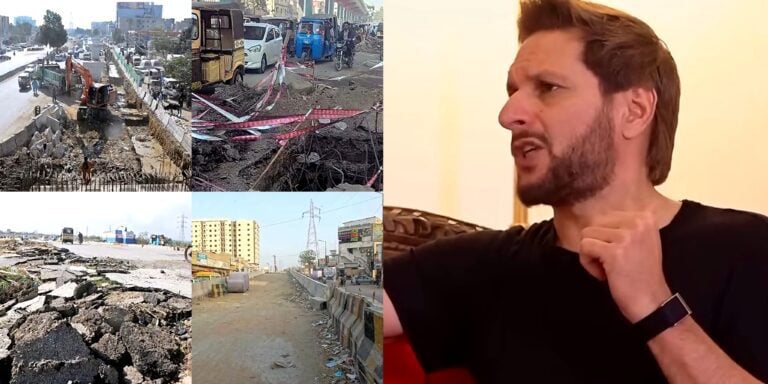
    Shahid Afridi voices concern over Karachi’s decline

    Shahid Afridi has always had a complicated relationship with Karachi, the city of his origins and the one he eventually left behind. He now lives in Islamabad with his family, a decision he has attributed to the worsening state of roads and cleanliness in the city. But a recent visit to Karachi, his first in several months, brought those feelings rushing back with full force, and he did not hold them in. In a video shared on social media following his visit, Afridi spoke directly to his followers about what he saw during a trip to the Korangi area, and his disappointment was palpable from the very first word. “Day before yesterday, I was visiting the Korangi area,” he said. “Friends, I don’t understand this. We give you billions of rupees’ business and this city provides millions of jobs, but I feel embarrassed seeing the condition of Karachi.” He then described the particular disillusionment that comes from returning to a place with hope, only to find it unchanged. “I came to Karachi after years, thinking there must have been some construction work or development, but it is still the same. It disappoints me.” He named specific areas to illustrate his point, places that residents have long complained about and that appear to have remained in a state of perpetual half-construction. “The areas around Korangi, the side area, university road have been under construction for years,” he said. “The city needs a lot of development, and the authorities need to work on it. Please do something. I hope Karachi gets better.” The appeal was genuine and the frustration behind it real, coming from a man who grew up in the city and clearly retains a deep affection for it even in its current condition. The contrast between Karachi’s economic significance and the state of its infrastructure is one that has been raised by residents, civic activists and public figures for years. Afridi’s remarks gave fresh voice to that long-running complaint. The public reaction, however, was not entirely sympathetic. While some supporters agreed with the substance of his concerns, many commenters pointed to what they saw as a glaring contradiction. Afridi has been vocal in his political commentary and has aligned himself publicly with certain political figures and parties over the years. For many Karachiites, the individuals and systems he has supported are the very ones responsible for the neglect he was now condemning. The criticism was pointed: it is easier to express disappointment from Islamabad than to have consistently held accountable those who could have made a difference. The response reflects a broader frustration that many Pakistanis feel when public figures with platform and influence choose to react rather than act. Shahid Afridi’s concern for Karachi appears genuine. Whether that concern translates into sustained accountability for those in power over the city’s administration is the question his critics were loudly putting back to him.

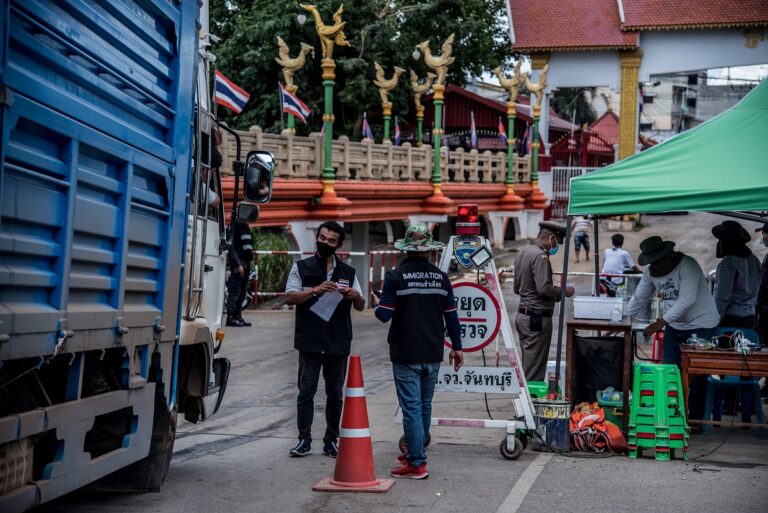
  • Thailand–Cambodia Ceasefire Takes Effect, to Be Monitored for 72 Hours

    BANGKOK – Thailand and Cambodia have agreed to implement a ceasefire along their shared border, effective from noon today, with a 72-hour observation period aimed at ending months of deadly clashes. The agreement was signed by Cambodian Defence Minister Gen Tea Seiha and Thai Defence Minister Gen Nattaphon Narkphanit following a special General Border Committee […]

  • |

    Azma Bukhari slams PPP over performance

    Punjab Information Minister Azma Bukhari has criticised the Pakistan Peoples Party (PPP), accusing it of avoiding questions about its performance and shifting the blame onto the federal government through what she described as a misleading political narrative. In a statement, Bukhari said the PPP had failed to address major public issues in Sindh, particularly in Karachi, where, according to her, residents continued to struggle with water shortages and depended on the tanker mafia for access to basic necessities. She questioned the PPP’s criticism of the federal government and said the party should focus on its own performance instead of creating what she called a false narrative against the centre. Commenting on the response to previous floods, Bukhari said PPP Chairman Bilawal Bhutto Zardari had advised the government to seek donations during the crisis. She claimed that Punjab Chief Minister Maryam Nawaz took practical steps to respond to the disaster using the province’s own resources, while the federal government did not provide the support Punjab expected. The provincial information minister also criticised what she described as the PPP’s repeated complaints against its political opponents. She said the party’s tendency to “cry foul” had become a routine part of its politics. Bukhari added that political tensions could ease if the opposition reduced its rhetoric. “If the political temperature comes down from the other side, we will also respond in the same manner,” she said. Taking aim at the Sindh government’s healthcare system, Bukhari questioned why senior leaders and ministers from the province travelled abroad for medical treatment if the healthcare facilities in Sindh were as effective as the PPP claimed. She also highlighted the Punjab government’s focus on southern Punjab, saying Chief Minister Maryam Nawaz had given the region special attention and was working to improve development and public services there. Bukhari further accused the PPP of adopting different standards when discussing political and administrative issues. She said the party frequently used the southern Punjab issue as a political card while opposing similar demands for the creation of new administrative units in Sindh. The Punjab information minister argued that the PPP should maintain consistency in its political position and apply the same principles to administrative reforms across the country.

  • |

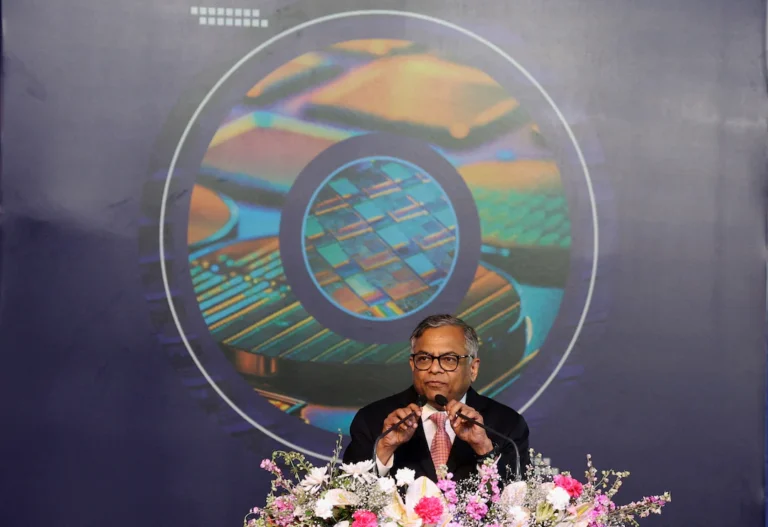
    Tata chairman to step down amid trust tensions

    NEW DELHI: N. Chandrasekaran, chairman of Tata Sons, has decided not to seek another term at the helm of India’s major business conglomerate, bringing his leadership tenure towards an end after growing differences with the group’s influential charitable trust arm. Chandrasekaran, 63, said on Wednesday that he would remain chairman until his current term expires in February. He said greater certainty over the group’s future leadership was necessary because several major projects were at critical stages. The decision follows months of disagreement between Chandrasekaran and Tata Trusts, which controls about 66% of Tata Sons. The two sides have reportedly differed over several important strategic and governance issues. Among the disputed matters were the future ownership and structure of Tata Sons, whether the company should pursue a stock market listing, losses at Air India, the proposed departure of a minority shareholder and the composition of the board. Tata Sons had postponed a decision on Chandrasekaran’s reappointment in February after Noel Tata, chairman of Tata Trusts, opposed extending his tenure. Six months later, the issue remained unresolved. A person familiar with Chandrasekaran’s decision said the disagreement with Tata Trusts was the sole reason behind his decision not to seek another term. Tata Trusts has not publicly commented on the development. Leadership change comes at difficult time Chandrasekaran’s planned departure comes as the Tata Group faces challenges across several major businesses. Air India, which is controlled by Tata, has been struggling with losses following its return to private ownership. Tata’s automotive operations are also facing pressure, including weaker performance at Jaguar Land Rover. The group’s electronics business has additionally faced the consequences of a recent data leak that affected major customers, including Apple and Tesla. The leadership uncertainty immediately affected investor sentiment. Shares of Tata Consultancy Services, where Chandrasekaran spent most of his career, fell around 5% following news of his planned departure. Tata Motors also declined, while Tata Steel and Titan recorded smaller losses. From TCS intern to Tata chairman Chandrasekaran joined Tata Consultancy Services as an intern in 1987 and spent his entire corporate career with the information technology company. He rose through the ranks and became TCS chief executive in 2009. He was appointed chairman of Tata Sons in 2017. He became the first chairman of Tata Sons who was not a member of the Tata family or from the Parsi community. Under his leadership, Tata expanded its presence across technology, automobiles, aviation, electronics and consumer businesses. The Tata Group is one of India’s oldest and most prominent business organisations. Its companies operate across a wide range of sectors, with products and services ranging from salt and consumer goods to automobiles, hotels, aviation and software. The group’s publicly listed companies had a combined market value of hundreds of billions of dollars at the end of March, highlighting the potential significance of any leadership transition at Tata Sons. Tata’s history has also included previous disputes between its corporate leadership and charitable trusts. One of the most prominent occurred in 2016, when the Tata Sons board removed chairman Cyrus Mistry following a bitter dispute involving governance and the group’s leadership.

  • | | |

    17-year-old killed after trailer hits motorcycle i…

    A tragic road accident involving a heavy vehicle claimed the life of a 17-year-old boy and left another person injured in Karachi on Tuesday, raising fresh concerns over road safety and the movement of heavy traffic across the city. According to rescue officials, the accident occurred near Gulshan Hadeed Turn in the Steel Town area when a trailer collided with a motorcycle carrying two riders. The impact of the crash proved fatal for one of the riders, who died at the scene, while the second rider sustained injuries. The deceased was identified as 17-year-old Usman, a resident of Shah Latif Town. Rescue teams responded promptly to the incident and shifted both the victim’s body and the injured person to Jinnah Postgraduate Medical Centre (JPMC) for legal formalities and medical treatment. Authorities have not yet released the identity or condition of the injured individual. Police officials from Steel Town stated that the trailer driver was taken into custody immediately after the accident. The trailer involved in the collision has also been seized as part of the investigation. A case is being processed, and authorities are examining the circumstances that led to the crash. The latest incident adds to a growing number of fatal accidents involving heavy vehicles in Karachi, where trailers, dumpers, and trucks have frequently been linked to deadly road crashes. Such incidents have repeatedly sparked public concern over traffic management, enforcement of road safety regulations, and the operation of heavy vehicles on busy roads. Residents and road safety advocates have urged authorities to implement stricter measures, including better monitoring of heavy transport vehicles, improved driver training, and stronger enforcement of traffic laws. Many believe that regulating the movement of heavy vehicles during peak traffic hours could significantly reduce the risk of similar accidents. The investigation into the Gulshan Hadeed accident is ongoing, and police are expected to determine whether negligence or traffic violations contributed to the fatal collision. Meanwhile, the loss of another young life has once again highlighted the urgent need for comprehensive road safety reforms to prevent further tragedies on Karachi’s roads.

  • | |

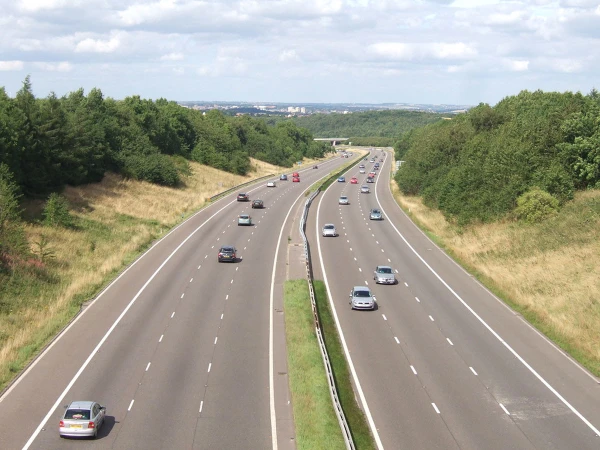
    Motorway controversy rocks Senate: officer suspend…

    Islamabad: A controversy over a motorway incident involving a couple’s video and growing concerns over delayed road projects dominated the Senate Standing Committee on Communications meeting, where lawmakers questioned the role of motorway police and raised serious concerns over incomplete highways due to funding problems. The committee was informed that the motorway police officer involved in the incident had been suspended and an inquiry was underway after officials clarified that moral policing is not part of the department’s official duties. Inspector General Motorway Police told the committee that the incident took place on 16 July when motorway police found a vehicle parked on the roadside. He said an argument developed when the vehicle moved away. The IG informed lawmakers that stopping people for moral reasons is not included in the motorway police’s standard operating procedures. He assured the committee that action had been taken against the officer involved and the inquiry would be completed soon. The Senate Standing Committee on Communications, chaired by Senator Pervaiz Rashid, also reviewed major road development issues and questioned delays in important infrastructure projects. During the meeting, lawmakers raised concerns over the incomplete Kuchlak to Zhob N50 Highway project, which covers around 298 kilometres. Officials informed the committee that the project remains unfinished because of a shortage of funds. Senator Zameer Hussain Ghumro questioned why new development plans are considered when existing projects are still waiting for completion. The Additional Secretary of the Ministry of Communications informed the committee that no new projects had been started during the current year. The committee stressed that incomplete projects increase public difficulties and may also increase costs because delays often create additional financial pressure. Members discussed improving the National Highway Authority’s funding system so road projects can continue without stopping due to delayed payments. The committee recommended that project funds should be released every three months to ensure contractors receive payments on time and construction work continues smoothly. Officials also discussed creating a bridge financial system to prevent road projects from being affected by temporary funding shortages. The committee was briefed about financial matters related to development loans and agreed that funding mechanisms should be discussed separately to create better policies for future projects. Senator Muhammad Abdul Qadir also raised concerns about the distribution of development funds and pointed out differences in allocation for road projects. He said that out of Rs116 billion approved for Balochistan, around Rs100 billion was allocated for the N25 Highway project. The committee said better planning was needed to ensure development funds are distributed effectively and important routes receive timely attention. Several questions related to road projects in Chitral and Balochistan, including CPEC related highways and the Karachi Bela Road, could not be discussed because the members who had submitted the questions were not present.

Leave a Reply

Your email address will not be published. Required fields are marked *