oil prices fall
| | | |

Oil prices fall as Hormuz shipments resume

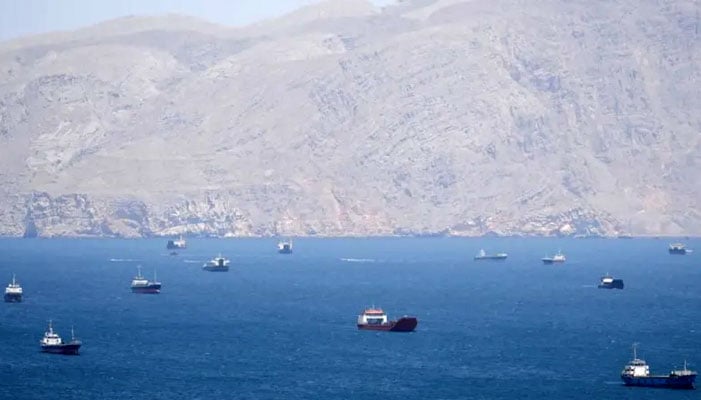
Global oil prices fell sharply on Friday, extending weekly losses as crude exports through the Strait of Hormuz gradually resumed, easing fears of prolonged supply disruptions despite a fresh maritime security incident near Oman.

Brent crude dropped nearly 2% to $73.76 per barrel, while US West Texas Intermediate (WTI) crude also declined around 2% to $70.43 per barrel during trading. The decline reflected growing market confidence that oil supplies from the Gulf were beginning to recover after months of disruption.

Saudi Arabia’s state-owned energy company resumed crude loading operations at the Ras Tanura export terminal after a suspension of almost four months. Shipping data indicated that two very large crude carriers were loading oil at the terminal, with another tanker waiting offshore, signalling a gradual restoration of export activity.

Market analysts said traders were reacting positively to the increase in tanker movements through the Strait of Hormuz, one of the world’s most important energy corridors. However, they noted that crude demand from China remains weaker than expected, adding downward pressure on prices.

The market had briefly rallied a day earlier after a commercial cargo vessel was struck by an unidentified projectile near Oman, prompting the United Nations’ shipping agency to suspend its voluntary evacuation programme in the area. US officials later alleged that Iranian forces had fired on the vessel as it attempted to transit the strait, while Iranian authorities maintained that security could not be guaranteed for ships operating outside designated navigation routes.

Although oil shipments through the Strait of Hormuz have reached their highest level since the outbreak of the US-Israel-Iran conflict in February, overall maritime traffic remains well below normal levels recorded before the crisis.

Analysts observed that much of the recent increase in tanker traffic reflects vessels that had been stranded during the conflict finally leaving the Persian Gulf. They cautioned that inbound shipping remains limited, suggesting export flows could slow again once the backlog of delayed vessels has cleared.

Adding another layer of uncertainty, earthquakes in Venezuela raised fresh concerns about global oil supplies. Initial assessments indicated that the country’s major oilfields, refineries and export facilities escaped significant damage because they were located away from the hardest-hit regions. Nevertheless, widespread power outages have created uncertainty over whether Venezuela can maintain crude production near its recent level of approximately 1.2 million barrels per day.

Despite ongoing geopolitical tensions and supply risks, the resumption of Gulf oil exports outweighed immediate concerns, leaving both Brent and WTI crude on course for weekly losses of around eight percent.

Similar Posts

  • | |

    Errors found in Mir Raza Ali’s initial post-…

    Fresh discrepancies have emerged in the initial post-mortem report of young businessman Mir Raza Ali, raising concerns that the investigation into his death could be compromised. According to medico-legal sources, several inconsistencies were identified after examining photographs of the body, prompting questions about the accuracy of the preliminary findings. Sources said the images showed a small gunshot wound on the lower back and a larger wound on the chest. They added that the injuries appeared inconsistent with the details recorded in the initial post-mortem report. The photographs also reportedly showed the fingers of the victim’s left hand tightly clenched around broken grass, while suspicious marks were observed on the right hand. Medico-legal officials said these details could be significant for the ongoing investigation. According to the sources, another visible injury was found beneath the victim’s chin, which was also not adequately addressed in the preliminary examination. The report further suggested that the body was approximately 24 to 36 hours old at the time it was examined. Sources familiar with the findings said the gunshot entry wound appeared larger than the exit wound in the report, while the photographs indicated the bullet had entered from the back and exited through the front. They stressed that these contradictions require further forensic review. Officials also noted that the body appeared swollen in the photographs and the face was severely disfigured. They said a detailed examination of the head could have helped determine the exact cause of the facial injuries and provided additional forensic evidence. The discrepancies have raised concerns that flaws in the initial post-mortem documentation may affect the direction and credibility of the investigation.

  • | | |

    Rain-bearing weather system ends in Karachi, monso…

    The weather system responsible for recent rainfall in Karachi has weakened and dissipated, bringing an end to the latest spell of rain in the city. However, the Pakistan Meteorological Department (PMD) has indicated that Karachi is still likely to receive more monsoon showers during the month of August. On Monday, the city experienced stronger-than-usual southwesterly sea breezes, helping to keep temperatures slightly lower than the previous day. According to the PMD, wind speeds reached 42 kilometers per hour, while the maximum temperature settled at 34.4°C, around 0.8°C lower than the previous day’s reading. Meteorologists said the strong sea breeze played a key role in moderating daytime temperatures despite the prevailing humid conditions. Residents continued to experience warm and sticky weather, although the increased wind speed provided some relief from the heat. The Early Warning Center has forecast partly cloudy, hot, and humid conditions for the next three days. During this period, daytime temperatures are expected to range between 34°C and 36°C, with no immediate indication of widespread rainfall. According to PMD spokesperson and Deputy Director Anjum Nazir, the weather system that triggered recent rain across Karachi has now completely weakened. He noted that it is too early to determine whether a developing low-pressure area over the Bay of Bengal will have any direct impact on Karachi’s weather. Despite the end of the current system, weather experts remain optimistic about the city’s monsoon outlook. They expect Karachi to receive additional rainfall during August as seasonal monsoon activity continues across the region. The timing and intensity of future rain spells will depend on the movement and strength of upcoming weather systems. Karachi typically experiences high humidity during the monsoon season, and changing weather patterns can result in sudden showers even after dry periods. Residents are advised to stay updated with official weather forecasts, especially if they plan to travel or participate in outdoor activities. The latest update offers a brief pause in rainfall while highlighting that the monsoon season is far from over. Authorities will continue to monitor developing weather systems and issue forecasts as conditions evolve, helping residents prepare for any significant changes in the coming weeks.

  • |

    Senate seeks review of IPP deals over rising power costs

    Islamabad: Independent Power Producers (IPPs) faced strong criticism in the Senate after lawmakers raised serious concerns over billions of rupees paid as capacity payments to power plants that are not fully operational, calling the practice an unnecessary burden on electricity consumers. The issue was discussed during a meeting of the Senate Standing Committee on Cabinet Secretariat, where members questioned the impact of IPP agreements on electricity prices and demanded a complete review of power generation contracts. The committee expressed concern that consumers are paying for electricity capacity even when some power plants are not producing electricity according to expectations. Members said such payments increase the cost of electricity and place additional pressure on ordinary citizens already facing high power bills. The committee directed the National Electric Power Regulatory Authority (NEPRA) to provide complete details of all Independent Power Producers, including their electricity tariffs, generation capacity, installation costs and rate analysis. The committee chairman stressed that electricity prices must be reviewed and unnecessary costs should be removed to provide relief to consumers. The committee also discussed whether some IPPs had affected the government’s solar energy policy. Members observed that certain power producers had, apparently, created difficulties for the promotion of solar energy initiatives and questioned whether existing agreements were supporting or limiting cheaper energy options. The committee demanded transparency in tariff decisions and questioned why NEPRA had not provided complete tariff determination details despite repeated directions. Lawmakers said clear information was necessary to understand how electricity prices are decided and why consumers continue to face expensive power bills. The committee also discussed imported coal and RLNG based power plants installed in Punjab instead of coastal areas. Officials explained that these plants were established near major electricity demand areas to improve supply efficiency. However, the committee directed NEPRA to provide a detailed comparison of all power projects so that lawmakers could examine costs, benefits and long term impact. The chairman said the government should consider renegotiating IPP agreements where necessary and review contracts of projects that are no longer useful. He said reducing electricity prices requires serious decisions and better management of power sector agreements. The meeting was chaired by Senator Rana Mahmood Ul Hassan and attended by Senators Mohammed Abdul Qadir and Aimal Wali Khan, while other members participated in person and online. The committee also reviewed issues related to circular debt, which remains one of the biggest challenges facing Pakistan’s power sector. Members said increasing electricity costs and financial problems in the energy sector require immediate attention because they directly affect households, businesses and the national economy. The committee’s discussion highlighted concerns over the relationship between power generation costs, IPP agreements and electricity bills paid by consumers. Members called for accountability, transparency and a detailed examination of agreements to ensure that the electricity system works in the public interest. The committee will continue reviewing IPP agreements and related energy sector issues in upcoming

  • | |

    Iran rejects US claims over Strait of Hormuz control 

      Iran’s military on Thursday rejected US claims that ships were continuing to pass normally through the Strait of Hormuz, insisting that no vessel could safely transit the strategic waterway without permission from Tehran. According to news agency, Ebrahim Zolfghari, spokesperson for the Khatam al-Anbiya Central Headquarters, said the strait remained under Iran’s “full management and control.” He warned that commercial vessels and oil tankers would not be able to secure safe passage without the permission and supervision of Iran’s armed forces. Zolfghari’s remarks came amid growing tensions between Tehran and Washington over the strategically important waterway, through which a significant portion of global oil and energy shipments traditionally passes. The conflicting statements from Iran and the United States have further intensified uncertainty surrounding maritime traffic in the region. Meanwhile, US Defence Secretary Pete Hegseth said Washington had the capability to maintain a naval blockade of Iranian ports for as long as necessary. Speaking to reporters, Hegseth said the US Navy could sustain such an operation indefinitely by rotating ships in and out of the region. His comments came as Washington continued to assert its ability to control maritime activity around Iran. Tehran, however, has strongly disputed those claims and maintained that it retains authority over the Strait of Hormuz. Iranian officials have also issued increasingly forceful warnings about a potential future conflict. Brigadier General Rasoul Sanaei-Rad said on Thursday that Iran would respond more aggressively if another war occurred. Sanaei-Rad, who currently serves as a political adviser in the office of Iran’s Supreme Leader, said Iran had stood firm during the recent conflict and would be prepared to respond with greater determination in any possible future war. Although he did not directly name the United States, he accused Iran’s “enemy” of attempting to create divisions inside the country through economic pressure. According to the general, those efforts had failed to achieve their intended objective. His comments reflected the increasingly confrontational rhetoric coming from Iranian officials as tensions with Washington remain high. Iranian Foreign Minister Abbas Araghchi also criticised US assessments of the conflict, saying Washington had repeatedly miscalculated because of intelligence failures. Referring to the recent war, Araghchi said the United States had made serious errors in assessing the situation and was now making an even bigger mistake regarding the Strait of Hormuz. “Worse than fake news is fake intelligence. Be careful,” Araghchi said, warning against what he described as flawed assessments of Iran’s capabilities and intentions. His comments came a day after US President Donald Trump claimed on his Truth Social platform that the United States had “total control” over the strategic waterway. Iran has rejected the assertion, with officials continuing to emphasise Tehran’s role in regulating passage through the strait. Iranian officials have also sought to project confidence in the country’s ability to withstand continued pressure. A former Iranian diplomat, Abbas Khameyar, said the United States had failed what he described as a test of economic and military warfare against Iran. Khameyar argued that Tehran would not accept American conditions or surrender to US ambitions. He also claimed that Washington had effectively fallen into a “trap” involving the Strait of Hormuz. The latest statements from both sides underline the deepening confrontation over the waterway. While Washington maintains that it has the military capability to sustain a blockade, Tehran insists that maritime passage remains subject to its authority. With both countries issuing conflicting claims over control and navigation, the Strait of Hormuz has once again emerged as a major flashpoint in the wider regional confrontation.

  • |

    Talks accelerate to fully reopen Strait of Hormuz 

      Efforts to fully reopen the Strait of Hormuz, one of the world’s most strategically important maritime trade routes, are gaining momentum as diplomatic contacts between the United States and Iran continue to show encouraging progress. According to reports preparations are underway to restore unrestricted commercial navigation through the vital waterway, with an official announcement expected within the next few hours or by Wednesday. The Strait of Hormuz serves as a critical shipping corridor connecting the Persian Gulf to international waters, carrying a significant share of the world’s crude oil, liquefied natural gas, refined petroleum products, and other essential commodities. Any disruption in traffic through the strait has immediate consequences for global energy markets and international trade. Arab television channels have claimed that discussions aimed at fully reopening the waterway have advanced considerably. The reports suggest that diplomatic negotiations have entered their final stages and that an agreement could soon be announced, allowing commercial vessels to resume normal operations after a period of uncertainty. Earlier, U.S. Treasury Secretary Scott Bessent also expressed optimism regarding the ongoing negotiations. Speaking to media in Washington , he said there was a strong possibility that an agreement to reopen the Strait of Hormuz could be reached by Tuesday or Wednesday.Talks between Washington and Tehran are focused on ensuring the uninterrupted movement of commercial ships through the strategic passage while restoring stability to the region. During the interview, the Treasury Secretary noted that negotiations are continuing with the aim of normalizing the security situation in the Strait of Hormuz and guaranteeing safe passage for international shipping. He emphasized that both sides are engaged in discussions designed to reduce tensions and facilitate the free flow of maritime commerce. When asked whether Iran would be permitted to collect toll fees from vessels passing through the Strait of Hormuz, Bessent dismissed the possibility. He clarified that the proposed arrangement is based on the principle of complete freedom of navigation for all commercial vessels. According to him, the agreement is intended to ensure that ships from every nation can transit the waterway without facing additional charges or restrictions. If finalized, the agreement is expected to have far-reaching economic benefits. In addition to restoring the uninterrupted export of crude oil from Gulf producers, it would also enable the smooth transportation of fertilizers, refined petroleum products, industrial gases, and numerous other essential commodities. Industry experts believe that the reopening of the strait would significantly improve global supply chains that have been disrupted by regional tensions. Another major benefit of the proposed agreement would be the release of hundreds of commercial vessels currently delayed or stranded in the Persian Gulf due to security concerns. Allowing these ships to resume their voyages would ease congestion, reduce shipping costs, and improve delivery schedules for international trade. Economists suggest that a full reopening of the Strait of Hormuz could also help stabilize global energy markets. Increased supplies of crude oil and petroleum products would likely ease concerns over shortages, potentially leading to lower international oil prices. Reduced transportation costs could further contribute to price relief across several sectors, including manufacturing, agriculture, and consumer goods. While optimism surrounding the negotiations has grown, officials have yet to announce a formal agreement. Diplomatic efforts remain ongoing, and both governments are expected to continue discussions until a final framework is approved. Observers around the world are closely monitoring developments, as the outcome of these talks could have a significant impact on global trade, energy security, and regional stability. If the anticipated agreement is reached, it would mark an important diplomatic breakthrough, restoring confidence in one of the world’s busiest maritime corridors and helping normalize commercial activity throughout the Gulf region.

  • | |

    Security forces kill militants in Lakki Marwat ope…

    Security forces carried out intelligence-based operations in Lakki Marwat district of Khyber Pakhtunkhwa, killing several militants and destroying multiple hideouts during the latest counterterrorism action. According to security sources, the operation targeted militant hideouts following intelligence reports about their presence in the area. During the operation, several militants were killed, while others were reportedly injured as security forces engaged the suspects. Officials said a cache of weapons, ammunition and other militant-related material was recovered from the sites cleared during the operation. Security sources added that the operation dealt a significant blow to the militant network operating in the area. Clearance and search activities continued to ensure that no militants remained in the vicinity. Meanwhile, Federal Interior Minister Mohsin Naqvi praised the security forces for the successful operation. He commended the professionalism, courage and commitment displayed by the personnel in carrying out the intelligence-based action. The interior minister said the forces had foiled the militants’ plans through timely action and reaffirmed the government’s commitment to eliminating terrorism from the country. He added that intelligence-based operations would continue until militant groups are completely dismantled and lasting peace is restored. He also said the nation stands with the security forces and values their sacrifices in maintaining peace and protecting the country from terrorist threats.

Leave a Reply

Your email address will not be published. Required fields are marked *