back school tips

Back to school tips every parent should know

As the long summer vacation comes to an end, many parents wonder how to help their children get back into the school routine.

After weeks of sleeping in playing and enjoying free time waking up early getting ready on time and returning to schoolwork can be difficult.

Experts say that a few simple habits can make this change much easier. One of the most important steps is to fix your child’s sleep schedule.

A few days before school starts encourage children to go to bed earlier and wake up at the same time they will on school days.

Children aged 6 to 13 should get 9 to 11 hours of sleep each night while teenagers aged 13 to 17 need 8 to 10 hours.

Good sleep helps improve both physical health and mental focus. Experts also recommend keeping children away from phones tablets computers and other electronic devices for at least one hour before bedtime.

Instead parents can talk with them about their teachers classmates school activities and exciting things they can look forward to.

Positive conversations can help reduce anxiety and build excitement. A healthy breakfast is another important part of a successful school day.

Foods such as fruit milk eggs oatmeal whole grain bread and other balanced meals give children the energy they need and improve their focus memory and learning.

Parents should also make time every day to ask their children about school.  Talking about lessons friends sports and classroom activities helps children feel supported and encourages them to share any concerns.

Experts say parents should lead by example.  When the home follows a regular routine for sleeping eating and daily activities children are more likely to develop the same healthy habits.

Most importantly school should be presented as a positive experience rather than something stressful.

With encouragement patience and support children can adjust more easily and begin the new school year feeling happy and confident.

Similar Posts

  • A glass of fruit juice may lift your mood

    Feeling stressed, low or unhappy from time to time is common.  A recent study suggests that adding a small glass of 100% fruit juice or a fruit smoothie to your daily diet may help improve your mood. Researchers from Newcastle University studied 42 people who normally ate very few fruits and vegetables.  The participants were divided into groups and followed for four weeks. The researchers then looked at changes in their diet and mood. The results showed that people who added a glass of natural fruit juice to their daily diet experienced better mood and lower levels of stress. Some people worry that fruit juice contains natural sugar and may be unhealthy. However during this short study researchers did not find any harmful effects on the participants physical health. Researcher Courtney Neal said that eating several portions of fruits and vegetables every day can be difficult for some people.  Having a small glass of 100% fruit juice or a smoothie can be an easy way to add more nutrients to the diet. Newcastle University lecturer oliver Shannon said the results were encouraging but more research is needed especially among people dealing with mental health problems. However this does not mean people should start drinking large amounts of juice. The study focused on small amounts of 100% fruit juice or smoothies while eating whole fruits and vegetables remains important. Experts also stress that depression is a complex mental health condition.  Fruit juice should not be considered a treatment for depression. Anyone experiencing long lasting sadness stress or loss of interest in daily life should speak with a doctor or mental health professional.

  • Get natural brown hair with henna

    Chemical hair dyes and salon coloring treatments are becoming increasingly common.  While they can give hair an attractive color frequent use may leave hair dry weak and damaged. For people who want a more natural option homemade henna can be a simple alternative.  It can add a warm brown shade while helping hair look soft and shiny. How chemical dyes can affect hair Many chemical hair dyes contain ingredients such as ammonia and hydrogen peroxide.  These chemicals can affect the hair’s outer layer and may weaken its structure over time. Repeated coloring can make hair dry and brittle leading to more breakage.  Some people may also experience scalp problems such as itching irritation or small bumps. Why choose natural henna? Many women use henna but later return to chemical dyes because they do not get the brown shade they want.  Adding a few natural ingredients to henna can help create a deeper brown color. Ingredients you need 1 cup dry henna 2 cups water 1 tablespoon tea leaves 1 tablespoon coffee 1 egg 2 tablespoons coconut mustard or olive oil How to prepare the mixture Boil two cups of water with one tablespoon each of tea leaves and coffee. Continue boiling until about one and a quarter cups of water remain. In a bowl add one cup of dry henna one egg and two tablespoons of your preferred oil.  Add the prepared tea and coffee water and mix everything well. Cover the mixture and let it rest for about 30 minutes. How to apply henna Wash your hair properly with shampoo one day before applying the henna. The next day apply the prepared mixture evenly from the roots to the ends. Leave it on for around three to four hours. Once the henna has dried rinse your hair with plain water. For the next step mix about half a teaspoon of lemon juice with a small amount of your regular hair oil.  Apply it to damp hair and let your hair dry. Shampoo your hair normally the following day. Use it regularly Using this henna method around twice a month may gradually give the hair a natural brown tone. It can also help hair look smoother and shinier. However natural does not always mean risk free. It is best to do a small patch test before using henna or any new ingredient especially if you have sensitive skin or a history of allergies.

  • A Requiem for the Margalla Hills

    By Ayesha Khan There is a particular grief in watching something die slowly, in full public view, while those paid to save it look away. That is the grief I carry every time I drive along the foothills of Islamabad and see, a little further each year, where the green line ends and the concrete begins. An old forester once told me the Margallas are the lungs of the capital. Lungs don’t fail all at once. They fail breath by breath. We are now deep into the final breaths of the Margalla Hills National Park (MHNP).  “Yeh daagh daagh ujala, yeh shab-gazeeda sehar; Woh intezar tha jis ka, yeh woh sahar toh Nahin”  (Faiz) The numbers alone should stop us. Margalla Hills park spans 17,386 hectares. It is one of the largest national parks embedded within any capital city on earth. It is home to leopards that returned from near extinction to 38 species of mammals, to hundreds of bird species, and to a watershed that quietly feeds the city’s water supply. This canopy is not scenery. It is infrastructure. Every mature tree pulls carbon dioxide from Islamabad’s air, cools the capital against the heat-island effect that chokes cities like Lahore and Karachi, and generates the oxygen that lets Islamabad breathe more easily. This is not sentiment. This is measurable ecological service, and it is being dismantled in front of us. Year after year, the same pattern repeats. A road is widened. A restaurant is licensed. A “temporary” structure becomes permanent. Watchdog surveys confirm what our eyes already suspected. Between 2022 and 2024 alone, grass-covered area in the park fell from 38.47 percent to 31.90 percent. More than 180 illegal structures now sit inside boundaries that were meant to be inviolable. In April 2026, climate experts warned that development creeping into the park’s sensitive foothill zones poses “potentially irreversible risks” — habitat fragmentation, blocked wildlife corridors, a slow strangulation of an ecosystem centuries in the making. Every week, more than 17,000 trekkers and casual sightseers pour onto trails built for a fraction of that number, leaving behind mountains of waste. Add to this the wildfires — the most recent devastating blaze swept through in May 2026 — and you have a park being eroded from every direction at once: fire above, concrete below, waste in between. The law is clear. The Islamabad Wildlife Ordinance of 1979 exists for precisely this purpose. Pakistan is bound under the Convention on Biological Diversity to conserve representative ecosystems and halt biodiversity loss within protected areas, and MHNP is exactly the kind of site that convention exists to protect. Under the UN Framework Convention on Climate Change and the Paris Agreement, converting a carbon-sequestering forest into concrete runs directly against our own climate commitments. In July 2025, the International Court of Justice issued a landmark advisory opinion declaring that States carry a binding legal duty to prevent significant environmental harm and to protect the right to a clean, healthy environment. And yet Pakistan continues to draw down international climate finance — from the Green Climate Fund, from the National Disaster Risk Management Fund — under the promise of resilience, adaptation, and protection of exactly these ecosystems. Can we, in good conscience, say the money has bought the forest a single healthy season? Where are the audits — real, independent, published audits — of how this money is spent, by whom, and with what oversight and outcomes? The harder truth is that this is not a failure of one institution. It is a failure of collective responsibility. It is the quiet collusion of convenience between government approvals, private commercial interests, and institutions across the public and civil society space that choose silence over confrontation. A report is launched. A file is moved. A license is issued. No one says no, because saying no is costly. Inquiries appear and then vanish into silence, with no public finding and no accountability. Individuals questioned for past performance now chair the very funds entrusted with Pakistan’s climate resilience money. Days ago, the Interior Minister stood before an economic summit and declared that Pakistan’s governance system “has collapsed,” calling for new administrative units to fix what decades of the old order could not. The DG ISPR, more cautiously, agreed that governance “cannot remain static.” I fear that new provinces built on the same unreformed bureaucracy will only multiply the disease. The Margalla Hills are the proof sitting in plain sight, a few kilometers from where that statement was made. We do not lack laws. We do not lack international obligations. We do not lack funding. We lack the will to enforce any of it. I am a born environmentalist and a development economist by training. I have spent years promoting technology and transparency as the most viable tools for recovery and rehabilitation. Let the Capital Development Authority’s every land-use decision on these hills be published, timestamped, and open to public challenge before a single tree falls. Let every rupee of climate finance be tracked to the meter of forest it was meant to save. Let every public and private sector institution mandated to protect our environment report annually and in public on the state of the Margallas. Until such a day, I will not be mourning alone on these trails, watching the tree line recede a little further each year. Our future generations will stand and mourn too, maybe not with my quiet grief but with a violent grief at their barren future, wondering how their elders could allow their future to die a slow death from the accumulated cowardice of everyone who could have stopped it but chose convenience instead.

  • Our Women Communicators of Tomorrow

    By: Mehreen Imambaksh  Empowering Voices for Global Change Throughout history, women have possessed powerful thoughts, deep emotions, and creative voices; yet, many of these voices have gone unnoticed. Their experiences were frequently limited to their homes, their abilities were questioned, and their intellectual development was neglected. However, literature, history, and social thought expose that women were capable of uttering knowledge, shaping culture, and influencing society, but patriarchal systems often restricted their visibility. For centuries, women were expected to remain silent in public intellectual areas. Their role was widely limited to household responsibilities, whereas education, authorship, and public speaking were dominated by men. Yet despite these barriers, many women endured to write, think, and challenge the systems that tried to silence them. One beautiful example can be found in the nineteenth century with the eminent novel *Wuthering Heights*, written by Emily Brontë (1847). Today the novel is considered one of the masterpieces in English literature. Moreover, Emily Brontë did not publish it under her original name; rather, she used the pen name Ellis Bell. Similarly, her sisters also adopted the same approaches. Charlotte Brontë published *Jane Eyre* under the name of Currer Bell, and Anne Brontë published *The Tenant of Wildfell Hall* under the name of Acton Bell. The reason behind these pen names was simple but widely revealing: society frequently refused to take women writers seriously. The Brontë sisters were highly imaginative and intellectually able, yet they felt pressured to hide their identities to ensure their work could be approved. Their circumstances examine the huge restrictions placed upon women’s voices during that time. Long before the Brontë sisters, early feminist thinkers had raised concerns about women’s lack of education and freedom. In 1792, Mary Wollstonecraft wrote *A Vindication of the Rights of Woman*, challenging that women should have equal access to education and intellectual opportunities. She said that women were treated as inferior in society not because they lacked capability, but because they were refused the chance to advance their minds. More than a century later, this problem was discussed again by Virginia Woolf in her masterpiece work *A Room of One’s Own* (1929). She famously argued that women in the past were refused both financial independence and private space, which restricted them from freely uttering knowledge. Therefore, she said a woman needs not merely talent but also freedom and equality to express her feelings and thoughts. Modern scholars have further examined how systems of knowledge can silence subaltern voices. In her essay “Can the Subaltern Speak?” (1988), Gayatri Chakravorty Spivak introduced the idea of epistemic violence, which means how dominant systems of knowledge remove or suppress the voices of certain groups, especially women and colonized communities. When women’s ideas are ignored or removed, their experiences are excluded from the production of knowledge, creating a form of intellectual oppression. These rooted examples depict that women’s silence was never because of a lack of intelligence or creativity. Instead, it was the result of social systems that demotivated or limited their role in participation in intellectual and public life. Even today, this evidence remains visible in many societies. In many cultures, women still hesitate to talk openly, particularly on public platforms or digital spaces. Furthermore, social expectations and fear of judgment frequently create unseen obstacles that prevent women from sharing their thoughts and feelings. This hesitation is not always enforced directly; sometimes it evolves internally due to long-standing social pressures. Moreover, I personally experienced this hesitation in my own life. For many years, I believed in the significance of women’s ability, yet I was not actively immersed in initiatives related to it. One cause for this was my anxiety about visibility on social media platforms to reveal my feelings and ideas because I feared how society, especially as a Baloch student, might react to a woman openly sharing her ideas. This anxiety is not unfamiliar. Many women feel unsure about expressing themselves publicly because they expect critique or misunderstanding. However, personal growth frequently begins with a small step. For me, that step was creating my social media platforms such as Medium, a LinkedIn profile, and starting to share my writings, including poems and reflections based on my experiences. At the start, this act felt common, yet slowly opened new chances. Through this visibility, I became connected with extensive intellectual and professional networks, which ultimately led me to become immersed in women’s ascension. Being involved in this initiative has allowed me to interact with women from various cultures, backgrounds, and perspectives. These interactions have been widely improving. They have shown me that when women communicate and share experiences across cultures, they create unique forms of understanding and collective growth. This experience shows that women’s empowerment does not always happen through major changes, but it begins slowly when women start to express themselves, engage in conversations, and share knowledge with others. Communication is one of the influential tools that helps women to connect their personal experiences with global discussions about equality and justice. However, change needs cooperation. Women’s power should not be seen as an effort between men and women. Instead, it should be perceived as a collaborative struggle to create a fair and inclusive society. Both men and women play a major role in supporting and motivating women’s voices. Traditionally, patriarchal societies frequently reduced women to limited roles, especially examining their function as a child-bearing machine. Whereas motherhood is an essential and valuable role, it should never define the entirety of a woman’s identity. Women have intellectual capabilities, creative skills, and leadership qualities that can contribute importantly to society. Education plays an essential role in changing these circumstances. When women receive education, they gain the confidence and knowledge necessary to contribute actively in social, economic, and intellectual life. Educated women are more capable of expressing their thoughts, challenging injustice, and participating in the development of their communities. Furthermore, the impact of women’s education extends beyond the individual. When women are educated, they can brighten their children’s lives and motivate the next generations

  • |

    Percy Bysshe Shelley’s “Mont Blanc”

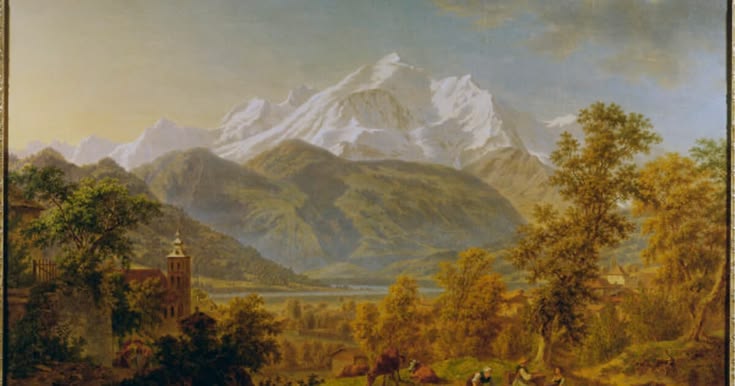
    In Romantic-era poetry, Percy Bysshe Shelley’s “Mont Blanc: Lines Written in the Vale of Chamouni” (1816) stands as the ultimate meditation on the romantic sublime. He wrote it during the second generation of English Romanticism alongside Lord Byron and John Keat.  Shelley used the terrifying scale of the Alpine peak to launch questions about perception, human consciousness and the unseen forces governing the cosmos. While early Romantics like William Wordsworth often found moral harmony and divine comfort in nature, Shelley’s philosophical temperament brought a different energy. For Shelley, nature was not a benevolent mother figure, but an indifferent, boundless, and overwhelming energy. Shelley engages directly with the concept of the Sublime. The sublime is an aesthetic experience where vastness or power induces a feeling of terrifying awe. It makes the human observer feel physically insignificant while mentally elevated. Rather than finding traditional religious comfort in the mountain’s height, Shelley explores his philosophical atheism. He views Mont Blanc as a symbol of Necessity or an impersonal power that governs existence. Throughout the five-part poem, Shelley constructs a series of striking visual and philosophical wonders. Shelley opens the poem by comparing human thought to a river flowing through a ravine. The “everlasting universe of things” rolls through human perception. Human consciousness is both passive (receiving impressions from the grand landscape) and active (shaping those impressions into meaning). The everlasting universe of things Flows through the mind, and rolls its rapid waves… Looking up at Mont Blanc, Shelley does not describe a peaceful picture-postcard landscape. Rather, he depicts a wild, chaotic realm of ice, rock, and storm. He envisions the mountain as a primordial arena where “the old Earthquake-daemon taught her young / Ruin”. The glaciers are slow-moving “frozen floods” that flatten forests and rocks with silent force. Shelley reflects on what lessons this silent mountain holds for humanity. The mountain possesses a mysterious tongue that teaches a lesson. To Shelley, Mont Blanc speaks an unspoken truth that can repeal large codes of fraud and woe (i.e., tyrannical dogmas, religious orthodoxies, and political oppression). Nature’s unyielding reality strips away human pretense. The poem reaches its dramatic climax by returning to the relationship between the peak and human thought. Shelley notes that the mountain remains still, snowy, and serene high above human affairs. He closes with a famous philosophical question: And what were thou, and earth, and stars, and sea, If to the human mind’s imaginings Silence and solitude were vacancy?  The mountain’s grandeur is real, but its meaning exists because the human imagination is there to perceive it. Without the human mind to process wonder, the immense universe would merely be an empty void.  

  • How Otto the Great created an Empire from the ashes of chaos

    In the tenth century, Central Europe was facing a state of political fragmentation and relentless conflict. This happened following the collapse of Charlemagne’s realm through the Treaty of Verdun in 843. Thus, the region split into warring territories. East Francia, the lands that would later form medieval Germany, was divided among powerful regional dukes who frequently clashed for supremacy. Amidst, a Saxon ruler emerged whose ambition, military prowess, and diplomatic intelligence changed a shattering kingdom into the Holy Roman Empire. He was Otto I! When King Henry I passed away in 936, he broke traditional Carolingian customs. He left the entire East Francian kingdom to a single heir: twenty-four-year-old son, Otto. Otto was crowned at Charlemagne’s ancient seat in Aachen. His reign began with a show of unity from the prominent dukes. However, that outward display of loyalty quickly dissolved into internal unrest. Otto’s early years on the throne were defined by bitter revolts. Rival nobles resented the monarchy’s growing authority. Otto’s own family members turned against him. His half-brother Thankmar and younger brother Henry repeatedly joined rebel factions. To tighten his grip on the realm, Otto appointed close relatives to head the kingdom’s core duchies. The names included Swabia, Bavaria, and Lotharingia. Yet this strategy proved double-edged. Familial rivalries simply migrated to the highest seats of power. The most dangerous challenge arose in 953 when Otto’s eldest son and heir, Liudolf, launched an open rebellion. Fearing that Otto’s second marriage to the Italian princess Adelheid would compromise his succession. Therefore, Liudolf rallied dissatisfied German lords and ousted royal loyalists across multiple regions. As civil war threatened to tear the kingdom apart, an external threat dramatically altered the course of history. In 954, nomadic Magyar raiders from the Eurasian steppes swept deep into East Francia. When rebel forces collaborated with the invaders, public sentiment shifted in Otto’s favor. The German nobility reconciled with their king rallied by a shared threat.  In August 955, Otto confronted the Magyar army at the Battle of Lechfeld near Augsburg. His victory was overwhelming and decisive. By crushing the invaders, Otto permanently ended nomadic incursions into Western Europe and solidified his reputation as the hero of Christendom. Internal rebellions vanished almost overnight. This victory gave Otto the absolute authority he needed to look southward toward Rome. Otto understood that true imperial legitimacy required papal endorsement. He had already secured the crown of Lombardy through his marriage to Adelheid. Otto now marched into Italy in 961 after Pope John XII requested military assistance against rival Italian lords. On February 2, 962, Pope John XII crowned Otto emperor in Rome. This occasion effectively birthed what historians consider the Holy Roman Empire. A dynamic entity had united German and Italian territories under a single imperial crown. Otto established firm oversight over papal elections. He negotiated a landmark diplomatic treaty with the Byzantine Empire, and secured his dynasty’s future before passing away in 973. Otto transformed a chaotic collection of duchies into a medieval superpower that shaped European history for centuries.  

Leave a Reply

Your email address will not be published. Required fields are marked *