netanyahu accuses new
|

Netanyahu accuses New York Mayor Mamdani of ‘fomenting hate’ and rejects ICC war crimes charges

Israeli Prime Minister Benjamin Netanyahu has strongly criticised New York City Mayor Zohran Mamdani, accusing him of “fomenting hate” and attempting to divide the city’s population.

The sharp exchange follows comments by Mamdani asserting that Netanyahu is unwelcome in New York City due to ongoing International Criminal Court (ICC) war crimes charges linked to the war in Gaza, and urging federal authorities to execute the court’s arrest warrant when the prime minister attends the United Nations General Assembly in September.

Appearing on Fox News Channel, Netanyahu dismissed the ICC charges as “bogus” and claimed the allegations were designed to divert attention from internal misconduct within the prosecutor’s office.

He expressed concern over eroding bipartisan support for Israel within the United States, warning that political rhetoric from progressive Democrats risks fueling rising anti-Semitism in major American cities.

Despite the mayor’s stance, US President Donald Trump has publicly assured Netanyahu that he will face no risk of arrest during his visits to the United States.

Similar Posts

  • | | | |

    Dar condemns Houthi attack killing 3 Pakistanis

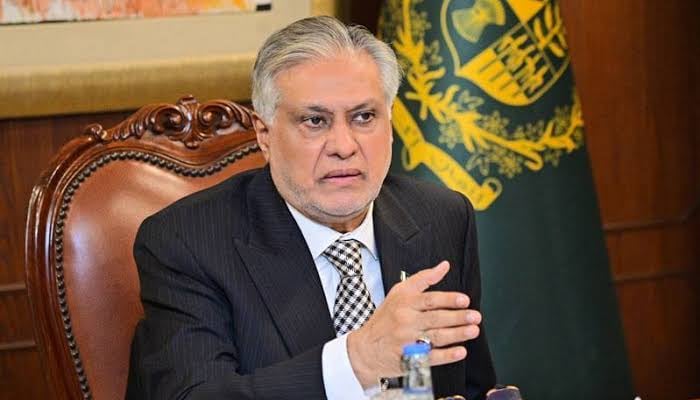
    ISLAMABAD: Deputy Prime Minister and Foreign Minister Ishaq Dar has condemned a Houthi attack on a commercial vessel in the Red Sea, saying three Pakistani nationals were killed and another was injured in the incident. Dar described the attack as a serious threat to innocent lives and maritime security. He expressed concern over the loss of Pakistani lives in the incident. The foreign minister said the Pakistani government was in contact with relevant Saudi authorities and the Yemeni government to obtain further details about the attack. He also directed Pakistan’s embassy in Riyadh to provide all possible assistance for the repatriation of the bodies of the deceased Pakistanis. The embassy has also been instructed to facilitate the injured Pakistani citizen and ensure that all necessary assistance is provided. The attack reportedly took place near the Bab al-Mandab Strait, a strategically important maritime passage connecting the Red Sea with the Gulf of Aden. According to Yemeni government and coast guard sources, Houthi forces attacked a cargo vessel in the area. The attack targeted the deck of the commercial ship. Three crew members were reportedly killed in the assault. The incident has raised fresh concerns over the safety of commercial shipping in the Red Sea. The waterway is a major international trade route used by cargo vessels travelling between Europe, Asia and the Middle East. Pakistan is continuing to coordinate with authorities in Saudi Arabia and Yemen to establish further details about the incident and assist the affected Pakistani nationals and their families.

  • | | |

    Military rejects talks with terrorists, vows conti…

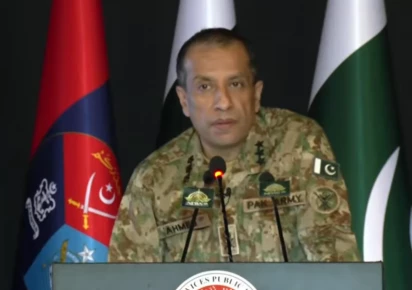
    Pakistan’s military has categorically ruled out any future negotiations with terrorist groups, declaring that security forces will continue operations until militancy is eliminated. The announcement was made by Director General of Inter-Services Public Relations (ISPR), Lieutenant General Ahmed Sharif Chaudhry, during a detailed media briefing on the country’s security situation and ongoing counterterrorism campaign. The military spokesperson said there was no possibility of holding talks with terrorists. He stressed that the state would not negotiate with those involved in violence against Pakistan. According to him, terrorists have only two choices: surrender before the law or face decisive action by the country’s security forces. Lt Gen Chaudhry said the armed forces would continue to engage directly with the people of Balochistan instead of individuals or groups involved in violence. He emphasized that the people of the province are the true stakeholders and that the military remains committed to protecting their lives and supporting their development. He also criticized certain influential elites and tribal leaders, claiming they had failed to promote the welfare of ordinary people. According to him, some powerful groups do not want children from poor families to progress through education and development. The military spokesperson further alleged that the Taliban administration in Afghanistan was providing support to terrorist groups carrying out attacks inside Pakistan. He said cross-border militancy remains one of the country’s major security challenges and continues to complicate efforts to maintain peace. Rejecting claims that the security situation in Balochistan is rapidly deteriorating, Lt Gen Chaudhry said a coordinated propaganda campaign was being carried out to create a false impression about conditions in the province. He maintained that while security challenges exist, the state is actively responding through intelligence-based operations and law enforcement measures. Speaking about Balochistan, he said the province’s unique geography presents operational challenges. Its vast territory, scattered population, and long distances between security posts require extensive coordination and resources. He added that security forces are dealing not only with terrorism but also with organized criminal activities, including drug trafficking, fuel smuggling, robbery, and other illegal networks that threaten stability. Addressing the issue of missing persons, the military spokesperson said the relevant commission had received hundreds of complaints. However, he noted that investigations had revealed that some individuals listed as missing were later found to have been killed during security operations, while others had joined militant organizations and were living in terrorist camps. Lt Gen Chaudhry presented detailed statistics on the country’s counterterrorism campaign. He said security forces have carried out 40,348 intelligence-based operations across Pakistan during the current year. These operations resulted in the killing of 2,084 confirmed terrorists, averaging approximately 10 militants eliminated every day. He added that security forces conduct nearly 194 operations daily as part of ongoing efforts to dismantle militant networks. Khyber Pakhtunkhwa remained the main focus of these operations, with 1,971 intelligence-based missions conducted in the province alone. The military also shared figures regarding casualties suffered during the ongoing campaign. According to Lt Gen Chaudhry, 819 people embraced martyrdom during the year. These included 303 personnel of the Pakistan Army, 194 members of law enforcement agencies, and 322 civilians who lost their lives in terrorist attacks and security-related incidents. The ISPR chief further revealed that 28 suicide attacks had been recorded across Pakistan during the current year. He claimed Afghan nationals were involved in the recent suicide attacks in Tank and Karachi, describing the incidents as evidence of continued cross-border terrorist involvement. Highlighting the importance of national unity, Lt Gen Chaudhry said Pakistan’s Constitution and legal system apply equally to every citizen. He stressed that loyalty to the state is a fundamental responsibility and said national peace, political stability, and economic development depend on a strong and secure Pakistan.

  • | | |

    Govt raises Petrol and Diesel prices in fresh fuel…

    ISLAMABAD: The federal government has announced a fresh revision in petroleum prices, increasing the rates of both petrol and high-speed diesel with immediate effect. According to a notification issued by the Ministry of Energy, the price of petrol has been raised by Rs1.09 per litre, taking the new rate to Rs336.15 per litre. The government has also increased the price of high-speed diesel by Rs2.42 per litre, bringing its new price to Rs393.04 per litre. The revised fuel prices came into effect immediately and will remain applicable until the next official review, subject to future adjustments based on international oil market trends and other pricing factors.

  • | | |

    Wheat imports spark farmer anger

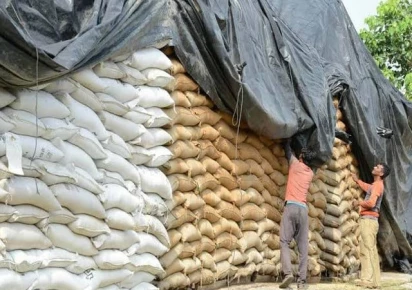
    The federal government’s decision to import one million tonnes of wheat has sparked strong criticism from farmers and agricultural experts. The move has raised concerns about Pakistan’s food policy and the country’s continued dependence on imported grain despite being a major wheat producer. Pakistan produces around 31 million tonnes of wheat annually. The crop covers nearly 40 per cent of the country’s cultivated area and remains a major part of the daily diet of millions of people. Punjab is the country’s largest wheat-producing province and contributes almost three-fourths of national production. Farmers and experts say the issue is not simply about wheat availability. They believe repeated imports are linked to weak planning, inaccurate crop estimates, poor storage facilities, post-harvest losses and inconsistent government policies. Population growth and changing weather patterns have also increased pressure on the wheat supply chain. Farmer organisations have strongly opposed the import decision. They say local growers are still struggling to sell their recently harvested wheat. Many farmers claim they are receiving prices below their production costs after spending heavily on seeds, fertiliser, pesticides, diesel and electricity. Growers fear that imported wheat could further reduce local prices. They argue that the government should first ensure that locally produced wheat is purchased at fair rates before turning to international markets. The controversy has also highlighted changes in Pakistan’s wheat procurement system. Under wider economic reforms linked to the International Monetary Fund programme, successive governments have reduced state intervention in agricultural markets. The aim is to limit government losses and encourage greater private-sector participation. The IMF has not directly ordered Pakistan to stop purchasing wheat from farmers. However, governments have moved away from the traditional procurement and support price system. Provincial authorities have also reduced wheat purchases, leaving farmers increasingly dependent on private traders. Farmers say the transition has not been properly managed. They argue that private buyers now have greater influence over prices because of weak market regulation. This has forced some growers to sell their wheat below production costs.

  • | | |

    PTI lawmakers clash over Imran Khan’s release

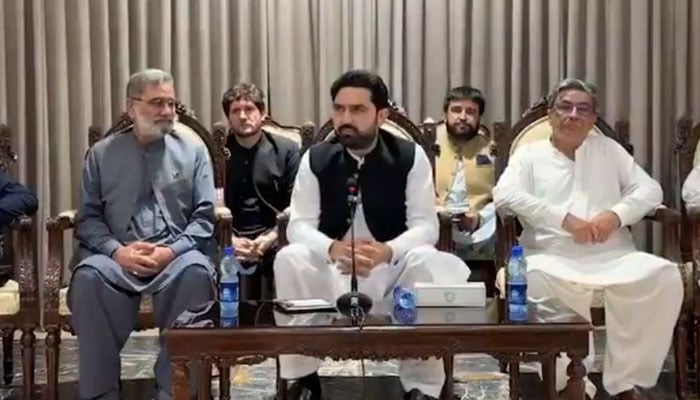
    The Pakistan Tehreek-e-Insaf (PTI) Khyber Pakhtunkhwa parliamentary party meeting reportedly turned tense as several dissatisfied lawmakers openly raised concerns about the party’s strategy for securing the release of PTI founder Imran Khan. The meeting was convened to discuss the political campaign for Khan’s release, but the session became disorderly following remarks by Chief Minister Sohail Afridi and members of the disgruntled group. According to details emerging from the meeting, the atmosphere became tense after the chief minister addressed the lawmakers. Members of the dissatisfied group reportedly delivered strong speeches and criticised the existing approach towards the campaign for Khan’s release. Their remarks upset Afridi, leading to a heated exchange during the session. The chief minister assured the disgruntled lawmakers that their reservations would be addressed. However, the assurance did not immediately resolve the differences. Some of the dissatisfied members reportedly left the meeting before it concluded. PTI lawmaker Fazal Elahi said all members of the parliamentary party had attended the meeting. He said the disgruntled lawmakers had demanded that the party organise a convention to formally administer an oath to its members. According to Elahi, a similar commitment should be sought from lawmakers for the campaign demanding Khan’s release, as was done during the Senate elections. Elahi stressed that the movement for Khan’s release should involve practical steps rather than remain limited to statements and discussions. He said the party’s founder could not be released through words alone and that members needed to demonstrate their commitment through action. He added that the remarks made by the dissatisfied lawmakers had caused displeasure during the meeting. The developments point to differences within the PTI parliamentary party in Khyber Pakhtunkhwa over how the campaign for Khan’s release should be pursued. Some lawmakers appear to be seeking stronger coordination and a more organised political strategy, while the party leadership continues to discuss its future course of action. The meeting is significant because PTI holds a strong political presence in Khyber Pakhtunkhwa. Any disagreement among its parliamentary members could affect the party’s political strategy and coordination in the province. The demand for a formal oath also indicates that some lawmakers want greater commitment from party members before launching further political activities.

  • | |

    Pakistan, FAO strengthen partnership to boost food…

    Pakistan and the Food and Agriculture Organization (FAO) have reaffirmed their commitment to expanding cooperation in food security, climate resilience, sustainable agriculture, and livestock development. The renewed partnership aims to address the growing challenges posed by climate change while supporting Pakistan’s long-term agricultural and economic development. The commitment was made during a meeting held in Islamabad between Federal Minister for National Food Security and Research Rana Tanveer Hussain and a delegation from the FAO led by Deputy Regional Representative for Asia and the Pacific, Robert Simpson. The discussions focused on strengthening existing partnerships and accelerating the implementation of projects designed to improve agricultural productivity and food systems across the country. During the meeting, Rana Tanveer Hussain emphasized that Pakistan remains one of the countries most vulnerable to the impacts of climate change, despite contributing only a minimal share to global greenhouse gas emissions. He stressed that unpredictable weather patterns, floods, droughts, and rising temperatures continue to threaten agricultural production, food availability, and the livelihoods of millions of farmers. The minister called for enhanced technical assistance from the FAO and urged the timely implementation of ongoing development initiatives. He highlighted the importance of adopting modern farming practices, improving water management, and strengthening institutional capacity to help Pakistan build a more resilient agricultural sector. Rana Tanveer Hussain also outlined the government’s key priorities for the agriculture sector. These include improving food safety standards, strengthening Sanitary and Phytosanitary (SPS) systems to boost agricultural exports, expanding livestock development programs, and increasing livestock exports to international markets. He further stressed the need to reduce Pakistan’s dependence on imported wheat and edible oil by increasing domestic agricultural production and promoting sustainable farming practices. The FAO delegation reaffirmed its continued support for Pakistan’s agricultural development agenda. Robert Simpson assured the minister that the organization would continue working closely with the government to mobilize financial resources from international financial institutions and development partners. The funding is expected to support climate adaptation projects, food security initiatives, and sustainable agricultural development across the country. The meeting reflects the shared commitment of Pakistan and the FAO to building a resilient and sustainable food system capable of addressing future challenges. By strengthening cooperation and investing in climate-smart agriculture, both sides aim to improve food security, enhance rural livelihoods, and promote sustainable economic growth for the benefit of future generations.

Leave a Reply

Your email address will not be published. Required fields are marked *