google ends free

Google ends free Android backup storage for users

Google has announced a major change to its cloud storage policy ending a long-standing free benefit for Google account users.

Almost every internet user today relies on a Google account which comes with limited cloud storage. When users approach their storage limit, Google typically recommends upgrading to a paid plan for additional space.

Until now, a user’s Google storage quota included Google Photos media files, Google Drive files and Gmail emails. Under the new policy, however, Android phone backup data will also count toward the account’s storage limit.

Google informed users of the change through email giving them 45 days notice before the new policy takes effect.

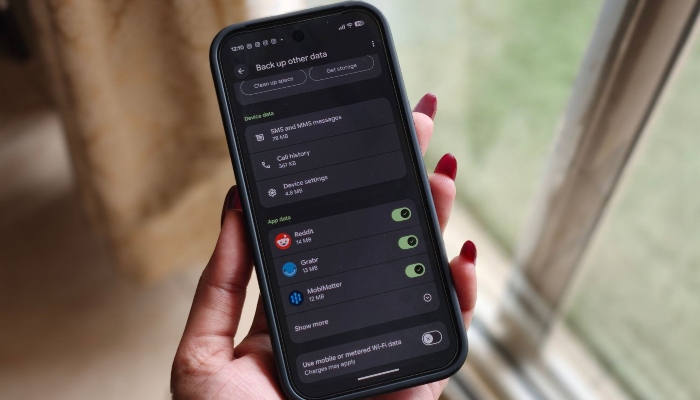
Once implemented, Android backup data including system settings, app data, SMS messages and call history will be included in the storage quota of a Google account.

The company said the advance notice is intended to give users enough time to manage their storage or adjust their backup settings before the policy is enforced.

Previously, only certain Android content, such as Google Photos uploads and MMS messages counted toward storage usage. Under the updated policy, complete Android backups are expected to consume a much larger portion of users available cloud storage.

Google warned that if Android backups cause users to exceed their storage limit, they will either need to free up space in their Google account or subscribe to a paid Google storage plan for additional capacity.

A Google spokesperson previously said that the average Android backup is expected to use around 40 MB of storage. The company also noted that users will have greater control over which data and apps are included in their backups.

This marks another change to Google’s account storage policies. Earlier, in May 2026, the company began testing a reduction in free storage for new Google accounts lowering the limit from 15 GB to 5 GB.


Similar Posts

  • OpenAI brings GPT-5.6 Leona to free ChatGPT users

    OpenAI has announced a major benefit for users who use ChatGPT for free. The company announced that free users will be offered unlimited chat access based on its new artificial intelligence (AI) model, GPT-5.6 Leona. Currently, free and Go subscribers use GPT-5.5 on ChatGPT but the Leona model will soon become available to them. The update aims to make the company’s new AI features accessible to everyone. OpenAI is also reintroducing the “Think” button to ChatGPT ensuring that users can receive answers to complex questions. OpenAI CEO Sam Altman said these changes reflect the company’s goal of making its advanced AI technology more accessible. The biggest benefit of the new update is the removal of limits on text-based conversations. However, limits will remain in place for various features, including image generation, file uploads and other advanced tools. According to OpenAI, new features are also being added to GPT-5.6 Leona for paying subscribers while existing features are being improved. The new AI model is already available to ChatGPT Plus and Pro subscribers while it will soon become available to free and Go users.

  • YouTube tightens policies on AI-generated videos

    YouTube has announced stricter policies for artificial intelligence (AI)-generated videos in an effort to curb low-quality and harmful content and prevent such videos from generating revenue. The company said the move comes as more creators are using AI tools to produce videos making it necessary to clarify its existing policies. According to YouTube, these are not entirely new rules. Instead, the company has updated the wording of its policies to make them clearer and easier for creators to understand. The revised guidelines place greater emphasis on AI-generated content that is repetitive, mass-produced or designed to manipulate or negatively influence viewers. YouTube said that while some of these videos may remain on the platform, they will not be eligible for monetization and will not be recommended to users. The company emphasized that creators should focus on quality, originality and context when producing AI-assisted content. YouTube also said it is working to distinguish useful and creative AI-generated content from AI-generated spam. According to the company, spam refers to videos that are uploaded in large numbers without meaningful effort, originality or consideration for quality. YouTube stressed that using AI tools is acceptable but creators are expected to include genuine human creativity and value in their videos. In its official statement, the company said that the latest update mainly provides clearer explanations of existing policies ensuring that creators are not caught off guard by sudden enforcement actions or policy crackdowns.

  • WhatsApp rolls out 3 new features for group chats

    WhatsApp has introduced several new features for group chats to make the overall user experience more convenient and efficient. Meta has added a total of three new features to WhatsApp. According to a statement issued by the company, these features are designed to simplify various aspects of group chats. Creating a new group has also been made easier. Smart poll features WhatsApp has updated its polling feature with new tools to make decision-making within groups easier. Users can now set an expiry time allowing polls to automatically close at a selected time. For greater privacy, users will also be able to hide voters identities. In addition, polls can be edited within 15 minutes of being posted. Creating new groups is now easier The messaging platform has also introduced a “Create a Similar Group” option. This feature allows users to create a new group with a single click using the chat and members of an existing group. Group mentions One of the major new features for WhatsApp groups is the @all mention feature which allows users to notify all group members simultaneously. This means there will no longer be a need to tag each person individually. The tool is designed to help users quickly inform everyone in a group about an urgent announcement or important matter. However, if a group has more than 32 members, only administrators will be able to use the @all feature. Users will also have the option to mute @all notifications.

  • |

    Does placing Wi-Fi router on floor weaken signals?

    You may have heard that the location of a Wi-Fi router plays an important role in its performance. Placing a router in a poor location can negatively affect the strength and range of internet signals. But what happens if you place a Wi-Fi router on the floor? The answer is that a Wi-Fi router can be placed on the floor but generally, it is not an ideal location. One reason is that when a router is placed on the floor, a significant portion of its Wi-Fi signals may be directed toward the ground. In addition, placing the router on the floor increases the chances of its signals being blocked or weakened by furniture and other household objects. As you may know, most Wi-Fi routers have antennas that transmit signals at different angles. Therefore, when a Wi-Fi router is placed on the floor, many of its signals may travel directly toward the floor instead of spreading efficiently throughout the room. Walls along the path of Wi-Fi signals can also act as obstacles. That is why it is generally recommended to place your Wi-Fi router in an elevated location such as on a shelf. The higher the router is placed, the better the signal coverage is likely to be throughout the house. It is also better to place the router in an open area where there are fewer household objects around it. Although placing a Wi-Fi router on the floor is not ideal, it is not necessarily the worst possible location. In fact, placing a router close to electrical appliances can be even worse. Therefore, you should avoid placing your Wi-Fi router near devices such as televisions, microwave ovens, refrigerators, Bluetooth devices and other electronic appliances as they can significantly interfere with signal coverage.

  • WhatsApp launches AI scam detection feature for users

    WhatsApp is introducing a new feature powered by artificial intelligence (AI) technology to help protect users from scams. According to a report, the AI-powered scam detection feature is designed to help identify potentially fraudulent chats. The feature will use on-device AI to flag suspicious conversations while messages will continue to be protected by end-to-end encryption. According to the report, the feature works by downloading a machine-learning model directly onto the user’s smartphone. The model analyzes WhatsApp messages from people whose phone numbers are not saved in the user’s contacts. It examines the conversation style and language to assess whether the interaction could potentially be a scam. If the system identifies a chat as potentially fraudulent, WhatsApp will display a warning to the user. The other person involved in the conversation will not be notified about the warning. After seeing the warning, users can choose to block or report the sender, continue the conversation or mark the chat as trusted. Once a chat is marked as trusted, WhatsApp will stop displaying scam alerts for that conversation. According to the company, the AI model has been trained to identify fraudulent activity. Meta also stated that the AI model will not compromise users privacy and the company will not have access to users’ messages.

  • Meta fined $570 million over children’s mental health

    A US court has fined Meta, the parent company of Facebook, hundreds of millions of dollars for causing harmful effects on children’s mental health. A court in New Mexico announced the decision during the second phase of a landmark case against Meta. In March 2026, the social media company suffered a setback in the case. At that time, a jury found that the company had knowingly harmed children’s mental health while concealing details related to child sexual exploitation. Meta was fined $375 million as a result. Now, in its latest ruling, the court has imposed an additional fine of $567 million on the company, bringing the total penalty to $942 million. Judge Brian Biedscheid said that $420 million of the fine would be allocated to services providing medical treatment to young people in New Mexico. The remaining amount will be spent over the next five years on awareness campaigns, service screening and other related areas. During the March hearing, the court found that Meta was responsible for activities taking place on its social media platforms. The second phase of the trial began in May. Prosecutors asked the court to require fundamental changes within Meta to control features that make its social media platforms addictive, improve age-verification procedures and prevent child sexual exploitation. The court’s ruling also ordered other changes including the creation of banners and informational screens for Facebook and Instagram that clearly explain their safety features and tools. The ruling also directed Meta to launch an educational campaign in New Mexico. Meanwhile, a Meta spokesperson said that the company disagrees with the court’s decision and plans to appeal it. According to the spokesperson, the company is working hard to ensure the safety of people on its platforms by removing harmful content and taking action against bad actors.

Leave a Reply

Your email address will not be published. Required fields are marked *