shehbaz sharif inaugurates
|

PM Shehbaz Sharif inaugurates Google office in Pakistan

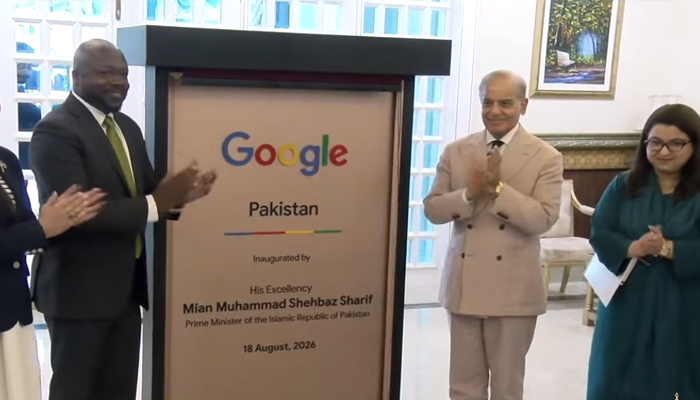
Islamabad – Prime Minister Shehbaz Sharif inaugurated Google’s new office in Pakistan. On the occasion, the Prime Minister also met with a Google delegation where they discussed the promotion of digital technology in Pakistan and prospects for future cooperation.

During the meeting, Prime Minister Shehbaz Sharif said that Pakistan marks the beginning of an important and exciting new journey for Google adding that there are enormous opportunities for Google in the country.

The Prime Minister also emphasized the importance of promoting Pakistan’s digital economy and strengthening cooperation with international companies in the field of modern technology.

On the occasion, Google’s Vice President said that the company seeks to establish a long-term partnership with Pakistan. He said further steps were needed to promote digital technology in the country.

The Google Vice President also made an important announcement for Pakistani students stating that Pakistani students will soon be provided with free access to Google Gemini for one year.

He said the initiative would give students access to modern artificial intelligence technology enabling them to benefit from it in their educational and research activities.

The inauguration of Google’s office in Pakistan is being described as an important development for the promotion of digital technology, artificial intelligence and modern digital skills in the country.


Similar Posts

  • | |

    Karachi weather to remain hot and humid, drizzle l…

    The weather in Karachi is expected to remain hot and humid over the next 24 hours.The sky will remain partly cloudy during the period. According to the Meteorological Department, some parts of the city may receive light drizzle. The possibility of scattered drizzle has been forecast for the next 24 hours.The weather conditions are expected to remain largely warm despite the possibility of rain. The department said the maximum temperature in Karachi could rise to between 33°C and 35°C.Sea breezes are also continuing to blow across the city. Their speed has been recorded at around 18 kilometres per hour. The humidity level in Karachi has been recorded at 78 percent. The high humidity is likely to make the weather feel warmer and more uncomfortable. The Meteorological Department also reported the minimum temperature during the past 24 hours. The lowest temperature recorded in the city was 28.5°C.Meanwhile, weather experts have said that rainfall could begin in most parts of Sindh by August 2. The expected rain may bring some relief from the ongoing hot and humid conditions. However, weather conditions may vary across different parts of the province.Residents of Karachi are advised to remain prepared for changing weather conditions. People should also take precautions against the heat and high humidity, particularly during the warmer hours of the day. The weather department will continue to monitor the situation. Further updates are expected as the weather system develops.

  • | | | | |

    Iran condemns Ukraine’s Caspian Sea strike as te…

    TEHRAN: Iran has strongly condemned a Ukrainian attack on an Iranian commercial vessel in the Caspian Sea, saying the incident killed one sailor and injured another, and warning that the strike could further widen the Russia-Ukraine conflict. Iran’s Foreign Ministry said the vessel was hit early Saturday, causing an explosion that resulted in the casualties. Tehran described the incident as an “act of aggression” and said the attack violated the principles of the UN Charter. Iran also summoned Ukraine’s chargé d’affaires to formally register its protest over the incident, according to reports. The diplomatic move underscored Tehran’s growing concern over what it described as the expansion of the Ukraine war into areas far beyond the main battlefield. The Iranian ministry said Tehran had never intervened in the Russia-Ukraine conflict and warned that the attack could contribute to the spread of insecurity and violence. It also said Iran would not hesitate to defend its national interests and security, holding Ukraine responsible for what it called the consequences of its actions. The Ukrainian account, however, presents a different picture. Ukrainian President Volodymyr Zelensky said Ukrainian forces had targeted a Russian warship and vessels allegedly being used to transport military cargo linked to Iran in the Caspian Sea. Kyiv has accused Moscow of supporting Iran and has increasingly focused on supply routes connected to Iranian military assistance. The Caspian Sea has become an increasingly sensitive strategic area amid the wider regional and international tensions. Any expansion of military operations there could carry diplomatic consequences for Iran, Ukraine and Russia. For Tehran, the reported death of an Iranian sailor has added a new layer of tension to an already volatile international situation. For Kyiv, strikes against vessels suspected of carrying military-related cargo are part of efforts to disrupt support networks linked to Russia and Iran. The incident now raises questions over whether the confrontation will remain limited to diplomatic protests or lead to further escalation between Tehran and Kyiv.

  • | | |

    ECC to review Rs1.34 hike in dealers’ margin

    ISLAMABAD: The Economic Coordination Committee (ECC) is set to consider a proposal to increase the margin of petroleum dealers. The meeting will be held on Friday evening. Federal Finance Minister will chair the session. The meeting is scheduled for 6pm. According to sources, the increase in petroleum dealers’ margins is the only item on the agenda. The committee will examine a proposal for a Rs1.34 per litre increase. Petroleum dealers currently receive a margin of Rs8.64 per litre on petroleum products. If approved, the proposed increase will raise the margin to Rs9.98 per litre. The proposal comes after discussions between the government and representatives of petroleum dealers. During those talks, the government had assured dealers that their margin would be increased. Dealers have been seeking an adjustment in their margin amid rising operational expenses. They argue that higher costs have affected the profitability of their businesses. The ECC will review the proposal and decide whether the increase should be approved. The committee’s decision will determine the next steps for implementing the proposed adjustment. Any increase in the dealers’ margin could also affect the overall pricing structure of petroleum products. The final impact will depend on how the government incorporates the additional margin into the pricing mechanism.

  • 5,000 Foreign Medical Graduates face career crisis over PMDC rules

    Islamabad: A major controversy has erupted between Foreign Medical Graduates and the Pakistan Medical and Dental Council (PMDC), with thousands of doctors and medical students claiming that new PMDC policies have placed their careers and future at serious risk. Foreign Medical Graduates say that around 1200 doctors who have already completed their medical degrees and more than 4000 students currently studying abroad are affected by PMDC decisions. They claim that students who entered foreign medical universities years before these notifications are now being affected by rules introduced later. During a press conference, Dr Waqas Akbar, President of Foreign Medical Graduates Afghanistan, said that many students had taken admission in universities in Afghanistan, Kyrgyzstan and China after receiving approval and information from PMDC. He said these students trusted the system, spent millions of rupees on education and completed their degrees before the new policy was introduced. Dr Waqas alleged that the PMDC notification created new conditions, including requirements related to international recognition and affiliation, and stopped some graduates from appearing in the National Registration Examination (NRE) and receiving Provisional Registration Medical Practice (PRMP). The main complaint of the graduates is that a new policy should apply to future students, not those who had already enrolled or graduated under previous rules. They argue that changing the rules after students completed years of education is unfair. According to Dr Waqas, many affected students enrolled between 2016 and 2018 when their universities appeared on PMDC lists and students obtained approval before travelling abroad. The issue reached the courts after affected graduates approached the Peshawar High Court. Dr Waqas stated that a two member bench of the court gave a decision in favour of students, observing that students who were already enrolled before the notification should not be affected by the new policy. However, according to the graduates, the matter remains unresolved and has moved to further legal proceedings. During the press conference, Advocate Abdul Rahim Wazir said the dispute involved important legal questions regarding whether administrative notifications could be applied to students who had already started their education years earlier. He argued that many students had spent millions of rupees on their education and returned to Pakistan expecting registration procedures according to existing laws. He further stated that the Peshawar High Court questioned the legality of applying the notification retrospectively and directed that affected graduates should receive registration opportunities. The graduates claim that the issue is not only about individual doctors but about thousands of families connected with these students. Advocate Abdul Rahim said the affected group represents around 5000 families whose futures depend on the outcome of this matter. The controversy intensified after PMDC issued another notification on 31 July 2026, which the graduates say created further uncertainty. They argued that political tensions between countries should not affect the careers of Pakistani students who studied abroad legally. Advocate Abdul Rahim said that political situations between countries may change over time, but students and doctors should not suffer because of diplomatic problems. The graduates also questioned why some doctors from similar foreign institutions were allowed to appear in professional examinations while others faced restrictions. Dr. Waqas gave the example of classmates from the same university where one student was allowed opportunities while another faced barriers. The affected doctors rejected claims that they were avoiding examinations. They said they were ready to appear in the NRE and wanted only the opportunity to prove their ability. Dr. Waqas said the students were not afraid of the NRE examination and requested permission to sit for the exam so their professional ability could be judged fairly. The graduates also challenged criticism that foreign universities were not of proper standard. They argued that many institutions were recognised internationally and questioned why students were allowed admission if those universities were later considered unacceptable. Dr. Waqas stated that students followed the rules available at the time of admission and that PMDC should take responsibility for the information and approvals provided earlier. The group also raised questions about recognition standards, saying some universities had international links and recognition pathways through organisations such as ECFMG and other international medical bodies. Representatives of the graduates demanded that PMDC withdraw the disputed notifications and create a fair transition policy. Their demands include allowing students enrolled before September 2025 to follow previous rules, permitting NRE participation and completing registration without discrimination. The graduates also demanded that the government, Parliament, PMDC and relevant authorities resolve the matter according to law and protect the future of thousands of medical students and doctors. The controversy now remains before legal forums, while affected doctors continue demanding a solution that allows them to appear in licensing examinations and serve patients in Pakistan.

  • | |

    Poor internet access threatens girls’ education …

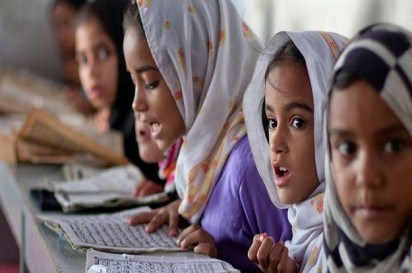
    PESHAWAR: Poor internet connectivity is creating serious problems for girls pursuing education in the merged districts of Khyber-Pakhtunkhwa. Students in remote areas often struggle to attend online classes. They also face difficulties downloading study material and submitting assignments. For 16-year-old Khadija Bibi from Kurram district, finding an internet signal has become part of her daily life. During the summer holidays, she often leaves her home and climbs a nearby hill. She carries her mobile phone with her. She stands on the rocky slope and searches for a stronger signal. She uses the limited connection to download lecture notes and complete academic tasks. She also tries to attend online classes from the hill. However, the weak network frequently disconnects. This causes her to miss lessons and submit assignments late. Khadija is a BS Computer Science student at Benazir Women University Peshawar. She said unreliable internet had become one of the biggest challenges in her education. She said students in remote areas were being left behind as education increasingly depended on digital technology. The problem is not limited to Kurram. Thousands of girls across the merged districts face similar difficulties. The region already has several major education challenges. Poverty remains a serious obstacle. Insecurity has also affected access to education. Many areas also lack proper schools and other educational facilities. The digital divide has added another challenge. Several schools in the merged districts either do not have computer laboratories or have laboratories without working computers. Some also lack internet connections. This prevents students from gaining basic computer skills. It also makes online education difficult. Official data highlights the wider education crisis in the region. Benazir Income Support Programme data shows that 66 per cent of children in North Waziristan are out of school. The rate stands at 63 per cent in Bajaur. It is 61 per cent in South Waziristan. Mohmand and Khyber each record an out-of-school rate of 51 per cent. Kurram and Orakzai each have a rate of 47 per cent. Girls face additional difficulties because of limited access to technology. The Khyber-Pakhtunkhwa Women Empowerment Policy 2026-2030 highlights the scale of the digital divide. According to the policy, only 11 per cent of women in the merged districts have access to the internet. The female literacy rate is also extremely low. It stands at only 17 per cent. Education and digital inclusion advocates say poor infrastructure is a major reason for the situation. Weak mobile networks make internet access unreliable. Many families also cannot afford smartphones or regular internet packages. Some girls have to borrow phones from family members. This makes it difficult for them to attend online classes regularly. Access to technology is also affected by social restrictions. In some communities, families remain concerned about girls using mobile phones and the internet. Concerns about online safety and social pressure often result in restrictions. Cultural norms can also limit girls’ access to digital technology. Experts say improving internet coverage alone will not solve the problem. Girls also need greater freedom to travel to schools, universities and training centres. Better transport facilities could help students reach educational institutions more easily. It could also improve access to vocational training and employment opportunities. Experts have urged the provincial government and telecommunications authorities to give greater attention to the merged districts. They say residents should receive reliable internet services similar to those available in settled areas. Improved digital infrastructure could transform educational opportunities for girls in remote communities. Reliable internet would allow students to attend online classes without travelling long distances. They could access digital libraries and educational resources. They could also develop computer skills and participate in online training programmes. For students like Khadija, internet access is more than a technological facility. It is directly linked to education and future opportunities. Without reliable connectivity, many talented girls may continue to struggle despite their willingness to study. Addressing the digital divide therefore requires investment in telecommunications infrastructure, schools, digital devices and affordable internet services. It also requires efforts to remove social barriers that prevent girls from using technology.

  • | |

    Pakistan defeats USA 3-0 in ITF masters world team…

    Pakistan made an impressive start to its campaign at the ITF Masters World Team Championships by defeating the United States 3-0 in the opening round of the men’s 45+ category. The prestigious tournament is being held in Lisbon, Portugal, where more than 300 players from 30 countries are competing for international honors. The Pakistani team, featuring experienced and internationally recognized players, displayed outstanding skill and determination to secure a clean sweep against a strong American side. The victory places Pakistan in a favorable position in the round-robin stage as it aims to qualify for the knockout rounds. Pakistan Tennis Federation President Aisam-ul-Haq Qureshi gave his team the perfect start by winning the opening singles match against Wojtek Breitek in straight sets, 6-2, 6-3. Qureshi’s commanding performance reflected his vast international experience and provided Pakistan with an early advantage. In the second singles match, veteran Aqeel Khan faced John Chesworth of the United States in a thrilling contest. After comfortably winning the first set 6-2, Khan lost the second set 1-6 before making a determined comeback to claim the decisive set 6-4. His hard-fought victory secured Pakistan’s overall triumph before the doubles match was played. The doubles encounter featured Shahryar Salamat and Hadi Hussain representing Pakistan against Jevon West and Guillermo Cosin. Despite losing the opening set 1-6, the Pakistani duo responded brilliantly by winning the second set 6-1. They maintained their composure in the deciding match tiebreak, sealing a 10-6 victory and completing Pakistan’s dominant 3-0 success. The comprehensive win highlights the depth of Pakistan’s veteran tennis squad and demonstrates the team’s ability to compete against some of the strongest nations in the tournament. With experienced campaigners leading the way, Pakistan has sent a strong message to its upcoming opponents. Following this convincing victory, Pakistan will now face Canada in its next round-robin fixture. The match is expected to be crucial, as the winning team will advance to the knockout stage of the ITF Masters World Team Championships. Pakistan will look to carry the momentum from its opening victory and continue its impressive run in the competition as it targets a place among the tournament’s top-performing teams.

Leave a Reply

Your email address will not be published. Required fields are marked *