nespak sets record
| |

NESPAK sets record with 180 new engineering projec…

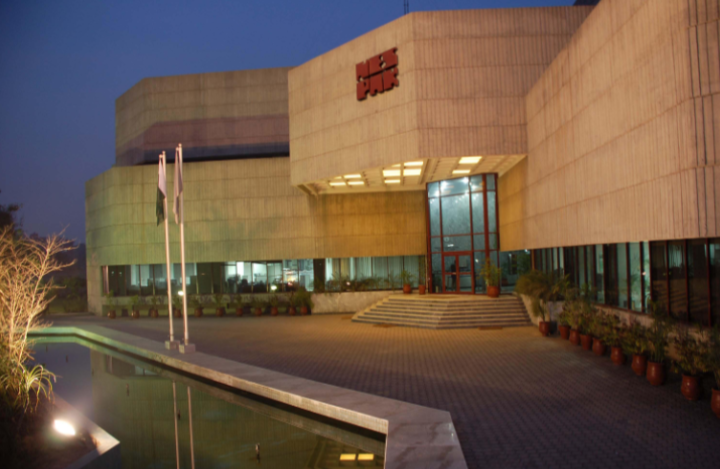
LAHORE: NESPAK, a premier organization of consulting engineers, has set an all-time record in business acquisition by securing 180 new engineering projects, both domestically and internationally, during the fiscal year 2025-26. Mr. Ahsan Anwar, Acting Managing Director of NESPAK, made this revelation here on Tuesday.

NESPAK has achieved unprecedented business by acquiring 172 national projects and 8 international projects securing substantial financial value at both levels. As a result, NESPAK has once again strengthened its presence felt in domestic and international markets securing diversified and high value projects in fields of transportation, energy, water resources, urban development and public infrastructure.

Among the landmark projects currently being executed during 2025-26 are consultancy services for the Battery Energy Storage System (BESS,2.5GWh) for the Saudi Electricity Company (SEC), Mass Transit System in Faisalabad & Gujranwala, Punjab Development Programme City Improvement Project (North and South Packages), K-IV Augmentation Works in Karachi, High-tension Transmission Line Project in Makkah, Saudi Arabia, Sultan Said Bin Taimur Road Project in Oman and the 30 MW Asifrah Diesel Fired Power Plant in Yemen. These projects demonstrate NESPAK’s growing footprint across the Middle East and South Asia while contributing significantly to sustainable infrastructure development.

The organization remains actively engaged on hundreds of projects covering highways, motorways, dams, hydropower, irrigation & drainage systems, flood protection & river training, buildings, airports, urban development, public health engineering, power transmission and digital infrastructure. With decades of experience and a highly qualified workforce, NESPAK continues to play a pivotal role in supporting Pakistan’s socio-economic development through innovative, sustainable and world-class engineering solutions. NESPAK stands out as one of the most successful and profitable organizations among the State-Owned Enterprises (SOEs). Its reputation, integrity, and track record speak volumes about its credibility and standing, both nationally and internationally.

NESPAK was conceived by its founders as an essential services entity, free from foreign dependence and capable of delivering the highest quality in engineering consultancy. It was envisioned to lead the consultancy market in Pakistan and compete abroad with excellence. Time has proven that NESPAK has succeeded in fulfilling its objectives to a large extent, thanks to the unparalleled dedication of its professional staff, who spared no effort in achieving their goals.
Similar Posts

  • | |

    Punjab seeks Rs12.5bn for local polls

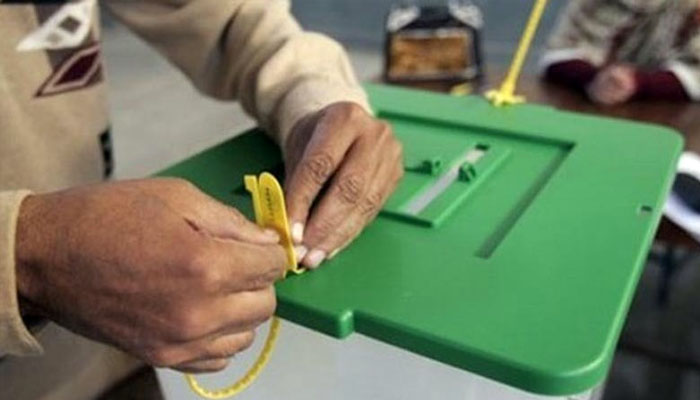
    The Punjab government is expected to consider a request for Rs12.5 billion to finance the upcoming local government elections in the province. According to official sources, the Punjab Local Government Department has formally sought the funds from the provincial government to meet the financial requirements for conducting the elections. The requested amount is intended to cover the expenses associated with organising the electoral process, including administrative arrangements, polling operations, election staff, logistics and other necessary preparations. Sources said the proposal for the release of funds will be presented before the Punjab Cabinet for approval. The cabinet will review the request and decide whether to allocate the required amount for the elections. An important meeting of the Punjab Cabinet has been convened for today. The meeting is expected to discuss several major policy and administrative matters, with the funding proposal for local government elections among the key agenda items. If the cabinet approves the request, the release of funds will pave the way for the Election Commission and the provincial authorities to begin practical preparations for the long-awaited local government elections. The financial allocation is considered a key step toward ensuring that the electoral process is conducted smoothly and that all logistical and administrative requirements are met on time. Officials believe that timely approval of the funds will help avoid delays in election preparations and support the successful organisation of local government polls across Punjab.

  • | |

    Congo tightens grip on mineral exports with ban on…

    The Democratic Republic of Congo has prohibited exports of copper concentrate and cobalt concentrate, according to a government order reviewed on Thursday, marking the latest step in an ongoing push to force more mineral processing to happen inside the country and capture a larger share of the value generated by its mining sector. News of the ban sent benchmark three month copper prices on the London Metal Exchange up by as much as 1.8 percent to $14,369.50 a metric ton, the highest level since January 29, when the metal touched an all time peak of $14,527.50. Prices stood at $14,300 as of 0930 GMT following the report. Congo holds the position of the world’s largest cobalt supplier and ranks among the top sources of copper and other minerals critical to the global energy transition. The government is using that leverage to encourage the build out of domestic processing capacity rather than allowing raw or partially processed materials to leave the country. The order, dated June 29 and signed jointly by Mines Minister Louis Kabamba Watum, Foreign Trade Minister Julien Paluku Kahongya and Economy Minister Daniel Mukoko Samba, states plainly that exporting copper and cobalt concentrates is now prohibited. The prohibition took effect immediately, though the order allows for one year export waivers to be granted under unspecified strategic circumstances. The same order also establishes a new tax structure covering economically significant mining by products, with a three month transition period built in before the new rules take full effect. Officials said the export ban aims to push mining companies toward marketing or exporting higher value processed mineral products rather than raw concentrate. This marks the fourth time Congo has restricted concentrate exports, following similar bans imposed in 2013, 2019 and 2023, each of which included waivers in cases where domestic smelting capacity could not keep pace with output. The new order formally repeals the 2023 measure and its associated exemptions, replacing it with a broader regulatory framework governing both mineral exports and taxation of significant by products recovered during processing. Congo already exports the vast majority of its copper in refined form. During the first quarter of 2026, the country shipped 696,725 tons of copper cathodes, compared with just 53,926 tons of copper concentrate containing roughly 18,863 tons of copper metal, according to official figures. Over the same period, Congo exported 51,940 tons of cobalt hydroxide containing about 17,054 tons of cobalt metal. Christian Geraud Neema, a mining analyst with the nonprofit China Global South Project, said the new ban is unlikely to significantly disrupt most mining operators since the bulk of Congo’s copper and cobalt already undergoes domestic refining before export. He said the operation most likely to feel the impact is the Kamoa Kakula venture, jointly owned by Ivanhoe Mines, China’s Zijin Mining and the Congolese government, which still exports some volume of concentrate under existing exemptions. Neither Ivanhoe nor Zijin responded immediately to requests for comment, and the Congolese chamber of mines also did not respond. The newly introduced tax regime applies broadly across mineral categories, extending to trace and ultra trace minerals recovered during the refining process. These by products will be taxed using a 55 percent valuation coefficient, with royalties applied alongside those already charged on the primary mineral being extracted. The policy fits into a broader pattern across resource rich African nations seeking to move beyond raw material exports and capture more manufacturing and processing value domestically, a shift that has gained momentum as global demand for energy transition minerals like copper and cobalt continues to grow.

  • |

    OGRA increases petrol, diesel prices again

    Islamabad – The Oil and Gas Regulatory Authority (OGRA) has announced another increase in petroleum prices marking the fourth consecutive day of fuel price hikes and issued new rates for petrol and high-speed diesel. According to an OGRA notification, the price of petrol has been increased by Rs. 4.40 per litre bringing the new price to Rs. 331.52 per litre. Similarly, the price of high-speed diesel (HSD) has been raised by Rs. 3.62 per litre taking the new price to Rs. 378.66 per litre. The notification states that the revised prices will come into effect from 12:00 a.m. on the night between July 23 and July 24 after which fuel stations across the country will charge customers according to the new rates. OGRA said the price adjustment was made after taking into account global crude oil prices, import costs and other relevant market factors. The continued increase in petroleum prices is expected to raise transportation costs which could in turn push up the prices of essential commodities. Members of the public and the business community have expressed concern over the repeated increases and urged the government to take effective measures to stabilize fuel prices. It is worth noting that this is the fourth consecutive day that OGRA has increased petroleum prices resulting in a significant rise in fuel costs over the past several days.

  • | |

    Homenet Pakistan urges protection of democratic ma…

      Lahore, July 2026: HomeNet Pakistan, in partnership with AwazCDS/PDA, organized a high-level policy dialogue with Members of the Provincial Assembly (MPAs), including members of the Standing Committee on Local Government, to discuss legislative reforms aimed at promoting a stronger, more inclusive, and constitutionally compliant local government system in Punjab. The dialogue brought together parliamentarians, civil society representatives, and governance experts to exchange views on the future of local governance and explore ways to strengthen democratic institutions at the grassroots level. The session focused on ensuring political continuity, enhancing public participation, and improving the effectiveness of elected local governments.   Opening the event, Mr. Zia ur Rehman, Chief Executive of AwazCDS-Pakistan, highlighted the constitutional importance of Article 140A, which requires the devolution of political, administrative, and financial authority to elected local governments. He stressed that an effective local government system is essential for democratic governance and improved public service delivery. He urged the Punjab Assembly to introduce legal and institutional reforms that would safeguard democratic continuity, ensure the timely conduct of local government elections, and strengthen the autonomy of elected local bodies.   During the session, Ms. Ume Laila Azhar, Executive Director of HomeNet Pakistan, presented a set of policy recommendations designed to reinforce democratic governance at the local level. She emphasized the need for a stable and party-based electoral framework for local governments, noting that frequent legislative changes have weakened institutional continuity. She referred to the replacement of the Punjab Local Government Act 2022 with the Punjab Local Government Act 2025 as an example of policy shifts that have contributed to delays in restoring elected local governments across the province. She called for legal safeguards to prevent repeated delimitations and unnecessary postponements of local government elections. HomeNet Pakistan also recommended a transparent and representative mechanism for filling reserved seats allocated to women, youth, minorities, workers, persons with disabilities, and other marginalized groups. According to the organization, such measures would promote broader democratic participation and ensure that local governments better reflect the diversity of society.   In addition, the organization emphasized the importance of returning key municipal responsibilities—including water supply, sanitation, solid waste management, and local infrastructure development—to elected local governments. It proposed that provincial and district administrations should primarily provide technical guidance and institutional support rather than directly managing these essential services. The dialogue was attended by Ms. Sumbal Malik Hussain, Ms. Fizzah Maimona Rao, Ms. Somia Atta, Ms. Rukhsana Kausar, Ms. Farzana Abbas, Ms. Nasreen Riaz, and Ms. Attia Hanif, alongside representatives from civil society organizations and governance experts. Responding to the recommendations, the participating MPAs appreciated the constructive engagement and acknowledged the importance of strengthening democratic local governance. They reaffirmed the Punjab Government’s commitment to transparency, institutional reforms, and democratic accountability, expressing confidence that these principles would continue to guide the ongoing local government reform process. The parliamentarians informed participants that the delimitation process had made substantial progress, with geographical boundaries largely finalized. They stated that the remaining objections were expected to be addressed by the end of July 2026. Following the completion of the statutory process, they expressed optimism that the election schedule would be announced, paving the way for timely local government elections. The MPAs also committed to sharing the recommendations emerging from the dialogue with the Honorable Speaker of the Punjab Assembly and pledged to advocate for legislative reforms that promote constitutional compliance, political continuity, and an empowered local government system capable of responding effectively to citizens’ needs. Concluding the event, HomeNet Pakistan reaffirmed its commitment to working closely with parliamentarians, government institutions, and civil society partners to advance democratic governance, strengthen inclusive representation, and support the timely restoration of empowered elected local governments across Punjab.

  • | |

    Balochistan rail operations fully restored

    Train services between Balochistan and other parts of Pakistan have resumed after a one-day suspension caused by railway track repair work. Railway officials confirmed that operations were restored after maintenance teams completed the necessary repairs. The temporary suspension was imposed to ensure passenger safety and to allow engineers to carry out essential work on the affected section of the track. Following the restoration of services, the Jaffar Express departed from Quetta for Peshawar as scheduled. The resumption of the train marked the return of regular rail connectivity between Balochistan and the country’s other provinces. Officials also said that the Jaffar Express travelling from Peshawar is expected to arrive in Quetta on Wednesday according to its scheduled timetable. They added that train operations are now running normally after the completion of repair work. The railway administration said the suspension was purely a precautionary measure aimed at ensuring safe travel. Maintenance crews worked continuously to restore the track within a day, allowing train operations to resume without further delay. The restoration of rail services is expected to provide relief to passengers who were affected by the temporary suspension. Travellers can now continue their journeys through the regular train schedule, while railway authorities have assured passengers that they will continue monitoring the track to ensure safe and uninterrupted operations. Pakistan Railways periodically carries out maintenance work on its network to improve safety and operational efficiency. Officials urged passengers to stay updated on train schedules through official railway channels, particularly when maintenance work or weather conditions affect rail operations.

  • | |

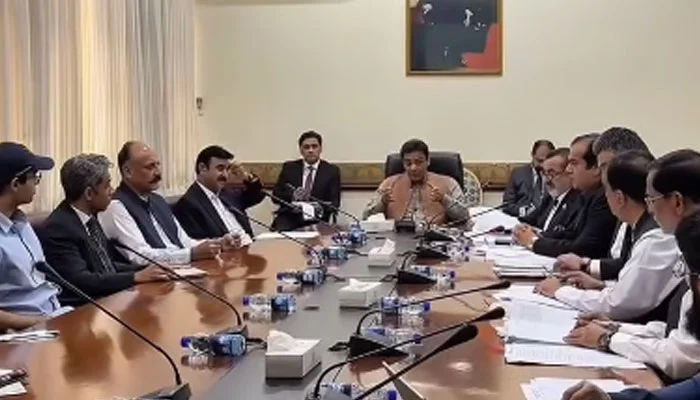
    Hamza Shehbaz pushes skills drive for youth, meets…

    ISLAMABAD: Former Punjab Chief Minister Hamza Shehbaz Sharif held a series of meetings with current and former parliamentarians at the Prime Minister’s House, where regional issues and youth development initiatives came under discussion. Hamza Shehbaz met Saira Afzal Tarar, Jamal Shah Kakar and Hafizur Rehman Drishak, while former MNA Murtaza Javed Abbasi, Khurram Dastgir and former Senator Behramand Tangi also called on him. During the meetings, the participants discussed issues affecting their respective regions. Hamza Shehbaz assured the lawmakers that matters requiring government attention would be taken up on a priority basis. Focus on youth skills and employment Hamza Shehbaz also chaired a meeting on the Prime Minister’s Youth Program, attended by its Chairman Rana Mashhood Ahmad Khan. The former Punjab chief minister directed officials to expand access to modern technical and vocational training for young people, particularly those from Balochistan, Khyber Pakhtunkhwa, South Punjab and smaller cities. He stressed the need to ensure that young people from less-developed areas are not left behind in emerging skills and employment opportunities. The meeting also discussed providing monthly stipends to participants during their technical training to help them complete their courses. Hamza Shehbaz said the government should fully support technical education and focus on connecting trained youth with employment opportunities in the market. The initiative aims to strengthen skills development while creating practical pathways from training to employment for young people across the country.

Leave a Reply

Your email address will not be published. Required fields are marked *