
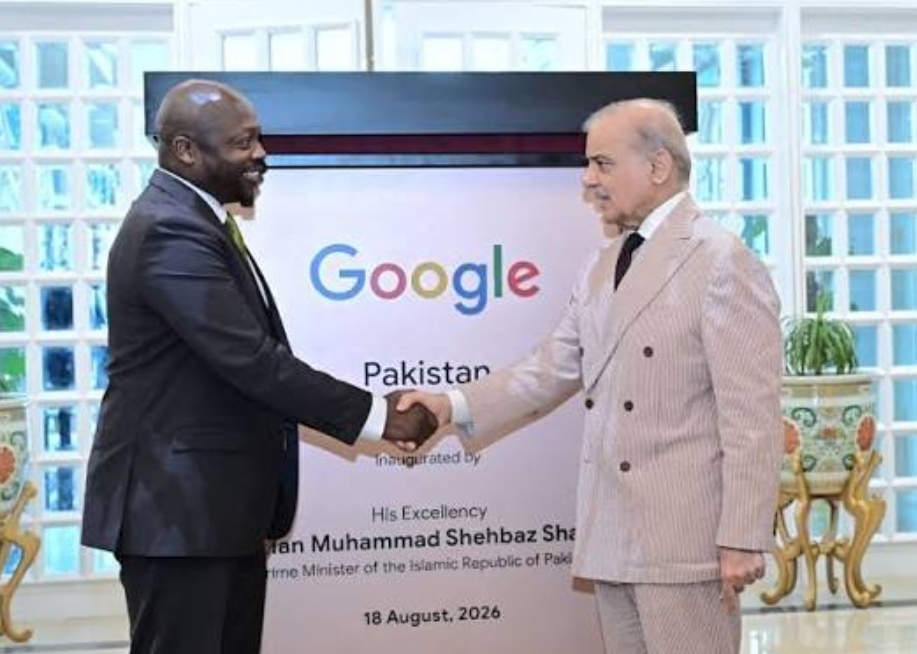
pakistan google sign
|

Pakistan, google sign “historic” MOU

By Umar Mujtaba

Islamabad: Pakistan and Google have signed a memorandum of understanding (MoU) to expand cooperation in artificial intelligence, digital skills, IT exports and innovation, with Pakistani students set to receive free one year access to advanced AI tools including Gemini.

The agreement was signed on Friday during a reception hosted by Prime Minister Shehbaz Sharif in honour of the Google team, according to a statement issued by the Prime Minister’s Office.

Under the agreement, an Artificial Intelligence (AI) centre of excellence will be established in Islamabad for the training of young people and professionals to align their skills with global market requirements.

This news comes days after Google opened its first office in Pakistan, which signals the company’s interest in Pakistan’s technology sector.

Pakistani students will also receive one year of free google AI tools access, including gemini and google AI plus. 

Both sides have agreed to expand google certificate to 150,000 in 2026, helping Pakistani youth with market oriented skills. 

A joint taskforce will also be established to increase the country’s IT exports and improve the country’s competitiveness in the global technology sector. 

The agreement also covers efforts to improve the global competitiveness of Pakistan’s mobile application and gaming industries, while promoting digital payments and expanding digital commerce.

One of the areas identified for cooperation is the Federal Board of Revenue’s digitization program, where AI powered data analytics could be used to improve tax administration and public-sector efficiency.

In agriculture, Pakistan and Google will explore AI applications for crop monitoring, forecasting and sustainable farming practices. The agreement also aims to use digital platforms to help Pakistani small and medium sized enterprises access international markets and expand their exports.

The Prime Minister of Pakistan Shahbaz Sharif described the collaboration as a stepping stone toward contributing to a field that is “very attractive” and “the call of the day.” 

Mr Sharif noted that the delegation’s arrival was “a sheer coincidence” because it comes precisely as the country is undergoing a major digital transformation of governance under the government’s “Digital Nation Pakistan” initiative. 

Wilson L. White (Vice President for Government Affairs and Public Policy) described the $30 Billion Export Target by stating “Your ambition of making Pakistan a 30-billion-dollar IT export hub aligns with the goals that we have at Google.” 

Similar Posts

  • |

    One dead, 37 fall ill after eating vermicelli in R…

    RAJANPUR: One child has reportedly died and four other people remain in critical condition after allegedly falling ill from eating vermicelli in the Umerkot area of Rajanpur district. According to Rescue 1122 sources, as many as 37 members of the same family developed serious health complications after consuming the food. The affected individuals reportedly included women and children. Rescue teams shifted 30 patients to the District Headquarters Hospital for medical treatment, while another seven were taken to the Tehsil Headquarters Hospital in Rojhan. Four of the affected people are said to be in critical condition, while doctors continue to monitor the health of the other patients.   Police officials said the family members told investigators that their health began to deteriorate after they ate the vermicelli. However, authorities have not yet confirmed whether the food caused the illness or whether another factor may have contributed to the incident. Police have launched an investigation to determine the exact cause of the mass illness. Officials are also expected to examine the food consumed by the family and gather further information as part of the inquiry.

  • | |

    Ammad Ali honoured with KP youth excellence award …

      HARIPUR: The Khyber Pakhtunkhwa government has honoured Ammad Ali, founder and Chief Executive Officer of RankingGrow, with the Youth Excellence Award for his contributions to youth development, digital skills training and efforts to create greater opportunities for young people, particularly those living in underserved areas of the province. The award was presented by Khyber Pakhtunkhwa Minister for Youth Affairs and Sports Taj Muhammad Khan Tarand during a ceremony organised by the Directorate of Youth Affairs to mark International Youth Day. Ali founded RankingGrow, a digital marketing and IT services company that has been involved in initiatives aimed at equipping young people with practical digital skills and improving their access to professional training and employment opportunities. Through RankingGrow and other youth-focused initiatives, Ali has supported training programmes, workshops and community-based activities in different parts of Khyber Pakhtunkhwa. These programmes have particularly targeted areas where young people have fewer opportunities to access modern technology, professional education, career guidance and exposure to the digital industry. The training initiatives have focused on practical and market-oriented skills that can help young people become financially independent and participate in the growing digital economy. Areas covered by these programmes include digital marketing, search engine optimisation, social media marketing, graphic design, video editing, web development, artificial intelligence, freelancing and entrepreneurship. The programmes aim to bridge the gap between traditional education and the skills increasingly demanded by employers and clients in the digital marketplace. By providing young people with relevant technical and professional skills, the initiatives seek to help participants explore employment opportunities, start freelancing careers or establish their own businesses. Ali has also received recognition for his work on other occasions. He was previously awarded the Pride of Pakistan Award under the patronage of the President of Pakistan in acknowledgement of his services and contributions. In addition, he has received other recognitions for his efforts in youth empowerment, digital skills development and community-oriented initiatives. Speaking at the award ceremony, Ali said the recognition would encourage him and his team to expand their efforts to provide young people with skills that are relevant to the changing job market. He expressed his commitment to continuing initiatives that can help young people gain access to professional opportunities and participate more effectively in the digital economy. Ali emphasised the importance of ensuring that young people from smaller cities and underserved communities are not left behind as digital technology continues to transform the employment landscape. According to him, access to digital skills and professional opportunities should not be limited to young people living in major urban centres. The Youth Excellence Award also highlights the growing importance of cooperation between government institutions, private-sector organisations and community-led initiatives in addressing challenges related to youth employment, entrepreneurship and skills development. With Khyber Pakhtunkhwa having a large and growing youth population, initiatives focused on digital education and employable skills can provide young people with alternative pathways to employment and entrepreneurship. The recognition of Ali’s work reflects the contribution of such initiatives towards creating opportunities for young people and strengthening their participation in the province’s economic and social development.

  • The Growing Issue of Fake Degrees and Certificates

    By Sania Rahim I would like to draw the attention of the concerned authorities and the general public toward the rapidly growing issue of fake degrees and certificates, which is becoming a serious threat to our society day by day. Education is considered the backbone of any nation. It builds skilled professionals, responsible citizens, and a strong economy. However, the increasing trend of fake educational documents is weakening this very foundation. Today, some people obtain fake degrees and certificates to secure jobs, promotions, admissions, and other benefits without having the required knowledge, skills, or hard work. This unfair practice is not only injustice to deserving candidates but is also damaging the credibility of our educational institutions. The most alarming part is that fake degrees are now being used in sensitive fields such as medicine, engineering, teaching, law, and public administration. An unqualified doctor, engineer, or teacher can endanger human lives and the future of entire communities. When unskilled people occupy important positions through fraudulent documents, the quality of services declines, accidents increase, and public trust in institutions erodes. It also discourages honest students who spend years studying and working hard to earn genuine qualifications. Another major consequence is corruption. The network of agents, printing presses, and online sellers who manufacture and sell fake degrees is growing because of high demand and weak verification systems. This creates a parallel market where money replaces merit. As a result, competent individuals are left behind while unqualified people move ahead, which ultimately harms national progress. To control this serious issue, I would like to suggest some necessary steps: First, the government should establish a centralized, digital database of all degrees and certificates issued by recognized boards and universities. Every employer and institution should be bound to verify documents through this system before hiring or admission. Second, strict legal action should be taken against those involved in making, selling, and using fake degrees. Heavy fines and imprisonment can serve as a strong deterrent. Third, awareness campaigns should be launched in schools, colleges, and on media platforms to educate students and parents about the dangers and legal consequences of using fake documents. Fourth, professional bodies like the Pakistan Medical Commission, Pakistan Engineering Council, and education departments must regularly audit their members and employees. In conclusion, fake degrees are not just a paper problem. They are a threat to merit, public safety, and the future of our country. I sincerely hope that the concerned departments, law enforcement agencies, and educational authorities will take immediate and effective steps to eliminate this malpractice and restore trust in our education system.

  • | | | |

    Oil slips as higher supplies ease market fears

    Global oil prices declined on Friday as increased crude shipments through key maritime routes helped calm supply concerns, despite continued geopolitical tensions in the Middle East and limited progress in diplomatic talks between the United States and Iran. Brent crude futures dropped by $1.03, or 1.2%, to trade at $88 per barrel, while US West Texas Intermediate (WTI) crude fell $1.50, or 1.8%, to $82.09 per barrel. Even with the daily decline, both international benchmarks remained on track to post monthly gains of around 20%. Market analysts said the fall in prices was mainly driven by improving oil flows through the Strait of Hormuz, one of the world’s most important energy shipping routes. The increase in exports helped offset fears that the ongoing regional conflict could lead to major supply disruptions. The Strait of Hormuz normally carries nearly one-fifth of the world’s crude oil and liquefied natural gas shipments. The route has remained under close watch since tensions escalated following the conflict involving the United States, Israel and Iran. At the same time, Saudi Arabia is working with regional partners to strengthen maritime security in strategic waterways, including the Bab el-Mandeb Strait, the Red Sea and the Gulf of Aden. These routes play a vital role in global energy transportation. According to Saudi officials, 14 countries have expressed support for the proposed multinational maritime defence initiative, aimed at improving the safety of commercial shipping in the region. Meanwhile, the security situation remains uncertain after Yemen’s Houthi movement announced a naval blockade targeting Saudi Arabia, raising fresh concerns over the safety of Red Sea shipping lanes, which serve as an alternative route for oil exports. Although oil tankers continue to pass through both the Strait of Hormuz and the Red Sea, traders say higher security risks have pushed up shipping costs and insurance premiums. These additional expenses continue to keep a geopolitical risk premium built into global oil prices.

  • | |

    Water level rises in the Chenab river, flooding se…

      The Irrigation Department has reported a significant increase in the water flow of the Chenab River, raising concerns about flooding in nearby riverine areas. According to officials, the rising water level has already affected several low-lying settlements, forcing floodwater into residential and agricultural areas and creating difficulties for local communities. The department stated that the increase in the river’s discharge has caused water to spread into nearby villages located along the banks of the Chenab River. As a result, a protective embankment known as the Zamindara Bund in Jalalpur Pirwala Tehsil has been breached. The collapse of the embankment has allowed floodwater to move more rapidly into surrounding areas, increasing the risk to people, homes, livestock, and crops. According to the Irrigation Department, at least five villages have been submerged due to the rising floodwaters. Among the affected settlements are Basti Khuda Bakhsh, Basti Allah Rakha, and Basti Bakhsha, along with two other nearby villages. Residents in these areas are facing severe challenges as water continues to enter homes, farmland, and local roads. Many families are concerned about the safety of their property and the possibility of further flooding if water levels continue to rise. Officials have also reported that water levels have increased in the surroundings of Head Muhammad Wala Road and near Qasim Bela. These areas are being closely monitored as authorities assess the situation and evaluate the potential for additional flooding. The rise in water has affected transportation routes, making travel difficult for residents and increasing the need for precautionary measures. The Irrigation Department is keeping a close watch on the river’s flow and is expected to continue monitoring the situation in coordination with local administration and disaster management authorities. Residents living in vulnerable riverine areas have been advised to remain alert and follow official instructions. If water levels continue to increase, further evacuations and emergency measures may become necessary to ensure public safety. Flooding in the Chenab River region is a recurring challenge during the monsoon season, particularly when heavy rainfall upstream leads to a sudden increase in river discharge. Breaches in protective embankments can significantly worsen the situation by allowing water to spread rapidly into populated areas. Such incidents often result in damage to homes, agricultural land, and infrastructure, while also disrupting daily life and economic activities. Local authorities are expected to assess the extent of the damage once water levels stabilize. Relief efforts may include providing temporary shelter, food, clean drinking water, and medical assistance to affected families. The government and emergency response agencies are likely to continue monitoring weather conditions and river flows to reduce further risks. The situation remains under observation, and officials have urged residents in flood-prone areas to stay informed through official updates and cooperate with emergency responders. Authorities are working to minimize the impact of the flooding and ensure the safety of communities living along the Chenab River.

  • |

    Thousands of former Pak PWD employees still await salaries as Committee slams bureaucratic delay

    Islamabad: The Senate Standing Committee on Housing and Works erupted in frustration over massive delays in salary payments to former Pakistan Public Works Department (Pak PWD) employees, exposing systemic inefficiencies and administrative apathy across federal ministries. Despite being adjusted in various departments, thousands of workers remain unpaid, sparking fears of widespread exploitation and financial insecurity. Chairman Senator Nasir Mehmood openly criticized ministries for misleading assurances, stating that the Committee would not tolerate empty promises. Officials revealed that out of 20,024 former Pak PWD employees, only 3,094 had received salaries, while around 30 cases remained pending, including employees in the Ministry of Planning and Ministry of Religious Affairs. “These delays are unacceptable,” Senator Mehmood said, stressing that commitments made to the Committee must be implemented without further excuses. The Committee also took up the plight of contractual employees, highlighting that existing rules deny them pensions. While the Ministry of Housing and Works had submitted proposals for special consideration, no concrete action has been taken yet, leaving many workers in limbo. Senator Naseema Ehsan highlighted the plight of widows and families of deceased employees, urging immediate resolution to their pending cases. Beyond employee issues, the Committee reviewed stalled development projects, including the Green Enclave I Housing Project, which has faced prolonged delays due to litigation, NAB inquiries, land disputes, bank guarantees, COVID-19 impacts, and contractual complications. Despite partial resumption of work, allottees continue to suffer from financial and operational setbacks. Chairman Mehmood warned, “Thousands of citizens invested in good faith; they deserve timely delivery, not excuses.” The Committee directed contractor Dr. Hafeez Abbasi to appear in the next session to explain persistent delays and emphasized that all stakeholders must cooperate to complete projects promptly. Officials confirmed that new housing schemes are on hold until ongoing projects are completed, highlighting a major bottleneck in government housing delivery. Other projects under scrutiny included lift replacements at Shaheed-e-Millat Secretariat, which remain incomplete, and the Model Jail project, where only Phase-I is near completion, while Phase-II, including women’s facilities, is still pending. The Committee demanded an on-site inspection in August to ensure accountability and prevent further slippage. In a stern warning, Senator Mehmood urged all ministries and departments to implement recommendations immediately and submit detailed progress reports in the next meeting, signaling zero tolerance for bureaucratic inaction.

Leave a Reply

Your email address will not be published. Required fields are marked *