diesel cut brings
| |

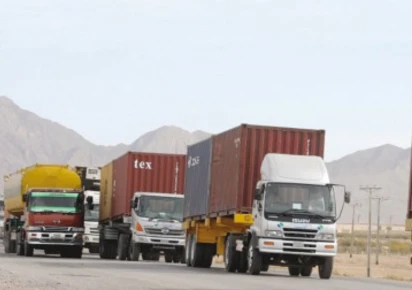
Diesel cut brings freight fare relief

RAWALPINDI: Goods transport and long-distance public transport operators have lowered fares following a Rs32.63-per-litre reduction in diesel prices, offering temporary relief to passengers and businesses.

The Goods Transport Federation announced a 10 per cent reduction in freight charges, while fares for long-distance routes to nearby areas have been cut by 5 per cent.

The fare revision, however, has not extended to all local transport. Taxis, Qingqis and motorbike rickshaws have raised their fares by another 5 per cent after petrol prices increased by Rs3 per litre. The standard stop-to-stop fare remains Rs50.

Freight charges have also been reduced significantly on major routes. The cost of transporting containers and trailers from Karachi to Rawalpindi has fallen by Rs50,000, while charges for containers, trailers and heavy vehicles travelling from Karachi to Peshawar have dropped from Rs800,000 to Rs750,000.

Transport federations said the reduced fares would remain in effect for only 24 hours. They warned that any increase in petroleum prices expected later in the week would result in the fare cuts being withdrawn proportionately.

They further said bookings made by Thursday evening for heavy vehicles, trailers and containers operating on routes including Karachi-Peshawar, Peshawar-Lahore, Karachi and Multan could be revised if fuel prices rise, with additional charges imposed accordingly.
Similar Posts

  • | |

    Shein turns to China as Hong Kong IPO nears

    Fast-fashion giant Shein is preparing to make its stock market debut in Hong Kong after years of efforts to list in the United States and Britain, marking a significant shift in how the company presents its relationship with China. The company is expected to raise around $1.7 billion through its Hong Kong initial public offering, with a valuation of about $26.5 billion. That figure is considerably below the company’s valuation in 2022. Shein had previously sought to establish itself as a global company. It moved its headquarters to Singapore in 2021 and promoted plans to expand manufacturing and operations in countries including Brazil, Türkiye and parts of Europe. However, its attempts to secure a Western listing faced regulatory and political obstacles. Chinese authorities were also reportedly involved in blocking earlier efforts to list in New York and London. After shifting its focus to Hong Kong in 2025, Shein founder Sky Xu increased his engagement with Chinese officials and became more involved in regulatory and capital-market discussions inside the country, according to people familiar with the matter. Xu also made a rare public appearance at a business forum in Guangdong earlier this year, where he announced plans for Shein to invest $1.5 billion in the province. He said the company would deepen its presence in Guangdong and develop its smart supply-chain system while contributing to the region’s fashion industry. Shein also opened a research and development centre in Nanjing, the eastern Chinese city where the company was founded in 2012. These moves helped reinforce the company’s economic links with China at a time when Beijing has been paying close attention to companies with major overseas operations. Officials in Guangdong also reportedly highlighted Shein’s contribution to employment and domestic economic activity when engaging with central authorities. The company has sought to emphasise that its main business is overseas rather than in China. Shein does not market its extremely low-priced products to Chinese consumers, allowing it to distance itself from the intense competition among domestic e-commerce platforms. Shein has instead argued that its international operations benefit China by generating foreign currency and supporting Chinese manufacturing and supply chains. The company’s Hong Kong prospectus describes China as the foundation of its global logistics and fulfilment network. Nearly 80 per cent of Shein’s workforce is based in mainland China. The shift comes after growing difficulties in Western markets. In the United States, lawmakers raised concerns over Shein’s supply chains and called for stronger assurances that its products were not linked to forced labour. The company has also faced scrutiny in Europe over competition, product safety and items offered through its online marketplace. At the same time, changes to low-value import rules in the US and Europe have created additional challenges for Shein’s business model, which relies heavily on inexpensive shipments directly to consumers. Analysts say the company’s experience demonstrates how geopolitical tensions are increasingly influencing corporate decisions and stock-market listings.

  • | | |

    Rs22 Billion allocated to PIMS, 14 newborns dead

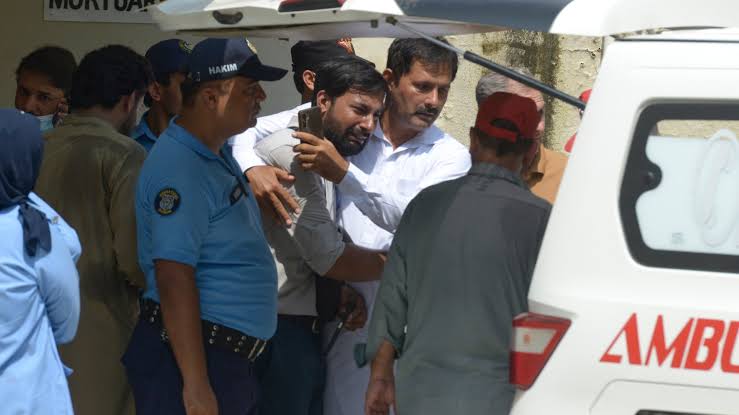
    ISLAMABAD: A deadly fire at the Pakistan Institute of Medical Sciences (PIMS) on August 26 resulted in the deaths of at least 14 newborns, raising serious questions about safety standards, hospital management and the use of public funds. The tragedy has brought renewed attention to the financial resources provided to the country’s major public hospitals. Federal government records show that approximately Rs22 billion was allocated to PIMS over the past three years. Despite these substantial allocations, the hospital continues to face staff shortages, maintenance concerns and problems with essential equipment Official budget figures show that PIMS received an allocation of Rs6.84 billion during the previous financial year. However, the hospital spent approximately Rs7.51 billion, exceeding its approved budget by around Rs670 million.The institution also received an additional Rs660 million in supplementary funds during the year.For the current financial year, the government’s allocation for PIMS has been increased to approximately Rs7.63 billion. Questions have also been raised over funds allocated for repair and maintenance. The federal government had previously provided Rs500 million under this category, while only Rs230 million has been earmarked for the current year. These figures have prompted concerns over whether available resources are being effectively utilised and whether sufficient priority is being given to basic safety, maintenance and patient care. Despite receiving billions of rupees in government funding, PIMS is reportedly operating with a significant shortage of staff. Hospital data indicates that 949 sanctioned positions remain vacant. These include 385 doctors, 363 nurses and 201 paramedical staff. Such shortages can place additional pressure on existing employees and affect the hospital’s ability to provide timely care. Understaffed wards can also make emergency response more difficult, particularly in critical departments where patients require continuous monitoring. The PIMS fire has therefore intensified questions about whether staffing gaps and inadequate resources played any role in the tragedy. Determining the exact causes, however, will require a transparent and independent investigation. The concerns surrounding PIMS are part of a broader debate over safety and accountability in Pakistan’s public hospitals. A review of reported incidents between 2016 and 2026 has highlighted several cases involving alleged negligence and failures in healthcare facilities across the country. In June 2025, 20 children, including 15 newborns, reportedly died at DHQ Hospital Pakpattan, with oxygen shortage cited as a possible factor. In October 2020, seven patients died at Khyber Teaching Hospital Peshawar following an oxygen supply failure. In November 2024, a three-year-old child reportedly fell into an open manhole inside Children’s Hospital Lahore. Other reported incidents across different cities have involved alleged treatment delays, incorrect injections, oxygen-related problems and unsafe hospital infrastructure. The PIMS tragedy has once again raised questions about whether increasing government allocations are producing meaningful improvements in public healthcare. The government has ordered an inquiry into the fire, which is expected to determine the circumstances surrounding the deaths and identify any negligence or safety failures. For the families who lost their newborns, however, no investigation can undo the loss. The central question now is whether the billions allocated to PIMS have been used effectively and whether hospital authorities maintained adequate staffing, equipment, fire-safety systems and infrastructure. If a major public hospital receiving billions in government funding cannot guarantee basic safety for vulnerable patients, accountability must extend beyond temporary suspensions or administrative changes. The tragedy has highlighted the urgent need for stronger oversight, transparent financial management, adequate staffing and enforceable safety standards across Pakistan’s public healthcare system.

  • |

    White House considers removing top DC prosecutor over dropped monument case

    US President Donald Trump is contemplating the dismissal of Jeanine Pirro from her position as US Attorney for the District of Columbia following her department’s move to abandon the criminal prosecution related to damage at the Lincoln Memorial Reflecting Pool. The decision by federal prosecutors to drop charges against former Olympian David Hearn came after evidence revealed the peeling liner stemmed from a rushed, substandard renovation rather than criminal intent. Trump reportedly felt caught unawares by the court submission, publicly rebuking Pirro for backing down under judicial pressure and claiming she buckled during proceedings. In defence of her office’s actions, Pirro explained that crucial documentation regarding the botched installation was withheld by the Department of the Interior until after the original indictment had been filed. Conversely, Interior Secretary Doug Burgum disputed this account, continuing to insist that intentional destruction caused the damage. Formal dismissal of the charges against Hearn remains pending before the court.

  • | |

    Shah Ghulam Qadir nominated as next AJK prime mini…

    MUZAFFARABAD: Pakistan Muslim League-Nawaz (PML-N) Azad Jammu and Kashmir (AJK) President Shah Ghulam Qadir has been nominated as the next prime minister of AJK. The decision was taken by PML-N President Nawaz Sharif after consultations with Prime Minister Shehbaz Sharif and Punjab Chief Minister Maryam Nawaz. Party sources confirmed on Tuesday that Qadir would take oath as AJK prime minister on Thursday at 5pm at the High Court Ground in Muzaffarabad. The nomination follows the recent AJK elections, which were held in three phases between July 27 and August 10. The PML-N emerged as the largest parliamentary party after securing 25 of the 38 directly contested seats. The Pakistan Peoples Party won 12 seats, while one member of the Awami Dast-o-Bazu joined the PML-N. Qadir is a veteran politician with more than three decades of political experience. He has held several important parliamentary and ministerial positions in AJK. He has served as finance, planning and development minister and also held the food ministry. He was elected speaker of the AJK Legislative Assembly twice. He currently serves as PML-N AJK president and leader of the opposition. Qadir entered politics as a student leader and later became involved with the All-Jammu and Kashmir Muslim Conference. He eventually served as its secretary general during Sardar Abdul Qayyum Khan’s leadership. His electoral career began with his election from the Kashmiri refugees constituency, Kashmir Valley-IV. He went on to win seven elections to the AJK Legislative Assembly. Throughout his political career, Qadir has highlighted the issues of Kashmiri refugees and advocated the right to self-determination for the people of Indian-administered Jammu and Kashmir. He has also represented Kashmir at international forums, including the United Nations General Assembly and the UN Human Rights Council. Qadir was among the founding figures of the PML-N in AJK. He played a significant role in strengthening the party’s organisational structure and political presence in the region before becoming its AJK president. During his tenure as assembly speaker, he focused on parliamentary discipline, constitutional governance and legislative oversight. As opposition leader, he continued to call for stronger democratic institutions and accountability. Qadir is known for maintaining political contacts across different parties and is regarded as an experienced parliamentary leader. He is also fluent in Kashmiri and has maintained links with various Kashmiri political circles. His nomination comes after the new AJK Legislative Assembly began its parliamentary term. Forty-six newly elected members took oath during the inaugural session, which was presided over by Assembly Speaker Latif Akbar. The new 53-member assembly has a clear PML-N majority. According to the initial proceedings, 31 PML-N members and one Awami Dast-o-Bazu member took oath, while 14 PPP lawmakers were also sworn in.

  • | |

    Pakistan removed from Lloyd’s war risk insur…

    Pakistan’s Deputy Prime Minister and Foreign Minister, Ishaq Dar, has welcomed the decision by the Lloyd’s Market Association’s Joint War Committee to remove Pakistan from its list of regions classified as high-risk for war insurance. The announcement marks a significant development for the country’s maritime and trade sectors and is being viewed as a positive sign of increasing international confidence in Pakistan’s security and economic environment. Sharing his reaction on the social media platform X, Ishaq Dar described the decision as an important milestone that reflects the international community’s growing trust in Pakistan. He said the move demonstrates recognition of the country’s improving security situation and its continued efforts to strengthen economic stability and regional connectivity. The removal of Pakistan from the war risk insurance list is expected to provide several economic benefits. Ships entering Pakistani ports will no longer face the additional insurance premiums that are typically imposed on vessels operating in areas considered vulnerable to conflict or instability. As a result, shipping companies are likely to experience lower operational costs, making maritime trade with Pakistan more cost-effective and attractive. According to Ishaq Dar, reduced insurance expenses are expected to lower overall shipping costs, which will benefit both importers and exporters. Businesses engaged in international trade may see reduced transportation expenses, helping Pakistani products become more competitive in global markets while also decreasing the cost of imported goods. These developments could contribute to increased trade activity and support the country’s broader economic growth. The Deputy Prime Minister emphasized that the decision is not only an economic achievement but also a reflection of Pakistan’s improving international image. He noted that the country’s efforts to maintain stability, enhance security, and build stronger relations with international partners have helped restore confidence among global institutions and businesses. Ishaq Dar also expressed appreciation to the Lloyd’s Market Association for its constructive engagement throughout the review process. He acknowledged the organization’s professional approach and thanked its Joint War Committee for carefully assessing the situation before making its decision. He said the outcome reflects a balanced evaluation based on changing ground realities and demonstrates confidence in Pakistan’s progress. Industry experts believe that the removal of Pakistan from the war risk list could encourage greater commercial shipping activity at the country’s ports, including Karachi, Port Qasim, and Gwadar. Lower insurance costs may also attract more international shipping lines and investors, strengthening Pakistan’s position as an important regional trade hub. The development is expected to complement the government’s ongoing efforts to improve trade, attract foreign investment, and boost economic recovery. Reduced logistics costs could benefit multiple sectors of the economy, including manufacturing, agriculture, and exports, while creating a more favorable environment for business and investment. Overall, the decision by the Lloyd’s Market Association’s Joint War Committee is being regarded as a major positive step for Pakistan. It not only reduces financial burdens on international shipping but also sends a strong message that the country’s security and business environment are gaining international recognition. Government officials hope this milestone will further enhance investor confidence, promote trade, and contribute to long-term economic development.

  • | | |

    Indian cargo ship sinks after suspected attack nea…

    An Indian cargo ship sank in the Red Sea after suffering severe damage in a suspected maritime attack near Yemen’s western coast. The incident, which reportedly involved an explosive-laden boat or unidentified projectile, caused a powerful explosion and fire aboard the vessel before it eventually went down despite rescue efforts. According to international media reports, the cargo ship sustained extensive damage following the blast. Several crew members were injured during the incident, but no fatalities have been reported. The crew immediately initiated emergency procedures and alerted nearby maritime authorities, who responded with rescue operations. Authorities attempted to secure and tow the damaged vessel to a safe location. However, the ship’s condition deteriorated, and it eventually sank in the Red Sea. Medical assistance was provided to injured crew members, while rescue teams ensured the safe evacuation of everyone on board. India’s Ministry of External Affairs stated that the vessel was struck by an unidentified projectile, confirming that the cargo ship later sank. The ministry added that all crew members were safely rescued and no loss of life occurred. As of now, no group has officially claimed responsibility for the attack. However, the incident comes amid heightened security concerns in the Red Sea, where commercial shipping has faced repeated threats in recent months. Several previous attacks on merchant vessels in the region have been claimed by the Iran-backed Houthi movement, although no evidence has yet linked this specific incident to any particular group. The Red Sea has become one of the world’s most sensitive maritime routes due to ongoing regional tensions. Commercial vessels transiting the area have encountered increased security risks, prompting many shipping companies to strengthen safety measures or alter their routes. Recent months have also seen warnings and threats against ships passing through the Bab el-Mandeb Strait, a strategic waterway connecting the Red Sea with the Gulf of Aden. Disruptions in this corridor can have significant consequences for global trade, particularly the transportation of oil, gas, and other essential commodities. The Red Sea and Bab el-Mandeb Strait rank among the world’s busiest shipping lanes, serving as critical links between Europe, Asia, and the Middle East. Any disruption in these waters can affect international supply chains, increase shipping costs, and impact global energy markets. Investigations into the cause of the attack are expected to continue as maritime authorities gather evidence. Meanwhile, shipping companies and governments are closely monitoring the security situation in the region to ensure the safety of commercial vessels and international trade routes.

Leave a Reply

Your email address will not be published. Required fields are marked *