too much gaming

Too much gaming may harm children

Online and video games are a popular source of entertainment for children.  However experts warn that spending too much time playing games can affect a child’s mental physical and social development.

Playing games in moderation can be enjoyable but excessive gaming may lead to several problems. Experts say the growing popularity of video games among children is becoming a concern around the world. Spending long hours in front of a screen can reduce time for schoolwork exercise and other healthy activities.

Research also suggests that too much gaming may make some children more irritable angry or aggressive.

According to experts excessive gaming may also affect brain function and the nervous system.

Children who spend too much time playing games may lose interest in their studies perform poorly at school and become more likely to develop an unhealthy dependence on video games. Too much screen time can also reduce social interaction. Instead of spending time with family and friends children may prefer staying alone with their games which can affect their communication and relationship skills.

Pediatric experts advise parents to set clear limits on screen time and encourage children to take part in other activities. Outdoor games painting arts and crafts reading and other creative hobbies can support healthy physical and mental development.

These activities are even more beneficial when parents are involved. Experts also say that spending time with siblings and family members helps children build stronger relationships confidence, and social skills.  If video games become a child’s main focus family life and personal development may suffer.

Experts do not recommend banning video games completely as learning to use technology is important today. Instead parents should set reasonable gaming limits monitor what their children play and encourage a balanced lifestyle that includes learning physical activity and family time.

Similar Posts

  • |

    August 12 total solar eclipse, will it be visible in Pakistan?

    Islamabad – A rare total solar eclipse will occur on August 12, 2026 attracting the attention of astronomy enthusiasts around the world. However, will it be visible in Pakistan? The solar eclipse will not be visible in Pakistan as it will be nighttime in the country during the key phases of the eclipse. According to Pakistan Standard Time, the partial eclipse will begin at 8:34 PM on August 12 while the total eclipse will begin at 9:58 PM. The eclipse will reach its peak at 10:46 PM and the total eclipse will end at 11:34 PM. Where will solar eclipse be visible? On August 12, the Moon will pass between the Earth and the Sun causing a total solar eclipse to be visible in Greenland, Iceland, northern Russia and parts of Spain and Portugal. A partial solar eclipse will be visible across various parts of North America, Canada, most of Europe and northwestern Africa. According to NASA, the Sun will set during the eclipse in western parts of Europe and Africa creating a unique spectacle in which the solar eclipse will coincide with sunset. How can solar eclipse be watched live? NASA will also provide an online live broadcast of this astronomical event which can be watched online from Pakistan on the night of August 12. Astronomers have warned people in areas where the eclipse will be visible never to look directly at the Sun without specially designed solar-viewing glasses as doing so can cause severe damage to the eyes.

  • Blood treatment removes forever chemicals

    A new study suggests that a blood cleaning treatment used to lower cholesterol may also help remove harmful “forever chemicals” from the body. The treatment called apheresis is mainly used for people whose high cholesterol cannot be controlled with medication.  During the procedure blood is taken from one arm and passed through a special filter that removes excess fats. The cleaned blood is then returned to the body through the other arm. At the Technical University of Dresden in Germany, home to one of the world’s largest apheresis centers around 10,000 of these treatments are performed each year. For the study researchers examined used filter bags from the apheresis machines to see what substances had been removed along with cholesterol. They wanted to find out whether the filters could also remove harmful forever chemicals toxic substances that remain in the environment and the human body for a very long time as well as tiny plastic particles known as microplastics. The researchers say the early findings are promising. If future studies confirm these results apheresis could become a useful way to reduce the amount of certain harmful pollutants in the body in addition to lowering cholesterol.

  • | |

    Echoes from the Interstellar Dark

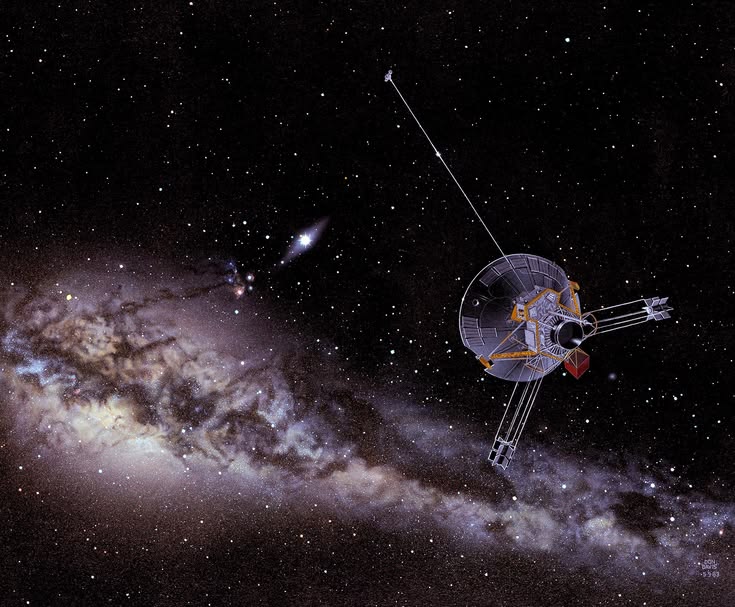
    NASA’s Voyager 1 probe was designed to explore the outer giant planets and send back photographs of Jupiter and Saturn. It was launched in 1977. More than eleven billion miles from Earth, floating through the icy void beyond our solar system, a tiny scrap of 1970s human ingenuity continues its lonely journey. Decades after its primary mission ended, the craft crossed the heliopause. The boundary where the sun’s protective magnetic bubble ends and true interstellar space begins. ​In recent months, engineers faced a daunting crisis. Voyager 1 began transmitting a repeating, meaningless gibberish loop of ones and zeros back to Mission Control. For a moment, scientists feared that after nearly half a century of unbroken operation, the farthest human artifact had finally succumbed to cosmic radiation and cold degradation. Yet through meticulous diagnostic work, engineers isolated a corrupt microchip. They rerouted its memory code across ancient hardware.  Hence, they successfully restored intelligible science data across the vast distance. ​Voyager 1’s survival is not just an engineering miracle; it is a profound testament to humanity’s desire to touch the unknown. ​A spindle of wire, a heart made of bronze, It drifts through the night where the quiet responds. Beyond the sun’s breath and the cradle of red, It whispers the secrets of worlds overhead. ​A Message in a Bottle Across Cosmic Waves ​Carried on the hull of Voyager 1 is the Golden Record, a gold-plated copper phonograph disc containing sounds of Earth, greetings in fifty-five languages, musical compositions from Bach to Chuck Berry, and encoded images of terrestrial life. It serves as an interstellar time capsule, intended to outlast our civilization and tell any distant intelligence who we were. ​We carved our desire on golden veneer, To prove in the darkness that someone was here. A chorus of ocean, a child’s brief greeting, Sent out to outlive every mortal heart’s beating. ​As the probe glides through the cosmic dust, its radio signal traveling at the speed of light takes over twenty-two hours to reach dish antennas on Earth. Every line of telemetry received is a faint echo from an environment no human eye will ever witness firsthand. The spacecraft operates on a diminishing power supply provided by its decaying plutonium generators. Year by year, NASA engineers shut down non-essential instruments to conserve every milliwatt of power, prioritizing the magnetometers and cosmic ray sensors that measure the interstellar medium. ​The Final Quiet Crossing ​The remaining active instruments will inevitably power down as the thermal generators fade entirely by the end of this decade. Voyager 1 will then become a silent voyager, drifting along its galactic orbit around the center of the Milky Way, unbothered by atmospheric drag or gravitational interference, lasting for millions of years. ​When the last power flickers and warmth slips away, It will glide through the night till the dawn of no day. No longer a transmitter, no longer a thread, Just a monument floating where gods used to tread. ​The triumph of retrieving clear data from Voyager 1 reminds us why we look up. Science and art stem from the same original impulse: the refusal to remain quiet in the vastness of the dark, and the drive to leave something meaningful behind before the power fades.

  • SpaceX’s 4-ton rocket crashes into Moon at 5,400mph

    Elon Musk’s SpaceX rocket has crashed into the Moon’s surface while travelling at a speed of 5,400 miles per hour while a telescope in Chile captured evidence of the impact. The European Southern Observatory’s (ESO) Very Large Telescope observed the impact on August 5 and detected colorful spectral lines of sodium and lithium gas. These were produced by clouds of lunar dust that were thrown up by the impact. The ESO telescope recorded the “chemical fingerprints” of the gas cloud which remained visible for around 5 to 10 minutes. The cloud was estimated to extend across dozens of kilometers. Experts had previously said that the impact could provide valuable data for future space experiments and help scientists analyze the effects of collisions involving human-made space debris. As NASA plans to establish a permanent human base on the Moon in the future understanding what happens when space debris strikes the lunar surface will be important. Impact site The impact occurred at a location on the Moon that is considered to be near the boundary between the sunlit and dark regions. When the impact sent clouds of dust into the air, they briefly became illuminated by sunlight. However, observing them with the naked eye from Earth was almost impossible. Although several satellites are currently orbiting the Moon, none was positioned at the time of the impact to directly observe it. The rocket fragment was approximately as tall as a five-story building and weighed around 4 tons. NASA’s Lunar Reconnaissance Orbiter and South Korea’s Korea Pathfinder Lunar Orbiter are being considered for photographing the impact site. These images could help determine how much damage was caused by the rocket although it may take several days to collect and analyze the information. It is worth noting that the SpaceX Falcon 9 rocket was launched in January 2025 and carried two landers toward the Moon. Its boosters returned to Earth while the upper stage continued carrying the landers toward the Moon.

  • Tommy cherry sets new cube World record

    American speed cuber Tommy Cherry has reclaimed the Guinness World Record for solving a Rubik’s Cube while blindfolded. The 21year old set the new record on June 28, 2026 during the Mid-Atlantic Quiet Championship 2026 in Branchburg, New Jersey. He solved a 3×3×3 Rubik’s Cube in just 11.56 seconds, setting a new world record. Tommy first earned this record in 2021 with a time of 15.27 seconds. Since then he has continued to improve breaking his own records several times over the years. He also shares the world record for the fastest average blindfolded solve of a 3×3×3 Rubik’s Cube with Charlie Eggins. Both speedcubers recorded an average time of 14.05 seconds. https://www.facebook.com/share/r/1EMYY7bxdd/ After his latest achievement Tommy said he was very happy because it was his first world record since 2024. He added that he hopes to keep improving and hold the record for a long time.

  • New image reveal Sun’s surface in amazing detail

    Looking directly at the Sun is impossible and capturing a clear image of it is even more difficult. However, new images of the star at the center of our solar system have been released showing its surface in extraordinary detail. The images were captured by the Inouye Solar Telescope located in the US state of Hawaii. It is considered the world’s most powerful solar telescope and is capable of observing the Sun in unprecedented detail. The telescope has captured images of the Sun before but these new photographs provide the most detailed views yet of the surface of our solar system’s star. A unique wing-like pattern can be seen across the Sun’s surface in the images. According to scientists, this pattern is associated with the Sun’s magnetic field which is moving in a wave-like manner due to hot gases. Closer look at Sun’s surface The images reveal processes occurring on the Sun’s surface that may help explain a decades-old mystery: why the Sun’s outer atmosphere known as the corona is millions of times hotter than its visible surface. Experts say these are the highest-resolution images of the Sun’s surface ever captured. In earlier observations, the telescope detected sand-like structures on the Sun’s surface making it appear as though grains of sand were being viewed under a microscope. Each of these structures was roughly the size of France in terms of area but the new images reveal much greater detail. The new photographs show a distinctive pattern on the Sun’s surface associated with rapidly moving plasma. Scientists have identified this pattern as Kelvin-Helmholtz instabilities (KHIs). Kelvin-Helmholtz instabilities have been observed on Earth during the formation of patterns in lakes, oceans and clouds. They have also been detected on Jupiter and Saturn but their presence on the Sun had not previously been confirmed. Why Sun’s magnetic activity matters? Solar activity particularly changes in the Sun’s magnetic fields can affect power grids, satellites, GPS positioning and global communications on Earth. These magnetic fields are generated by the Sun’s extremely hot plasma but scientists have not yet fully understood how they work. Experts know that these magnetic fields can trigger sudden releases of enormous amounts of heat but exactly why this happens remains unclear. The new images, however, provide clues that could help explain why the Sun’s visible surface has a temperature of around 6,000°C while its outer atmosphere can reach temperatures of millions of degrees Celsius.

Leave a Reply

Your email address will not be published. Required fields are marked *